

The Australian mouse spider is one of the most intriguing and misunderstood arachnids found across the continent. Its name often causes confusion, especially when viral photos of a “spider carrying a mouse” circulate online. However, the real mouse spider (Missulena genus) is a burrow-dwelling predator known more for its potent venom and unique lifestyle than for dragging rodents up fridges. Found across Western, Eastern, and Southern Australia, this species is part of the ancient mygalomorph spider group, closely related to trapdoor and funnel-web spiders.
Overview of the Australian Mouse Spider
Mouse spiders are native to Australia and are commonly seen in open woodlands, gardens, and dry areas with soft soil. They belong to the family Actinopodidae and are recognized by their stocky bodies and glossy dark appearance. There are around eight recognized species, with the Eastern, Western, and Red-headed mouse spiders being the most well-known.
Although they have a fearsome reputation, most mouse spiders are shy and prefer to stay hidden inside their silk-lined burrows. The name “mouse spider” doesn’t come from their diet but from the fact that their burrows resemble mouse holes in the ground.
Appearance and Identification

The mouse spider’s appearance varies depending on the species and gender, but most share similar traits. Their bodies are typically dark brown or black with a glossy finish. Males of some species, like the Red-headed Mouse Spider, display a striking reddish-brown cephalothorax, which makes them easy to recognize.
Key identifying features include:
- Large, powerful fangs designed to inject venom efficiently.
- Short, robust front legs.
- A smooth, shiny carapace with a distinct separation between head and abdomen.
Adult mouse spiders generally measure between 1 to 3 centimeters in body length, with a leg span of up to 4 centimeters. Females tend to be heavier and bulkier than males, which helps them protect their burrows and eggs.
Types of Mouse Spiders Found in Australia
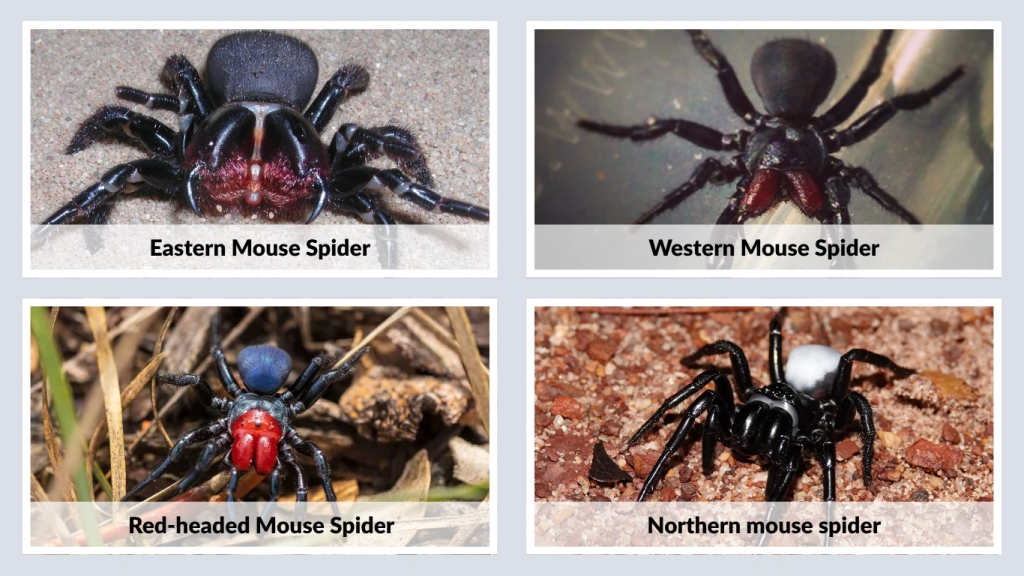
Australia is home to several mouse spider species spread across different regions:
- Eastern Mouse Spider (Missulena bradleyi) – Found in New South Wales and Queensland, known for its deep burrows and occasional encounters near human homes.
- Western Mouse Spider (Missulena occidentalis) – Common in Western Australia, especially around Perth and the Wheatbelt region.
- Red-headed Mouse Spider (Missulena occatoria) – Easily recognized by its vivid red head and often confused with the funnel-web due to its size and posture.
- Northern and Southern Variants – Other species, such as Missulena pruinosa and Missulena granulosa, are found in drier inland regions.
Each species prefers slightly different habitats but shares similar burrowing behavior and nocturnal hunting habits.
Male vs. Female Mouse Spider
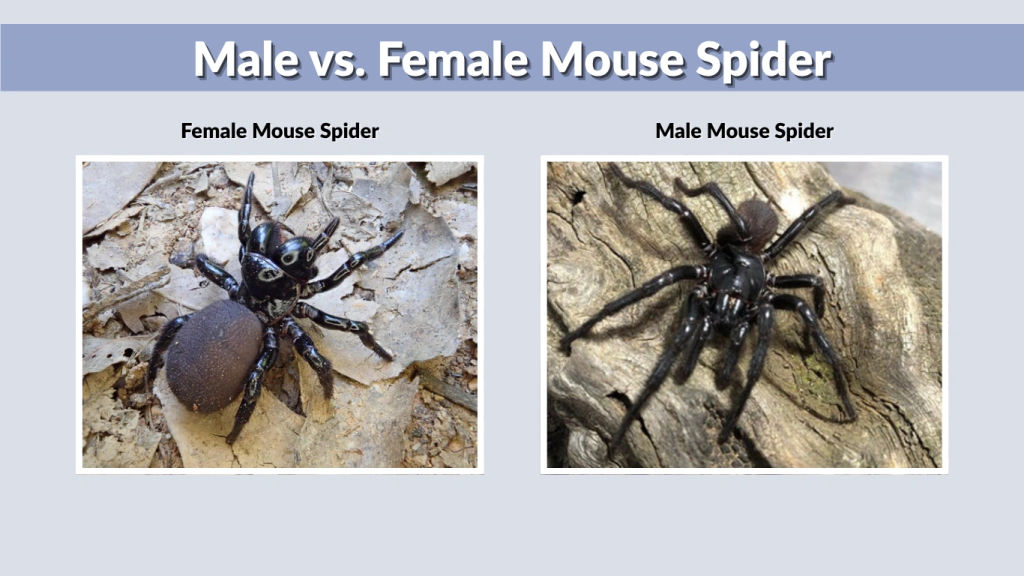
The difference between male and female mouse spiders goes beyond appearance. Males are smaller, more mobile, and often seen wandering during the mating season, especially after rainfall in spring. Their bright coloration, particularly the red-headed males, makes them more visible — and sometimes more feared.
Females, on the other hand, spend most of their lives underground. They are larger, darker, and less likely to be encountered by humans. While both genders possess venom, the male’s bite is considered more medically significant due to its potent neurotoxins. Fortunately, these spiders rarely bite unless provoked or handled carelessly.
Interestingly, the same antivenom used for the Sydney funnel-web spider also works for mouse spider bites, offering effective protection and treatment if needed.
Distribution and Habitat
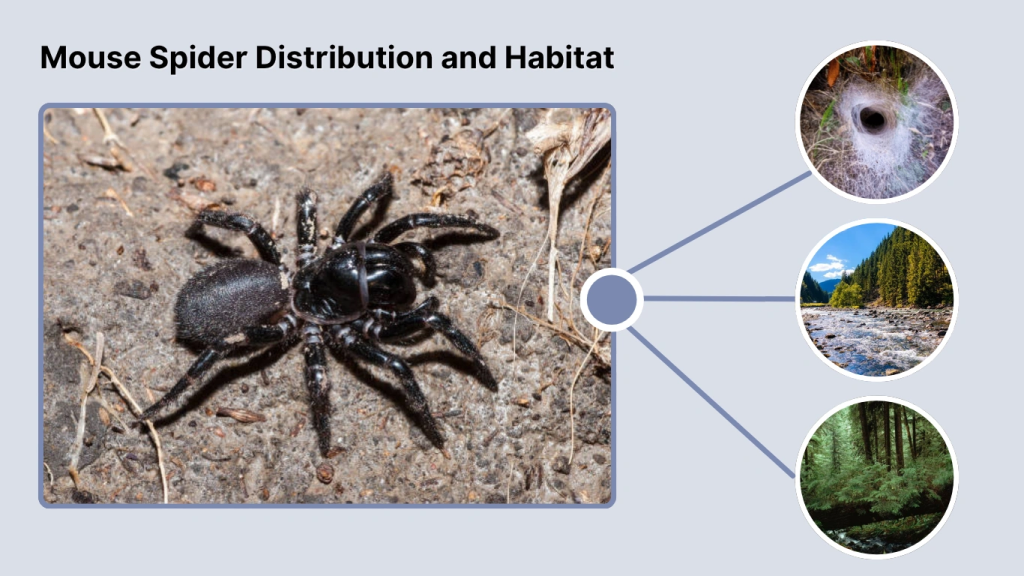
Mouse spiders are found across almost all parts of mainland Australia. The most common habitats include Western Australia, New South Wales, Queensland, South Australia, and Victoria. They favor areas with soft, moist soil suitable for burrowing, often near rivers, forests, or gardens.
Their burrows can reach up to 30 centimeters deep, lined with silk and sometimes covered with a hinged trapdoor made of soil and webbing. This trapdoor allows the spider to ambush passing insects while staying hidden from predators.
Because of their underground lifestyle, sightings are relatively rare. Most encounters happen when males leave their burrows in search of mates or after heavy rain when burrows become flooded.
Behavior and Hunting Habits
Mouse spiders are nocturnal hunters that rely on stealth and ambush. They typically stay near the entrance of their burrow at night, waiting patiently for prey such as beetles, small insects, or frogs. Their large fangs allow them to subdue prey quickly with venom that acts on the nervous system.
Despite their fearsome appearance, they do not chase or hunt mice. The confusion about “mouse-eating spiders” often comes from viral images featuring huntsman spiders carrying rodents, not mouse spiders. The mouse spider’s diet primarily consists of invertebrates rather than small mammals.
They play an essential role in the ecosystem by controlling insect populations and serving as prey for birds and reptiles.
Myths: Spiders Carrying or Eating Mice
The myth of Australian spiders carrying or eating mice has spread widely through viral photos and videos. However, these images almost always feature huntsman spiders, not mouse spiders. Huntsman spiders are large, fast, and capable of overpowering small animals like mice or frogs, which explains their online fame.
Mouse spiders, in contrast, are burrow dwellers and ambush hunters that rarely leave their tunnels. Their name comes from the mouse-like shape of their burrows, not from hunting rodents. These burrows are deep, silk-lined, and often sealed with a trapdoor, allowing the spider to stay hidden and protected. While mouse spiders have powerful fangs, their body size and hunting method make them unsuited to capturing large vertebrates like mice.
Venom and Bite Information
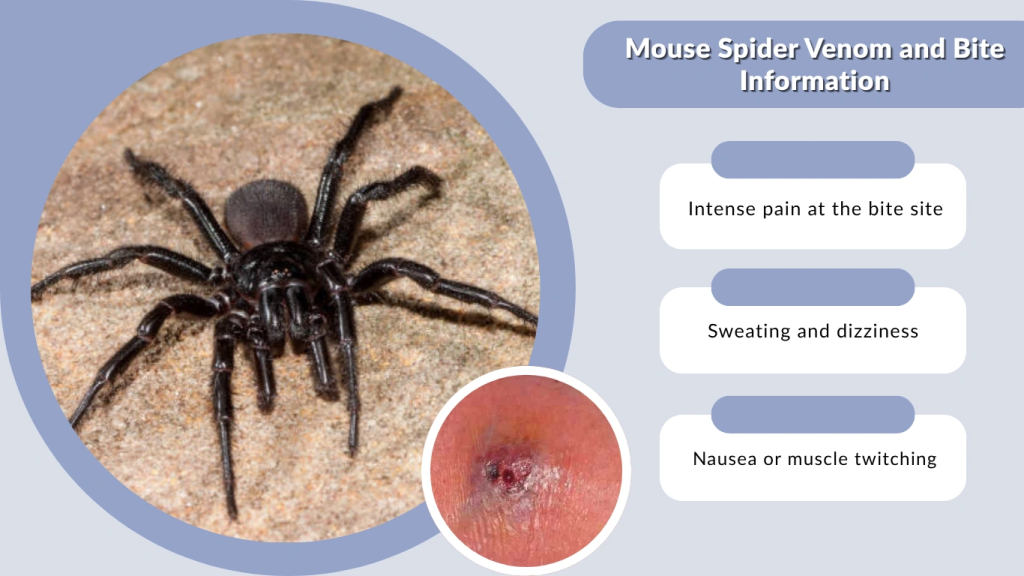
The venom of the Australian mouse spider is considered highly toxic and potentially dangerous to humans. It contains neurotoxins similar to those found in the deadly Sydney funnel-web spider. Despite this, there are very few recorded fatalities. Most bites occur when the spider is accidentally handled or trapped in clothing.
Typical symptoms include:
- Intense pain at the bite site
- Sweating and dizziness
- Nausea or muscle twitching
- In severe cases, breathing difficulties
Prompt medical treatment is crucial, but the good news is that funnel-web spider antivenom effectively treats mouse spider bites. Because of this, serious complications or deaths are extremely rare. In most cases, victims recover fully within a day or two with proper care.
Mouse spiders are not naturally aggressive. They prefer retreating into their burrows when disturbed and will only bite as a last resort.
Size and Appearance Facts
Mouse spiders are medium-sized compared to other Australian spiders but look quite robust. Adult females reach up to 3 centimeters in body length, while males average around 1.5 to 2 centimeters. Their leg span can reach about 4 centimeters, and their body shape gives them a tarantula-like appearance.
Their glossy exoskeleton, short legs, and muscular build distinguish them from the slender huntsman or long-legged trapdoor spiders. The Red-headed Mouse Spider is especially eye-catching, with its bright red cephalothorax contrasting against its shiny blue-black abdomen.
Although they look intimidating, their heavy body and slow movement make them less likely to be seen outside their burrows except during mating season or after rain.
Conservation and Human Interaction
Mouse spiders play an important ecological role, helping regulate insect populations and serving as a food source for reptiles and birds. They are not endangered, though habitat loss due to urban development can threaten local populations.
When found near homes or gardens, mouse spiders should be approached with caution. Experts recommend avoiding direct contact and using a container or professional service for removal. Educating the public about mouse spiders is vital, as many are unnecessarily killed due to mistaken identity or fear.
In reality, these spiders are secretive, beneficial, and rarely pose any real threat to humans when left undisturbed.
FAQs
What is the Australian mouse spider?
The Australian mouse spider is a burrow-dwelling arachnid from the Missulena genus. It builds silk-lined tunnels that resemble mouse holes, which inspired its name. Found across Australia, it’s a nocturnal hunter with powerful fangs and glossy black or dark brown coloring.
Are mouse spiders deadly to humans?
Mouse spiders have potent venom similar to that of the Sydney funnel-web, but fatalities are extremely rare. Most bites are mild because the spider injects little venom, and effective antivenom exists, ensuring quick recovery with medical care.
Where are mouse spiders found in Australia?
They are distributed throughout Western, Eastern, and Southern Australia, living in areas with soft soil suitable for burrows. Common habitats include gardens, forests, riverbanks, and open grasslands. They prefer sheltered, moist environments for building their silk burrows.
Do mouse spiders eat mice?
No, despite their name, mouse spiders do not eat mice. The name refers to their burrow structure, which looks like a mouse hole. Viral photos of spiders eating mice typically show huntsman spiders, which are large enough to capture small vertebrates.
How can you identify a male and female mouse spider?
Males are smaller, with reddish or brownish heads, while females are larger, darker, and stay underground most of their lives. Males wander during mating season, often after rain, making them more likely to be seen by humans.