

The Yellow Garden Spider (Argiope aurantia), often called the Black and Yellow Garden Spider or Texas Garden Spider, is a large, brightly colored orb-weaver found across the state of Texas. Its bold yellow and black patterns and impressive web designs make it one of the most striking spiders in nature. Despite its intimidating size, it’s completely harmless to humans and beneficial to gardens, helping control pest populations naturally.
Overview of the Yellow Garden Spider
Belonging to the Araneidae family, this species is known for its strong, circular webs and distinctive zigzag design called a stabilimentum. The Yellow Garden Spider thrives in warm, open environments, which makes Texas an ideal home. It’s commonly found in Central, North, East, and South Texas, from suburban gardens to rural farmlands.
These spiders are admired for their beauty and patience — often sitting motionless at the center of their web for hours while waiting for prey.
Identification and Appearance
Key Physical Features
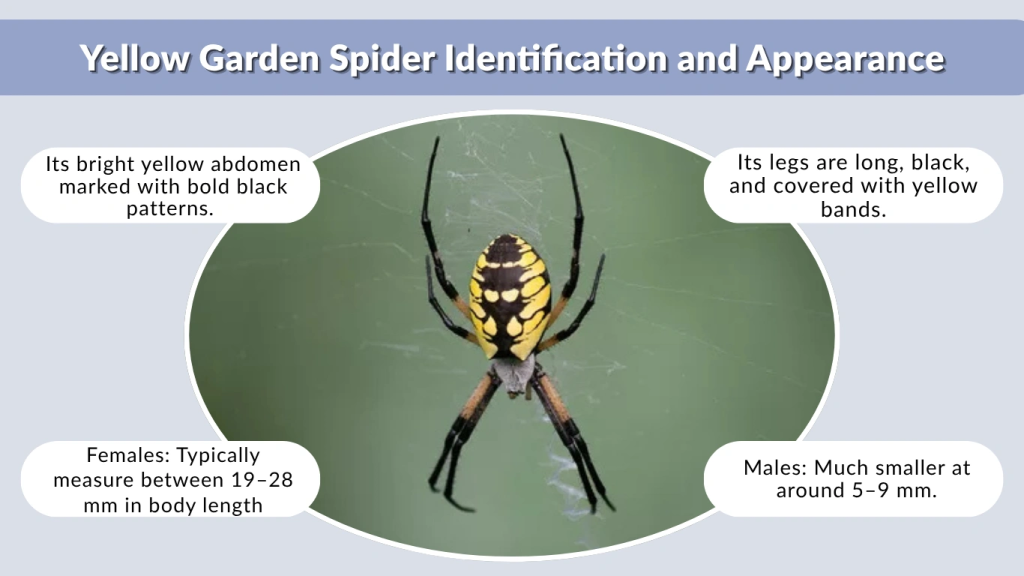
The Yellow Garden Spider is easily recognized by its bright yellow abdomen marked with bold black patterns. Its legs are long, black, and covered with yellow bands, giving it an almost decorative appearance. The spider’s cephalothorax (front body) is covered in silvery-white hairs, adding to its vivid contrast.
When seen up close, this spider’s design is mesmerizing — a true natural symbol of artistry and precision.
Yellow Garden Spider Size
- Females: Typically measure between 19–28 mm in body length, with a leg span reaching nearly 3 inches.
- Males: Much smaller at around 5–9 mm, often unnoticed beside the female’s large web.
- The impressive size difference makes it easy to distinguish between genders when both are present in the same area.
Male vs. Female Yellow Garden Spider
Physical Differences
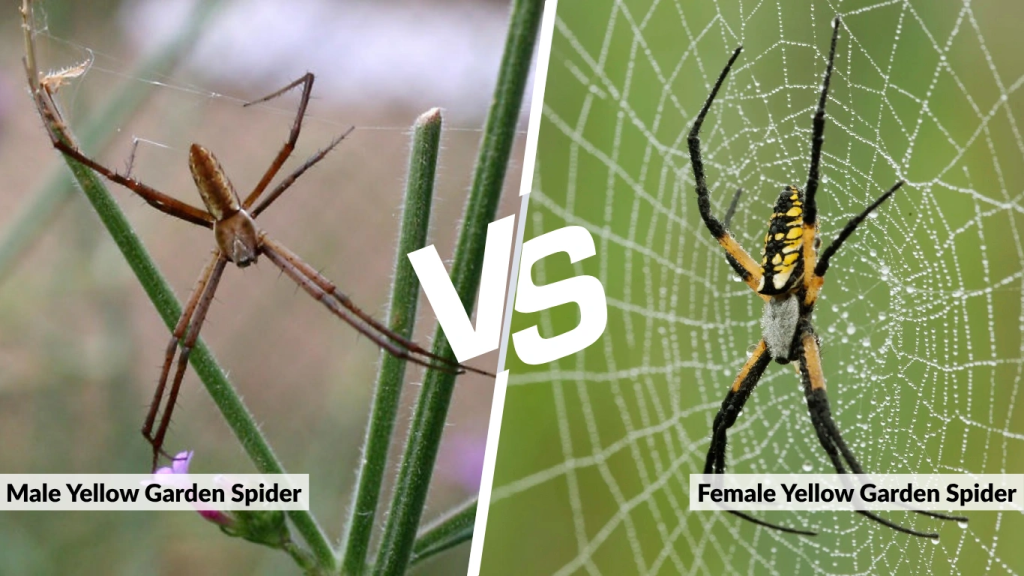
Females are large, bright, and vividly patterned, making them the more visible of the two. Males, in contrast, appear dull brown or gray and are significantly smaller. This difference in appearance and size is a classic case of sexual dimorphism found in many spider species.
Behavioral Differences
Females typically stay in the same web throughout the summer, repairing and rebuilding it daily. Males, on the other hand, roam actively in search of mates and rarely build permanent webs. Once mating occurs, males often die soon after, completing their brief adult life cycle.
Habitat and Distribution in Texas
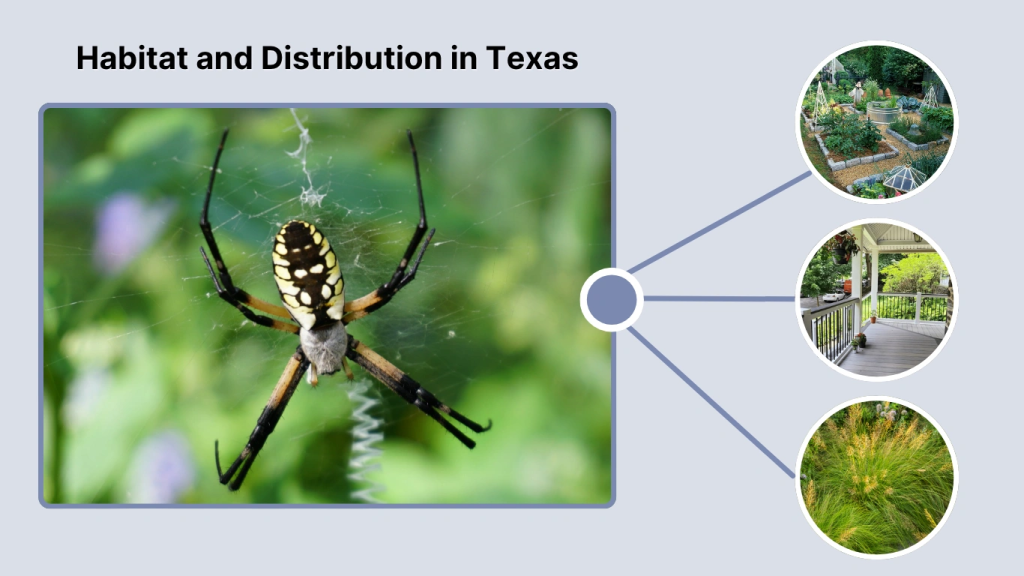
The Yellow Garden Spider thrives in sunny, open areas with access to abundant insects. Across Texas, they are common in:
- Gardens and backyards
- Fences and porch corners
- Tall grasses, bushes, and near ponds or streams
They can be found in Austin, Houston, Dallas, San Antonio, and East Texas woodlands, as well as the humid southern regions of the state. Their adaptability allows them to survive in both urban and rural landscapes as long as prey is plentiful and shelter is nearby.
Web Structure and Hunting Behavior
The Yellow Garden Spider’s web is one of its most fascinating features, both intricate and purposeful.
- Web Shape: Large, orb-shaped design, often up to two feet in diameter.
- Signature Feature: The central zigzag pattern (stabilimentum), believed to attract insects and strengthen the web.
- Web Placement: Usually built 2–5 feet above the ground, anchored between plants, fences, or garden posts.
- Prey: Captures grasshoppers, flies, wasps, and bees with sticky silk threads.
- Feeding Habit: Waits quietly in the web’s center; when prey hits the silk, the spider senses vibrations instantly.
- Recycling: The spider eats and rebuilds its web daily to conserve nutrients.
This efficient web design allows it to catch large quantities of insects — making it a vital natural pest controller in Texas gardens.
Yellow Garden Spider Bite

Are They Dangerous?
Although large and intimidating, Yellow Garden Spiders are not aggressive and rarely bite humans. They typically bite only if trapped or handled roughly. Their fangs can pierce human skin, but the venom is mild and not medically significant.
Bite Symptoms
If a bite does occur, the effects are minor and temporary:
- Mild redness or irritation
- Slight swelling or itching
- Symptoms resolve within a day or two
For most people, the reaction is no worse than a mosquito bite. The spider’s venom is designed for immobilizing insects, not defending against larger animals.
Is the Yellow Garden Spider Poisonous or Venomous?
Many Texans wonder whether the Yellow Garden Spider is dangerous or poisonous, but the answer is simple: it’s venomous to insects, not to humans. Its venom contains mild toxins that quickly paralyze small prey, allowing the spider to feed safely.
The word “poisonous” refers to something harmful when touched or eaten — which this spider is not. It poses no danger to humans or pets and plays an important ecological role as a beneficial predator.
Life Cycle of the Yellow Garden Spider
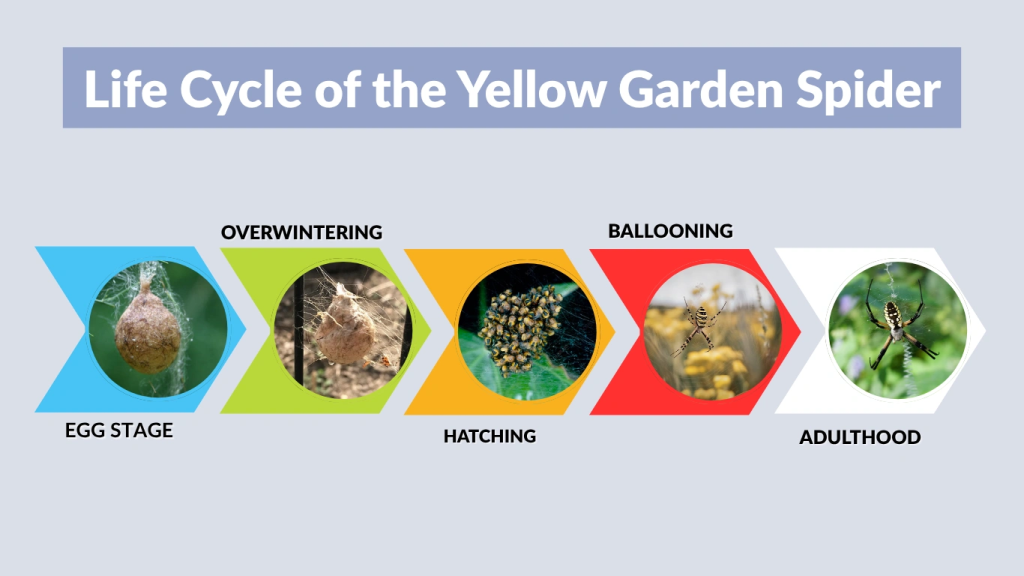
The life cycle of this spider is short but fascinating:
- Egg Stage: Females lay hundreds of eggs in large, papery silk sacs during autumn.
- Overwintering: The eggs remain safe inside the sacs through Texas’ mild winters.
- Hatching: Spiderlings emerge in spring when temperatures rise.
- Ballooning: The young spiders disperse by floating on silk threads through the wind — a process known as ballooning.
- Growth: Juveniles molt several times before reaching maturity by late summer.
- Adulthood: Adults live through summer and early fall, mate, and die after reproduction.
This one-year life cycle ensures a fresh generation each spring, maintaining the species’ strong presence across Texas landscapes.
Reproduction and Mating Season
Courtship Behavior
During the warm months of July to September, males locate females by following silk pheromones. They approach cautiously, producing gentle web vibrations to avoid being mistaken for prey. Once mating occurs, the male often dies soon after, sometimes even consumed by the female — a common behavior in orb-weavers.
Egg Sacs
The female creates up to three large silk sacs, each holding hundreds of eggs. These sacs are attached under leaves, eaves, or hidden structures. She guards them fiercely until her death, ensuring her offspring survive the cold months ahead.
Lifespan and Seasonal Activity
The average lifespan of a Yellow Garden Spider in Texas is about one year. Spiderlings hatch in spring, mature through the summer, and reach adulthood by late July. They are most visible in August and September, when females reach full size and begin building large, eye-catching webs.
As autumn arrives, the adults mate and die shortly afterward, leaving egg sacs to carry the species into the next season. The cycle begins again in spring when the new spiderlings hatch and disperse.
Diet and Feeding Habits
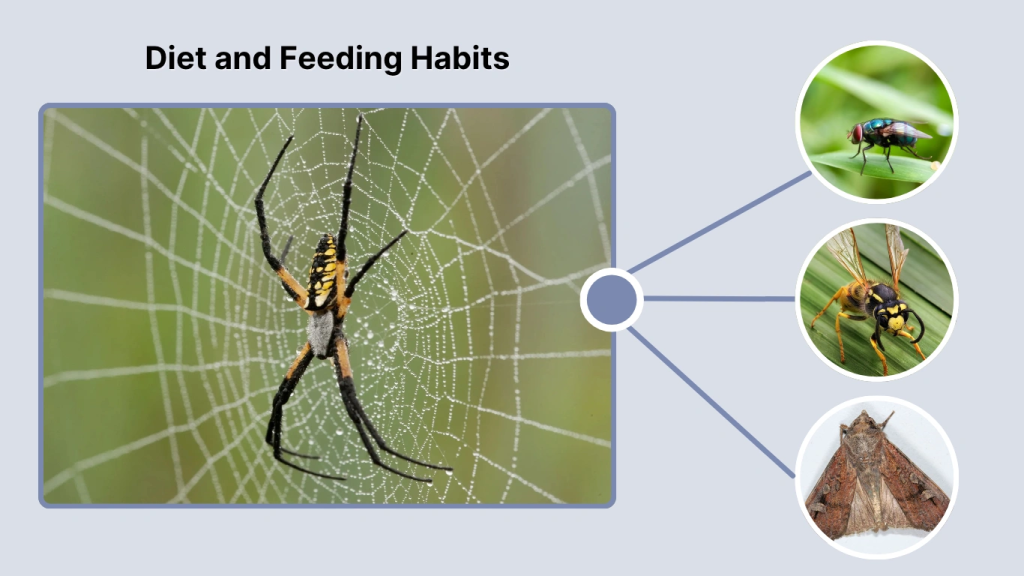
Yellow Garden Spiders are excellent insect hunters, feeding on a wide range of pests that frequent Texas gardens. Their diet mainly consists of:
- Flies
- Wasps
- Moths
- Grasshoppers
- Small beetles
After catching prey in their sticky orb web, the spider quickly injects venom to paralyze it, then wraps it tightly in silk. It later feeds by injecting digestive enzymes, turning the prey’s insides into a liquid meal. This external digestion method allows the spider to absorb essential nutrients efficiently.
Their appetite helps maintain ecological balance by naturally reducing insect populations — a benefit for both farmers and gardeners.
Regional Habitats Across Texas
The Yellow Garden Spider is widespread across Texas, adapting to diverse local environments:
- North Texas: Often found in suburban gardens and open fields around Dallas–Fort Worth.
- Central Texas: Common in Austin and San Antonio, where it thrives near fences and flowering plants.
- East Texas: Prefers the humid conditions of pine forests and lakeshores.
- South Texas: Populations flourish in tropical climates near the Rio Grande Valley.
- West Texas: Less common but present near irrigated areas with tall vegetation.
Their adaptability and resistance to heat make them one of the most successful spider species in the state.
Color Variations in Texas Populations
Depending on the region, color intensity and markings can vary slightly.
- In South Texas, spiders often display brighter yellow tones due to stronger sunlight exposure.
- In northern regions, individuals may appear darker and smaller, adapting to cooler conditions.
While these variations exist, the distinctive black-and-yellow abdomen pattern remains consistent, making this species instantly recognizable statewide.
Predators and Natural Threats
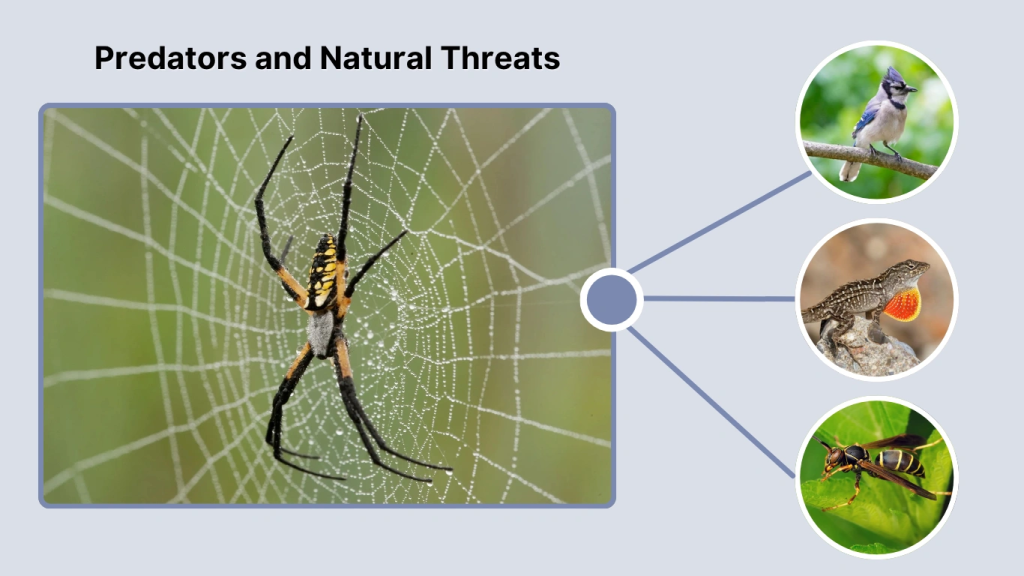
Despite their large webs and size, Yellow Garden Spiders face several predators.
Common enemies include:
- Birds (especially sparrows and wrens)
- Lizards
- Mud dauber wasps
- Frogs and small mammals
- Parasitic flies that target egg sacs
Habitat loss and pesticide use also threaten their survival in urban areas. However, their adaptability and high egg production ensure a stable population each year.
Ecological Importance
Yellow Garden Spiders are among the most beneficial arachnids in Texas ecosystems. They serve as natural pest controllers, keeping insect populations balanced. Their predation reduces the need for chemical pesticides, making them essential for sustainable farming and gardening.
Additionally, they provide a food source for birds and other wildlife, playing an integral role in the food chain. Their presence signifies a healthy, biodiverse environment, where predator-prey relationships are balanced.
Behavior and Adaptation
Daily Routine
The spider spends daylight hours resting quietly at the web’s center or hiding in nearby vegetation. At night, it becomes active, repairing or rebuilding its web for optimal performance.
Defense Tactics
When threatened, the Yellow Garden Spider may vibrate its web rapidly or drop to the ground to appear less visible. This vibration creates a blurry effect that confuses predators. It rarely bites and instead relies on camouflage, quick retreat, and vibration for defense.
Common Myths and Misconceptions
The Yellow Garden Spider is often misunderstood due to its large size and bright coloring. Let’s clear up a few myths:
- Myth: It’s poisonous to humans.
Fact: It’s venomous to insects only and harmless to humans. - Myth: It’s aggressive.
Fact: It’s docile and avoids human contact. - Myth: It invades homes.
Fact: It prefers outdoor areas and rarely enters houses.
Educating the public about these misconceptions helps people appreciate this spider’s ecological importance rather than fear it.
Yellow Garden Spider in Urban Areas
- Often seen in Austin gardens, parks, and backyards.
- Builds webs near porch lights, where flying insects gather.
- Harmless to pets and children.
- Acts as a natural pesticide by reducing pest insects.
- Adds aesthetic value and biodiversity to urban landscapes.
Urban Texans benefit greatly from these spiders, which quietly maintain balance in local ecosystems.
Fun Facts About the Yellow Garden Spider
- The female’s web can span up to two feet across.
- Its silk is stronger than steel by weight.
- They sense prey through vibrations rather than sight.
- Often nicknamed the “writing spider” for the zigzag web pattern.
- They recycle silk daily by eating old webs.
These unique behaviors make the Yellow Garden Spider one of the most fascinating species in Texas wildlife.
FAQs
Are Yellow Garden Spiders in Texas poisonous to humans?
No, they are not. These spiders use venom only to paralyze insects. Human bites are rare, and even if they occur, the effects are mild and disappear quickly.
Where are Yellow Garden Spiders found in Texas?
They are found across the state, from Central Texas to the Gulf Coast and up to North Texas. Look for them in sunny gardens, tall grass, or along fences and porch corners.
How big do Yellow Garden Spiders get in Texas?
Females grow up to 3 inches in leg span, making them one of Texas’s largest garden spiders. Males are much smaller and less noticeable.
What do Yellow Garden Spiders eat?
They feed on flies, moths, wasps, and grasshoppers — insects commonly found around homes and gardens. Their hunting helps keep pest numbers under control.
Are Yellow Garden Spiders beneficial?
Yes, extremely. They are natural pest controllers that reduce the need for insecticides. Their presence indicates a thriving, healthy environment.