

The green garden spider is one of the most striking and easily recognizable arachnids found in nature. Known for its vivid lime or emerald body, this spider often glows under sunlight, blending perfectly with the leaves and grass around it. Despite its eye-catching color, the green garden spider is harmless to humans and extremely helpful in keeping insect populations under control.
These spiders are found in many parts of the world, including the United States, the United Kingdom, Australia, and South Africa. They commonly appear during the warmer months and can often be spotted resting quietly in their silky orb webs or camouflaged among flowers and foliage. Whether you encounter a small green orb-weaver or a large green lynx spider, both play an essential role in the balance of your garden’s ecosystem.
Identification and Physical Characteristics
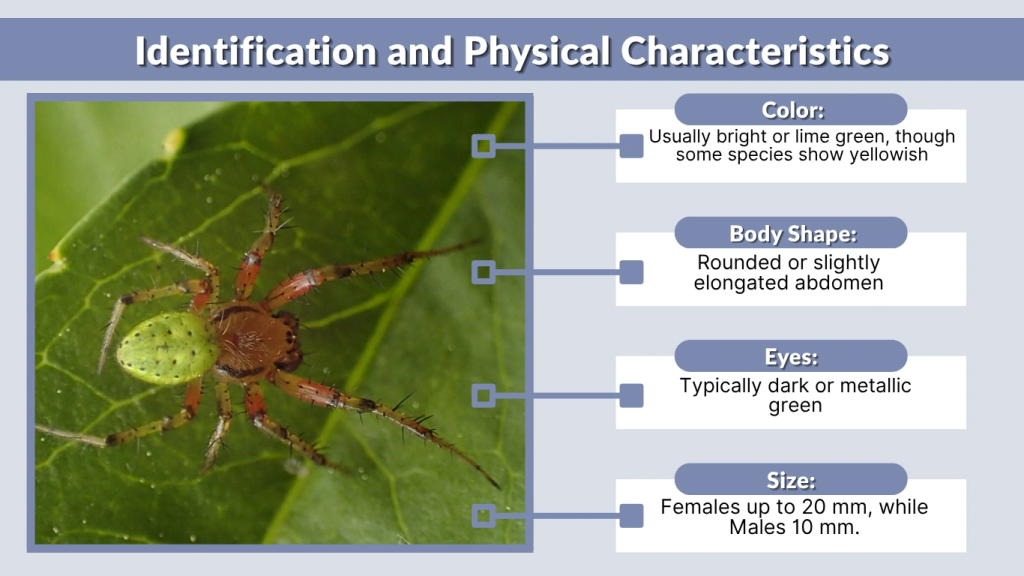
Gardeners often notice a flash of green among plants and wonder if it’s a new species or a dangerous invader. In reality, green garden spiders are calm, efficient hunters that use their appearance to remain hidden from both prey and predators.
Key Traits to Identify Green Garden Spiders:
- Color: Usually bright or lime green, though some species show yellowish or translucent tones.
- Body Shape: Rounded or slightly elongated abdomen with smooth texture.
- Legs: Long, fine, and often the same shade as the body for perfect camouflage.
- Markings: Small orange or white spots may appear near the spinnerets or along the sides.
- Eyes: Typically dark or metallic green, giving them a shimmering look in light.
- Size: Females can reach up to 20 mm, while males remain smaller at about 10 mm.
Their natural coloring helps them disappear among leaves, allowing them to ambush unsuspecting insects or build webs that blend seamlessly with the greenery.
Common Types of Green Garden Spiders
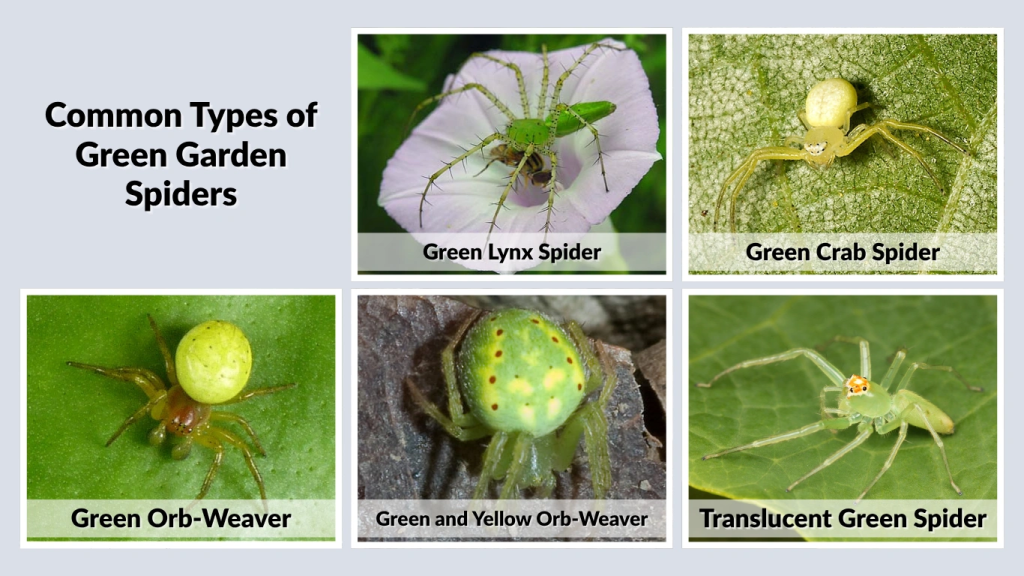
Not all green garden spiders belong to one species — the term includes several similar-looking types found around the world. Each differs slightly in shape, web design, and hunting behavior, but they all share the same vivid coloration.
1. Green Orb-Weaver (Araniella cucurbitina)
Common across Europe and the U.K., this tiny spider is bright green with a small orange or red spot near its spinnerets. It spins perfect circular webs between shrubs and fences and is most active from late spring to early autumn.
2. Green Lynx Spider (Peucetia viridans)
A large, agile species found mainly in the southern United States — particularly California, Texas, and Florida. The Green Lynx has long, translucent green legs with black spots and is known for its ability to leap toward prey instead of waiting passively in a web.
3. Green Crab Spider (Misumessus oblongus)
This small, flower-dwelling spider doesn’t spin webs to catch prey. Instead, it ambushes insects visiting blossoms, using its crab-like legs to hold and subdue them. Its pale green body and triangular shape allow it to blend seamlessly with petals and leaves.
4. Green and Yellow Orb-Weaver
A colorful relative of the common orb-weaver, this spider mixes shades of yellow and green across its abdomen. It is usually found in tropical or warm regions, including southern U.S. gardens and parts of Australia.
5. Pale or Translucent Green Spider
Some garden spiders appear almost see-through, especially just after molting. These are usually juvenile orb-weavers or crab spiders whose pigments have not yet darkened.
Each of these types plays a distinct ecological role but shares one important trait — they are non-aggressive and beneficial to gardens.
Habitat and Distribution
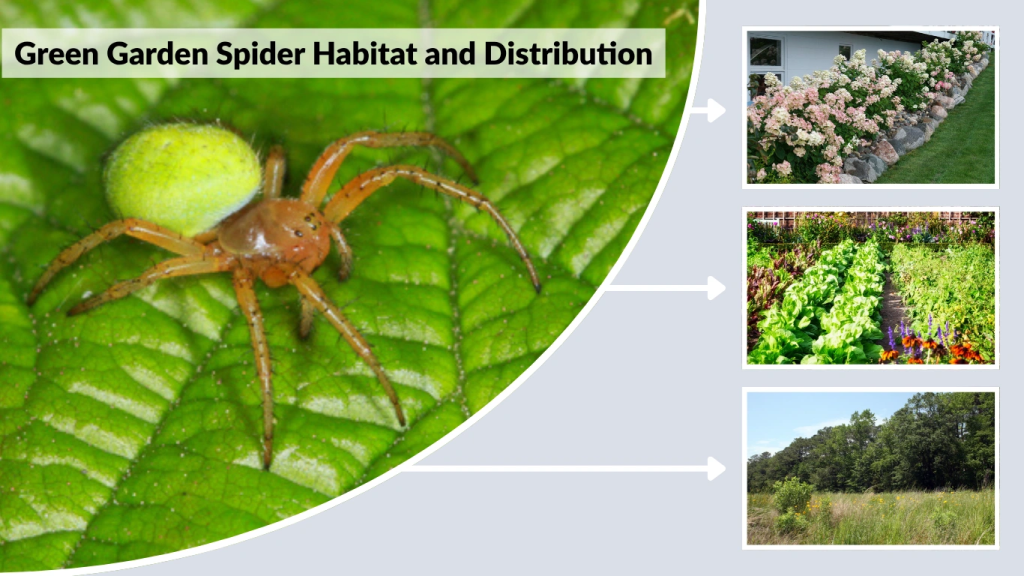
Green garden spiders thrive wherever vegetation is dense and insect activity is high. They are true companions of gardeners, quietly spinning webs that keep pest numbers low.
Typical habitats include:
- Flowerbeds, shrubs, and hedgerows
- Vegetable gardens and grassy lawns
- Forest edges and meadow plants
- Around porch lights, fences, or trellises
In the United States, green lynx spiders are most common in southern states such as California, Florida, Texas, and Georgia. They prefer sunny gardens and open meadows where insects are abundant. In the U.K. and Europe, smaller green orb-weavers dominate hedgerows and fences during late summer. Australia and South Africa host larger orb-weaving species, often seen near outdoor lights at dusk.
Because they rely on warm weather, these spiders are most visible from spring through early autumn and become less active once temperatures drop.
Behavior and Hunting Style
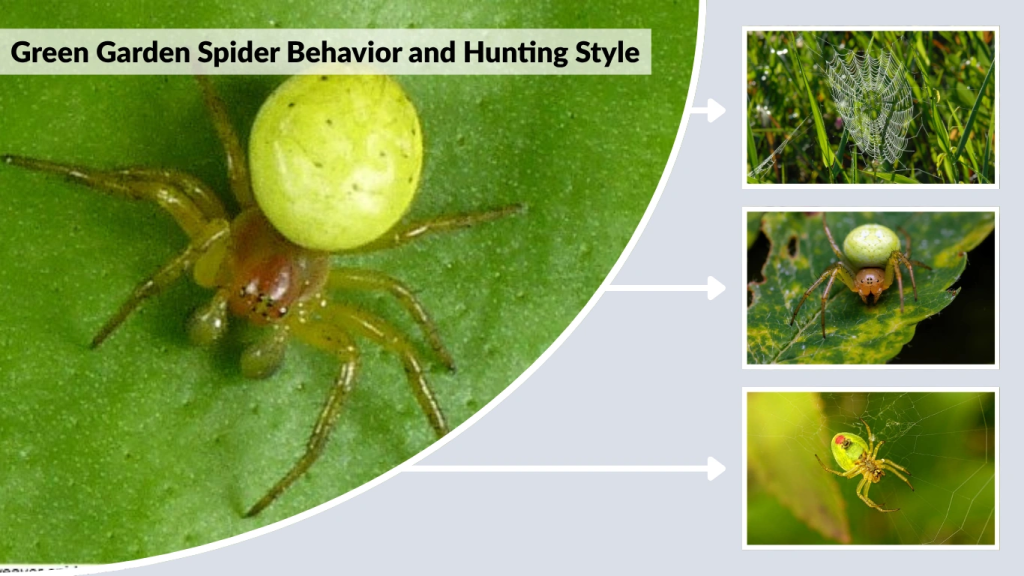
The green garden spider is both patient and strategic. It uses its color to remain invisible to prey and predators alike. Unlike more aggressive spiders, it relies on stillness and timing rather than speed or venom strength.
Hunting Habits:
- Web Builders: Many species, like the orb-weaver, spin intricate circular webs designed to trap flying insects such as flies, gnats, and mosquitoes.
- Ambushers: Crab and lynx spiders wait on flowers or leaves for prey to land within reach, striking with surprising speed.
- Daytime Activity: Some, like the Green Lynx, hunt under sunlight, while others remain hidden until dusk.
- Web Maintenance: Orb-weavers often rebuild their webs every evening, recycling silk by consuming older strands.
When prey becomes trapped, the spider swiftly immobilizes it with silk before delivering a venomous bite. The venom is mild and only effective on small insects, not humans.
Their calm nature makes them excellent garden residents. They rarely wander indoors, and if disturbed, they usually retreat rather than bite. Their presence indicates a healthy garden teeming with life.
Are Green Garden Spiders Poisonous?
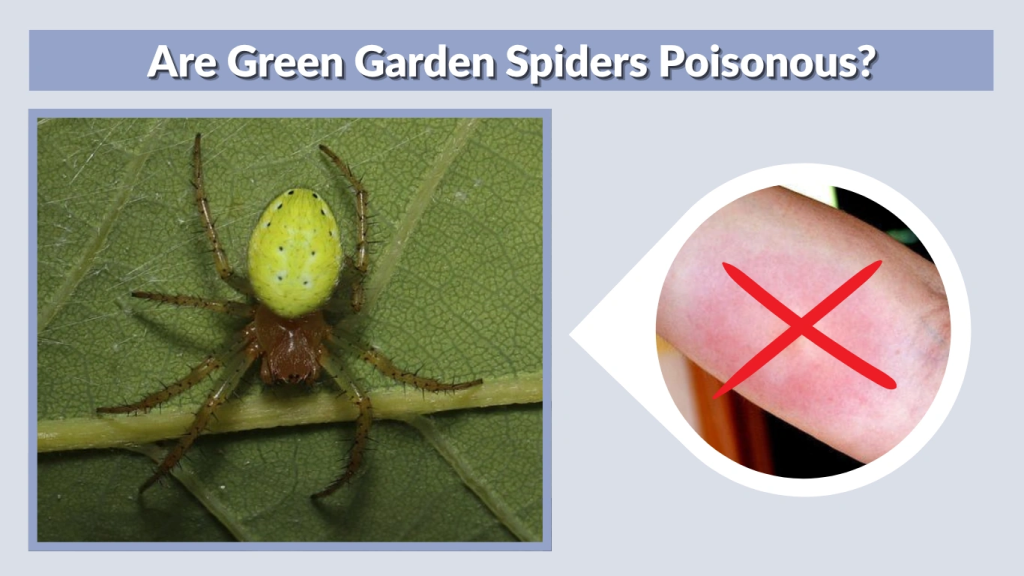
Despite their bright and sometimes intimidating appearance, green garden spiders are not poisonous to humans. Their venom is designed solely to paralyze insects. Bites are exceedingly rare and happen only when a spider is accidentally pressed against the skin.
Facts about their venom and safety:
- The venom is harmless to humans and pets.
- A bite may cause slight redness or mild itching but no serious reaction.
- They do not attack unless provoked or trapped.
- Their coloration serves primarily as camouflage, not as a warning sign.
For most gardeners, these spiders are helpful allies rather than threats. By keeping them undisturbed, you allow them to continue their natural pest-control duties.
Regional Sightings and Color Variations
Green garden spiders appear in many regions and climates, often showing subtle differences in color and behavior. Their adaptability helps them thrive in diverse environments — from warm, tropical zones to cooler temperate gardens.
a. United States (California, Texas, Florida, Ohio, Georgia)
In the U.S., the Green Lynx Spider is the most common species. It’s large, bright green, and often found on flowering plants. In California and Texas, these spiders are active throughout the summer, preying on insects that gather near garden lights. In Florida, they favor humid gardens and orchards. Meanwhile, Ohio and Georgia see smaller orb-weaver variants with yellow-green tones and delicate circular webs.
b. United Kingdom and Europe
Across the U.K. and much of Europe, the Green Orb-Weaver (Araniella cucurbitina) is frequently seen from May through September. This tiny spider is easy to spot once sunlight catches its lime-green body and the small red-orange dot near its abdomen’s tip. These spiders are non-aggressive and typically build their webs between bushes or across low branches.
c. Australia and South Africa
Australia hosts several vibrant green orb-weavers and lynx species that shimmer under the sun. They are especially active in the evening, often spinning large webs near outdoor lights to capture night-flying insects. In South Africa, bright green garden spiders appear during warm months, camouflaging themselves in garden plants while hunting.
Green Garden Spider vs. Other Color Morphs
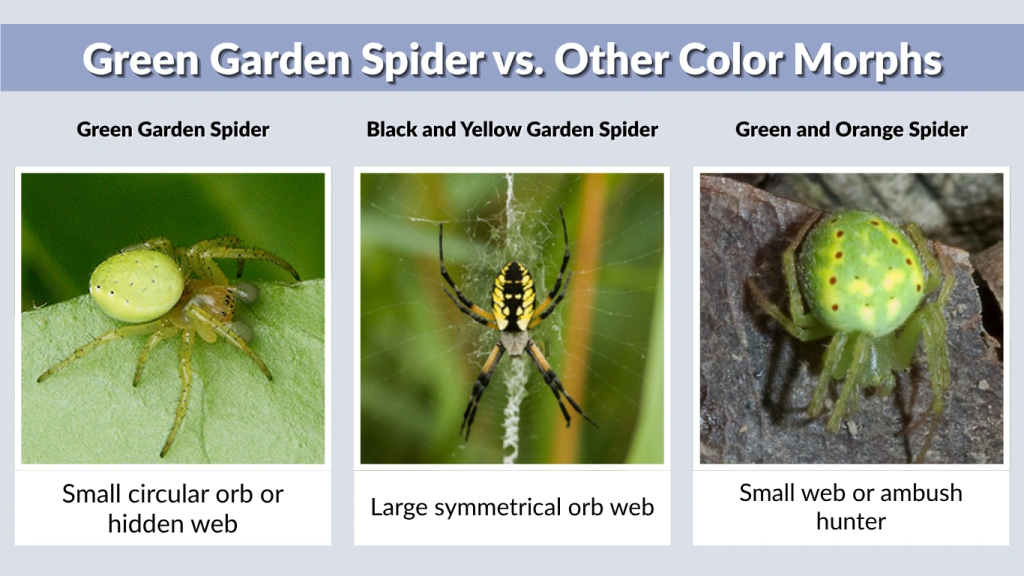
While the green garden spider is unique, it’s often confused with other colorful species found in similar habitats. Knowing how to tell them apart makes identification much easier.
| Feature | Green Garden Spider | Black and Yellow Garden Spider | Green and Orange Spider |
| Coloration | Solid or lime green body | Yellow stripes on black abdomen | Green with orange or red spots |
| Web Type | Small circular orb or hidden web | Large symmetrical orb web | Small web or ambush hunter |
| Behavior | Camouflaged and calm | Bold, visible, web-centered | Active during daylight |
| Regions | Global, especially temperate zones | North America and Europe | Warm tropical climates |
Each color morph is part of the garden’s natural balance, helping to control insects while displaying beautiful diversity in appearance.
Importance in the Garden Ecosystem
Green garden spiders are unsung heroes of natural pest control. They quietly maintain ecological balance without harming plants, pets, or humans.
Key benefits they offer include:
- Natural Pest Management: Consume large numbers of flies, moths, mosquitoes, and other nuisance insects.
- Pollinator Support: By removing predatory insects that harm bees and butterflies, they indirectly aid pollination.
- Reduced Chemical Use: Their presence allows gardeners to limit pesticide use, promoting a healthier environment.
- Food Chain Role: Serve as prey for birds and small reptiles, keeping biodiversity intact.
Allowing green garden spiders to live undisturbed ensures a more sustainable and thriving garden ecosystem.
Green Spider Mating and Life Cycle
Like other orb-weavers, green garden spiders have a fascinating and seasonal life cycle.
Typical stages include:
- Mating Season: Occurs in late summer. Males seek females through web vibrations and visual cues.
- Egg Sac Creation: Females spin protective egg sacs under leaves or within rolled grass blades. Each sac can contain hundreds of eggs.
- Hatching: Spiderlings emerge in spring and remain together briefly before dispersing by ballooning — floating through the air using silk threads.
- Growth and Molting: Juveniles molt several times as they grow, with color deepening to a vivid green after the final molt.
- Adulthood: Most adults live for one season, from late spring to early autumn.
This natural rhythm ensures that every summer brings a new generation of spiders to your garden.
Fascinating Facts About Green Garden Spiders
- Their green coloration comes from biliverdin, a natural pigment also found in the blood and bile of animals.
- The Green Lynx Spider can squirt venom from a short distance when threatened — a rare behavior among spiders.
- They can slightly alter their color depending on light and temperature, becoming paler in bright sunlight.
- Female orb-weavers are much larger and more colorful than males, who often appear pale or yellow-green.
- Some species glow faintly under ultraviolet light, making their webs and bodies shimmer at night.
These unique traits make them not only effective hunters but also fascinating examples of natural adaptation and beauty.
Interaction with Humans
Although their bright colors may alarm some people, green garden spiders are peaceful and beneficial creatures. They rarely wander indoors, preferring to stay hidden among plants.
If one does appear inside your home, you can safely relocate it using a glass and a piece of paper. Avoid squashing or spraying them, as they play an important role in managing insects naturally.
Gardeners should view them as allies rather than pests — their presence indicates a balanced, healthy environment where natural life thrives.
FAQs
Are green garden spiders dangerous to humans?
No. Green garden spiders are harmless and not poisonous to humans. Their venom is only strong enough to subdue small insects. If bitten — which is rare — it causes mild irritation or itching that fades quickly.
What is the bright green spider in my garden?
You’re likely seeing a Green Orb-Weaver or Green Lynx Spider. Both are harmless, active during warm months, and help control pests by catching flies, mosquitoes, and gnats in their webs.
Do green garden spiders bite?
They rarely bite and only in self-defense when trapped or handled. Their bite is mild and medically insignificant, causing no lasting effects. These spiders prefer to flee rather than fight.
Where are green garden spiders commonly found?
They live in gardens, bushes, grassy meadows, and forest edges. In the U.S., they’re found in states like California, Texas, and Florida. In the U.K., smaller green orb-weavers are widespread in hedges and shrubs.
Why do green garden spiders glow or appear transparent?
Their bodies contain light-reflective pigments that can make them appear to glow or shimmer in sunlight. Some species even fluoresce slightly under UV light, which helps them blend with foliage and confuse predators.