

California garden spiders are common arachnids found throughout the state, from lush northern gardens to warm southern backyards. These colorful web builders are known for their circular orb webs and striking markings. With species like the black and yellow garden spider, brown garden spider, and green orb weaver, they play a key role in pest control while adding a touch of mystery to California’s gardens.
Overview of California Garden Spiders
Garden spiders in California belong primarily to the Araneidae family, known as orb weavers. They thrive in sunny gardens, parks, and near vegetation where insect prey is abundant. These spiders build large, wheel-shaped webs that glisten with morning dew. Despite their intimidating size and vivid coloration, garden spiders are generally harmless and beneficial, feeding on flies, mosquitoes, and moths.
Identification and Appearance

Identifying a California garden spider is easy once you know what to look for. They usually have:
- A rounded abdomen with unique color bands.
- Long legs with dark stripes or bands.
- A silver, yellow, brown, or black body depending on the species.
Their circular webs, often stretching up to two feet wide, serve as their primary hunting tool. Males are smaller and less colorful, while females are larger and more vibrant.
Common Types of Garden Spiders in California

California hosts several types of garden spiders, each with distinctive patterns and behavior:
- Black and Yellow Garden Spider – Recognized by its bright yellow markings and zigzag web design.
- Brown Garden Spider – Usually seen in shaded areas; it has earthy tones for camouflage.
- Banded Garden Spider – Features bold horizontal bands across its abdomen.
- European Garden Spider – An introduced species with a signature cross pattern on its back.
- Green Garden Spider – Slender and vivid, often mistaken for a leaf.
- Silver Garden Spider – Known for its reflective abdomen that shimmers in sunlight.
Color Variations Explained
Garden spiders in California appear in many colors, from orange and red to white and yellow. These variations depend on species, age, and environmental conditions. For example, younger spiders often have lighter tones, while adults develop richer hues as they molt.
Photographs of these spiders commonly show their vivid bodies against contrasting greenery, making them easy to spot for those trying to identify them in their gardens.
Garden Orb Weaver Spiders
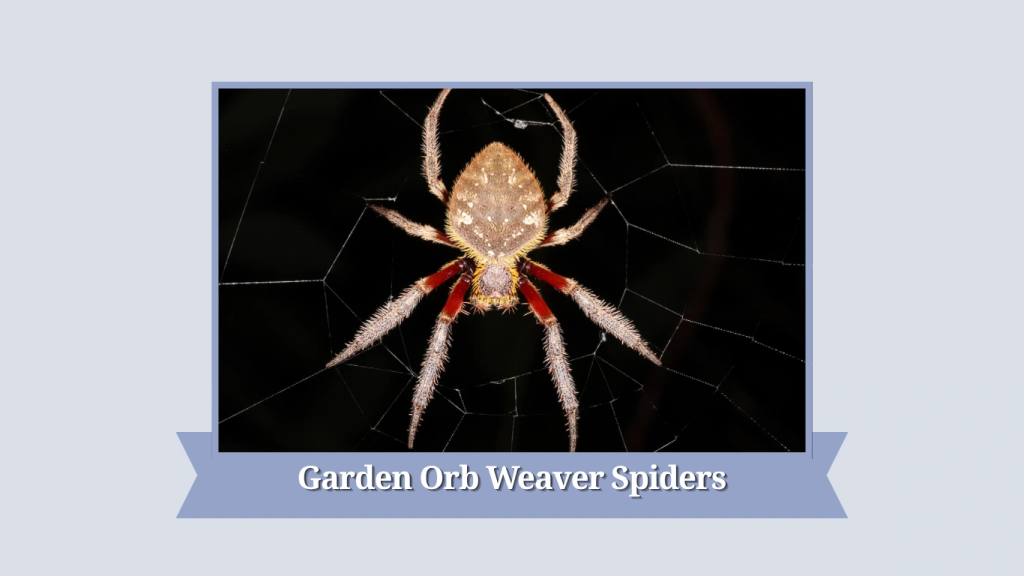
The garden orb weaver is the most widespread spider in California. It’s known for its large, symmetrical web and patient hunting technique. These spiders rebuild their webs nightly, consuming the old one each morning to recycle silk proteins.
Their presence indicates a healthy ecosystem since they help manage insect populations naturally, reducing the need for chemical pest control.
Male vs Female Garden Spiders in California
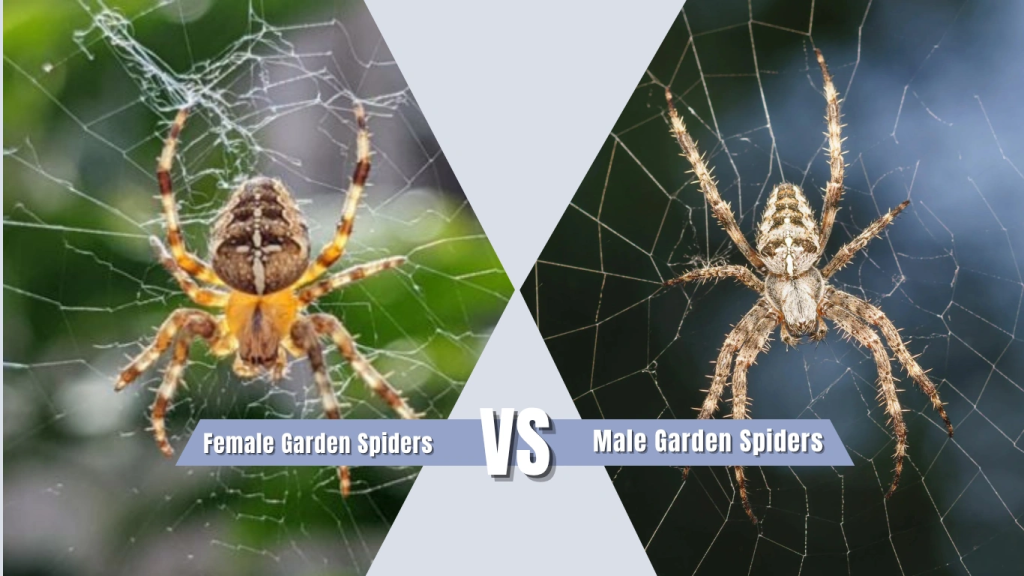
Female Garden Spiders
Females are larger, brightly colored, and the main web builders. They often remain in a single spot, repairing their webs daily.
Male Garden Spiders
Males are smaller and roam in search of mates. Once mating occurs, females may guard their egg sacs until winter.
This sexual dimorphism helps balance reproduction and territory defense within spider populations across California’s gardens.
Are California Garden Spiders Poisonous?
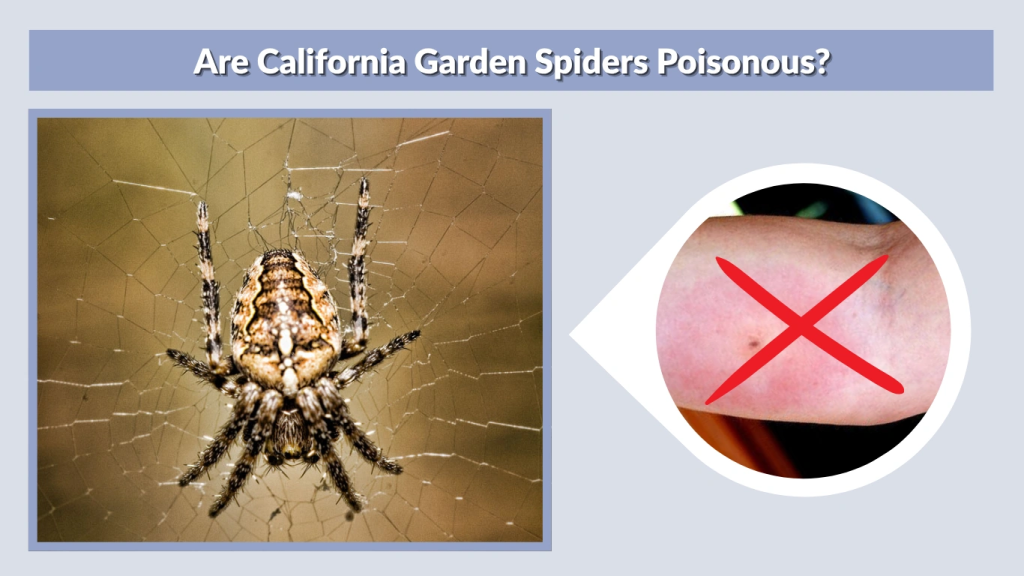
California garden spiders are not dangerous to humans. Their venom is mild and used only to paralyze small insects such as flies, beetles, and moths. A bite from these spiders rarely causes more than slight redness or irritation. Most cases occur only when the spider feels trapped or threatened. In short, these spiders are safe garden allies rather than pests.
California Garden Spider Bite Identification
A garden spider bite is easy to recognize but seldom serious.
- Symptoms: Mild pain, redness, slight swelling, or itchiness.
- Duration: Symptoms fade within a few hours or a day.
- Treatment: Wash with soap and water, apply ice, and avoid scratching.
Medical attention is rarely required unless allergic reactions appear, which is extremely uncommon with California garden spiders.
Size and Growth Stages
The size of a California garden spider depends on its species and gender.
- Adult females: 0.75 to 1 inch in body length, with a leg span up to 3 inches.
- Adult males: Around half that size.
These spiders grow through several molting stages before reaching adulthood, usually within one season. After mating in late summer, females lay egg sacs that hatch the following spring, continuing the cycle.
Habitat and Web Locations
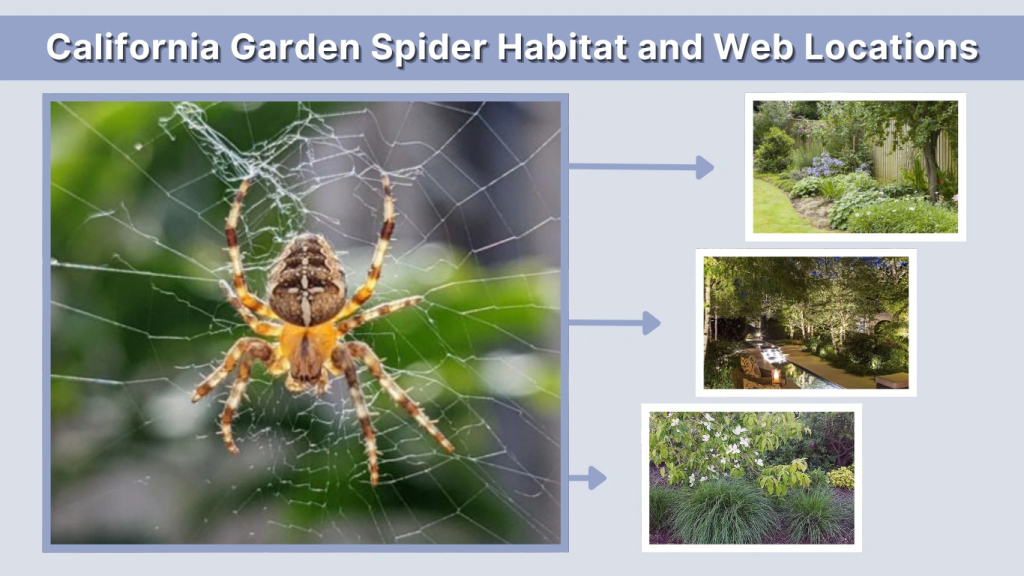
Garden spiders favor sunny, quiet areas where flying insects are common. Typical web locations include:
- Between garden plants or fences
- Near porch lights or trees
- Around tall grass or shrubs
In Southern California, species like the silver garden spider and banded orb weaver are more frequent due to the warmer climate. In Northern California, the European garden spider and brown orb weaver thrive in cooler, shaded environments.
Interesting Facts about California Garden Spiders
- They consume their old webs each morning to recycle silk.
- Their webs can stretch more than two feet across.
- They’re most active during late summer and early fall.
- These spiders are solitary and rarely seen in groups.
- Female spiders may produce hundreds of eggs before dying in winter.
Their presence indicates a balanced ecosystem where natural pest control thrives.
Photos and Visual Identification Guide
When observing garden spiders in California, pay attention to:
- Web shape: Perfectly circular with radial spokes.
- Body patterns: Crosses, stripes, or metallic spots.
- Color range: From bright yellow and green to muted brown or silver.
Photographs of the black and yellow garden spider or green orb weaver are especially popular among nature enthusiasts for their vivid contrast and web symmetry.
FAQs
What does a California garden spider look like?
California garden spiders have round abdomens with striped legs and bright colors such as yellow, brown, or black. They’re often spotted in gardens with large, circular webs shimmering in sunlight, making them easy to identify.
Are California garden spiders poisonous to humans?
No. Their venom is only harmful to insects and causes minimal reaction in humans. A bite might leave slight redness or itching, but they are not medically significant or aggressive by nature.
How large can a California garden spider grow?
Females grow up to an inch in body length with a leg span of around three inches. Males are smaller and more mobile, often moving around in search of mates rather than building permanent webs.
Where are garden spiders found in California?
They inhabit both northern and southern regions, thriving in gardens, fields, and backyards. They prefer calm, sunny areas where flying insects are abundant, especially during late summer and early autumn.
What should I do if bitten by a garden spider?
Clean the area with soap and water, apply a cold compress, and monitor for irritation. These bites heal quickly without medical care, but consult a doctor if severe pain, rash, or swelling develops.