
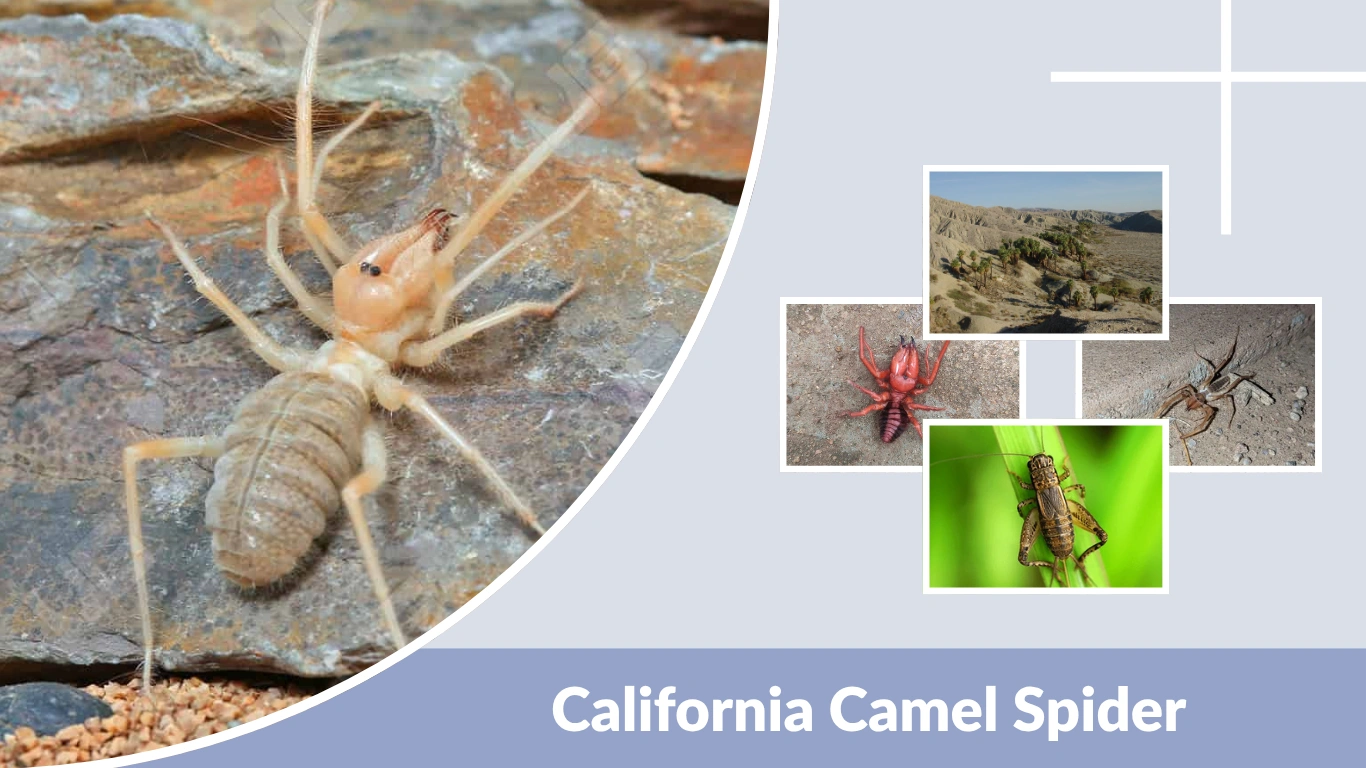
The California camel spider attracts both fascination and fear, yet most of what’s said about it is exaggerated or misunderstood. Although often mistaken for venomous predators, these desert-dwelling arachnids are harmless to humans. Found in both Southern and Northern California, camel spiders play a unique role in maintaining insect balance across arid landscapes.
What Is a Camel Spider?
Camel spiders belong to the order Solifugae, a group distinct from both spiders and scorpions. They are known for their fast movement, strong jaws, and nocturnal behavior. Despite their intimidating look, they neither spin webs nor produce venom. Their anatomy makes them excellent desert hunters, perfectly adapted to the California climate.
Camel Spider Appearance and Identification
List Section (1 of 3)
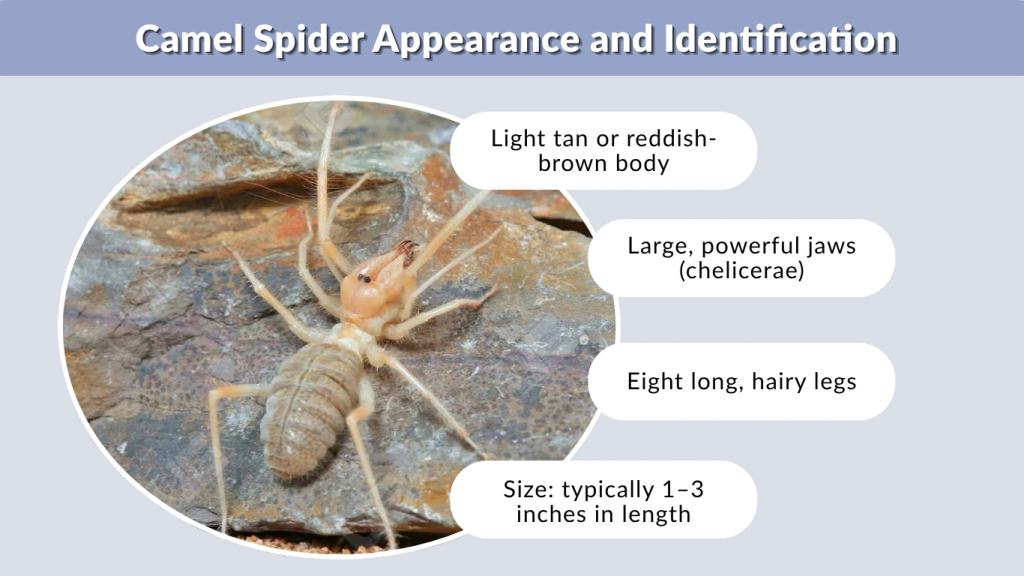
To identify a camel spider in California, look for these features:
- Light tan or reddish-brown body
- Large, powerful jaws (chelicerae)
- Eight long, hairy legs
- Distinct segmented abdomen
- Size: typically 1–3 inches in length
- No silk glands or venom sacs
Their appearance often leads people to mistake them for oversized spiders or small scorpions, though they belong to neither category.
Habitat and Range Across California
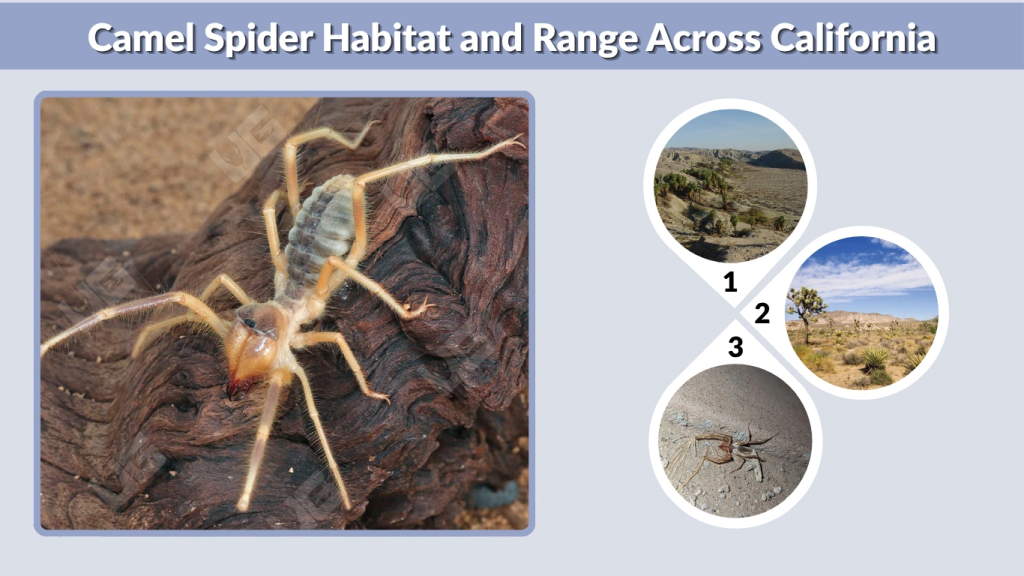
Camel spiders favor dry and sandy areas where they can hide during the day and hunt at night. They are most active during summer and early fall.
Common locations include:
- Southern California deserts such as Mojave and Coachella Valley
- Northern California dry regions with limited vegetation
- Alpine California zones, occasionally seen in warmer months
Their population density is higher in desert regions due to suitable temperatures and prey availability.
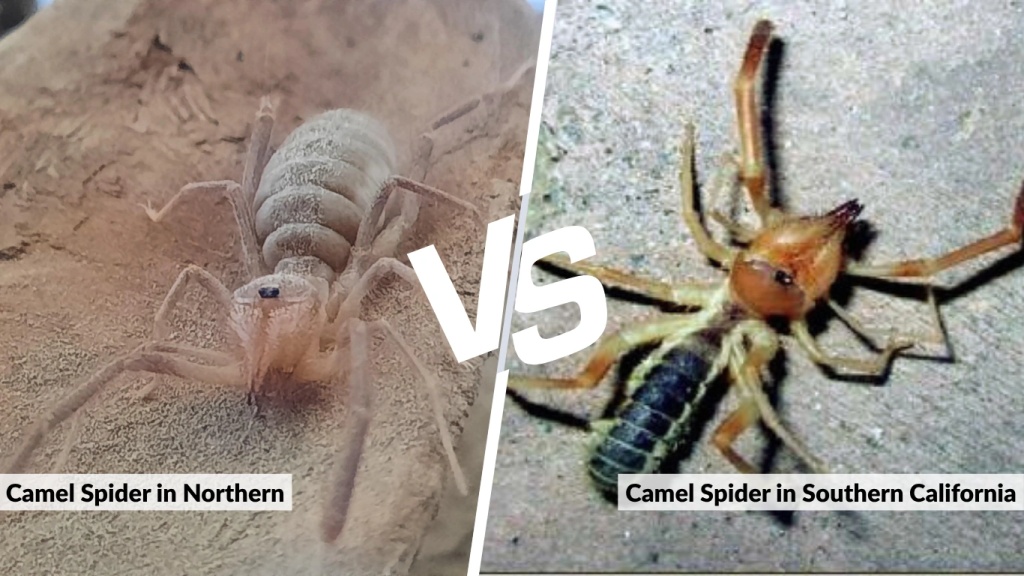
Camel Spider in Northern vs. Southern California
Northern California
In Northern California, camel spiders are rare but present in dry foothills and rocky terrains. Cooler temperatures limit their activity, and sightings usually happen in summer.
Southern California
In contrast, Southern California hosts larger populations, especially in desert and semi-arid suburban areas. These regions provide ideal hiding spots, such as under rocks, logs, and debris. Most sightings reported online come from counties like San Bernardino, Riverside, and Imperial.
Are Camel Spiders Dangerous or Poisonous?
Despite the myths, camel spiders are not venomous. They cannot inject poison, nor do they pose any major health risk. Their bite might feel like a mild pinch or bee sting if handled roughly, but it causes no lasting harm. Much of their terrifying reputation stems from viral myths and magnified photos circulated online.
Camel Spider Size in California
Camel spiders in California generally measure between 1 to 3 inches, depending on age and species. Adults in desert regions grow larger due to abundant prey and heat, while baby camel spiders remain under an inch long. Their extended legs and large jaws often make them appear bigger than they actually are.
Camel Spider Behavior and Diet
List Section (2 of 3)
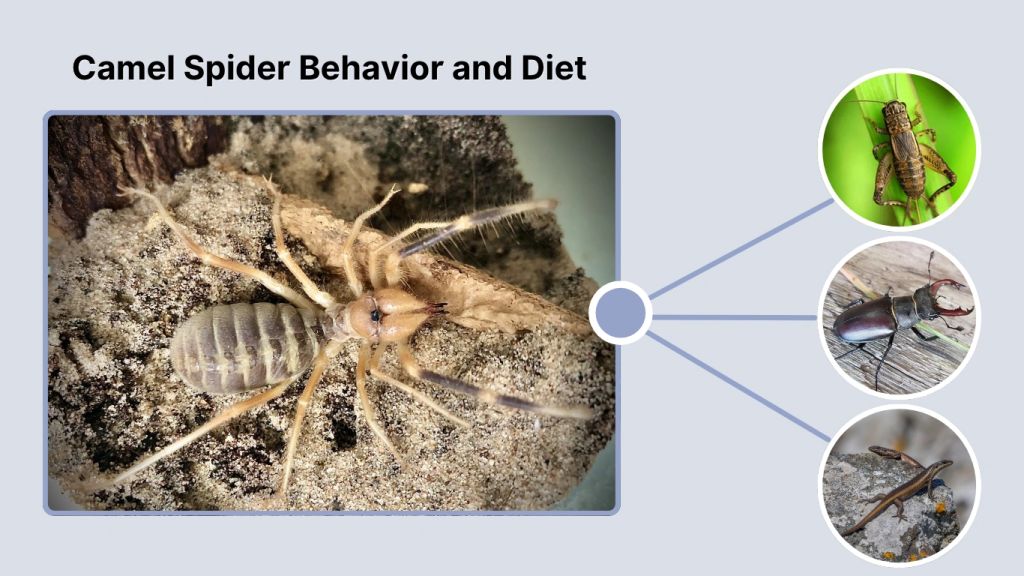
These nocturnal predators hunt swiftly, using their speed and agility to capture prey. They feed mainly on:
- Crickets, beetles, and small insects
- Occasionally small lizards or rodents
- Other arthropods when food is scarce
Camel spiders are solitary and prefer to avoid sunlight, hence their nickname “sun spiders.” Their behavior helps maintain ecological balance by controlling pest populations.
Camel Spider Bites in California
How Bites Happen
Camel spider bites are rare and typically occur when someone accidentally handles or traps them. These arachnids prefer to flee rather than fight but will bite defensively if cornered. Encounters usually happen at night in desert regions or occasionally inside homes near dry landscapes.
Symptoms
A camel spider bite causes mild pain, redness, or slight swelling. Since they have no venom, the reaction remains superficial. Cleaning the wound with soap and applying antiseptic is sufficient. Medical treatment is rarely required unless secondary infection occurs.
Camel Spider Colors and Types

List Section (3 of 3)
California camel spiders display color variations based on habitat and maturity:
- Red camel spiders – Found mostly in southern desert regions, blending with sandy terrain.
- Tan or beige types – Common across dry valleys and suburban edges.
- Small or pale young spiders – Appear almost translucent until fully grown.
These colors help them camouflage effectively, reducing predation and aiding in nighttime hunting.
Fascinating Facts (National Geographic–Style Insights)
Camel spiders have several unique traits that make them stand out in California’s desert ecosystem:
- They can run up to 10 miles per hour, making them among the fastest arachnids.
- They are not true spiders or scorpions, belonging to a separate order called Solifugae.
- Locally called wind scorpions or sun spiders.
- Thrive in arid climates but avoid direct sunlight by hiding under rocks or debris.
- Use their powerful jaws to crush prey instead of injecting venom.
Camel Spider Sightings and Reports in California
Recent reports have noted camel spider sightings in Chino, Alpine, and several Southern California deserts. Residents often mistake them for venomous species due to their intimidating look. However, experts confirm they are harmless and beneficial for pest control. In desert towns, spotting a camel spider is a sign of a healthy ecosystem, as they help manage insect populations naturally.
FAQs
Are camel spiders native to California?
Yes. Certain Solifugae species are native to California’s dry environments, particularly the Mojave and Colorado Deserts. They thrive in sandy soil and rocky terrains, where they hunt insects and small arthropods at night.
Are camel spiders in California dangerous to humans?
No, camel spiders are not dangerous. They lack venom glands and do not attack humans. Their bite only causes minor irritation. They actually benefit the environment by reducing harmful insect populations.
How big do camel spiders get in California?
Adults grow between 1 and 3 inches, though their long legs make them seem larger. Desert species tend to be bigger than those from cooler northern areas. Baby camel spiders are tiny and often translucent.
Where are camel spiders found in California?
They are mostly found in Southern California deserts—including Imperial, Riverside, and San Bernardino Counties. Northern California sightings occur occasionally in dry foothills or alpine zones during warmer months.
What should you do if you find a camel spider in your home?
Gently guide it into a container using paper and release it outside. Avoid harming it, as camel spiders are harmless and play an important ecological role by controlling pests around homes and gardens.