
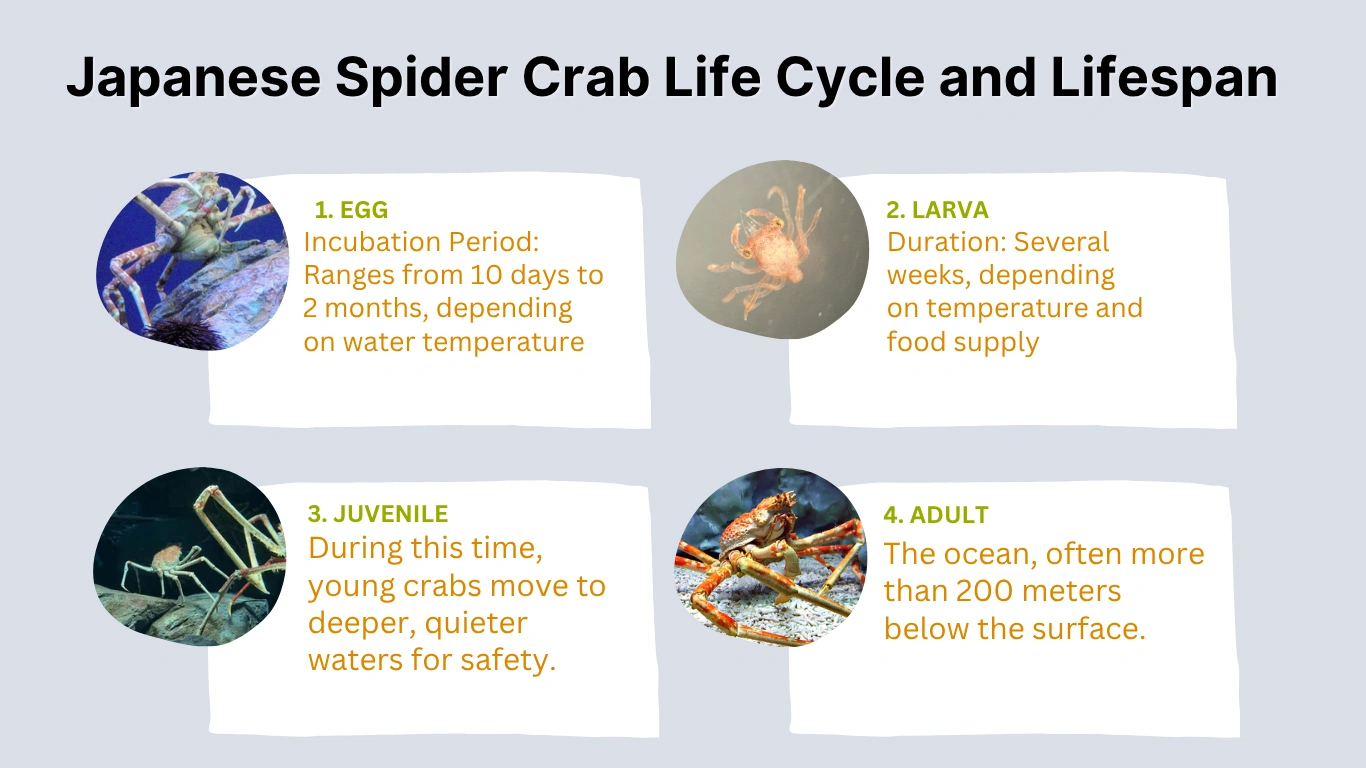
The Japanese Spider Crab (Macrocheira kaempferi) is the world’s largest crab species and a fascinating example of deep-sea adaptation. Found in the cold waters off Japan’s Pacific coast, it can live for over a century. From tiny, drifting larvae to massive, long-legged adults, every stage of its life reflects the ocean’s quiet power and mystery.
What Is the Japanese Spider Crab?
The Japanese Spider Crab belongs to the arthropod family, which includes crustaceans such as lobsters and shrimp. It’s most famous for its incredible leg span, which can stretch up to 12 feet, and its bright orange body with white-spotted limbs.
This crab lives in deep, cold waters, usually between 150 and 300 meters below the surface. Its long limbs and slow movements make it appear intimidating, yet it’s a harmless scavenger feeding mainly on decaying matter. Its calm behavior, combined with its enormous size, gives it an almost ancient presence among sea creatures.
Early Life: Egg Stage
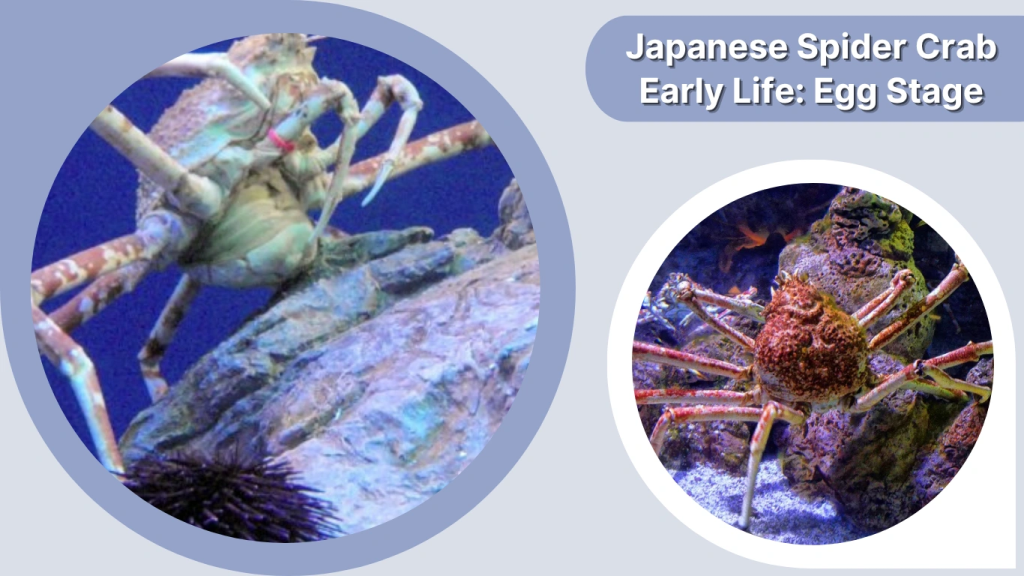
The life cycle of the Japanese Spider Crab begins when females carry fertilized eggs beneath their abdomen. During this period, the female carefully protects and aerates them using her abdominal limbs.
- Egg Quantity: Up to 1.5 million per breeding season
- Incubation Period: Ranges from 10 days to 2 months, depending on water temperature
- Protection Strategy: The female hides in deep, rocky areas to avoid predators
When the eggs hatch, microscopic larvae are released into the water, beginning the next phase of their life in open ocean currents.
Larval Stage and Development

Once hatched, the larvae enter their free-swimming phase, drifting near the ocean surface. At this stage, they are transparent, fragile, and resemble tiny floating dots.
They pass through multiple larval phases known as Zoea and Megalopa, each bringing new physical developments such as forming small limbs and a hard outer shell.
- Diet: Plankton and organic debris
- Duration: Several weeks, depending on temperature and food supply
- Vulnerability: Extremely high mortality due to strong currents and predators
When the larvae mature, they descend to the seafloor, marking a major shift in their growth and lifestyle.
Juvenile Stage
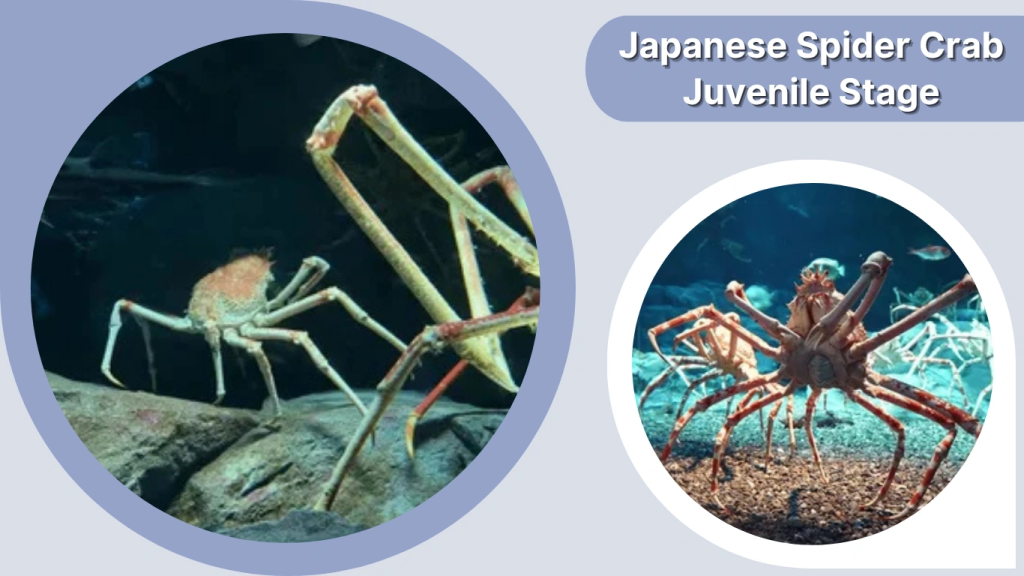
The juvenile stage is when the crab begins to look more like its adult form. After metamorphosis, its exoskeleton starts hardening, and its legs lengthen to give it mobility on the ocean floor.
During this time, young crabs move to deeper, quieter waters for safety. They start scavenging for small food sources like dead fish, shells, and algae. Growth at this stage depends on how frequently they molt. Frequent molting helps them outgrow their shells and build stronger, more resilient bodies.
Juvenile crabs remain in this stage for several years before reaching full size and sexual maturity.
Molting Process

Molting is one of the most vital parts of a Japanese Spider Crab’s growth and survival. Because their hard shells don’t stretch, crabs must shed their exoskeleton to expand.
Steps in the Molting Process:
- The crab’s body absorbs water, swelling to crack its old shell.
- It wriggles out, leaving behind the empty exoskeleton.
- The new shell is soft and pliable, allowing expansion.
- Over several hours, minerals harden the shell to full strength.
- Lost limbs or claws regenerate during this process.
Molting is most frequent in young crabs but slows down as they age. It’s a risky period because their soft shells make them vulnerable to predators. Yet, molting is essential for growth and even limb regeneration after injury.
Adult Stage
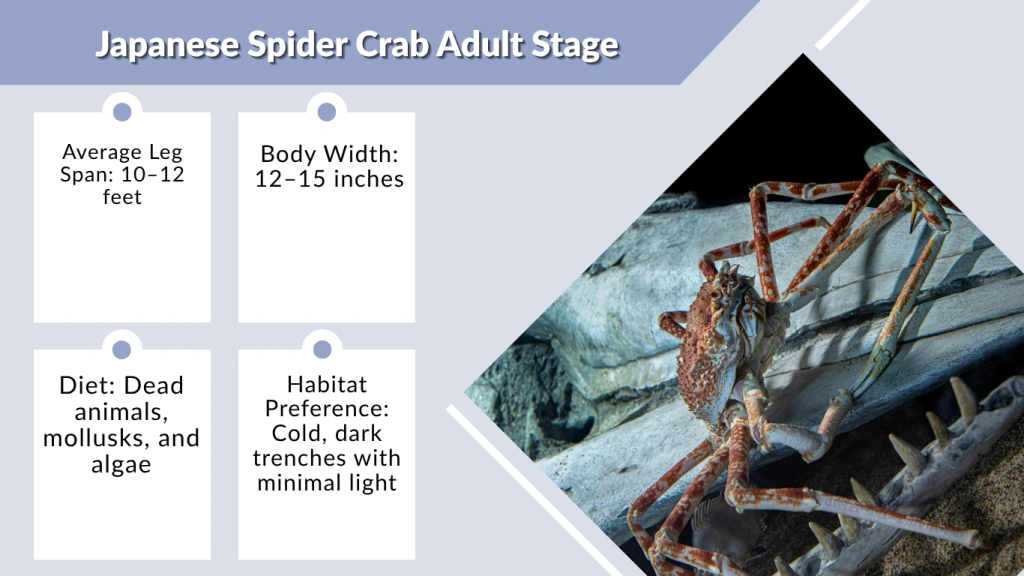
When they reach adulthood, Japanese Spider Crabs migrate to the colder and deeper parts of the ocean, often more than 200 meters below the surface. They are fully developed with tough exoskeletons, spindly legs, and sharp sensory abilities.
- Average Leg Span: 10–12 feet
- Body Width: 12–15 inches
- Diet: Dead animals, mollusks, and algae
- Habitat Preference: Cold, dark trenches with minimal light
Adults typically reproduce during the spring season, when water temperatures rise slightly. Their slow metabolism and low activity levels contribute to their incredible lifespan — some living up to a full century in the right conditions.
Reproduction and Mating
The reproduction process of the Japanese Spider Crab is a carefully timed event tied to the crab’s molting cycle. Mating usually takes place shortly after the female sheds her shell, as her new exoskeleton remains soft and flexible.
During this time, males use their claws to gently grasp the female, guarding her from other males until the shell hardens. Fertilization occurs internally, and the female later carries fertilized eggs beneath her abdomen for several weeks. Once hatched, the larvae float to the surface, beginning the life cycle once more.
This cycle typically occurs once a year, usually in spring, when water temperatures become slightly warmer, encouraging reproduction and larval development.
Lifespan of the Japanese Spider Crab
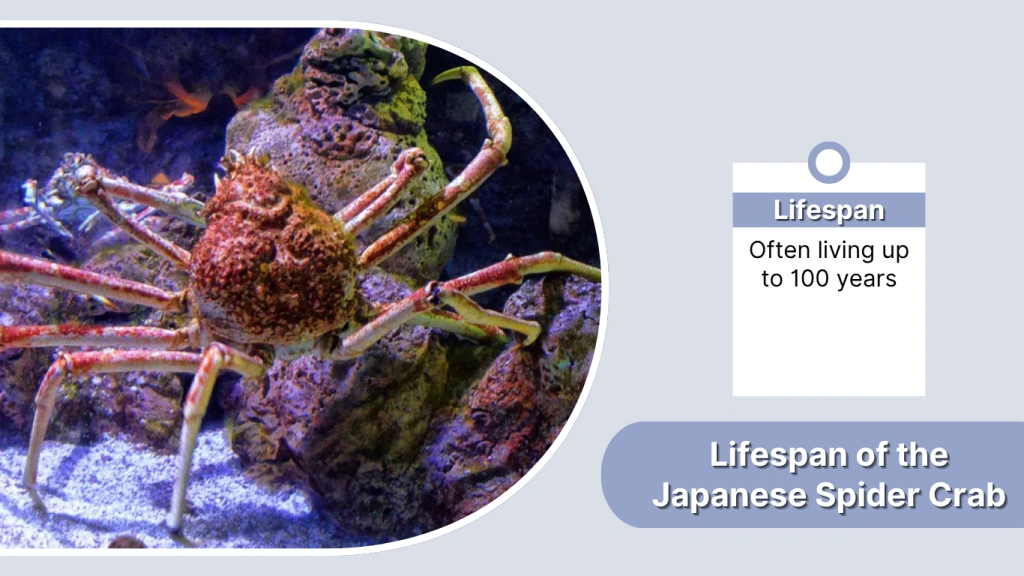
The Japanese Spider Crab is known for its remarkable lifespan, often living up to 100 years. This longevity is rare among crustaceans and is attributed to their slow metabolism and deep-sea lifestyle, where fewer predators exist.
Several key factors influence their extended lifespan:
- Cold Environment: The deep ocean keeps their metabolic rate low.
- Diet: A scavenger diet filled with minerals and proteins supports long-term health.
- Predator Avoidance: Living in dark, deep waters reduces natural threats.
- Molting Control: As they age, molting slows, conserving energy for survival.
These elements combine to make them one of the oldest-living arthropods in the marine world, symbolizing both endurance and resilience.
Environmental Challenges
Despite their longevity, Japanese Spider Crabs face multiple challenges in modern oceans. Their deep habitats are vulnerable to environmental disruptions and human activity.
Major Threats Include:
- Overfishing: Especially during breeding seasons when crabs move closer to shallower waters.
- Habitat Degradation: Pollution and ocean acidification affect larval growth.
- Temperature Changes: Rising sea temperatures alter breeding patterns.
- Predation: Octopuses remain one of their primary natural enemies.
Conservation groups and aquariums in Japan are now studying sustainable ways to maintain their population through breeding programs and seasonal fishing bans.
Fun Facts About Their Life Cycle
The Japanese Spider Crab is a creature full of surprises, often described as a living relic of the deep.
- They begin life as tiny larvae, no bigger than a grain of rice.
- Despite their terrifying appearance, they are completely harmless to humans.
- They are capable of regenerating limbs lost during battles or molting.
- The Japanese name Takaashigani translates to “long-legged crab.”
- Their molting shells are sometimes mistaken for sea monsters by fishermen!
Each stage of their life cycle is a story of transformation, adaptation, and survival in the silent depths of the ocean.
FAQs
How long can a Japanese Spider Crab live?
A Japanese Spider Crab can live up to 100 years in its natural environment. Its deep-sea habitat, cold temperatures, and slow metabolism contribute to its impressive longevity, making it one of the longest-living arthropods known to science.
How do Japanese Spider Crabs reproduce?
Males and females mate after the female molts her shell. The male fertilizes the eggs, which the female then carries under her abdomen. Once hatched, the larvae drift in ocean currents before settling on the seafloor to grow into juveniles.
What happens when a Japanese Spider Crab molts?
During molting, the crab sheds its hard outer shell to grow. The new shell underneath is soft for several hours, leaving the crab vulnerable to predators. Molting also allows them to regrow lost limbs and maintain healthy growth throughout life.
At what age do Japanese Spider Crabs mature?
They typically reach sexual maturity around 10 years old, depending on food supply and environmental conditions. Once mature, they reproduce annually, contributing to the ongoing life cycle of the species in Japan’s deep-sea habitats.
Why do Japanese Spider Crabs live so long?
Their extreme environment plays a big role. The cold, low-oxygen deep-sea conditions slow their metabolic processes, reducing cellular damage. Combined with a scavenger diet and limited predators, these crabs can thrive for nearly a century.