
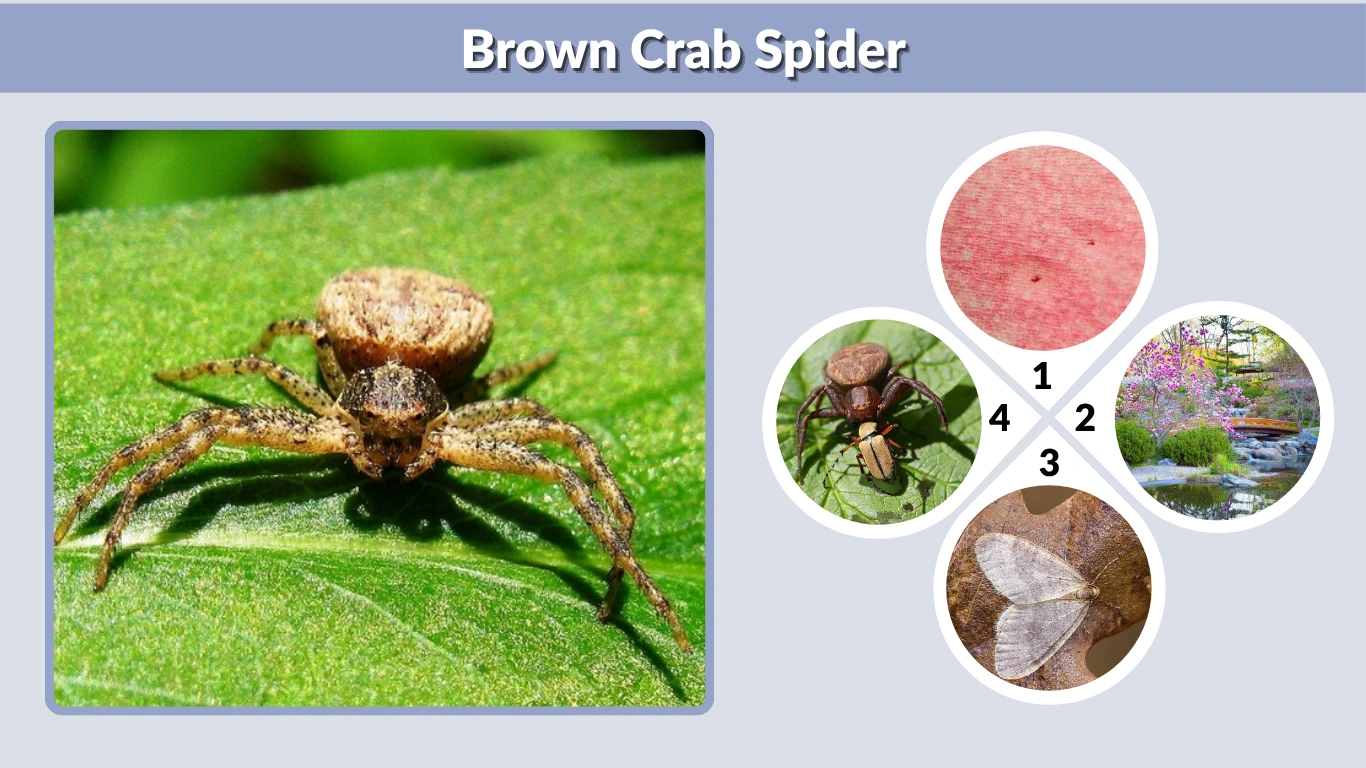
The Brown Crab Spider is a small but fascinating arachnid recognized for its crab-like stance and earthy coloration. Found across North America and Europe, it blends perfectly into natural surroundings like bark, soil, and leaf litter. Its sideways walking motion and flattened body often cause confusion with other spiders, particularly the brown recluse, though the brown crab spider is completely harmless to humans.
Identification and Appearance
Physical Description
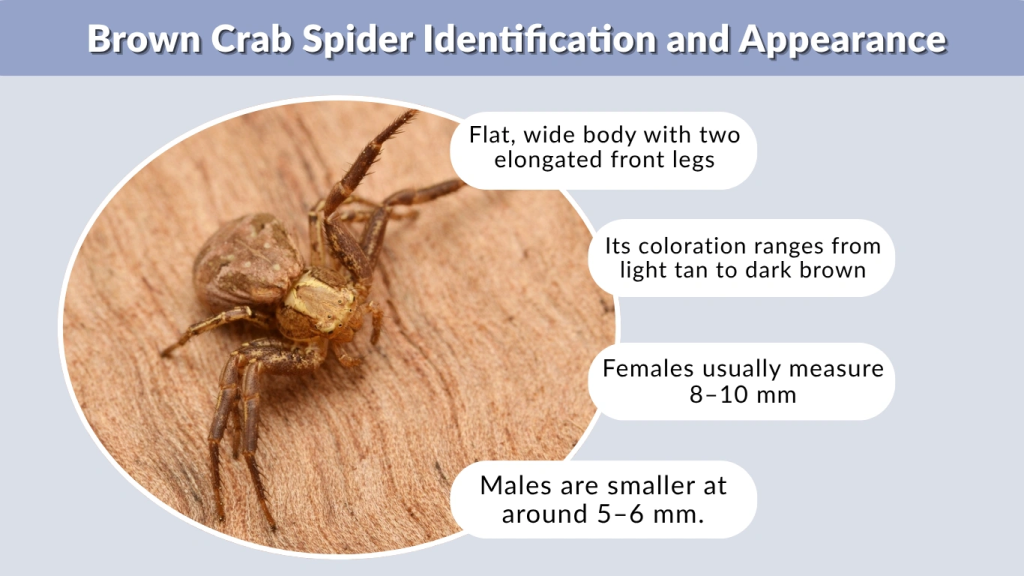
The brown crab spider has a flat, wide body with two elongated front legs that resemble a crab’s claws. Its coloration ranges from light tan to dark brown, sometimes with a reddish tint or patterned abdomen. Females usually measure 8–10 mm, while males are smaller at around 5–6 mm. This variation helps them camouflage effectively in different environments like wood, dry grass, or bark.
Their small, compact shape allows them to move easily across uneven surfaces. When disturbed, they freeze or retreat sideways rather than running forward — a behavior typical of crab spiders from the Thomisidae family.
Common Variants
- Brown Running Crab Spider (Philodromus spp.) – Fast ground-dwelling species often mistaken for small crabs.
- Goldenrod Crab Spider (Brown Morph) – Females can appear brownish when camouflaging on darker flowers.
- Brown Ground Crab Spider – Prefers forest floors and garden soil.
- Reddish-Brown Crab Spider – Found in leaf litter or tree bark, often confused with small beetles.
Their ability to vary in shade — from pale beige to chocolate brown — gives them remarkable camouflage in both rural and urban environments.
Habitat and Range
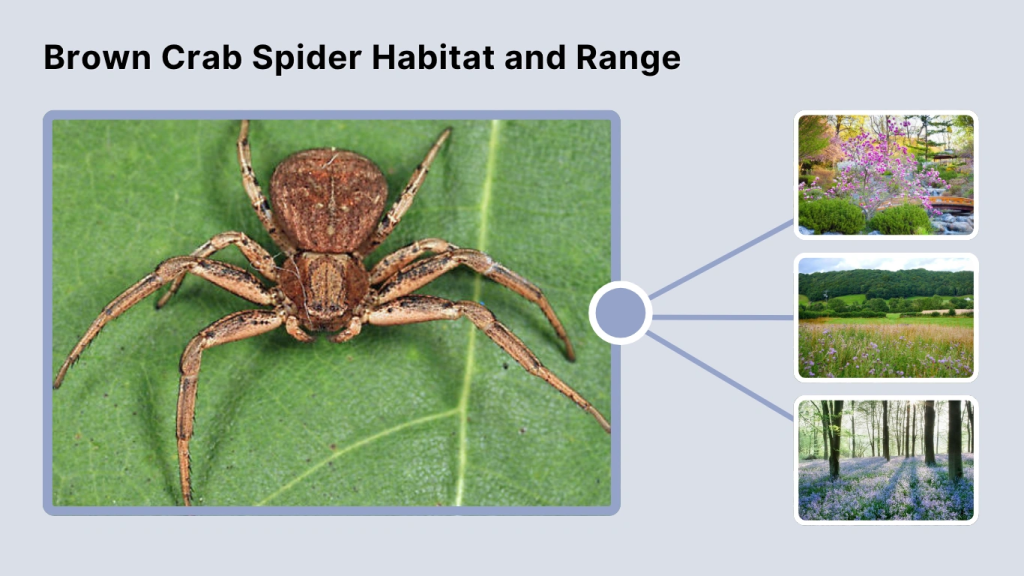
The Brown Crab Spider is highly adaptable and thrives in temperate and subtropical regions. They are found in gardens, fields, woodlands, and even inside homes near windows or walls where insects gather.
Where They Live
These spiders are particularly common in Texas, Oklahoma, Ohio, and California, though they also appear in parts of Europe and the UK. They prefer dry, sunny habitats like:
- Flowering gardens
- Tree bark and fence posts
- Rocks and forest litter
- Shrubs and low vegetation
Because they rely on stealth and color rather than webs, they select locations where their brown hue matches the background. In Texas, they are especially noticeable during spring and summer when insect activity peaks.
Behavior and Diet
Hunting Style
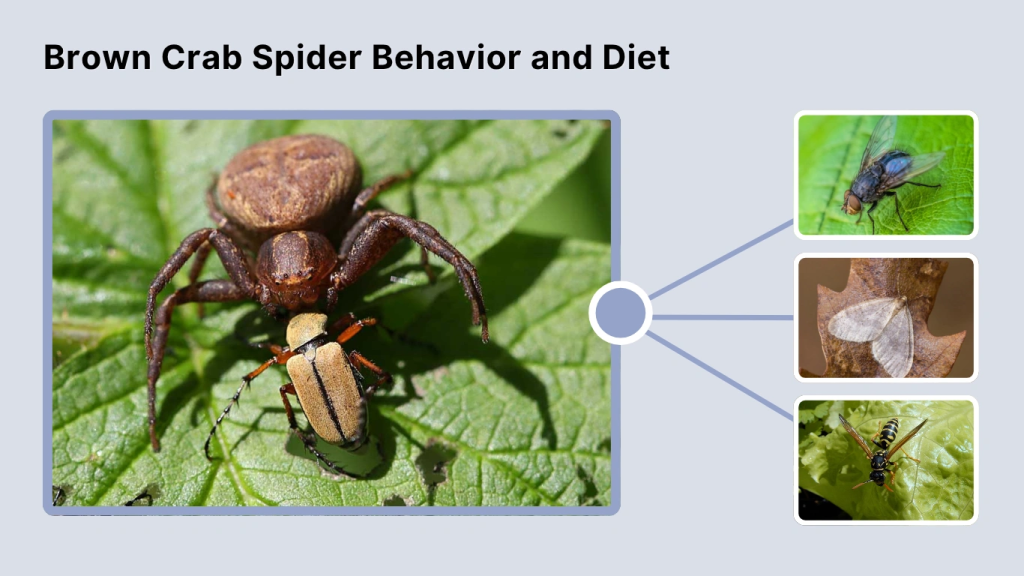
Unlike web-building spiders, the brown crab spider is an ambush predator. It waits patiently on leaves or wood surfaces until unsuspecting prey—like a fly or small bee—comes close. Then, with lightning speed, it grabs the insect using its powerful front legs and injects venom to immobilize it.
Diet
Their diet mainly includes:
- Flies and mosquitoes
- Small beetles and moths
- Pollinating insects like bees and wasps
Their hunting strategy makes them beneficial to gardens, as they help control pests naturally. They do not harm plants and rarely interfere with human activity.
Movement and Camouflage
The spider’s sideways motion helps it blend in with bark grooves and rough textures. When still, its coloring and posture make it nearly invisible to both predators and prey. Some species can even slightly alter their shade over time to match the surface they inhabit.
Venom and Bite Information
Are Brown Crab Spiders Poisonous?
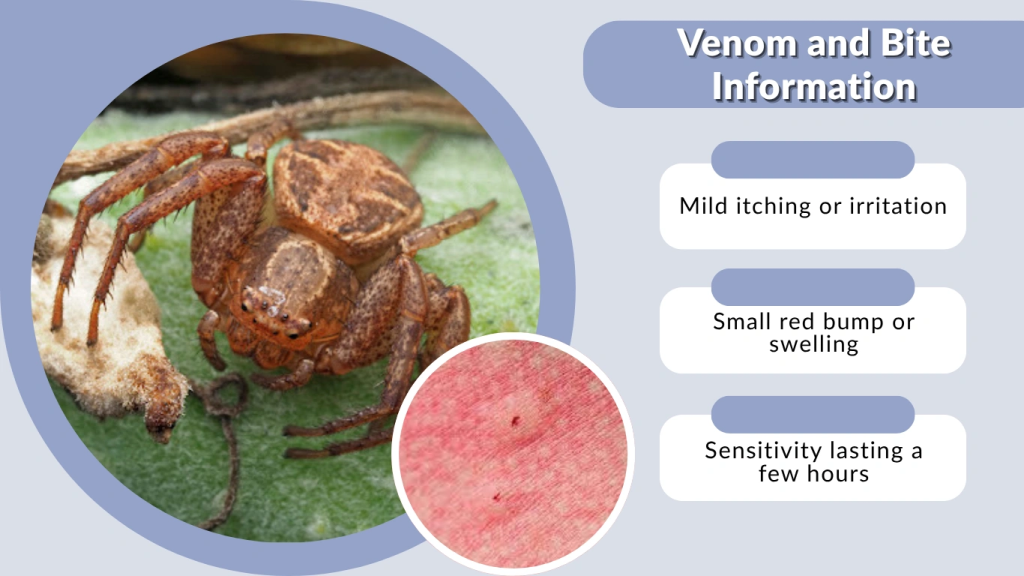
Brown crab spiders possess venom to paralyze small insects, but it is harmless to humans. Their fangs are tiny and rarely penetrate human skin. Even if they do bite—which is uncommon—the reaction is mild and short-lived.
Bite Symptoms
If bitten accidentally, symptoms may include:
- Mild itching or irritation
- Small red bump or swelling
- Sensitivity lasting a few hours
Treatment is simple: clean the bite with soap and water, apply an ice pack, and use a mild antiseptic cream. Unlike the brown recluse, which causes tissue damage, the brown crab spider’s venom is non-toxic to humans.
Brown Crab Spider vs. Brown Recluse
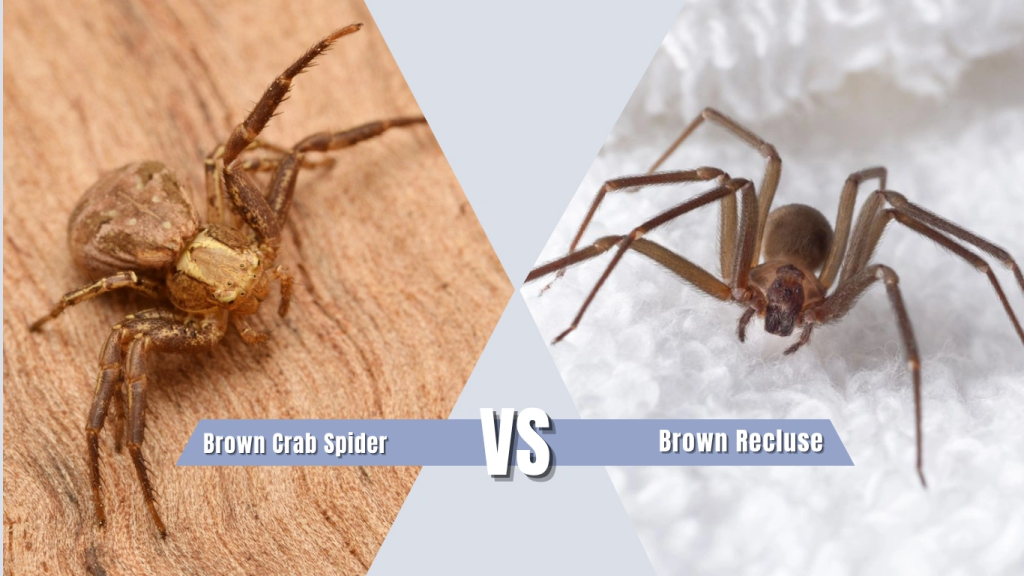
Because of their similar coloration and body size, the brown crab spider is often mistaken for the brown recluse. However, these two species are very different in anatomy, behavior, and risk level. Recognizing the distinctions is important for safety and identification.
| Feature | Brown Crab Spider | Brown Recluse Spider |
| Body Shape | Flat, round body with long front legs | Narrow body with a distinct “violin” marking |
| Movement | Walks sideways like a crab | Walks forward normally |
| Habitat | Gardens, shrubs, fences, flower beds | Dark indoor areas like basements and closets |
| Venom | Mild, harmless to humans | Necrotic, can cause skin ulcers |
| Webs | Does not spin capture webs | Spins irregular webs for shelter |
| Aggression | Non-aggressive, shy | Avoids humans but can bite when trapped |
The brown crab spider is a peaceful garden predator that benefits the ecosystem, while the brown recluse is a house-dwelling spider with medically significant venom. Identifying features—like sideways walking and the absence of a violin marking—can quickly distinguish the two.
Interesting Facts
- Excellent Camouflage: The brown crab spider can match shades of bark, wood, or soil, making it nearly invisible to both prey and predators.
- Ambush Specialist: It uses stealth instead of webs, relying on quick reflexes and strong front legs to seize prey.
- Maternal Care: Females spin small silk sacs to protect their eggs and guard them until hatching.
- Temperature Resilience: These spiders tolerate both hot Texas summers and cooler northern climates.
- Harmless Nature: Despite their name and resemblance to dangerous species, they are non-aggressive and beneficial to the environment.
- Tiny Architects: They may spin small silk retreats to rest in, though they don’t use webs for trapping food.
FAQs
Are brown crab spiders dangerous to humans?
No. Brown crab spiders are completely harmless. Their venom is only strong enough to subdue insects. Human bites are very rare and cause only mild redness or swelling that disappears within hours.
Where are brown crab spiders found in the United States?
They are widespread across Texas, Oklahoma, Ohio, Michigan, and California, living in gardens, forests, and fences. They can also be found in parts of Europe and the UK, thriving in dry, warm climates.
What do brown crab spiders eat?
They feed on flies, moths, beetles, and small bees. By controlling insect populations, they serve as natural pest managers in gardens and agricultural areas.
How can you tell a brown crab spider from a brown recluse?
The brown crab spider moves sideways and has a flattened body, while the recluse walks normally and has a violin-shaped mark on its back. The crab spider is harmless; the recluse’s venom can cause serious wounds.
Do brown crab spiders spin webs?
No. They don’t build webs to catch prey. Instead, they create small silk shelters for protection or egg-laying, relying on ambush tactics to capture food.