
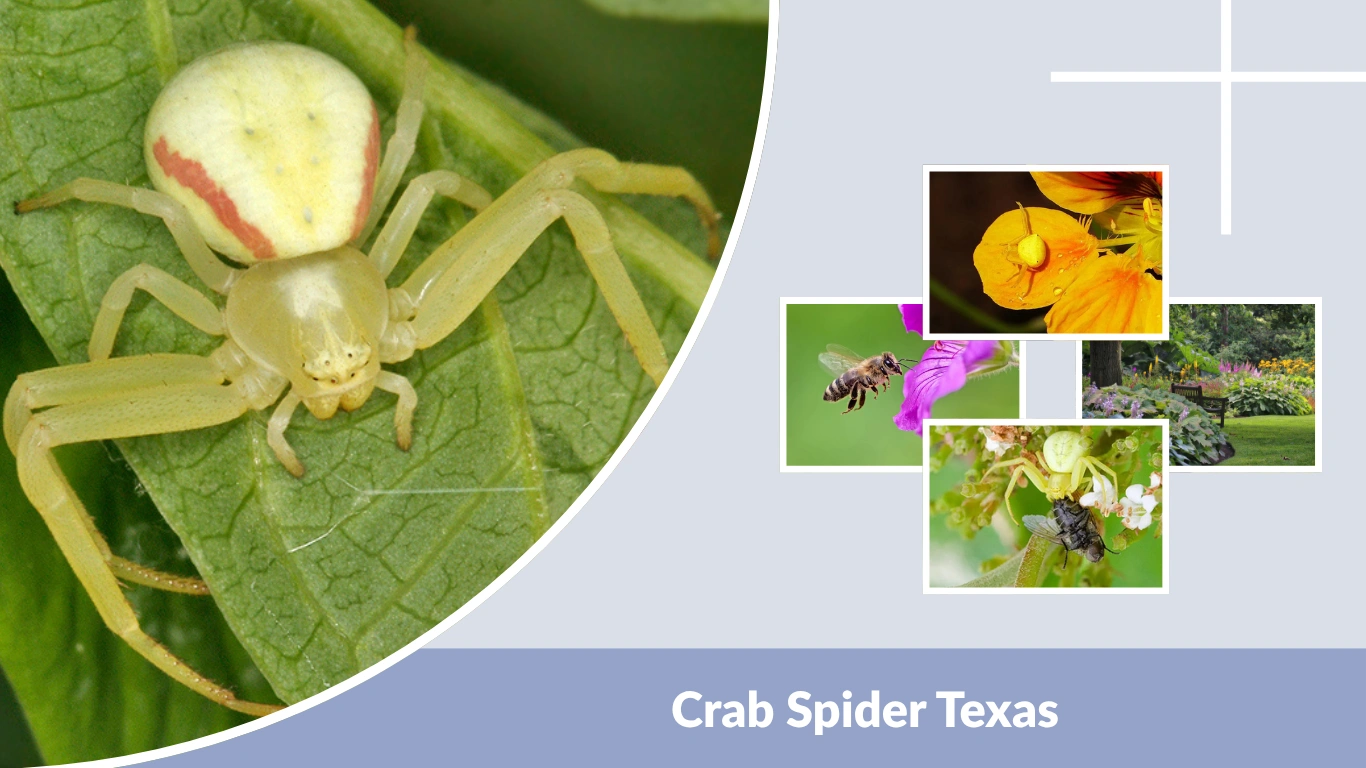
The Crab Spider in Texas is a fascinating member of the spider world, admired for its crab-like stance and sideways motion. Found across the state—from East Texas woodlands to South Texas grasslands—these spiders display an impressive range of colors and adaptations. Despite their bold appearance and sometimes vivid hues, crab spiders are harmless to humans and play a crucial role in maintaining nature’s balance by controlling insect populations.
Identification and Appearance
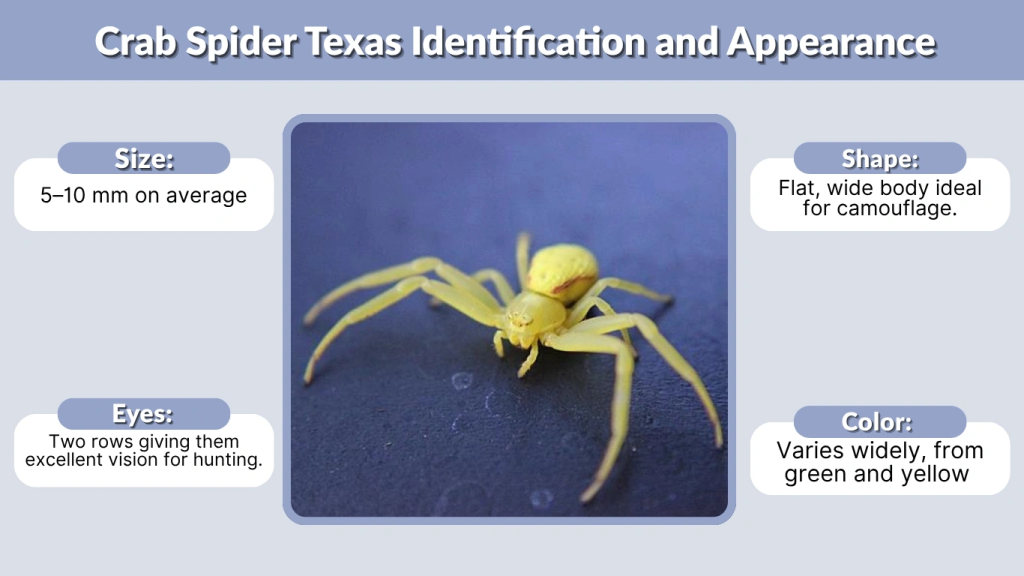
Distinct Features
Crab spiders get their name from their crab-like movement and body shape. Their two front pairs of legs are longer and extend outward, resembling crab claws. These agile predators move sideways or backward rather than forward.
- Size: 5–10 mm on average, though some ground species are larger.
- Shape: Flat, wide body ideal for camouflage.
- Eyes: Two rows giving them excellent vision for hunting.
- Color: Varies widely, from green and yellow to red, orange, white, and brown.
Females are typically larger and more robust than males, allowing them to overpower bigger prey. Their compact bodies help them remain hidden on flower petals, bark, or soil surfaces.
Color Variations in Texas
Texas is home to some of the most colorful crab spider species in North America. Their color often depends on the environment and the flowers they inhabit:
- Green Crab Spider – Blends perfectly with leaves and garden vegetation.
- White Crab Spider – Common on white or pale flowers such as daisies.
- Yellow Crab Spider – Ambushes prey on yellow blooms, blending seamlessly.
- Brown Crab Spider – Found on bark, mulch, and soil; masters of camouflage.
- Red or Orange Crab Spider – Found on wildflowers, especially in Central and South Texas.
- Black and White Crab Spider – Rarer, found mostly in East Texas fields.
These colors help them ambush insects effectively, turning them into living camouflage experts.
Species Found in Texas
Common Land Crab Spiders
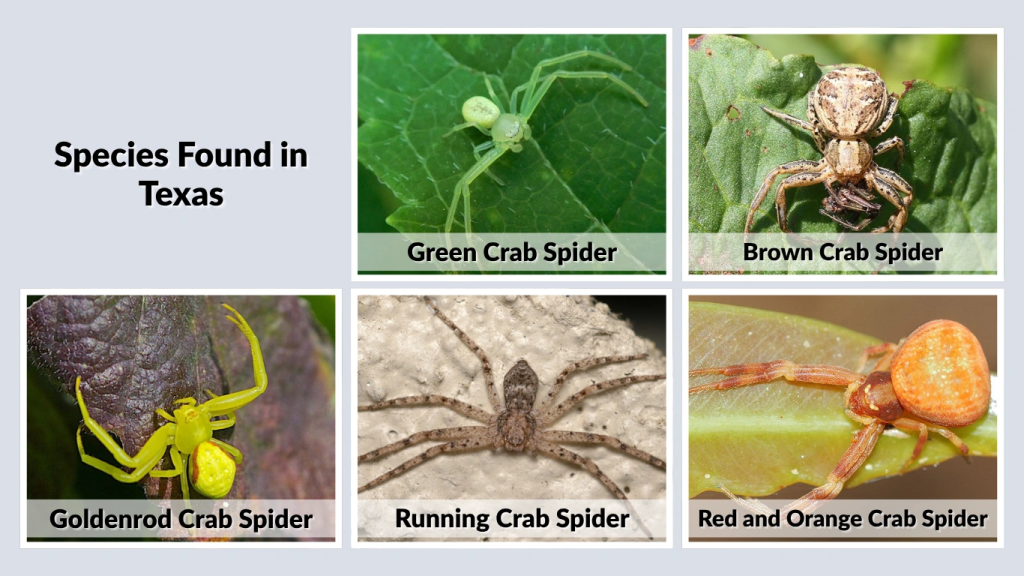
Texas hosts a wide variety of Thomisidae family crab spiders:
- Goldenrod Crab Spider (Misumena vatia) – White or yellow, often seen on flowers; can change color slowly to match surroundings.
- Green Crab Spider (Misumessus oblongus) – Bright lime green and found in gardens and forests.
- Brown Crab Spider (Xysticus spp.) – Ground-dwelling species that hide under leaves or bark.
- Running Crab Spider (Philodromus spp.) – Fast and agile, lives on tree trunks and fences.
- Red and Orange Crab Spider – Vibrant species found in southern Texas, known for hunting around wildflower patches.
All of these spiders are small, non-aggressive, and rely on stealth rather than webs to capture prey.
The Texas Giant Crab Spider
One commonly mistaken relative is the Texas Giant Crab Spider (Olios giganteus), a member of the huntsman family (Sparassidae) rather than Thomisidae.
- Size: Up to 2 inches (5 cm) in body length.
- Color: Light brown or tan with long, flexible legs.
- Habitat: Often found indoors or under bark, rocks, or logs.
Despite its size and speed, the giant crab spider is harmless and often beneficial, feeding on roaches and other household pests.
Habitat and Distribution
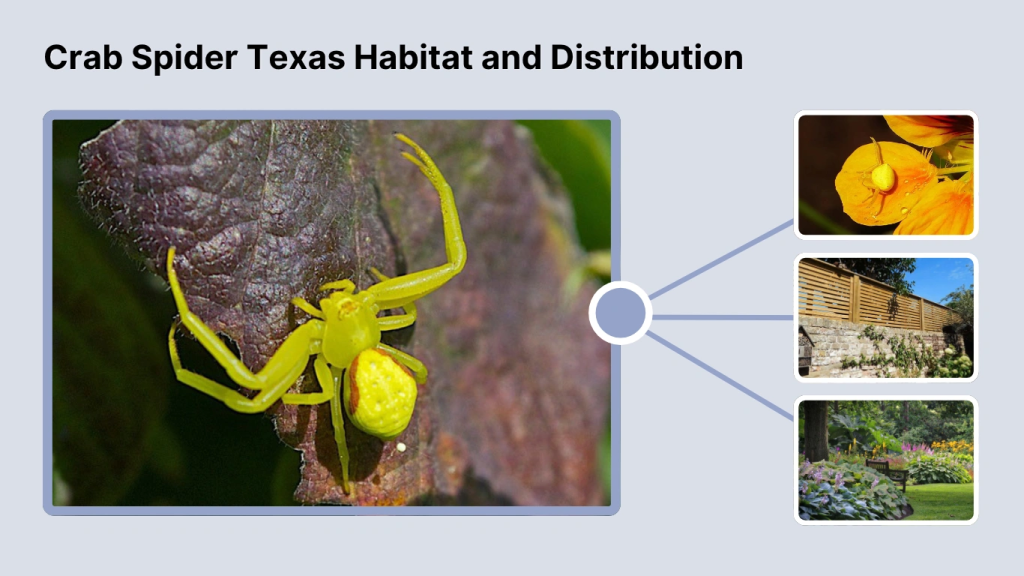
Crab spiders thrive in nearly every region of Texas, thanks to its warm climate and diverse landscapes.
Regional Presence
- Central Texas: Meadows, vineyards, and flowering gardens.
- East Texas: Humid forests and shaded woodlands.
- South Texas: Coastal grasslands and desert edges.
- West Texas: Dry rocky terrains and scrublands.
- Gulf Coast & Corpus Christi: Occasional sightings of marine spider crabs near beaches and surf zones.
Preferred Environments
Crab spiders live wherever insects thrive — especially in sunny areas filled with vegetation. You can often spot them:
- On flowers, waiting for pollinators
- On fences or walls near gardens
- Under leaves or bark in shaded areas
- Among tall grass or shrubs
Their ability to blend with their surroundings makes them one of the most successful ambush hunters in the Texas ecosystem.
Behavior and Diet
Hunting Technique
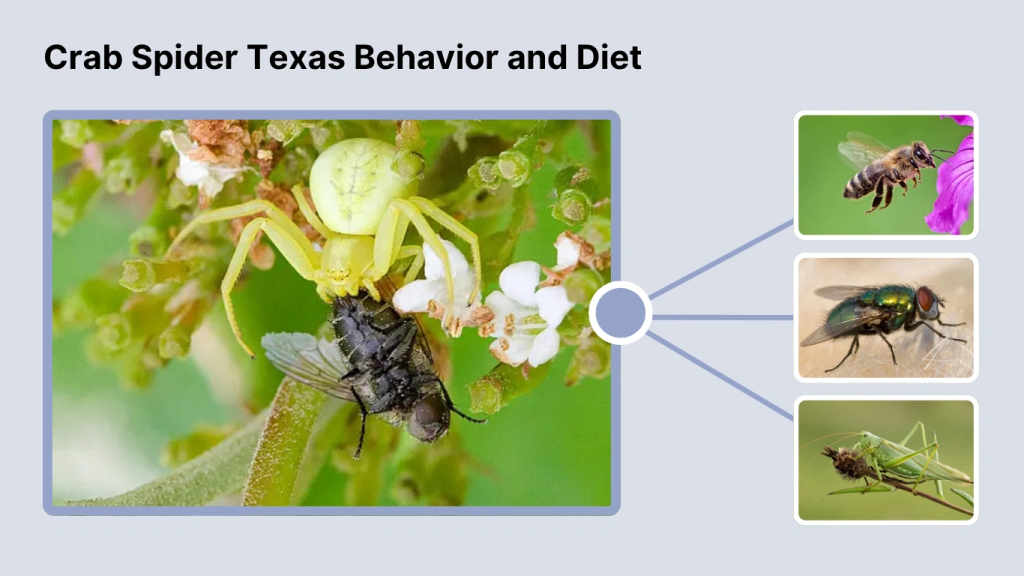
Crab spiders in Texas are ambush predators—they rely on stealth rather than webs. A typical crab spider sits motionless on a flower petal or leaf, waiting for an unsuspecting insect to land. When a bee, fly, or butterfly draws near, it strikes quickly with its long front legs, injecting venom to paralyze the prey instantly.
This hunting style allows them to conserve energy while capturing insects much larger than themselves. Their strong forelegs act like grappling hooks, ensuring their prey cannot escape.
Diet Composition
Their diet mainly consists of:
- Bees and wasps visiting flowers
- Flies and gnats around vegetation
- Small beetles and moths
- Grasshoppers or caterpillars (for ground-dwelling types)
These spiders help control pest populations naturally, making them beneficial to Texas gardens and farms.
Venom and Bite Facts
Are Texas Crab Spiders Poisonous?
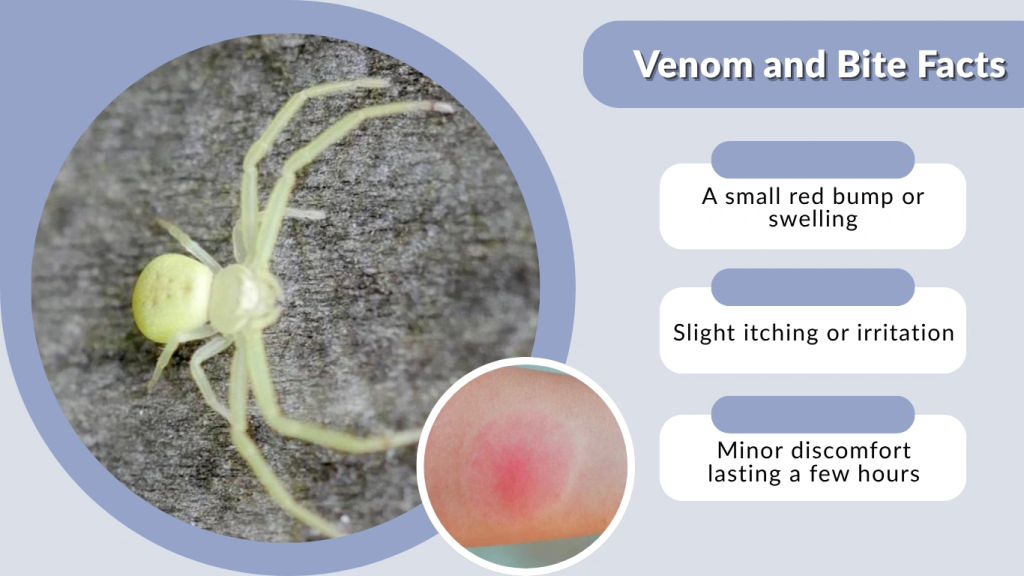
Crab spiders are venomous only to their prey. Their venom is designed to subdue insects quickly, but it poses no danger to humans or pets. They rarely bite unless threatened or trapped against the skin. Even then, their fangs are too small to cause significant harm.
Bite Symptoms and Treatment
Bites are rare and mild, causing:
- A small red bump or swelling
- Slight itching or irritation
- Minor discomfort lasting a few hours
Simple treatment involves cleaning the bite with soap and water, applying an ice pack, and using a mild antiseptic. Unlike the brown recluse, crab spiders’ venom is non-necrotic and medically insignificant.
Marine Spider Crabs in Texas
Portly Spider Crab (Libinia emarginata)
In Texas coastal waters, especially near Corpus Christi and Galveston Bay, the Portly Spider Crab can be found. This marine crab is unrelated to the land-based crab spider but shares a similar appearance. It lives along reefs and sandy bottoms, often covered in algae for camouflage.
- Habitat: Gulf of Mexico shallows and mangroves
- Diet: Feeds on algae, detritus, and small invertebrates
- Edibility: Technically edible but not commercially fished in Texas
- Behavior: Slow-moving and harmless, often caught in shrimp nets
Texas Spiny Spider Crab
Another Gulf resident, the Spiny Spider Crab, is known for its rough, armored shell and long legs. It inhabits reefs and nearshore zones, occasionally spotted by divers. Like the Portly Spider Crab, it poses no threat to humans and contributes to marine ecosystem balance.
Interesting Facts
- Camouflage Masters: Land crab spiders can blend with their surroundings—some can even change shades over several days.
- Guardians: Female crab spiders fiercely protect their egg sacs until spiderlings hatch.
- Natural Pest Control: They feed on mosquitoes, flies, and harmful crop insects.
- Night Hunters: Running crab spiders and ground varieties are often active at dusk.
- The Texas Giant Crab Spider: Despite its intimidating name, this huntsman spider is non-venomous and helps control household pests.
- Coastal Connection: The Gulf Coast’s “spider crabs” are true crustaceans, not spiders, but share the crab-like movement that inspired their name.
FAQs
Are crab spiders in Texas dangerous?
No. Crab spiders in Texas are harmless to people. Their venom affects only insects, and their bites rarely break human skin or cause more than mild irritation.
Where can you find crab spiders in Texas?
Crab spiders live throughout Texas—on flowers, shrubs, tree bark, and gardens. You can find them in Central Texas fields, East Texas forests, and even coastal areas near Corpus Christi.
What do crab spiders eat?
They eat a variety of insects such as flies, bees, butterflies, and beetles. Their stealthy ambush technique makes them effective hunters and valuable garden allies.
What is the giant crab spider in Texas?
The Texas Giant Crab Spider (Olios giganteus) is a large huntsman spider. It’s fast, light brown, and non-aggressive, often mistaken for a dangerous species but entirely harmless.
Are spider crabs in Texas waters edible?
Yes, the Portly Spider Crab from the Gulf of Mexico is edible, though not commonly fished. Its meat is mild and sweet but limited compared to more popular crab species