
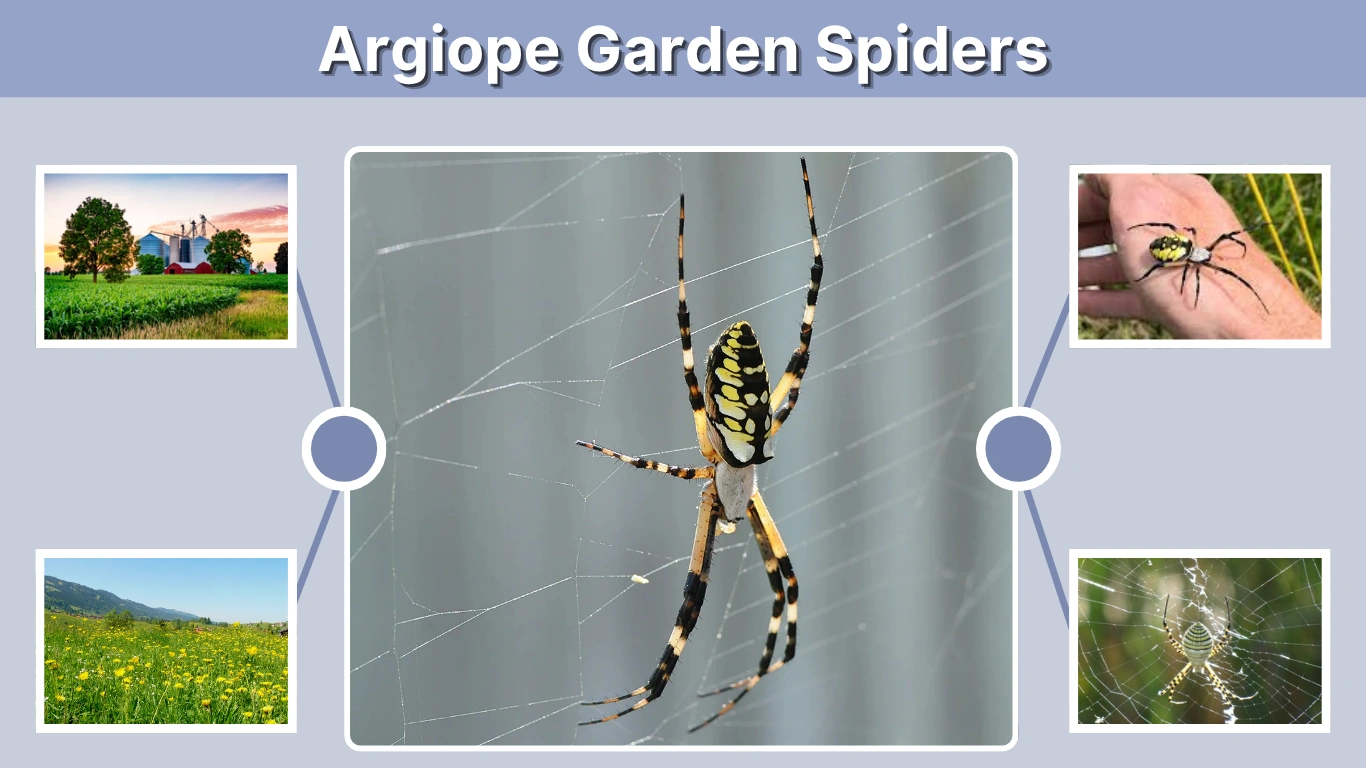
Graceful, vibrant, and misunderstood — the Argiope garden spiders are among nature’s most fascinating orb-weavers. Known for their striking black, yellow, or silver markings and geometric webs, these spiders are found across gardens, grasslands, and fields around the world. Despite their intimidating size, Argiope species are harmless to humans and serve an essential ecological role in keeping insect populations in check.
The Argiope Genus — Nature’s Web Artists
The Argiope genus belongs to the orb-weaver family (Araneidae), which includes hundreds of species known for their intricate, circular webs. These spiders are sometimes called “writing spiders” because of the zigzag silk pattern, or stabilimentum, woven into the center of their webs.
Argiope spiders are large, colorful, and daytime active, making them some of the most visible spiders in gardens. They can be found on every continent except Antarctica, adapting to different climates from tropical regions to temperate zones. Each species has distinct coloration, but they share similar hunting methods, web structures, and reproductive behaviors.
Major Species of Argiope Garden Spiders
Yellow Garden Spider (Argiope aurantia)
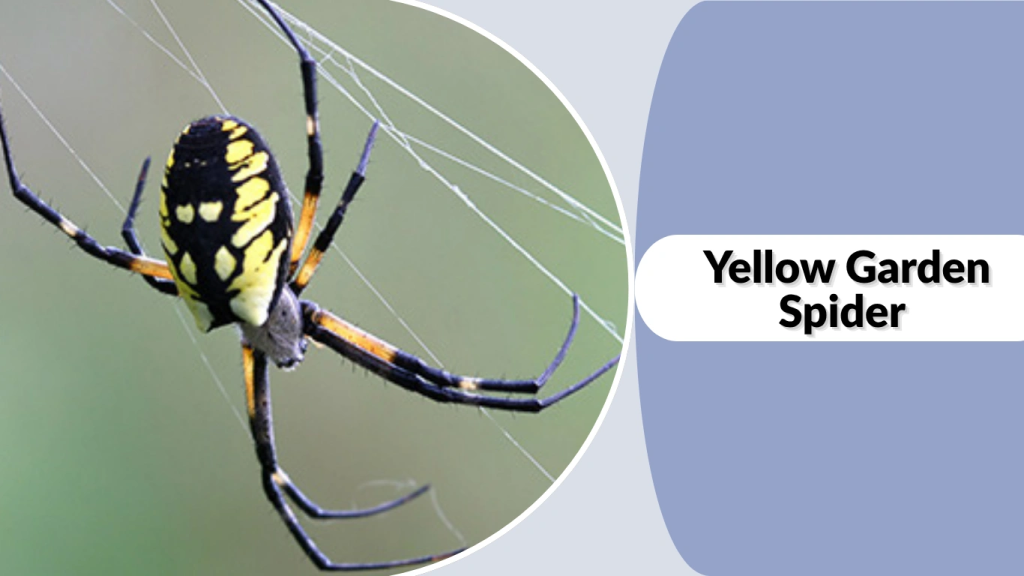
Perhaps the most recognized member of the genus, the yellow garden spider is famous for its vivid black-and-yellow markings and its large orb web, which can reach up to two feet in diameter. Found across North America, A. aurantia thrives in sunny meadows, gardens, and agricultural fields.
Identification:
Females are much larger than males, with long black legs banded in yellow or orange. The abdomen is bright yellow with bold black patterns, while the underside is mostly black.
Behavior:
The spider sits in the web’s center, head down, waiting for vibrations from trapped insects. Once prey is caught, it wraps it in silk before injecting mild venom to immobilize it.
Interesting Note:
In folklore, this spider is sometimes called the “writing spider,” because its zigzag silk resembles written script. Despite myths, these spiders pose no danger to humans.
Banded Garden Spider (Argiope trifasciata)
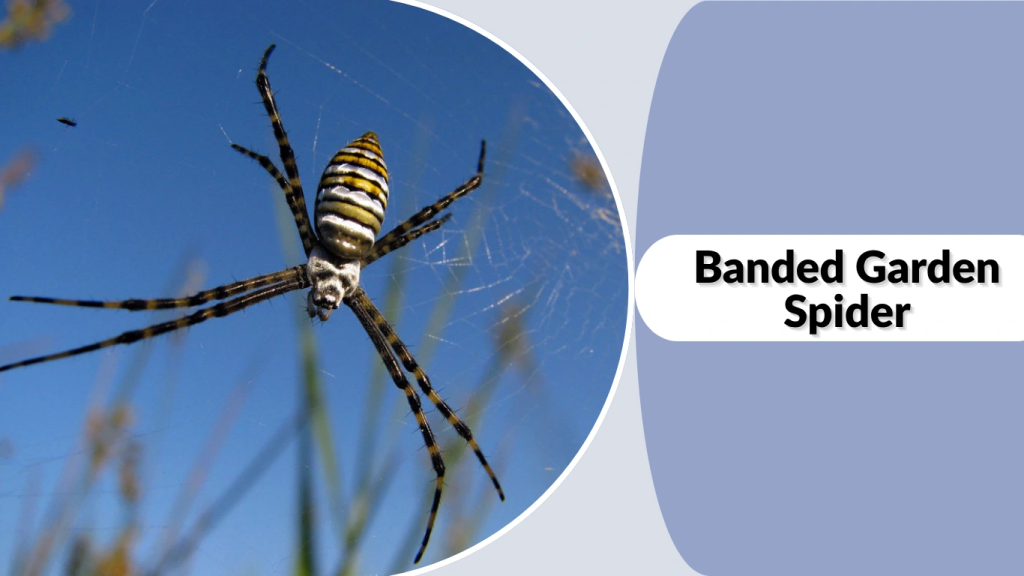
The banded garden spider, or Argiope trifasciata, is another striking species distinguished by its silver, yellow, and brown horizontal stripes across the abdomen. It is widespread globally, from North America to Europe, Africa, and Asia.
Habitat:
This species prefers open grasslands, prairies, and field edges. It tends to build webs close to the ground to catch flying insects such as grasshoppers and wasps.
Appearance:
Females display three distinct bands on their abdomens and have long, slender legs. Males are smaller, duller, and often stay near the edge of the female’s web during mating season.
Behavioral Traits:
Unlike some Argiope species, A. trifasciata is less shy and will remain motionless even when approached, relying on its camouflage for protection.
Silver Garden Spider (Argiope argentata)
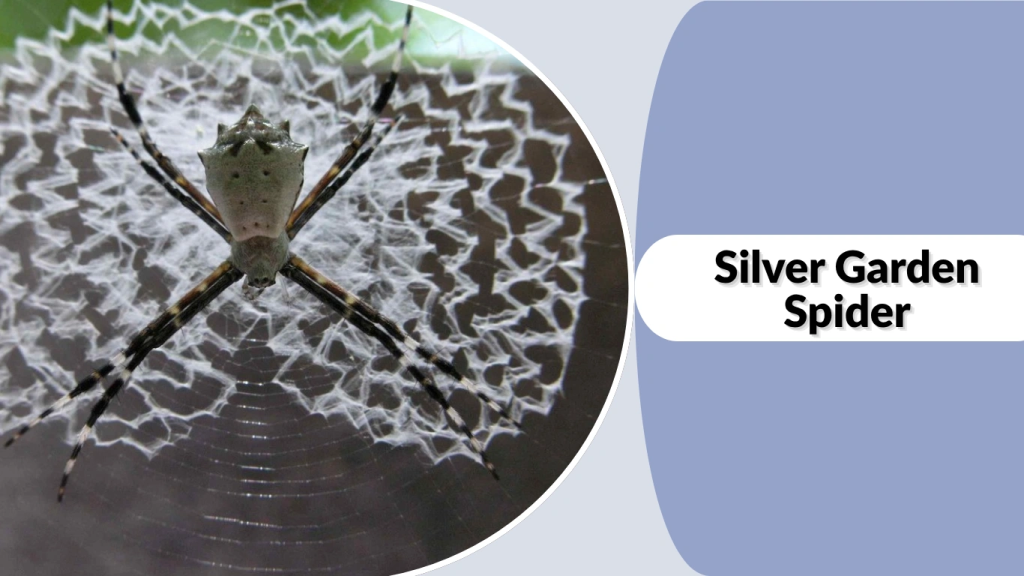
The silver garden spider, Argiope argentata, is easily recognized by its metallic silvery-white carapace and orange or brown markings on its abdomen. It thrives in tropical and subtropical regions, including Florida, Central America, and the Caribbean.
Web Characteristics:
This species builds smaller orb webs near bushes and low vegetation. Like its relatives, it includes a stabilimentum in the center, though it may appear more irregular or broken.
Adaptations:
Its bright, reflective coloration acts as camouflage by scattering sunlight, making it harder for predators to detect. Silver Argiope spiders often hang upside down in their webs, with legs stretched outward in an X-shape.
Hawaiian Garden Spider (Argiope appensa)
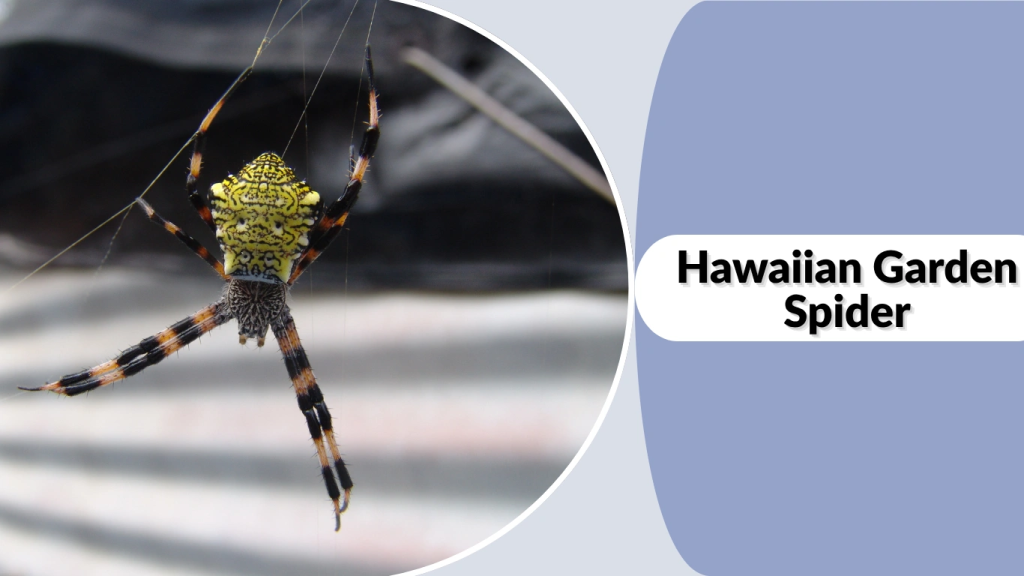
Native to the Pacific Islands, the Hawaiian garden spider (Argiope appensa) is a large, bold spider with an impressive web. Its yellow-and-black patterned body and long legs with hairy tufts make it one of the most photogenic Argiope species.
Habitat and Behavior:
Commonly found in coastal areas, forest edges, and gardens, it spins wide orb webs that can span several feet. Females are significantly larger than males and often seen in the center of the web, while smaller males remain nearby.
Cultural Importance:
In Hawaiian folklore, this spider symbolizes creativity and patience. Its geometric web and graceful stance have earned it a place of respect in local nature traditions.
Physical Appearance and Size
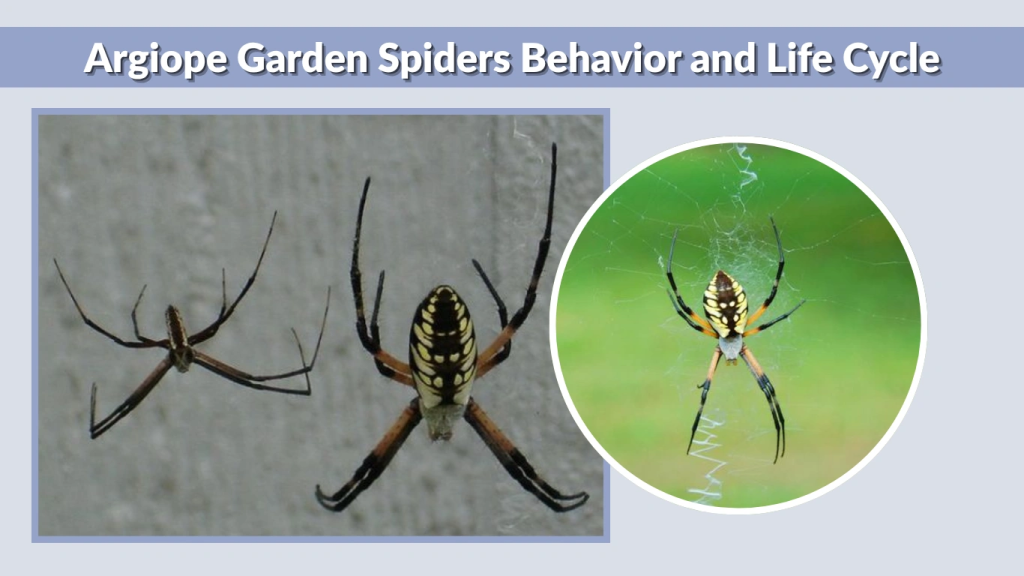
Argiope garden spiders are among the largest orb-weavers, with females measuring up to 1.5 inches in body length and 3 inches across including leg span. Males, however, are usually less than half that size.
Their bodies are covered in bright colors — black, yellow, white, silver, or brown — often forming intricate patterns for camouflage and intimidation. The contrast helps deter predators such as birds and wasps.
Another unique feature is their stabilimentum, the zigzag silk in their web. While scientists still debate its function, theories suggest it helps reflect ultraviolet light to attract prey or strengthens the web’s center.
Habitat and Web Construction
Preferred Environments
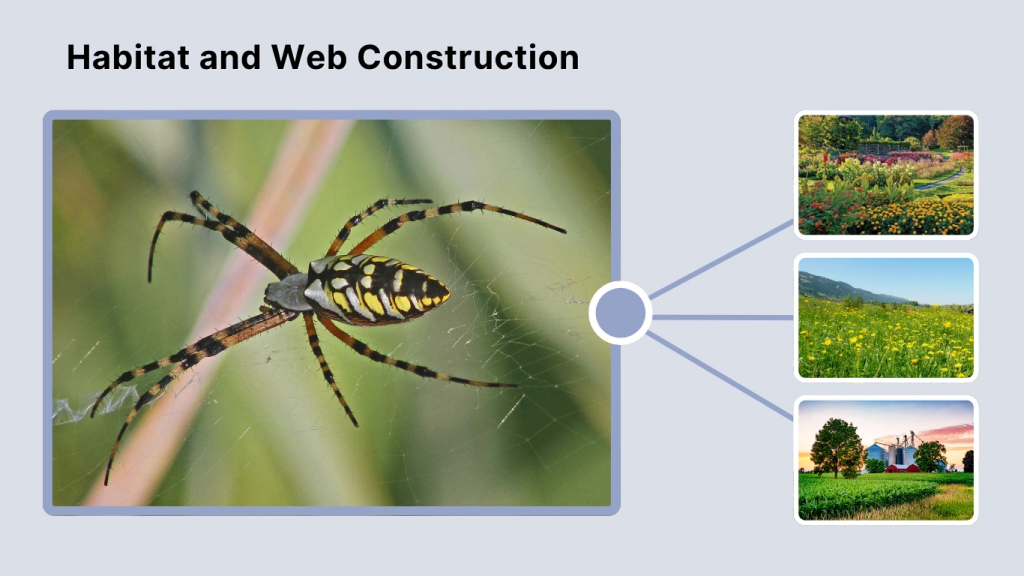
Argiope spiders favor open habitats like gardens, grasslands, farms, and meadows. They thrive in warm, sunny areas where flying insects are abundant. Because of their adaptability, they can also live near humans — spinning webs on fences, shrubs, and porch corners.
Web Structure and Purpose
Argiope webs are masterpieces of geometry. The circular orb design, with a distinct zigzag down the center, helps trap prey efficiently. The spider typically hangs upside down in the center, waiting for vibrations that signal a catch.
Every morning, the spider may repair or rebuild the web, recycling old silk for energy efficiency. This daily reconstruction ensures the web remains strong enough to withstand wind and large insects.
Behavior and Life Cycle
Mating and Reproduction
Like many spiders, Argiope species have fascinating — and sometimes risky — mating rituals. The male approaches the female cautiously, sending vibrations through her web to signal that he’s a potential mate, not prey. Because females are much larger and territorial, a careless male risks being attacked or eaten.
Once accepted, the pair mates, and the female soon begins building silken egg sacs near her web. Each sac may contain 400–1,000 eggs, which she carefully wraps in multiple layers of silk for protection. These sacs are often attached to plants or structures close to the main web.
In most climates, the adult female dies soon after laying eggs, while the egg sacs survive through the winter. When spring arrives, tiny spiderlings hatch and disperse by a process called ballooning — releasing silk threads that catch the wind, carrying them to new territories.
Seasonal Activity
Argiope spiders are most active in late summer and autumn, when insects are abundant. They typically live one year, though in tropical regions, overlapping generations can exist year-round. Males generally die shortly after mating, while females continue hunting until cold weather arrives.
Bite, Venom, and Safety
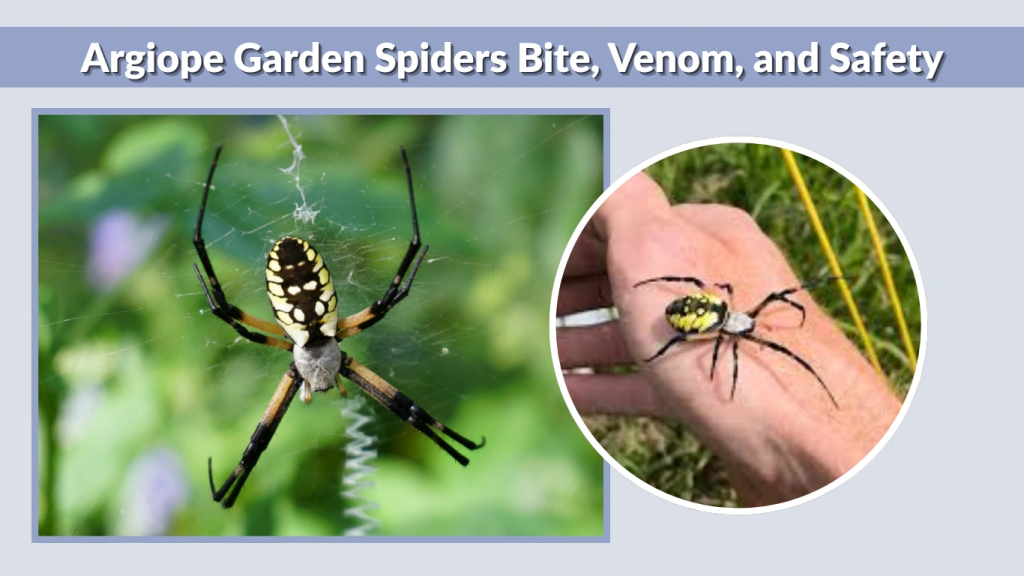
Despite their fierce appearance, Argiope garden spiders are not dangerous to humans. Their fangs are small and rarely penetrate human skin. When threatened, they usually retreat rather than bite.
The venom they produce is designed for small insects, not large animals. If a bite does occur, it typically causes mild, short-term symptoms such as redness, swelling, or irritation — similar to a bee sting. There are no recorded cases of serious reactions or toxicity from Argiope species.
In fact, these spiders are considered beneficial allies to gardeners and farmers. They control populations of flies, grasshoppers, moths, and other pests that damage crops and plants. Observing one in your garden should be seen as a good sign — not a reason for alarm.
Interesting Facts and Cultural Notes
Argiope spiders are rich in folklore and scientific intrigue alike. Their zigzag webs, known as stabilimenta, have earned them the nickname “writing spiders.” According to folklore in the southern United States, if a spider writes your name in its web, it’s a sign of good luck (or, in some versions, a warning to behave well!).
In Hawaii, the Argiope appensa, or Hawaiian garden spider, is admired for its patience and beauty. Locals associate it with creativity and balance, mirroring the intricate symmetry of its web.
Behaviorally, these spiders have several distinctive habits:
- They hang head-down in the center of the web to maximize reaction speed when prey lands.
- When threatened, they vibrate rapidly, blurring their body image to confuse predators.
- Some species rebuild their web every morning, maintaining efficiency and visibility for capturing food.
Their presence adds ecological and aesthetic value to gardens, making them popular subjects for wildlife photographers and nature educators.
Identification Tips and Comparison Guide
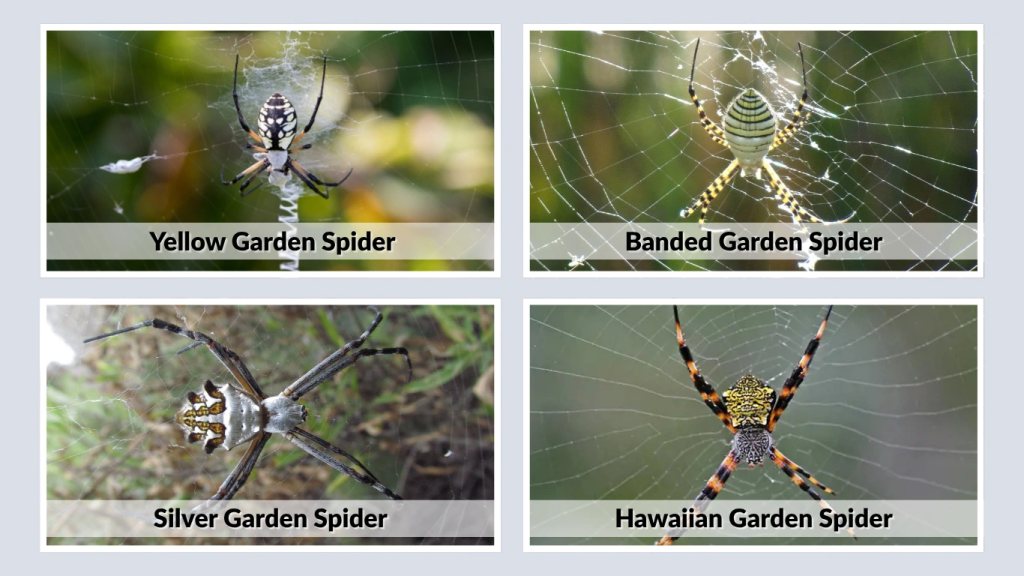
Identifying Argiope species can be simple with a few key observations:
| Species | Common Name | Key Color Pattern | Region |
| Argiope aurantia | Yellow or Black-and-Yellow Garden Spider | Bold black and yellow stripes | North America |
| Argiope trifasciata | Banded Garden Spider | Silver with brown or yellow bands | Worldwide |
| Argiope argentata | Silver Garden Spider | Metallic silver body, orange markings | Florida, Caribbean, Tropics |
| Argiope appensa | Hawaiian Garden Spider | Yellow-and-black, large orb webs | Pacific Islands |
| Argiope lobata | Lobed Garden Spider | Silver-white with lobed abdomen | Africa, Europe, Asia |
Tip:
- Females are large and brightly colored, while males are smaller and duller.
- Argiope webs almost always feature a zigzag pattern (stabilimentum) — a clear identification clue.
Ecological Role and Conservation
Argiope garden spiders play a vital role in maintaining a healthy ecosystem. Each spider consumes dozens of insects per day, reducing the need for chemical pesticides. A single web can catch hundreds of flies and grasshoppers over a season, making these spiders valuable allies for sustainable agriculture.
Threats
Despite their wide distribution, Argiope populations are affected by:
- Habitat loss due to urbanization and deforestation.
- Pesticide use, which kills both spiders and their insect prey.
- Climate change, altering breeding cycles and prey availability.
Conservation Tips
- Avoid using broad-spectrum insecticides in your garden.
- Provide natural spaces with tall grasses or shrubs for web anchoring.
- If you find a spider indoors, safely relocate it outside rather than kill it.
By encouraging their presence, homeowners can enjoy natural pest control and contribute to biodiversity preservation.
FAQs
Are Argiope garden spiders poisonous?
No. Their venom is only harmful to insects and poses no threat to humans. Most bites cause little more than minor irritation.
Where can I find yellow garden spiders?
They are common across North America, especially in sunny areas with tall plants or fences for web building.
How big do garden spiders get?
Female Argiope spiders can reach 1–1.5 inches in body length and up to 3 inches across with legs extended.
What do they eat?
They feed on flies, mosquitoes, moths, grasshoppers, and bees — anything small enough to get caught in their sticky web.
How long do they live?
Most Argiope spiders live about one year. Females die after laying eggs, while egg sacs hatch the following spring.