
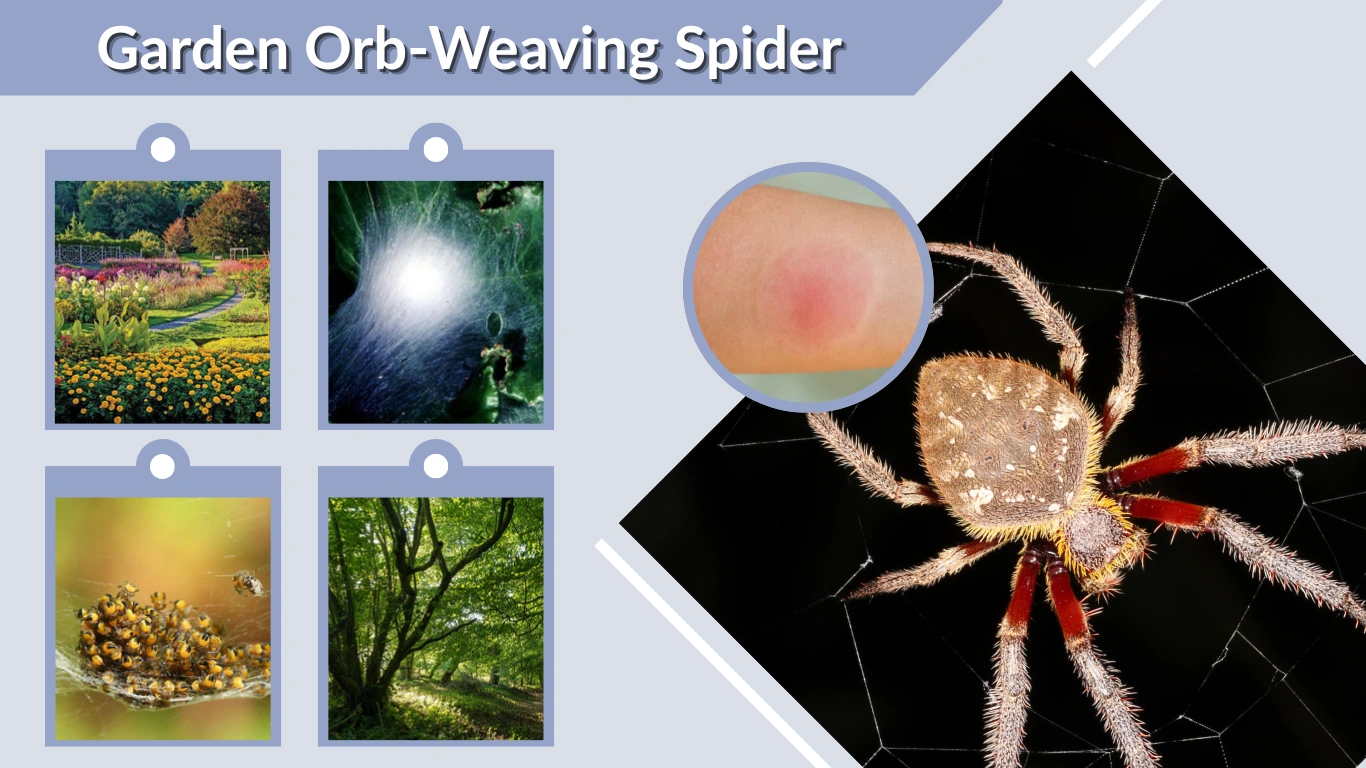
Garden orb-weaving spiders are among the most common and easily recognized spiders across the world. Their large, circular webs shimmer in morning dew, marking them as skilled architects of the insect world. Belonging to the family Araneidae, these spiders are often spotted in gardens, forests, and even around human homes. Despite their size and intimidating appearance, garden orb-weavers are gentle and beneficial creatures that play a vital role in controlling insect populations.
What Is a Garden Orb-Weaving Spider?
The term “orb-weaver” refers to spiders that build orb-shaped (circular) webs, the kind most people picture when thinking of spider webs. These webs are intricate and geometrically perfect, made to capture flying insects efficiently.
There are more than 3,000 species of orb-weaving spiders worldwide, and many of them are commonly referred to as garden spiders because they thrive near vegetation and human dwellings. Their habits are mostly nocturnal — they build or repair their webs at dusk, spend the night catching prey, and then rest during daylight hours, often hiding nearby in leaves or corners.
Orb-weavers are found on every continent except Antarctica, adapting to various environments from tropical rainforests to suburban gardens. While their appearance varies between regions, they all share the same defining behavior: creating perfectly circular webs to trap flying insects.
Physical Characteristics and Identification
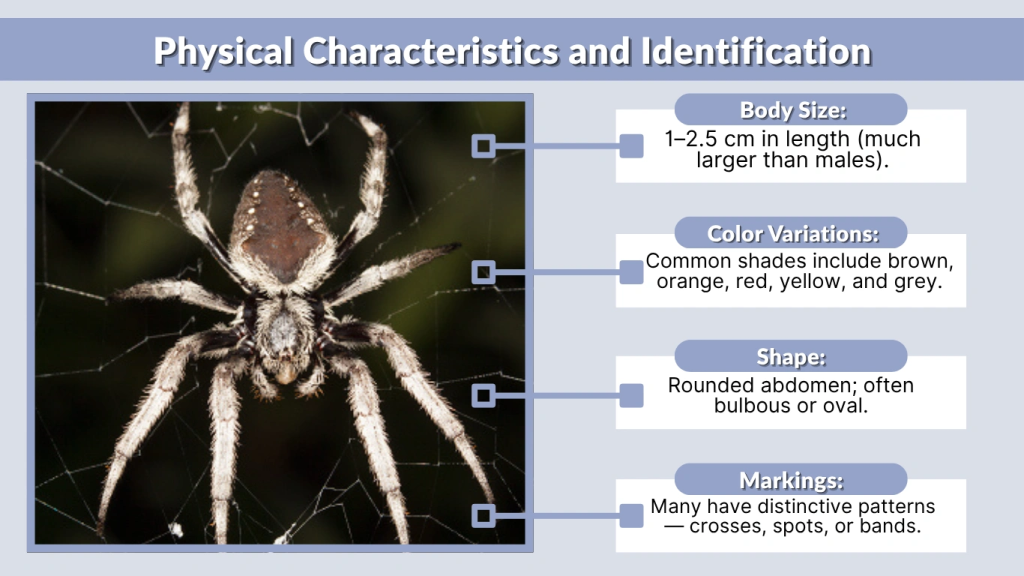
- Body Size:
- Females: 1–2.5 cm in length (much larger than males).
- Males: Smaller, with slender bodies and shorter legs.
- Females: 1–2.5 cm in length (much larger than males).
- Color Variations:
- Common shades include brown, orange, red, yellow, and grey.
- Some display mottled or banded patterns for camouflage.
- Common shades include brown, orange, red, yellow, and grey.
- Shape:
- Rounded abdomen; often bulbous or oval.
- Legs are long, spiny, and arranged in pairs for balance on webs.
- Rounded abdomen; often bulbous or oval.
- Markings:
- Many have distinctive patterns — crosses, spots, or bands.
- The European cross orb-weaver shows a white cross on its back.
- Many have distinctive patterns — crosses, spots, or bands.
- Eyes and Senses:
- Eight small eyes arranged in two rows.
- Excellent vibration detection; limited vision.
- Eight small eyes arranged in two rows.
Common Species of Garden Orb-Weaving Spiders
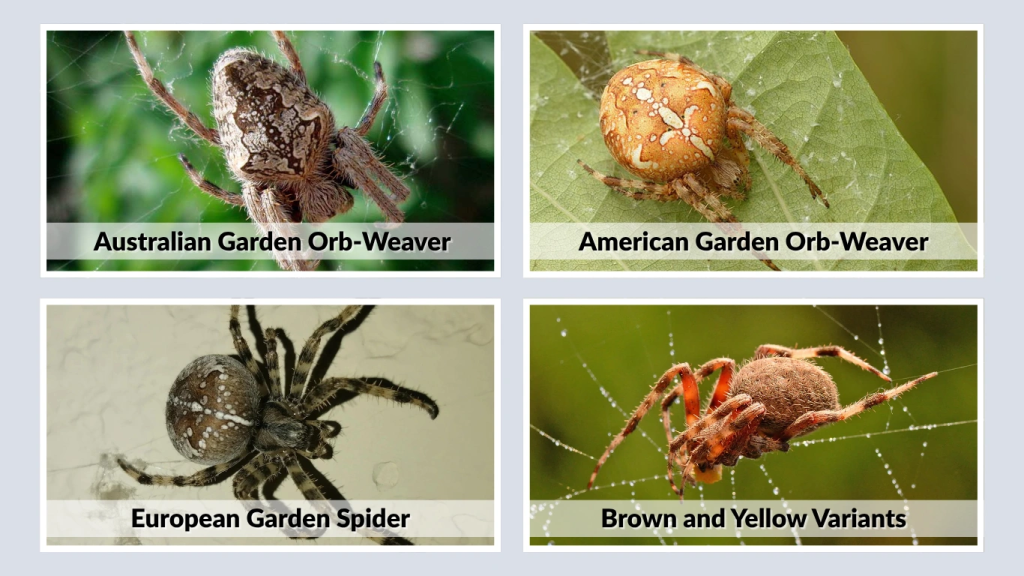
While orb-weavers share many traits, several species stand out for their widespread presence and unique appearance.
Australian Garden Orb-Weaver (Eriophora transmarina)
One of Australia’s most recognized spiders, the Australian garden orb-weaver is a large, hairy-bodied species that varies in color from reddish-brown to grey. Its body may feature pale patterns or stripes, depending on its environment.
Habitat and Behavior:
It is common throughout Australia, particularly in gardens, porches, and wooded areas. The spider builds large webs each evening between trees or buildings, often across pathways. By dawn, it consumes the web to conserve energy.
Human Interaction:
Although they may look alarming, these spiders are harmless. Their bite is rare and typically causes only mild redness or itching. They are helpful garden allies, feeding on moths, mosquitoes, and beetles.
American Garden Orb-Weaver (Various Araneus species)
Found across the United States and Canada, the American garden orb-weaver is most active in late summer and fall. They are often seen in backyards, wooded areas, and near outdoor lights, where flying insects gather.
Description:
These spiders come in shades of orange, brown, and tan, sometimes with intricate markings on the abdomen. They are slightly smaller than the Australian species but build equally impressive webs.
Behavior:
American orb-weavers construct new webs nightly, anchoring them to shrubs, fences, or porch corners. They are nocturnal hunters, capturing flies, beetles, and other small insects that wander into their sticky traps.
Interesting Fact:
In the U.S., the cross orb-weaver (Araneus diadematus), native to Europe but now widespread in North America, is one of the most frequently encountered types. Its distinct white cross pattern on the abdomen makes it easy to recognize.
European Garden Spider / Cross Orb-Weaver (Araneus diadematus)
The European garden spider, also known as the cross orb-weaver, is famous for the white cross-shaped markings on its back. It is one of the most iconic spiders in Europe and the UK, often found in gardens, hedges, and barns.
Habitat:
These spiders prefer quiet corners where they can anchor their webs between vegetation. They are most visible in late summer and early autumn, hanging motionless in the middle of their web.
Behavior:
Like their relatives, they rebuild or reinforce their webs nightly and feed on flying insects. Females lay eggs in autumn and die soon after, while their egg sacs survive through winter.
Cultural Note:
The cross orb-weaver has been featured in European folklore for centuries, often symbolizing patience and precision because of its perfectly symmetrical webs.
Brown and Yellow Variants
In warmer regions, color variants such as the brown orb-weaver or yellow garden orb-weaver are frequently seen. These spiders are smaller and lighter than the large Eriophora types but equally skilled at web-making.
They are sometimes confused with the yellow garden spider (Argiope aurantia), another orb-weaver, but differ in body shape — Argiope spiders have longer legs and a more elongated abdomen.
Color variations in orb-weavers often depend on environment and molt stage: younger spiders appear duller, while mature females display brighter shades during mating season.
Habitat and Web Construction
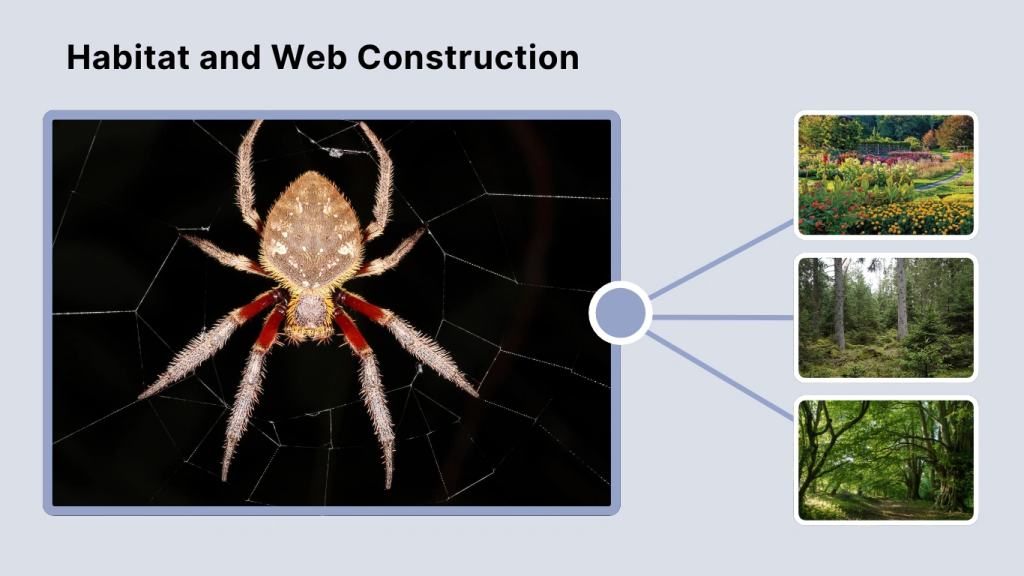
Preferred Environments
Garden orb-weaving spiders are highly adaptable and can live in a wide variety of habitats. They thrive in gardens, forests, woodlands, meadows, and even suburban yards, wherever there are sturdy structures to support their webs. Common web anchors include tree branches, fences, bushes, porch railings, and the corners of outdoor buildings.
These spiders are especially drawn to areas rich in insect activity. Outdoor lights that attract moths and flies provide an endless food source, which is why you may notice orb-weaver webs near patios and windows. In tropical or warm regions, they can remain active year-round, while in colder climates, only the egg sacs survive winter, ensuring the next generation emerges when spring begins.
The Art of the Web
The signature orb-shaped web of these spiders is an engineering masterpiece. Typically built at dusk, it consists of radial spokes connected by spiral threads coated with sticky silk. The center of the web—called the hub—is where the spider waits upside down for prey.
Webs can span 30–60 centimeters in diameter, though some species produce even larger ones. Each evening, the spider may either repair the existing web or consume it entirely, recycling silk proteins to build a new one. This daily renewal process ensures the web remains strong, elastic, and sticky enough to capture flying insects.
When an insect becomes trapped, the spider quickly detects the vibration through the silk strands, rushes to immobilize it with silk, and delivers a venomous bite to paralyze the prey.
Behavior and Life Cycle
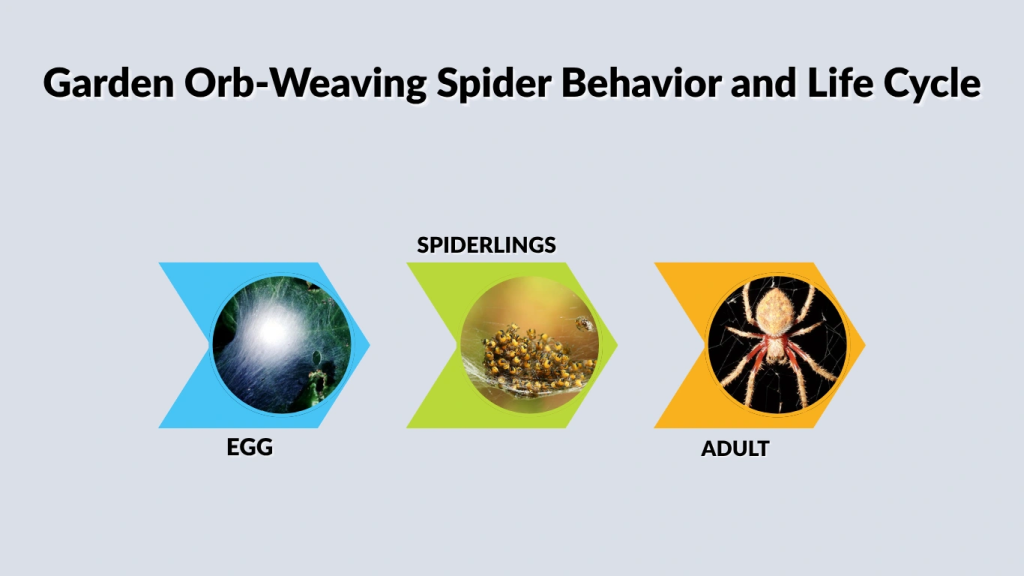
Mating and Reproduction
Mating for garden orb-weavers can be risky. Males are much smaller and cautious when approaching females, often sending rhythmic vibrations through the web to announce their presence. Once mating is complete, the male often retreats—or in some cases, becomes the female’s meal.
Females lay their eggs in autumn, producing several silk egg sacs, each containing hundreds of tiny eggs. These sacs are attached to sheltered surfaces like leaves, tree bark, or walls. The adult female typically dies after egg-laying, as her life cycle ends with the first frost.
In spring, spiderlings hatch and disperse through a process called ballooning—releasing silk threads that catch the wind and carry them to new habitats. Only a small percentage of spiderlings survive to adulthood, ensuring a natural population balance.
Lifespan and Seasonal Activity
Garden orb-weaving spiders usually live for one year, though some tropical species may survive longer. They are most visible during late summer and fall, when adults reach full size. By winter, only egg sacs remain, marking the continuation of their annual cycle.
During their adult phase, orb-weavers are solitary. Each maintains its own web, though multiple individuals may live close together in areas with abundant prey.
Bite, Venom, and Human Safety
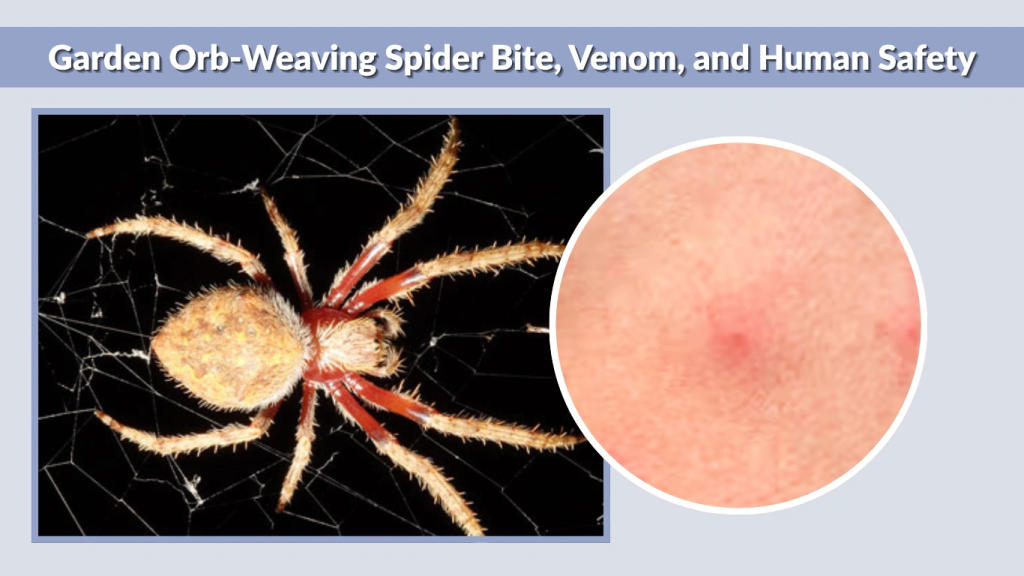
Despite their intimidating size and vivid appearance, garden orb-weaving spiders are harmless to humans. Their venom is designed to subdue small insects, not large animals.
Are They Poisonous?
No — garden orb-weavers are not poisonous or dangerous. In rare cases where a bite occurs (usually when handled roughly), symptoms are mild: slight redness, itching, or minor swelling that resolves within a few hours. Their fangs are small, and their first instinct is to flee rather than fight.
They provide a valuable service to humans by keeping mosquito, moth, and fly populations under control. Encouraging their presence in gardens is a natural and effective form of pest management.
Comparison with Golden Orb-Weaver Spiders
While both belong to the orb-weaver family, golden orb-weavers (Nephila species) are larger and produce golden-tinted silk. Garden orb-weavers are smaller, less vivid in color, and more widespread across temperate regions. Both are harmless to humans and share similar web-building techniques.
Garden Spider vs. Orb-Weaver — What’s the Difference?
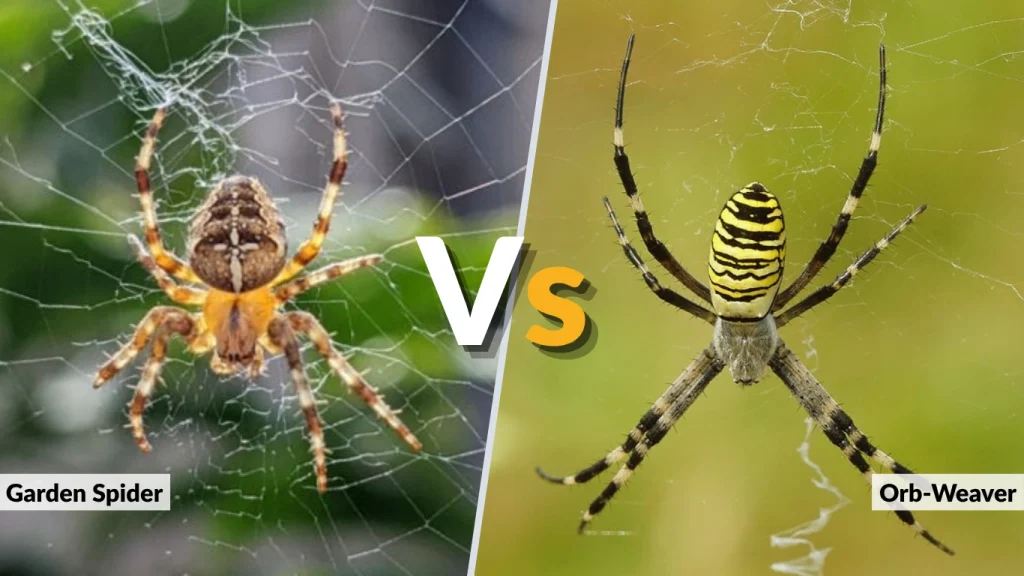
The terms “garden spider” and “orb-weaver” are often used interchangeably, but they describe related groups. Essentially, all garden spiders are orb-weavers, though not all orb-weavers are referred to as garden spiders.
- Garden spiders: A general name for orb-weavers that live near human dwellings or gardens, such as Eriophora or Araneus species.
- Orb-weavers: A broader term encompassing all spiders that build circular orb webs, including the Argiope (yellow garden spider) and Nephila (golden orb-weaver).
Garden orb-weavers tend to have rounder abdomens and earth-toned colors, while species like the yellow garden spider (Argiope aurantia) have longer bodies and bolder markings. Regardless of appearance, both types share the same characteristic orb web design and beneficial role in ecosystems.
Interesting Facts and Ecology
- Web Recycling: Orb-weavers eat their old webs each morning to reuse the protein in new silk.
- Vibration Sensitivity: They can detect prey size and direction through subtle vibrations in web threads.
- Beneficial Predators: A single adult may consume hundreds of insects per week, reducing pests naturally.
- Seasonal Colors: Their body shades often shift with temperature and daylight, helping camouflage them against predators.
- Photogenic Patterns: Their webs glistening with dew are a favorite subject for macro photography.
These traits make garden orb-weaving spiders both fascinating and vital to the environment. By reducing insect pests without harming other wildlife, they help maintain healthy ecosystems.
FAQs
Are garden orb-weaver spiders poisonous?
No. Their venom is only harmful to insects. Human bites are rare and cause mild irritation at most.
What do they eat?
They primarily eat flying insects such as flies, moths, beetles, and mosquitoes.
Where do they live?
They’re found worldwide — especially in gardens, woodlands, meadows, and around outdoor lights.
How long do they live?
Most species live for about one year, with females dying after laying eggs in late autumn.
Why do their webs disappear overnight?
They often consume their webs each morning to recycle silk proteins and rebuild fresh ones in the evening.