
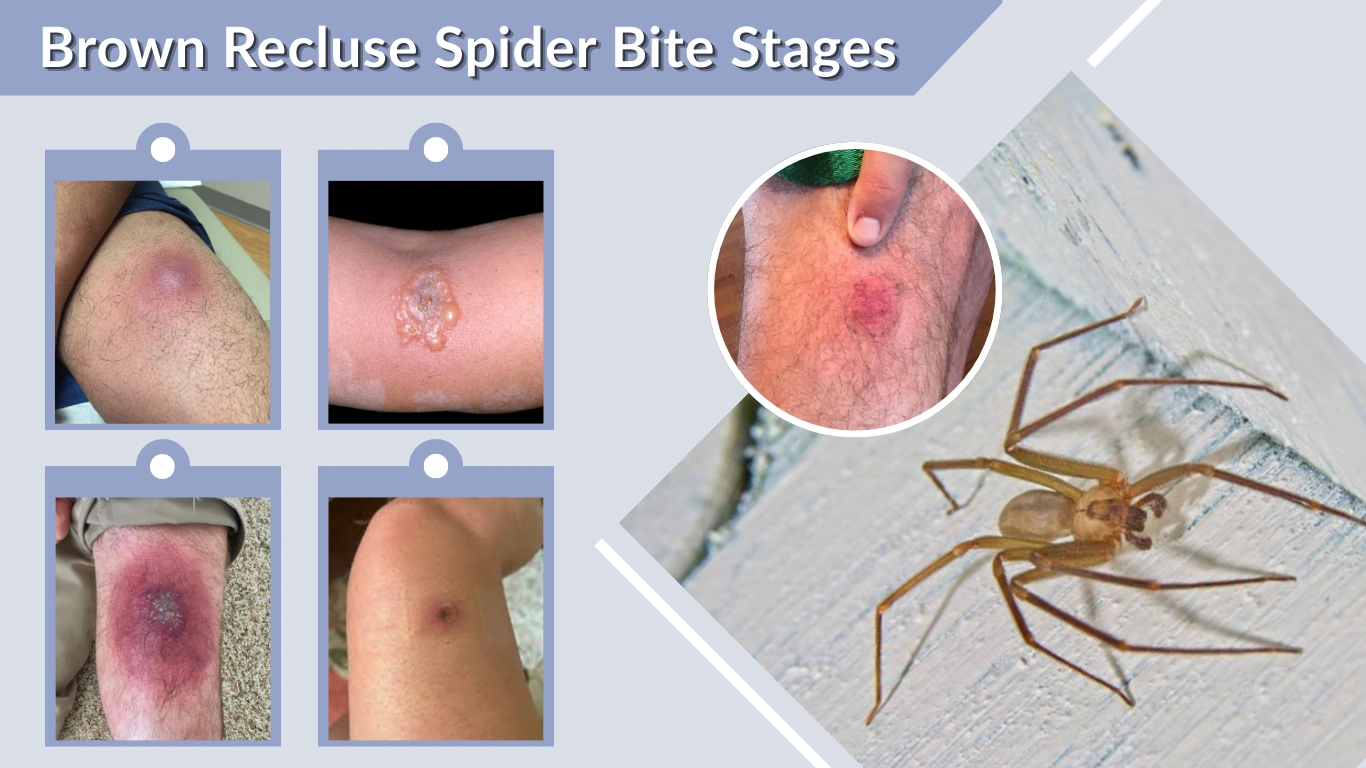
A brown recluse spider bite can develop through several stages, ranging from mild skin irritation to more serious tissue damage in rare cases. Because the bite is often painless at first, many people do not realize they have been bitten until symptoms begin to appear. Understanding the stages of a brown recluse spider bite can help you recognize early warning signs and seek appropriate care. This guide explains how the bite progresses, what symptoms appear at each stage, and what to expect during the healing process.
What Is a Brown Recluse Spider Bite?
A brown recluse spider bite occurs when the spider injects venom into the skin while defending itself. These spiders are not aggressive and usually bite only when trapped against the skin, such as inside clothing, shoes, or bedding.
The venom of a brown recluse spider contains enzymes that can damage skin cells and surrounding tissue. In most cases, bites remain mild and heal within a few weeks. However, some bites can lead to more serious reactions, especially if the venom causes tissue breakdown.
Why Brown Recluse Bites Are Different
Brown recluse bites are unique because their venom contains proteins and enzymes that can destroy skin tissue. This process is known as necrosis, which means the affected skin cells begin to die.
Although the possibility of necrosis often causes concern, it is important to note that severe reactions occur in only a small percentage of cases. Many bites result in mild symptoms similar to those of other insect bites.
Where Brown Recluse Spiders Are Commonly Found
Brown recluse spiders prefer dark, quiet areas where they are unlikely to be disturbed. Inside homes, they are often found in places such as basements, closets, attics, or storage boxes.
Outdoors, they may hide in woodpiles, sheds, or under rocks and tree bark. Because these spiders are mostly active at night, bites often occur when someone accidentally presses against them while sleeping or putting on clothing.
Overview of Brown Recluse Spider Bite Stages
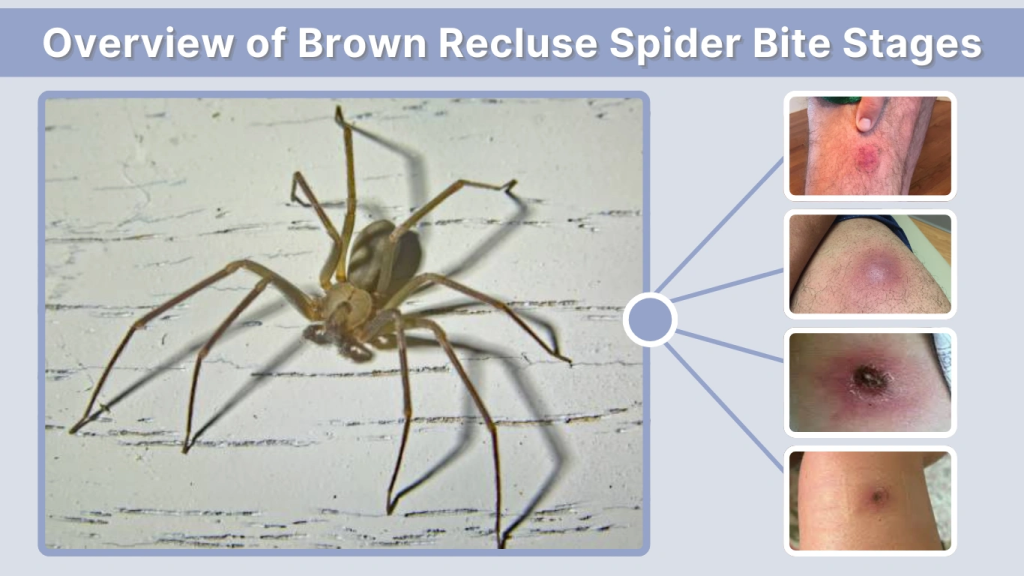
A brown recluse spider bite usually progresses through several stages as the body reacts to the venom and begins the healing process. Understanding this progression can help identify the bite early and monitor any changes.
The typical stages include:
- Initial bite stage
- Early reaction stage
- Blister formation stage
- Necrosis or tissue damage stage
- Healing and recovery stage
Not every bite will go through all of these stages. In many cases, the reaction stops after the early stages and heals without significant complications.
Stage 1 – Initial Bite Stage (0–8 Hours)
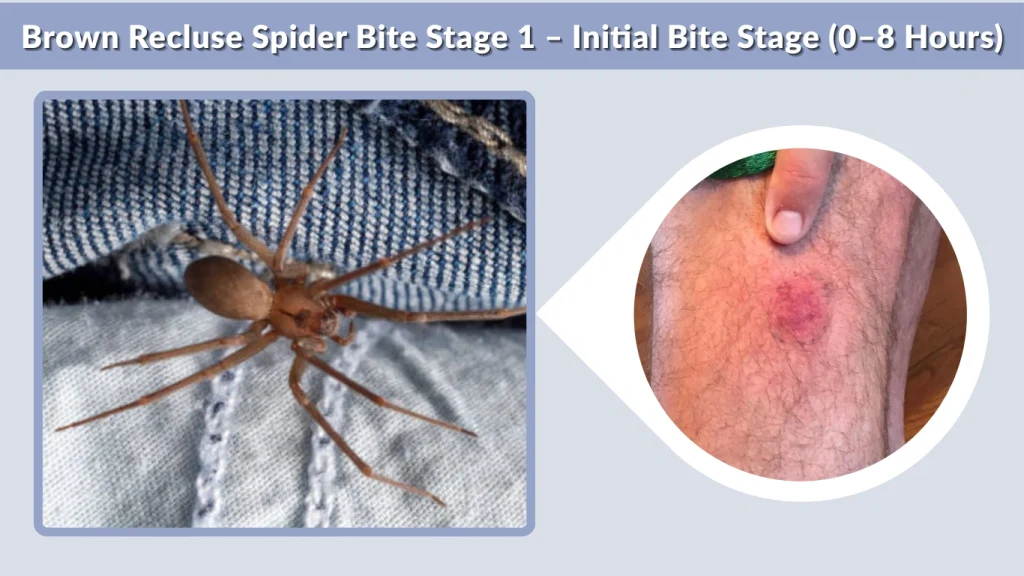
The first stage of a brown recluse spider bite occurs immediately after the bite happens. One reason these bites can be difficult to identify is that the initial bite is often painless.
At this stage, the bite may look similar to a small insect bite.
Common symptoms during this stage include:
- A small red spot at the bite location
- Mild burning or stinging sensation
- Slight swelling around the area
- Minimal discomfort
Because the symptoms are usually mild at first, many people may not notice the bite right away. Some individuals may only become aware of the bite several hours later when the skin begins to change.
In some cases, two tiny puncture marks may be visible, although they are often too small to see clearly.
Stage 2 – Early Reaction Stage (8–24 Hours)
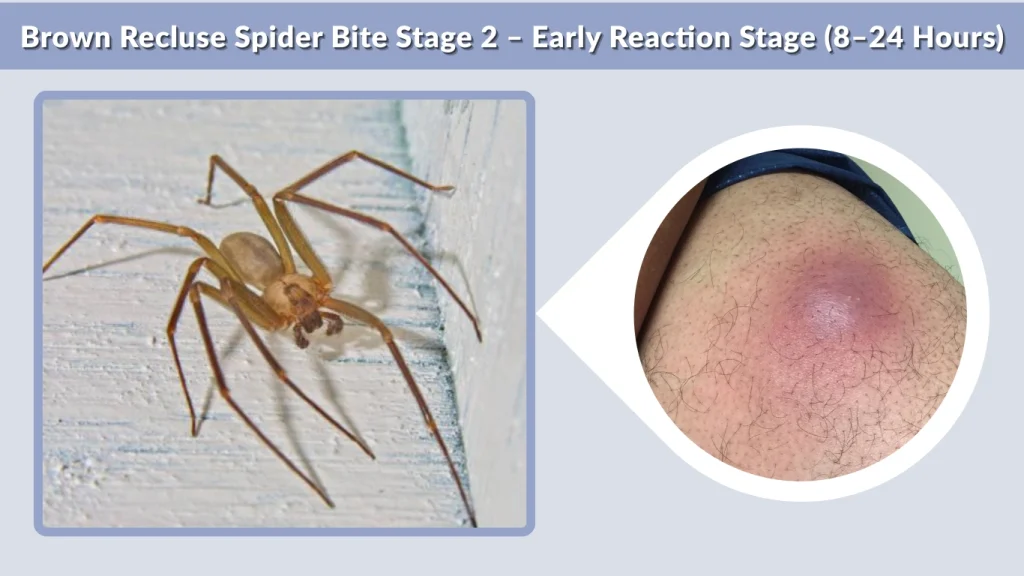
Within the first 24 hours, the body begins reacting more noticeably to the venom. This stage is when many people first recognize that something unusual is happening to the skin.
The bite area may start to change in appearance as inflammation increases.
Typical symptoms during this stage include:
- Increasing redness around the bite
- Swelling and tenderness
- Mild to moderate pain
- Itching or irritation
- A pale or whitish center forming in the middle of the bite
The bite may begin to develop a bull’s-eye appearance, with a red outer ring and a lighter center. This pattern occurs as blood vessels around the bite react to the venom.
Although the symptoms may become more noticeable, the bite can still resemble a common insect bite at this stage. For many people, the reaction stops here and gradually improves over the next several days.
Stage 3 – Blister Formation Stage (1–3 Days)
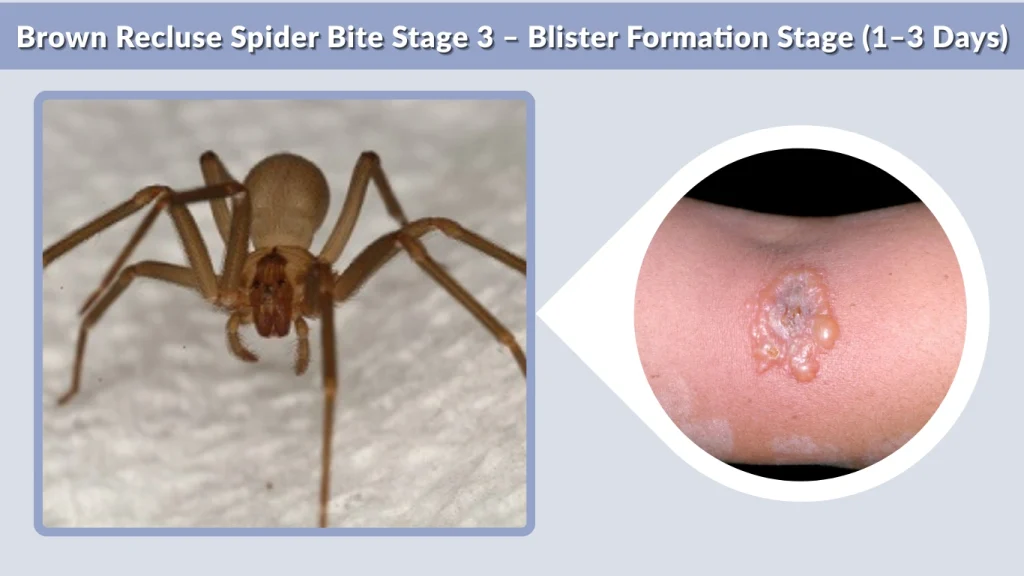
The third stage typically occurs between one and three days after the bite. At this point, the venom may begin affecting the surrounding skin tissue more significantly.
One of the most noticeable changes during this stage is the development of a blister at the bite site.
Blister Development
A fluid-filled blister may appear in the center of the bite area. This blister forms as the body responds to the venom and inflammation increases.
The surrounding skin may change color, sometimes appearing bluish, purple, or darker than the surrounding tissue. The center of the bite may also become firm or slightly raised.
The blister can vary in size depending on the individual reaction and the amount of venom injected.
Increasing Pain and Inflammation
During this stage, the bite area may become more painful. Swelling and redness around the bite may expand slightly as the body continues reacting to the venom.
Some people may also experience additional symptoms such as:
- Warmth around the bite area
- Increased tenderness
- Mild fatigue or discomfort
For many bites, symptoms begin to stabilize after this stage and gradually improve as the body starts the healing process.
Stage 4 – Necrosis Stage (3–7 Days)
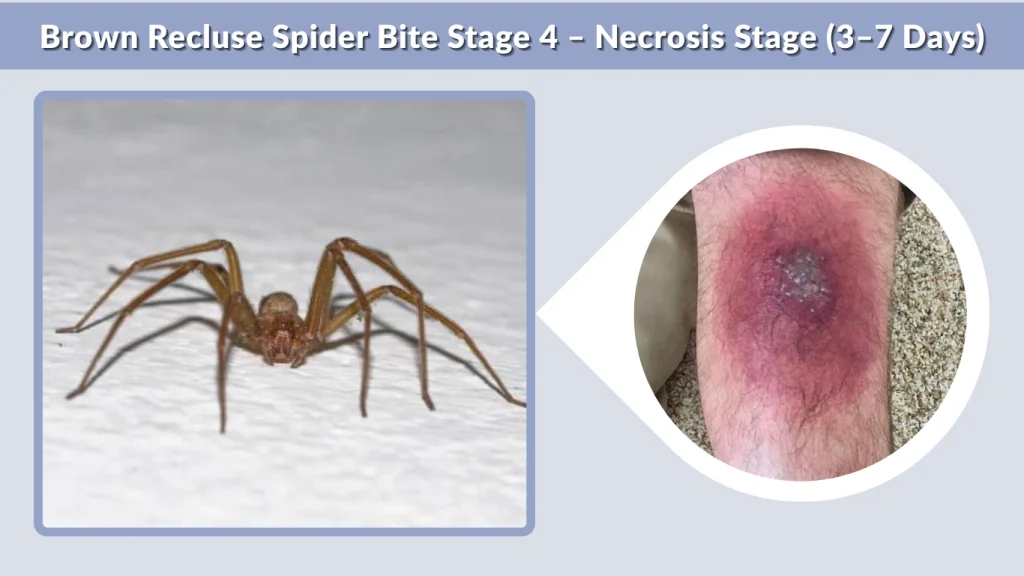
In some cases, a brown recluse spider bite may progress to the necrosis stage. This stage involves damage to the surrounding skin tissue caused by the spider’s venom. However, it is important to remember that not all bites reach this stage, and severe reactions are relatively uncommon.
During this stage, the appearance of the bite can change noticeably as the affected tissue begins to break down.
Skin Tissue Damage
The center of the bite may start to turn dark purple, brown, or black. This discoloration happens when the venom interferes with blood flow and damages skin cells.
As the tissue becomes damaged, the area may begin to sink slightly or form a hardened scab. The surrounding skin may still appear red or inflamed.
Symptoms during this stage may include:
- Increased pain around the bite
- Darkening of the skin in the center of the wound
- Expansion of the affected area
- Sensitivity and swelling
Although this stage can appear alarming, the body will gradually begin to remove damaged tissue as part of the healing process.
Formation of an Ulcer
In more severe cases, the damaged skin may break open and form an ulcer or open wound. This wound may appear crater-like and can take several weeks to heal.
The ulcer may produce fluid or develop a scab as the body works to repair the damaged tissue. Proper wound care during this stage is important to prevent infection and support healing.
If the wound continues to grow larger or becomes extremely painful, medical attention should be sought to ensure proper treatment.
Stage 5 – Healing and Recovery Stage
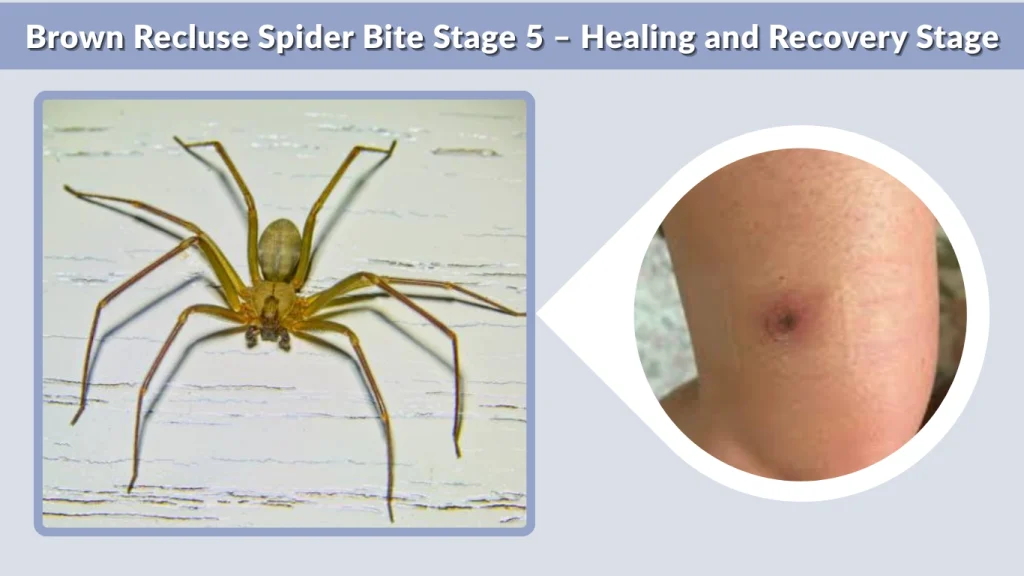
The final stage of a brown recluse spider bite is the healing and recovery phase. During this stage, the body gradually repairs the damaged skin and replaces it with new tissue.
The length of this stage can vary depending on the severity of the bite.
Healing in Mild Bites
For mild bites that do not cause tissue damage, healing usually occurs fairly quickly. Redness and swelling slowly fade, and the skin returns to normal over time.
Most mild bites heal within one to three weeks with basic care such as cleaning the wound and keeping the area protected.
Healing in Severe Bites
If the bite caused necrosis or ulcer formation, the healing process may take longer. The body must first remove damaged tissue before new skin can develop.
Severe bites may require several weeks or even months to fully heal. In some cases, a scar may remain after the wound closes.
Proper medical care, wound cleaning, and monitoring can help reduce complications and improve recovery.
Brown Recluse Bite Timeline (Day-by-Day Progression)
Although every bite is different, many brown recluse bites follow a similar timeline. Understanding this progression can help people recognize whether a bite is healing normally or becoming more serious.
A typical timeline may look like this:
- Day 1: A small red spot appears with mild irritation or burning.
- Day 2–3: Swelling and blister formation may occur, and the bite becomes more noticeable.
- Day 4–7: In some cases, tissue damage or ulcer formation may develop.
- Week 2 and beyond: The healing process begins as redness fades and new skin forms.
Some bites may stop progressing after the early stages and heal quickly, while others may take longer depending on the individual reaction.
Mild vs Severe Brown Recluse Bite Stages
Not all brown recluse bites look the same. Some remain mild and heal quickly, while others develop more serious symptoms.
Mild Bite Symptoms
Mild bites usually produce only minor irritation. Common symptoms include:
- A small red bump
- Mild itching or burning
- Slight swelling
- Quick recovery within a few weeks
These bites often resemble common insect bites and may not require medical treatment.
Severe Bite Symptoms
Severe bites are less common but may cause more noticeable skin damage. Symptoms may include:
- Large blister or ulcer
- Dark or necrotic tissue in the center of the bite
- Significant swelling and pain
- Longer healing time
If symptoms worsen or the wound expands, professional medical care may be necessary.
When to Seek Medical Attention
Most brown recluse spider bites heal without serious complications, but certain symptoms should not be ignored.
Medical attention should be sought if:
- Severe or increasing pain develops
- The bite forms a large ulcer or open wound
- Redness continues spreading around the bite
- Fever or chills occur
- Signs of infection such as pus or warmth appear
Early medical care can help prevent complications and ensure proper treatment.
Treatment Options During Different Bite Stages
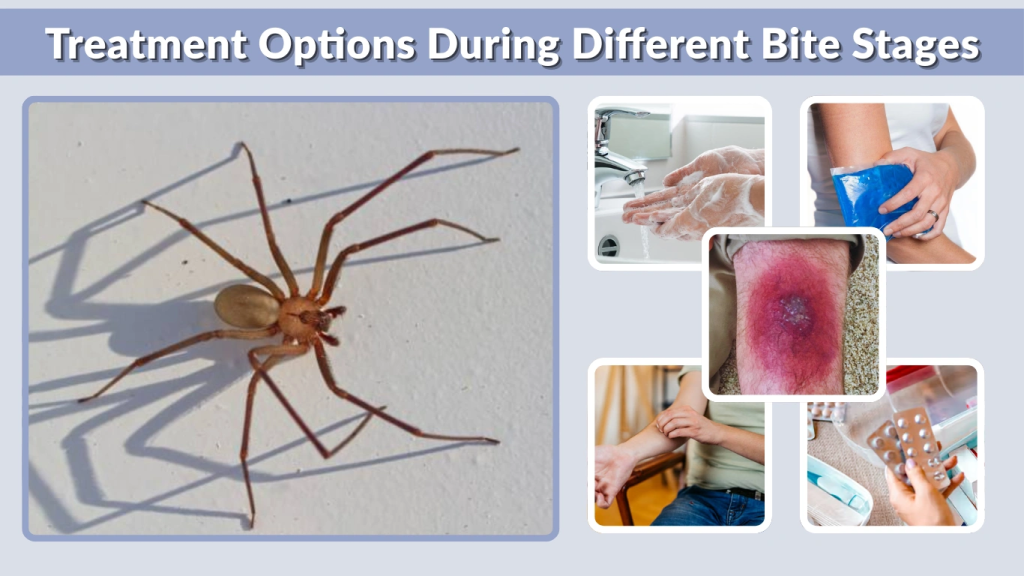
Treatment for a brown recluse bite depends on the stage of the bite and the severity of symptoms.
Early Stage First Aid
During the early stages, simple first aid steps can help reduce irritation and swelling.
Recommended actions include:
- Washing the bite with soap and water
- Applying a cold compress to reduce swelling
- Elevating the affected area if possible
- Avoiding scratching or squeezing the wound
These steps can help prevent infection and support the healing process.
Medical Treatment for Severe Stages
If the bite becomes severe or shows signs of tissue damage, medical treatment may be required. Doctors may recommend treatments such as:
- Antibiotics to treat or prevent infection
- Pain relief medications
- Professional wound cleaning and monitoring
In rare cases where significant tissue damage occurs, additional medical procedures may be necessary to repair the affected area.
FAQs
What are the stages of a brown recluse spider bite?
The typical stages include the initial bite stage, early reaction stage, blister formation stage, possible necrosis stage, and the final healing stage.
How long do brown recluse bite stages last?
Mild bites may heal within one to three weeks, while severe bites involving tissue damage can take several weeks or months to fully heal.
What does a brown recluse bite look like after three days?
After three days, the bite may develop a blister and increased redness. In some cases, the center of the bite may appear darker.
Do all brown recluse bites cause necrosis?
No. Most bites remain mild and do not progress to tissue damage. Necrosis occurs in a smaller number of cases.
How long does it take for a brown recluse bite to heal?
Healing time depends on severity. Mild bites often heal within a few weeks, while severe bites may take months and may leave a scar.