
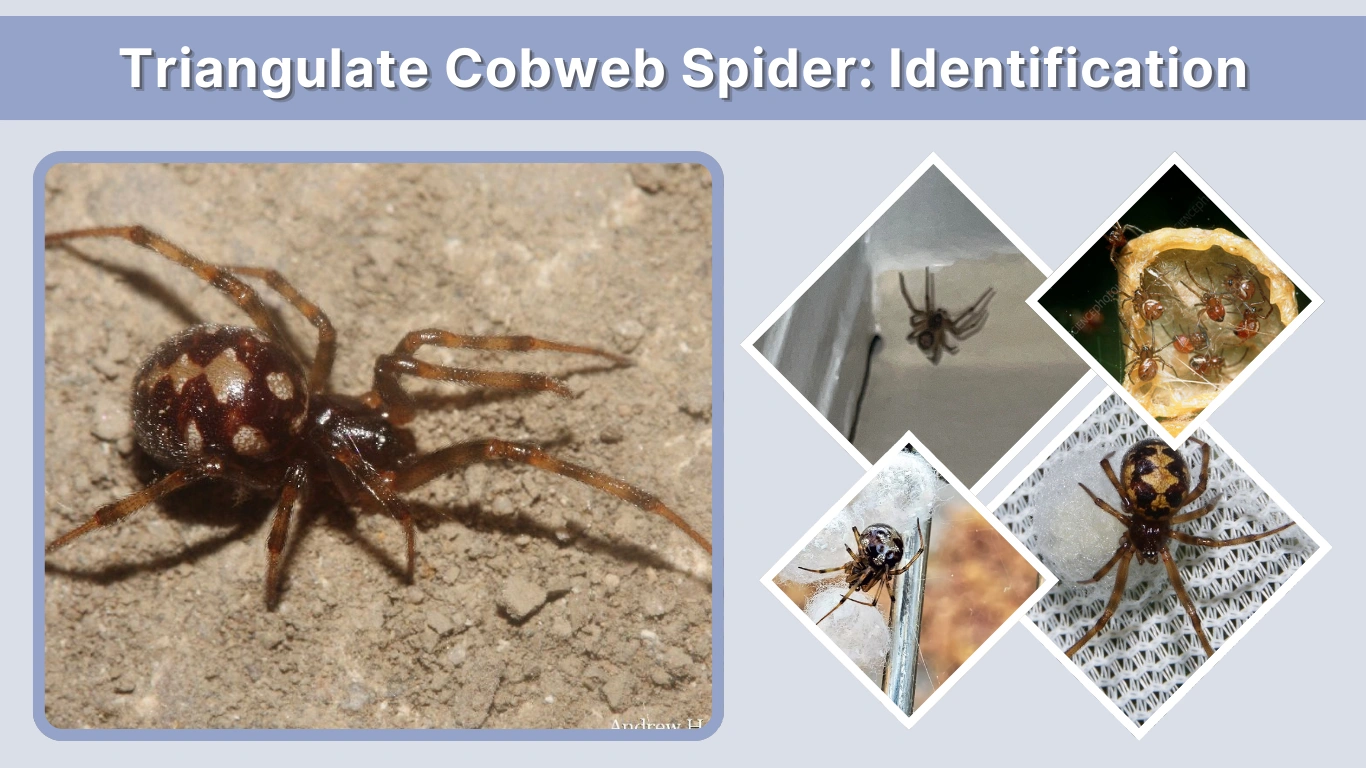
The triangulate cobweb spider (Steatoda triangulosa) is a small but fascinating spider commonly found inside homes. Known for the distinctive triangular patterns on its abdomen, this species belongs to the cobweb spider family (Theridiidae). Although its appearance may seem intimidating, the triangulate cobweb spider is generally harmless to humans and actually benefits households by feeding on common pests. These spiders prefer quiet indoor corners where they build messy cobwebs and patiently wait for prey.
What Is a Triangulate Cobweb Spider?
The triangulate cobweb spider is a species of small house spider widely recognized for the triangular markings across its abdomen. Its scientific name, Steatoda triangulosa, places it within the genus Steatoda, a group often referred to as “false widow spiders.” While some members of this genus resemble widow spiders, the triangulate cobweb spider is far less dangerous and rarely causes harm to people.
This spider is commonly found indoors where it thrives in undisturbed areas. It builds irregular cobwebs in corners and hidden spaces, patiently waiting for insects to become trapped in its sticky threads. Because of its pest-control role, many homeowners consider it a beneficial spider.
Quick Facts
| Feature | Details |
| Scientific Name | Steatoda triangulosa |
| Family | Theridiidae |
| Common Name | Triangulate Cobweb Spider |
| Size | 3–6 mm |
| Color | Cream, light brown with dark triangular markings |
| Habitat | Indoor corners, basements, garages |
| Diet | Small insects |
| Venom Risk | Very low for humans |
Triangulate Cobweb Spider Identification
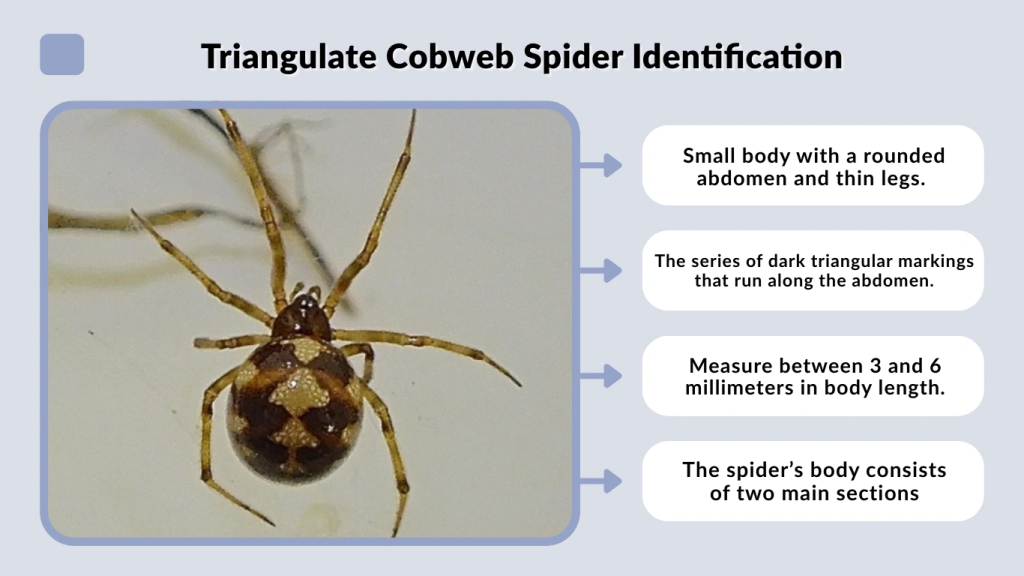
Correctly identifying the triangulate cobweb spider can help people distinguish it from other house spiders. While it is small, its unique body patterns make it relatively easy to recognize.
Physical Appearance
The triangulate cobweb spider has a small body with a rounded abdomen and thin legs. Its coloration typically ranges from cream to light brown. The most recognizable feature is the series of dark triangular markings that run along the abdomen. These patterns give the spider its common name.
The abdomen is usually slightly glossy and bulb-shaped, while the legs appear slender and delicate. Compared to many other spiders, this species looks relatively smooth and compact.
Size
Triangulate cobweb spiders are quite small. Adult females generally measure between 3 and 6 millimeters in body length. Males are usually slightly smaller and slimmer than females.
Despite their tiny size, they can still build effective webs and capture a variety of insects.
Body Structure
The spider’s body consists of two main sections: the cephalothorax (front body section) and the abdomen. The abdomen is the most prominent part and contains the spider’s digestive and reproductive organs.
Its legs are long relative to its body and help it move quickly along its web. Like other spiders, it has eight legs and multiple small eyes arranged in clusters.
Comparison With Similar Spiders
Some spiders are often confused with the triangulate cobweb spider because they share similar shapes or habitats.
Brown Widow Spider
Brown widows are larger and have a more distinctive hourglass marking on the underside of their abdomen. Their venom is also stronger.
Common House Spider
Common house spiders build similar tangled webs but lack the triangular abdominal patterns.
False Widow Spiders
Other Steatoda species may look similar but are typically darker and larger than the triangulate cobweb spider.
Understanding these differences can help avoid unnecessary fear when encountering this harmless spider.
Triangulate Cobweb Spider Habitat
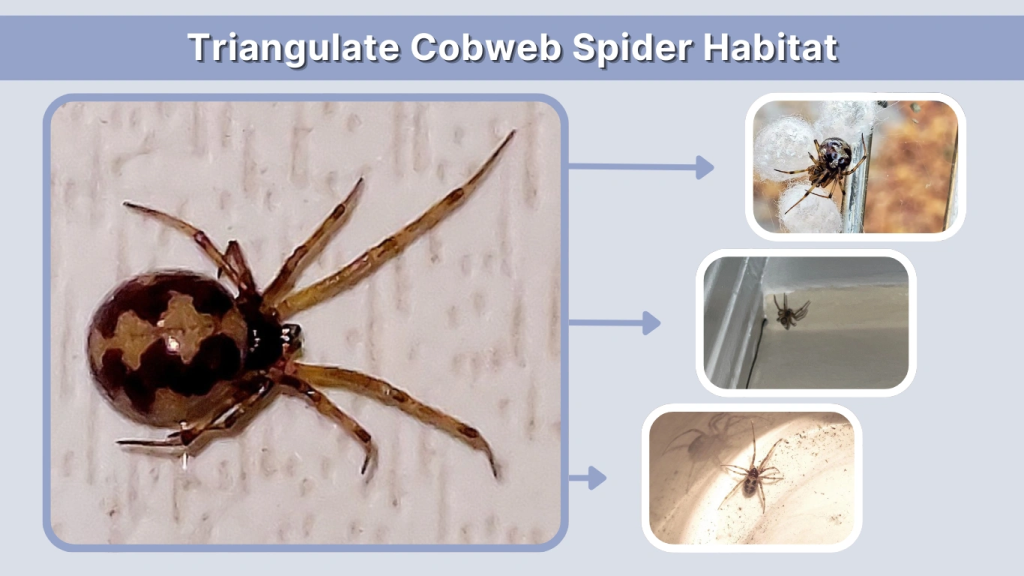
Triangulate cobweb spiders are strongly associated with human buildings. They prefer indoor environments where they can find shelter and a steady supply of insects.
Where They Live
These spiders are commonly found in quiet indoor locations such as:
- Room corners
- Basements
- Attics
- Garages
- Behind furniture
- Storage areas
They often remain hidden during the day and become more active at night when insects are more likely to fly into their webs.
Because their webs are usually placed in areas that are rarely disturbed, many people may live with these spiders without ever noticing them.
Geographic Distribution
The triangulate cobweb spider originally came from Europe, but it has spread widely across the world. Today it is commonly found in many regions, including:
- North America
- South America
- Asia
- Australia
- Parts of Africa
Human travel and trade have helped this species expand its range over time. It adapts easily to indoor environments, which makes it successful in many different climates.
Preferred Environment
These spiders prefer dry and sheltered locations where their webs can remain undisturbed. They tend to avoid open spaces and bright light.
Ideal conditions for triangulate cobweb spiders include:
- Low disturbance areas
- Dark corners
- Stable temperatures
- Moderate humidity
Homes and buildings provide the perfect environment for these spiders because they offer consistent shelter and abundant insect prey.
Triangulate Cobweb Spider Web
One of the most noticeable signs of this spider is its messy, irregular web.
Unlike orb-weaving spiders that create perfectly symmetrical webs, triangulate cobweb spiders produce tangled webs that appear disorganized. However, these webs are very effective for catching prey.
The web typically consists of sticky silk threads arranged in a chaotic pattern. When insects fly or crawl into the web, they become trapped in the sticky strands.
These spiders often place their webs in corners or along ceiling edges where insects frequently travel. Once prey becomes stuck, the spider quickly approaches and wraps it in silk before feeding.
Their webs are sometimes referred to as cobwebs, which is why the spider belongs to the cobweb spider family.
Diet and Feeding Habits
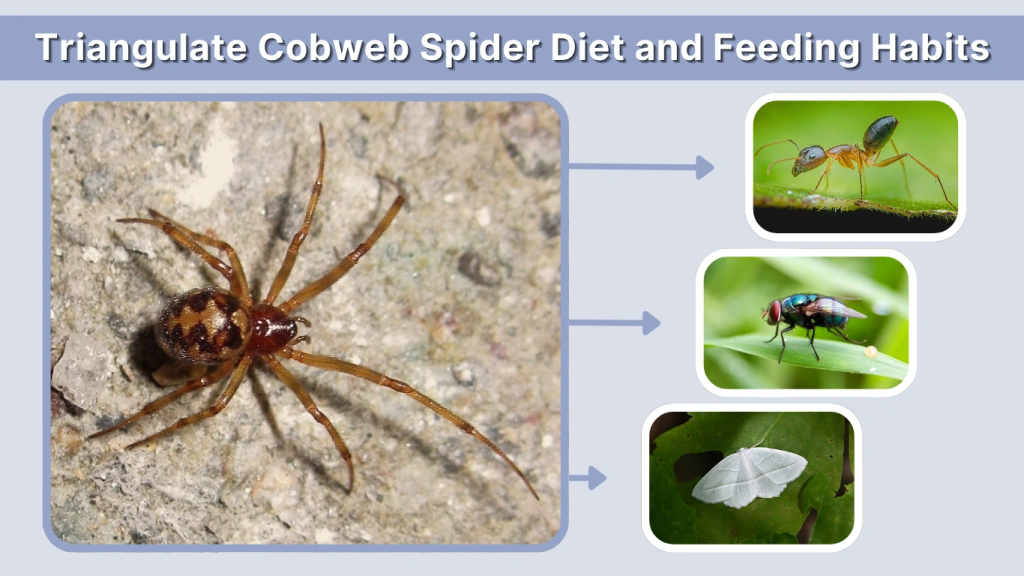
Triangulate cobweb spiders are carnivorous predators that feed mainly on small insects. Their tangled webs act as traps that capture prey moving through the area. Once an insect becomes stuck in the sticky silk, the spider quickly approaches and immobilizes it with additional strands of silk.
What Do Triangulate Cobweb Spiders Eat?
These spiders consume a variety of household insects, including:
- Ants
- Flies
- Mosquitoes
- Beetles
- Small moths
- Other tiny arthropods
Interestingly, triangulate cobweb spiders are also known to capture insects that are larger than themselves. Their strong silk helps restrain prey until the spider can safely bite and inject digestive venom.
Role in Pest Control
Because they feed on many common household insects, triangulate cobweb spiders can actually help reduce pest populations indoors. By catching flies, mosquitoes, and ants, they contribute to natural pest control within homes and buildings.
For this reason, some people choose to leave them undisturbed in quiet corners where they can continue catching unwanted insects.
Triangulate Cobweb Spider Bite
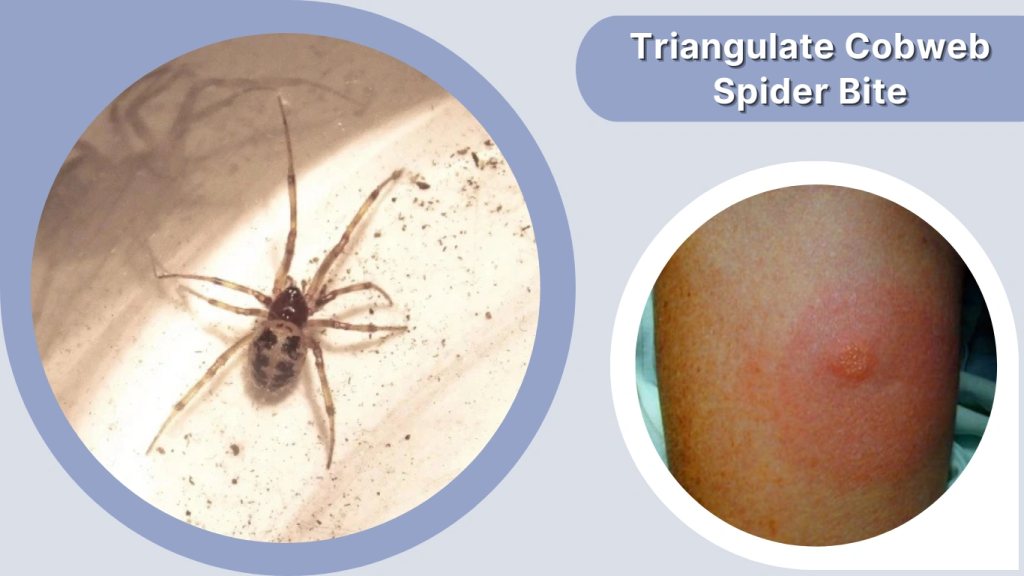
Many people worry about spider bites, but bites from triangulate cobweb spiders are very rare. These spiders are shy and non-aggressive, and they usually prefer to avoid human contact.
Are They Dangerous?
The triangulate cobweb spider does have venom, but it is primarily used to subdue small insects. For humans, the venom is considered very mild and rarely causes serious reactions.
In most cases, these spiders will only bite if they feel trapped or threatened.
Bite Symptoms
If a bite does occur, the symptoms are typically mild and may include:
- Slight redness
- Minor swelling
- Mild pain or irritation
These symptoms usually disappear within a short time and do not require medical treatment.
When to Seek Medical Attention
Although reactions are uncommon, medical attention may be necessary if:
- Severe swelling develops
- Symptoms worsen over time
- An allergic reaction occurs
However, such cases are extremely rare with this species.
Behavior and Lifestyle
Triangulate cobweb spiders are generally quiet and reclusive creatures. They prefer to remain hidden within their webs rather than actively wandering around.
Activity Pattern
These spiders are mostly nocturnal, meaning they are more active at night. During the evening hours, they monitor their webs and respond quickly when prey becomes trapped.
During the day, they often stay motionless near the edge of the web or hide in nearby cracks and corners.
Temperament
One reason these spiders are rarely noticed is their calm temperament. They are not aggressive and do not chase humans or animals.
Instead, they rely entirely on their webs to capture food. If disturbed, they usually retreat rather than attack.
Reproduction
Female triangulate cobweb spiders produce egg sacs that are attached to their webs. Each sac contains dozens of tiny spider eggs.
After hatching, the spiderlings remain in the web for a short period before dispersing to find their own locations to build webs.
Lifespan and Life Cycle
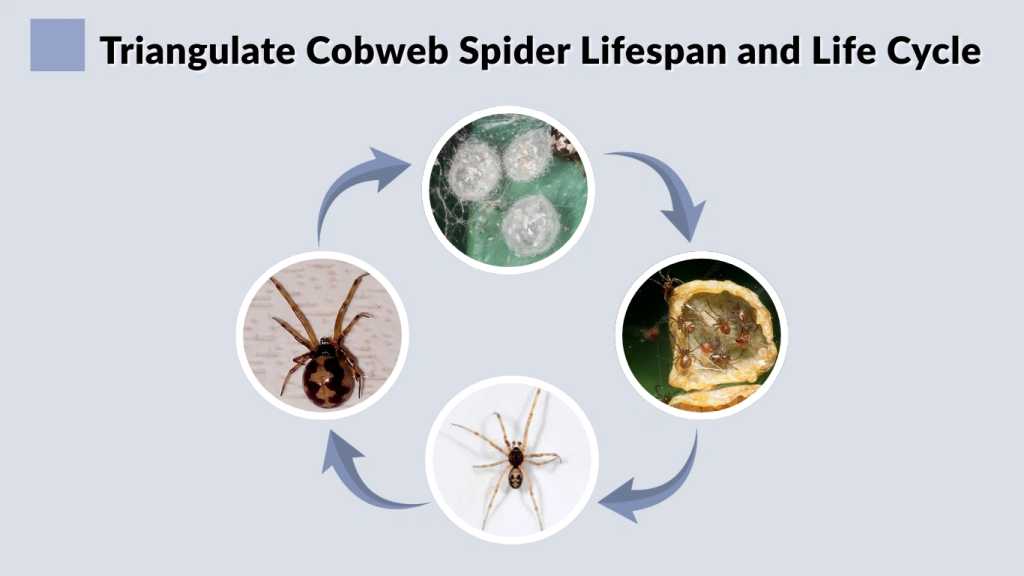
Like most spiders, the triangulate cobweb spider goes through several developmental stages before reaching adulthood.
Life Stages
The typical life cycle includes:
- Egg Stage – Eggs are protected inside silk egg sacs.
- Spiderling Stage – Young spiders emerge and begin growing.
- Juvenile Stage – They gradually develop adult features.
- Adult Stage – Mature spiders reproduce and continue the cycle.
Average Lifespan
The average lifespan of a triangulate cobweb spider is about one to two years. Environmental conditions, food availability, and predators can all influence how long an individual spider survives.
Benefits of Triangulate Cobweb Spiders
Although many people dislike spiders, the triangulate cobweb spider provides several benefits.
Natural Pest Control
One of the biggest advantages of these spiders is their ability to reduce insect populations indoors. By feeding on pests like flies and mosquitoes, they help maintain a healthier living environment.
Harmless Household Spider
Unlike some spiders that may pose a medical risk, this species is considered low risk for humans. Their bites are rare and usually harmless.
Maintaining Indoor Balance
Spiders play an important role in ecosystems, even inside homes. They help maintain balance by controlling insect numbers and preventing certain pests from becoming overwhelming.
How to Get Rid of Triangulate Cobweb Spiders (If Necessary)
While many people tolerate these spiders, others may prefer to remove them from their homes.
Natural Removal Methods
Simple cleaning methods are often enough to reduce their presence:
- Vacuum corners and ceiling edges
- Remove old webs regularly
- Keep storage areas organized
- Reduce clutter where spiders may hide
Prevention Tips
Preventing insects indoors will also discourage spiders from staying. Helpful strategies include:
- Sealing cracks and gaps in walls
- Keeping windows and doors properly screened
- Reducing outdoor lighting near entrances
- Keeping food sealed and clean
Without a steady supply of insects, spiders are less likely to remain inside a building.
FAQs
Are triangulate cobweb spiders poisonous?
They do possess venom used to capture prey, but it is very mild and not dangerous to humans.
Do triangulate cobweb spiders live in beds?
No. They usually prefer quiet corners, ceilings, or storage areas where their webs are less likely to be disturbed.
How big do triangulate cobweb spiders get?
Most adults grow between 3 and 6 millimeters, making them relatively small compared to many other house spiders.
Should I remove triangulate cobweb spiders from my house?
It is not always necessary. Since they help control insects, some people allow them to remain in undisturbed areas.
Conclusion
The triangulate cobweb spider (Steatoda triangulosa) is a small, harmless house spider recognized by the triangular markings on its abdomen and its tangled cobwebs. Despite its somewhat intimidating appearance, this species rarely bites humans and plays a valuable role in controlling household pests. Found in quiet indoor corners around the world, these spiders quietly capture insects and help maintain balance within indoor environments. Understanding their behavior and benefits can help people appreciate these useful spiders rather than fear them.