
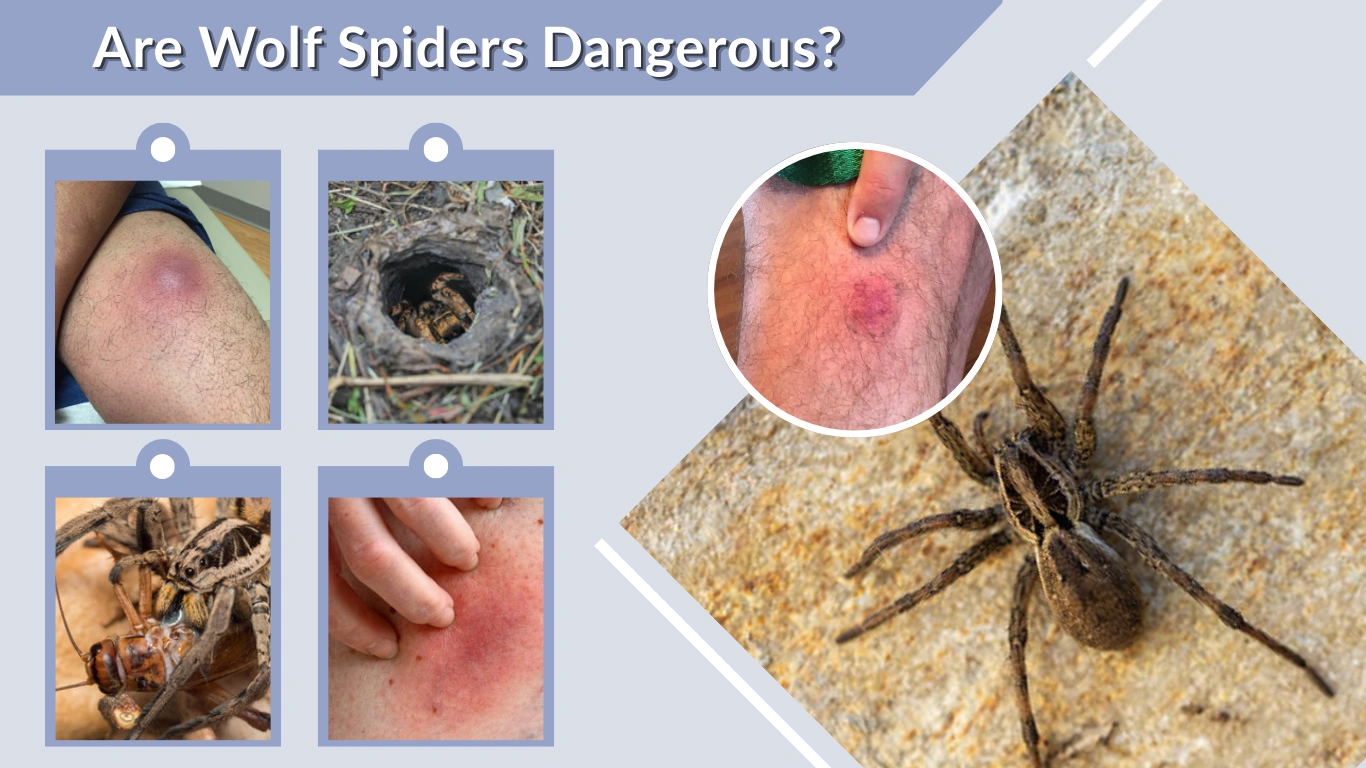
Wolf spiders often cause alarm because of their large size, hairy bodies, and fast movements. Many people wonder whether these spiders are dangerous to humans. Wolf spiders belong to the Lycosidae family, a group of hunting spiders known for their speed and excellent eyesight. Unlike many spiders, they do not build webs to catch prey. Although they can bite if threatened, wolf spiders are generally not considered dangerous to humans and usually prefer to avoid contact.
What Are Wolf Spiders?
Wolf spiders are a group of ground-dwelling spiders known for their hunting ability. Instead of spinning webs to capture insects, they actively chase and ambush their prey. Their name comes from their hunting style, which resembles the way wolves stalk and pursue their targets.
These spiders are commonly found in gardens, forests, grasslands, and sometimes inside homes. Because they are fast-moving predators, they play an important role in controlling insect populations.
Quick Facts
| Feature | Details |
| Scientific Family | Lycosidae |
| Common Name | Wolf Spider |
| Size | 10–35 mm |
| Color | Brown, gray, black |
| Habitat | Forests, gardens, fields, homes |
| Diet | Insects and small arthropods |
| Venom Risk | Low for humans |
| Activity | Mostly nocturnal |
Wolf Spider Identification
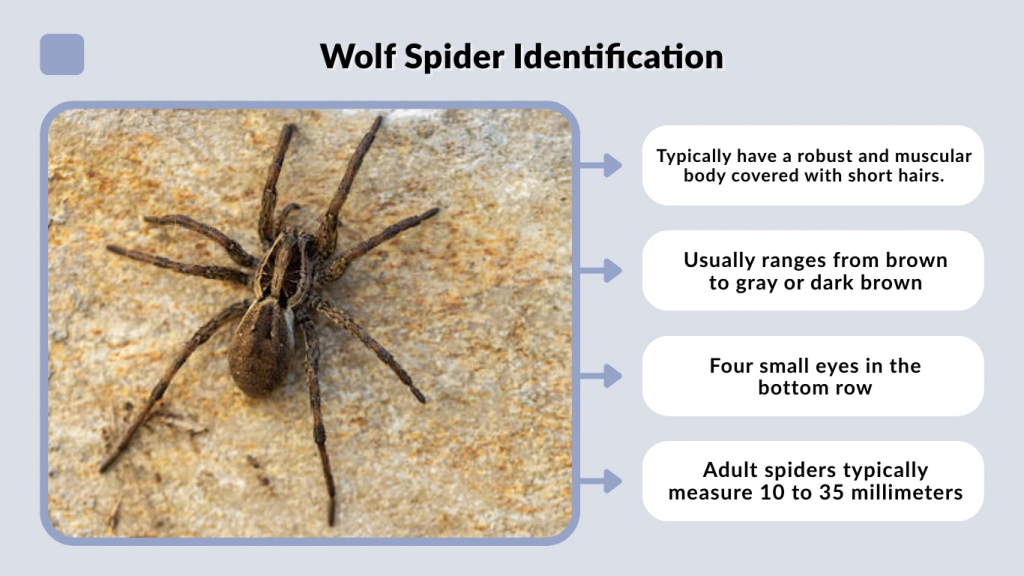
Identifying a wolf spider is fairly easy because of its distinctive appearance and behavior. These spiders are larger than many common house spiders and have a somewhat rugged, hairy look.
Physical Appearance
Wolf spiders typically have a robust and muscular body covered with short hairs. Their coloration usually ranges from brown to gray or dark brown, which helps them blend into soil, leaves, and natural ground surfaces.
Many species also have faint stripes or patterns along their bodies, helping them camouflage in their environment.
Eye Arrangement
One of the most unique features of wolf spiders is their eye pattern. They have eight eyes arranged in three rows:
- Four small eyes in the bottom row
- Two very large eyes in the middle row
- Two medium-sized eyes on the top row
The two large middle eyes provide excellent vision, which helps the spider hunt prey efficiently.
Size
Wolf spiders are relatively large compared to many house spiders. Adult spiders typically measure 10 to 35 millimeters in body length. Some species can appear even larger when their legs are included.
Females are usually larger and heavier than males.
Unique Traits
Several features make wolf spiders different from many other spiders:
- They do not build webs to catch prey
- They rely on speed and stealth while hunting
- Females carry egg sacs attached to their abdomen
- Mother spiders may carry baby spiderlings on their backs after hatching
These behaviors make wolf spiders fascinating hunters within the spider world.
Where Wolf Spiders Live
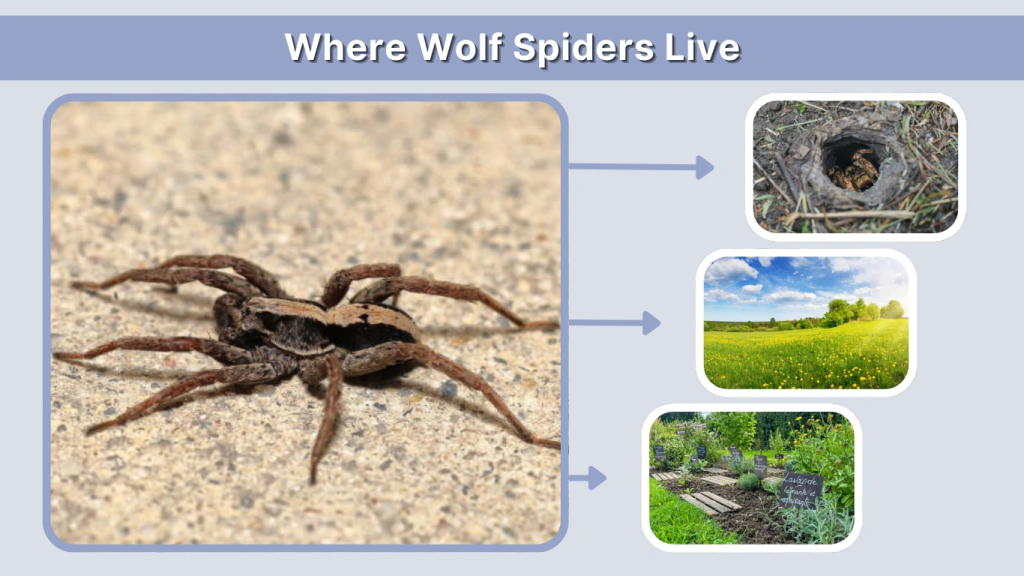
Wolf spiders are highly adaptable and can survive in a wide variety of environments. They are commonly found outdoors but sometimes wander indoors in search of food or shelter.
Natural Habitats
In nature, wolf spiders prefer areas where they can easily hunt insects. Typical habitats include:
- Grasslands
- Forest floors
- Gardens
- Fields
- Desert regions
- Leaf litter and soil surfaces
Some species dig small burrows in the ground where they hide during the day.
Indoor Locations
Although wolf spiders usually live outdoors, they occasionally enter houses. When inside, they may be found in:
- Basements
- Garages
- Storage rooms
- Near doors or windows
- Under furniture
Most indoor encounters happen accidentally when the spider wanders inside while hunting.
Global Distribution
Wolf spiders are widely distributed around the world. They can be found on nearly every continent except Antarctica. Some of the regions where they are commonly seen include:
- North America
- Europe
- Asia
- Australia
- Africa
Their ability to adapt to many climates and environments helps explain why they are so widespread.
Wolf Spider Behavior
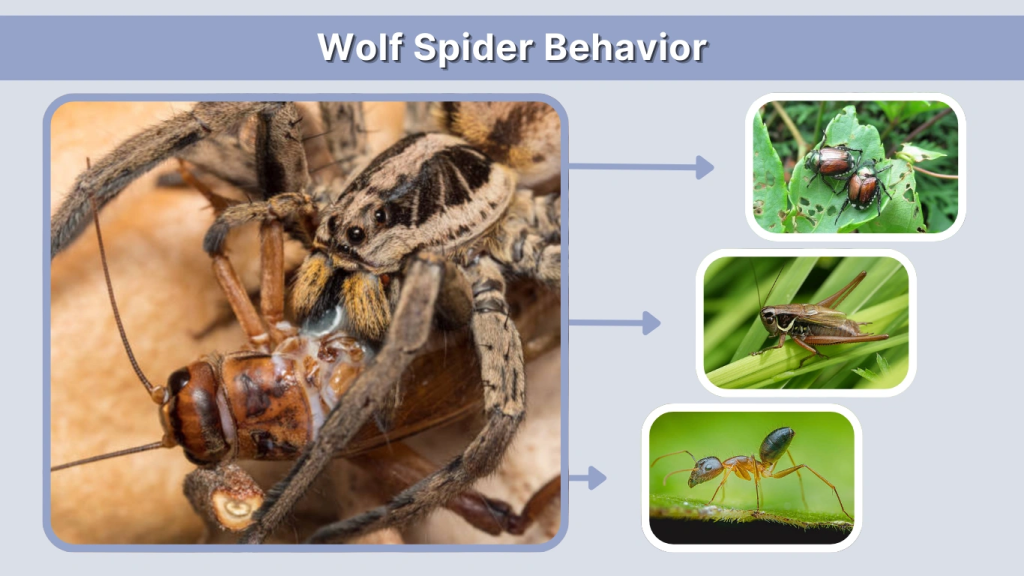
Wolf spiders are known for their active hunting behavior and quick movements. Unlike web-building spiders that wait for prey, wolf spiders actively search for food.
Hunting Style
These spiders use a stalk-and-pounce strategy when hunting insects. They rely on their strong eyesight and fast legs to chase down prey.
Common prey includes:
- Beetles
- Crickets
- Ants
- Flies
- Other small insects
Once the spider catches its prey, it injects venom that quickly immobilizes the insect.
Activity Pattern
Wolf spiders are mostly nocturnal, meaning they hunt during the night. Their excellent vision helps them navigate and detect movement even in low-light conditions.
During the day, they usually hide in sheltered areas such as:
- Under rocks
- Inside leaf litter
- In small burrows
- Beneath logs or debris
Temperament
Despite their intimidating appearance, wolf spiders are not aggressive toward humans. They usually try to escape when disturbed.
Most bites occur only if the spider becomes trapped, accidentally pressed against skin, or handled roughly.
Wolf Spider Bite
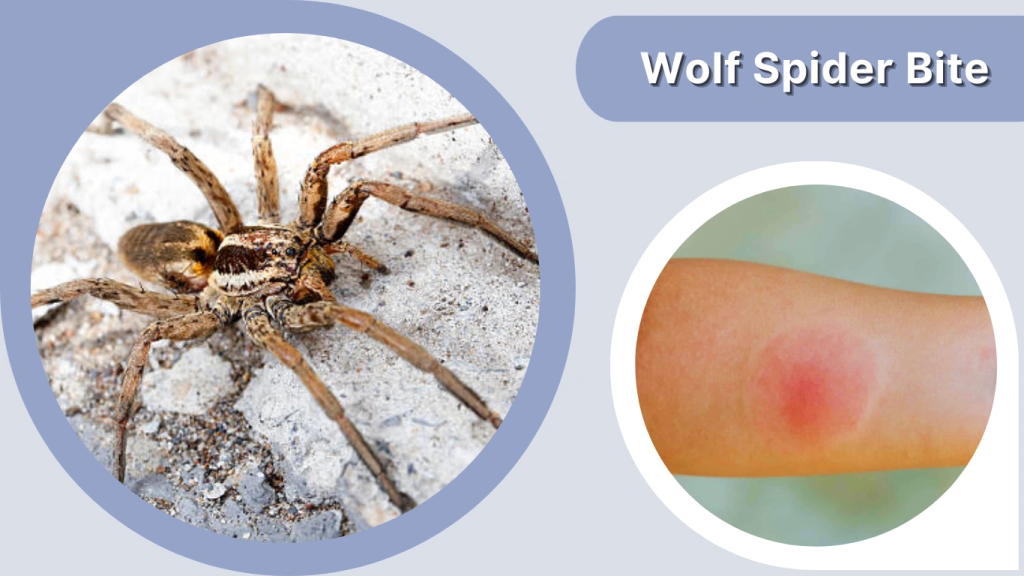
Although wolf spiders look intimidating, bites from these spiders are rare. In most situations, wolf spiders prefer to run away rather than defend themselves. However, like many spiders, they may bite if they feel trapped or threatened.
Do Wolf Spiders Bite Humans?
Yes, wolf spiders can bite humans, but it usually happens only in specific situations, such as:
- When the spider is accidentally pressed against the skin
- When someone tries to handle the spider
- When the spider feels threatened or cornered
Most encounters with wolf spiders do not result in bites.
Bite Symptoms
If a wolf spider bite does occur, the symptoms are generally mild. Common symptoms may include:
- Mild pain at the bite site
- Redness
- Slight swelling
- Itching or irritation
In many cases, the bite feels similar to a bee sting and the discomfort fades within a short time.
Bite Severity
Wolf spider venom is designed to immobilize insects rather than harm humans. For most people, a bite causes only minor symptoms that disappear within a few hours or days.
Severe reactions are uncommon, but individual sensitivity can vary.
Are Wolf Spiders Dangerous to Humans?
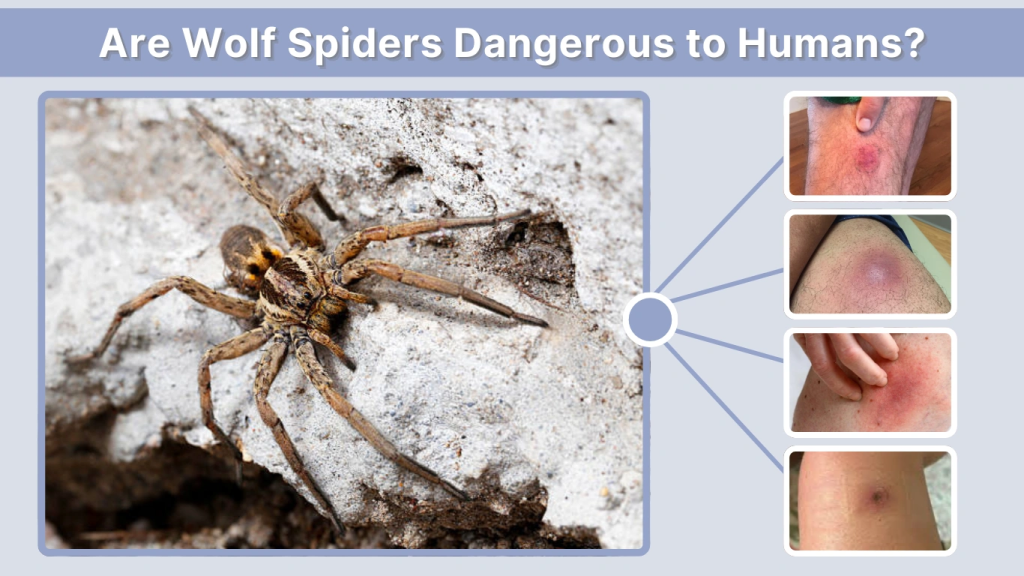
The simple answer is no—wolf spiders are generally not dangerous to humans.
Although they do possess venom, it is relatively mild and not considered medically significant. Most bites result in only temporary discomfort.
Venom Effects
Wolf spider venom is mainly used to paralyze prey such as insects. When injected into humans, the venom usually produces only localized reactions.
Typical effects include:
- Minor swelling
- Temporary redness
- Mild pain
These symptoms usually disappear without medical treatment.
Risk Level
Overall, wolf spiders are considered low-risk spiders. Compared with medically significant spiders such as the black widow or brown recluse, wolf spiders pose very little danger.
Who Should Be More Careful
While serious reactions are rare, certain individuals should be cautious if bitten:
- People with insect or spider venom allergies
- Young children
- Individuals with weakened immune systems
If unusual symptoms develop, it is always best to seek medical advice.
Are Wolf Spiders Dangerous to Pets?
Many pet owners worry about spiders harming their animals. Fortunately, wolf spiders are generally not dangerous to pets such as cats and dogs.
Possible Effects on Pets
If a pet is bitten, it may experience:
- Temporary pain
- Mild swelling
- Local irritation
Most pets recover quickly without complications.
However, if a pet shows signs of distress, excessive swelling, or unusual behavior after a suspected bite, consulting a veterinarian is recommended.
Benefits of Wolf Spiders
Despite their frightening appearance, wolf spiders are actually beneficial predators in many environments.
Natural Pest Control
Wolf spiders feed on a wide variety of insects that people often consider pests. Their diet commonly includes:
- Cockroaches
- Crickets
- Beetles
- Flies
- Ants
By hunting these insects, wolf spiders help maintain balance in ecosystems and reduce pest populations.
Important Role in Ecosystems
Wolf spiders are important predators in both natural and urban environments. They help control insect populations and serve as prey for larger animals such as birds, reptiles, and small mammals.
Their presence contributes to a healthy and balanced ecosystem.
Wolf Spider vs Dangerous Spiders
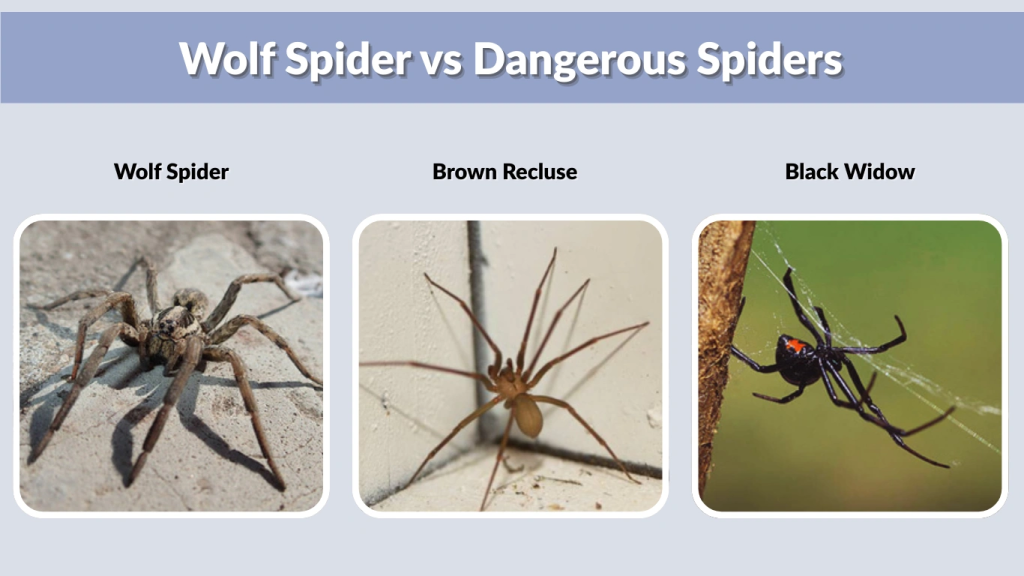
Because wolf spiders can look large and intimidating, they are sometimes mistaken for more dangerous species.
Wolf Spider vs Brown Recluse
The brown recluse spider is much more medically significant. Key differences include:
- Wolf spiders are hairy and have multiple eye rows.
- Brown recluses have smooth bodies and a violin-shaped marking on their back.
Wolf Spider vs Black Widow
Black widow spiders are easily recognized by their shiny black bodies and the red hourglass marking on the underside of their abdomen.
Wolf spiders lack these markings and have a more rugged appearance.
Understanding these differences can help people avoid unnecessary fear when encountering wolf spiders.
How to Prevent Wolf Spiders in Your Home
While wolf spiders are helpful outdoors, some people prefer to keep them out of their homes.
Prevention Tips
A few simple steps can reduce the chances of wolf spiders entering your house:
- Seal cracks and gaps in walls or foundations
- Install proper window and door screens
- Reduce clutter around the home
- Keep outdoor lighting away from entrances
- Control insect populations indoors
Since wolf spiders enter homes mainly in search of prey, reducing indoor insects will make your home less attractive to them.
Safe Removal Methods
If you find a wolf spider indoors, there are simple ways to remove it safely:
- Use a container and release the spider outside
- Vacuum the spider if necessary
- Avoid handling spiders directly
Most wolf spiders will quickly run away if given the chance.
FAQs
Are wolf spiders poisonous?
Wolf spiders have venom used to subdue prey, but it is not considered dangerous to humans.
How painful is a wolf spider bite?
A wolf spider bite is usually comparable to a mild bee sting and rarely causes serious symptoms.
Do wolf spiders chase people?
No. Wolf spiders may appear to run toward someone, but they are usually trying to escape rather than attack.
Should I kill wolf spiders in my house?
Killing them is not always necessary. Since they help control insects, many people simply remove and release them outdoors.
Conclusion
Wolf spiders may appear intimidating because of their size, speed, and hairy bodies, but they are generally harmless to humans. While they can bite if threatened, their venom is mild and rarely causes serious reactions. In fact, wolf spiders play an important role in controlling insect populations and maintaining ecological balance. By understanding their behavior and benefits, people can learn to coexist with these useful predators rather than fear them.