
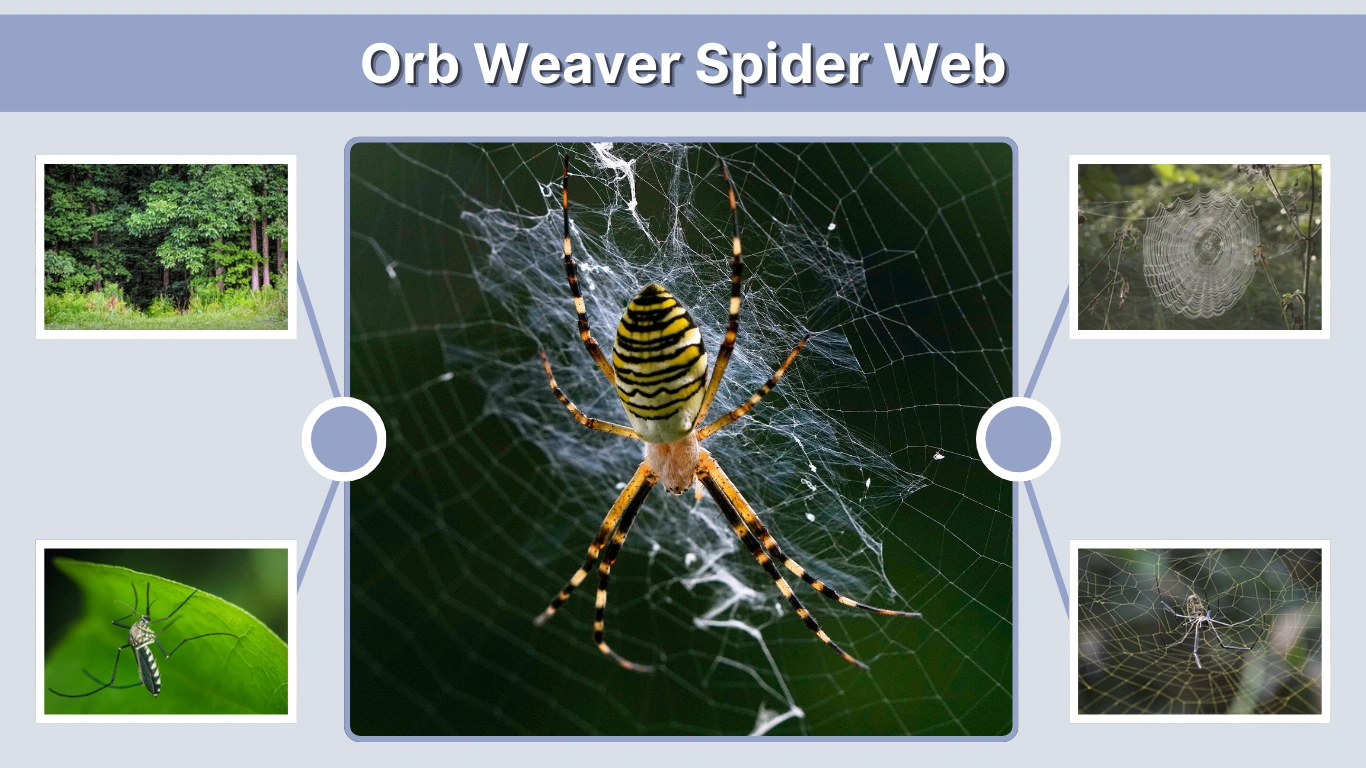
The orb weaver spider web is one of the most recognizable structures in nature. These beautiful circular webs are often seen in gardens, forests, and around homes, especially early in the morning when they are covered with dew. Orb weaver spiders belong to the Araneidae family, a group known for creating highly organized webs with radial spokes and sticky spiral threads. These intricate webs are not only visually impressive but also extremely effective traps for flying insects.
What Is an Orb Weaver Spider Web?
An orb weaver spider web is a circular, wheel-shaped web built by spiders in the orb-weaving group. The web design features evenly spaced radial lines that extend outward from the center, connected by spiral threads.
This type of web is designed primarily to capture flying insects such as flies, moths, and mosquitoes. When an insect flies into the web, it becomes stuck in the sticky silk threads, allowing the spider to quickly capture its prey.
Orb weaver webs are among the most geometrically precise structures in the animal kingdom. Their symmetrical patterns make them highly efficient at trapping insects while using a minimal amount of silk.
Quick Facts
| Feature | Details |
| Spider Family | Araneidae |
| Web Shape | Circular (orb-shaped) |
| Web Diameter | 20–60 cm or more |
| Silk Type | Sticky spiral silk and strong support silk |
| Function | Capture flying insects |
| Construction Time | 30–60 minutes |
Orb weaver spiders often build their webs in places where insects are likely to fly, such as near lights, between tree branches, or across garden pathways.
Orb Weaver Spider Web Structure
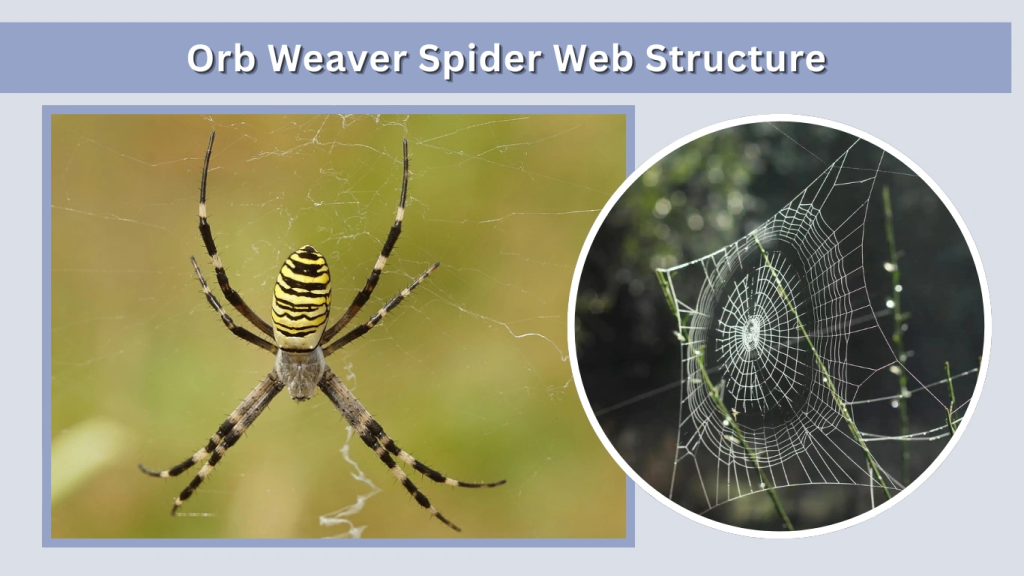
The structure of an orb weaver web is carefully organized and consists of several important parts. Each component plays a role in supporting the web and trapping prey.
Radial Lines
Radial lines, often called spokes, extend outward from the center of the web. These threads connect the hub of the web to the outer frame.
The radial lines provide structural support for the web and help distribute the force when insects collide with the web. They are made from strong, non-sticky silk that allows the spider to move easily across the web.
Spiral Capture Threads
Between the radial lines, the spider spins spiral threads that form circular loops around the web.
These spiral threads are coated with sticky droplets that trap insects. When a flying insect touches the web, the sticky silk holds it in place, preventing escape.
The spider can then quickly move toward the trapped prey.
Anchor Threads
Anchor threads connect the web to surrounding surfaces such as:
- Tree branches
- Leaves
- Walls
- Fences
- Garden plants
These threads stabilize the web and keep it stretched tightly. Strong anchor points help the web remain stable even when wind or struggling insects place stress on the structure.
Web Center (Hub)
The hub is located at the center of the web where many radial lines meet.
Some orb weaver spiders sit in the hub and wait for prey to become trapped. Others hide nearby and monitor the web through vibrations transmitted along the silk threads.
When an insect becomes stuck, the vibrations alert the spider, allowing it to quickly locate the prey.
Orb Weaver Web Pattern
Orb weaver webs are famous for their symmetrical circular design. This pattern is not only visually impressive but also extremely effective for catching insects.
Circular Symmetry
The web forms a nearly perfect circle with evenly spaced radial lines extending outward like the spokes of a wheel.
This symmetry allows the web to cover a wide area, increasing the chances that flying insects will collide with it.
The circular shape also helps distribute tension across the web, making it stronger and more stable.
Geometric Design
The combination of radial spokes and spiral loops creates a geometric pattern that resembles a wheel or target.
Scientists and engineers often study orb weaver webs because their design demonstrates natural engineering principles, including:
- Efficient material use
- Structural stability
- Energy absorption
Despite using only silk threads, these webs are strong enough to stop insects traveling at high speeds.
Why the Pattern Works
The orb web pattern works effectively because it maximizes both strength and prey capture efficiency.
Key advantages of the design include:
- Large surface area for trapping insects
- Strong radial lines to support the web
- Sticky spiral threads that hold prey securely
This clever design allows orb weaver spiders to catch many insects while using relatively little silk.
How Orb Weaver Spiders Build Their Webs
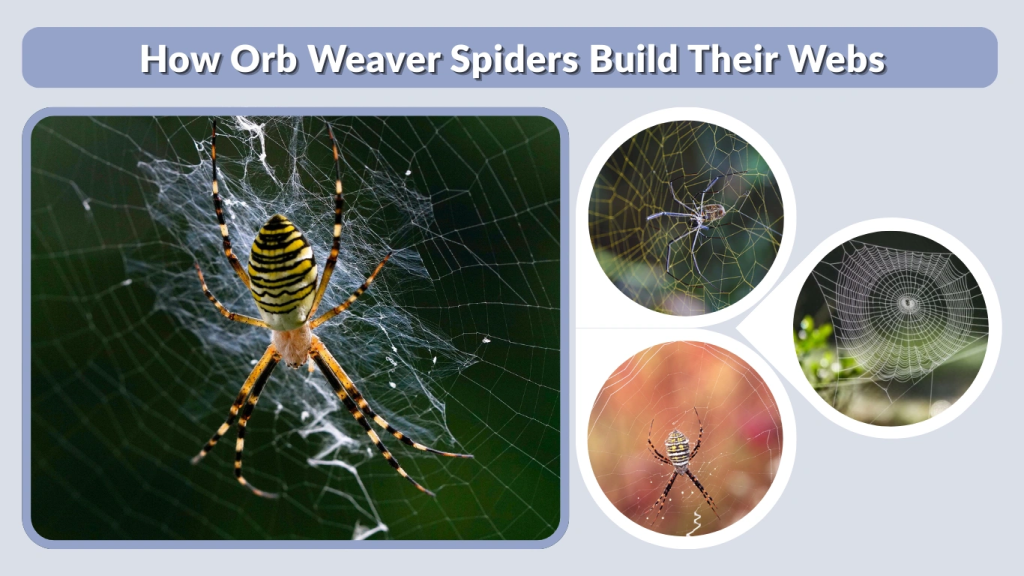
Orb weaver spiders follow a step-by-step process when constructing their webs. Despite their small size, they are remarkably skilled builders.
Step 1: Creating the Bridge Line
The spider first releases a strand of silk that floats in the air until it attaches to another surface. This thread forms the bridge line, which becomes the foundation of the web.
Once the line is secured, the spider strengthens it by walking back and forth while adding additional silk.
Step 2: Building the Frame
After establishing the bridge line, the spider constructs the outer frame of the web.
The frame defines the overall size and shape of the web and provides attachment points for the radial lines.
Step 3: Adding Radial Spokes
Once the outer frame is complete, the spider begins building the radial spokes. These lines extend from the center of the web outward to the frame, forming the wheel-like structure that orb webs are known for.
The spider usually starts from the center and moves outward, attaching silk threads to the frame at different points. These spokes create the main support structure of the web.
Radial lines are made from strong, non-sticky silk, allowing the spider to walk across them without getting trapped. They also help transmit vibrations, so the spider can detect when prey hits the web.
Step 4: Spinning the Spiral
After the spokes are in place, the spider begins creating a temporary spiral from the center outward. This spiral helps maintain even spacing between the radial lines.
Next, the spider replaces this temporary spiral with the final sticky spiral. This sticky silk is what traps insects when they fly into the web.
The spiral threads are coated with tiny adhesive droplets that cling to insect wings and bodies. Once this final spiral is completed, the web becomes a fully functional trap.
Most orb weaver spiders can complete an entire web in 30 minutes to one hour, depending on the size of the web.
Why Orb Weaver Webs Are So Strong
Orb weaver webs may appear delicate, but they are surprisingly strong and flexible. The strength of the web comes from the special properties of spider silk.
Spider Silk Strength
Spider silk is known for its remarkable strength. In terms of weight and thickness, spider silk can be stronger than steel.
This strength allows the web to absorb the impact of fast-flying insects without breaking.
Elasticity
Another important feature of spider silk is its elasticity. The silk threads can stretch significantly without snapping.
When an insect collides with the web, the silk stretches and slows the insect down rather than breaking immediately. This elasticity helps prevent prey from escaping.
Shock Absorption
The combination of strong radial lines and elastic spiral threads allows the web to act as a shock absorber.
Instead of breaking under pressure, the web distributes the force of impact across multiple threads. This makes orb webs highly efficient traps.
Where Orb Weaver Spider Webs Are Found
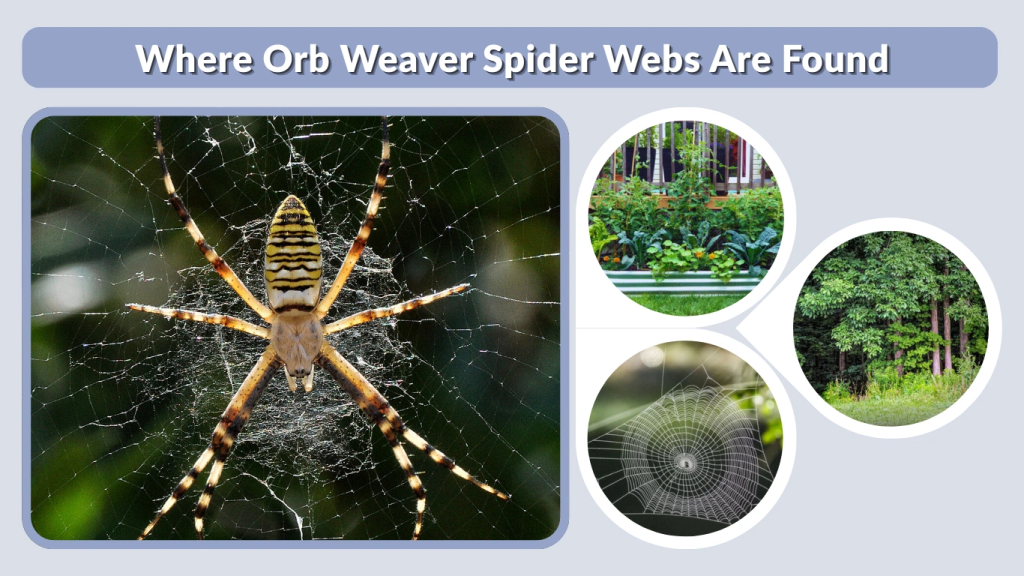
Orb weaver spiders carefully choose locations where their webs are most likely to catch insects.
Outdoor Locations
Most orb weaver webs are built outdoors in places where flying insects are abundant. Common locations include:
- Gardens
- Forest edges
- Fields
- Between tree branches
- Around bushes and shrubs
These areas provide both support structures and a steady supply of prey.
Near Lights
Many orb weaver spiders build webs near outdoor lights because lights attract insects at night.
Street lamps, porch lights, and garden lights often become excellent hunting locations for orb weavers.
Web Placement Strategy
Orb weaver spiders typically build their webs across open spaces where insects are likely to fly through. Examples include:
- Between two trees
- Across garden paths
- Between fences or posts
This strategic placement increases the chances that flying insects will collide with the web.
What Insects Orb Weaver Webs Catch
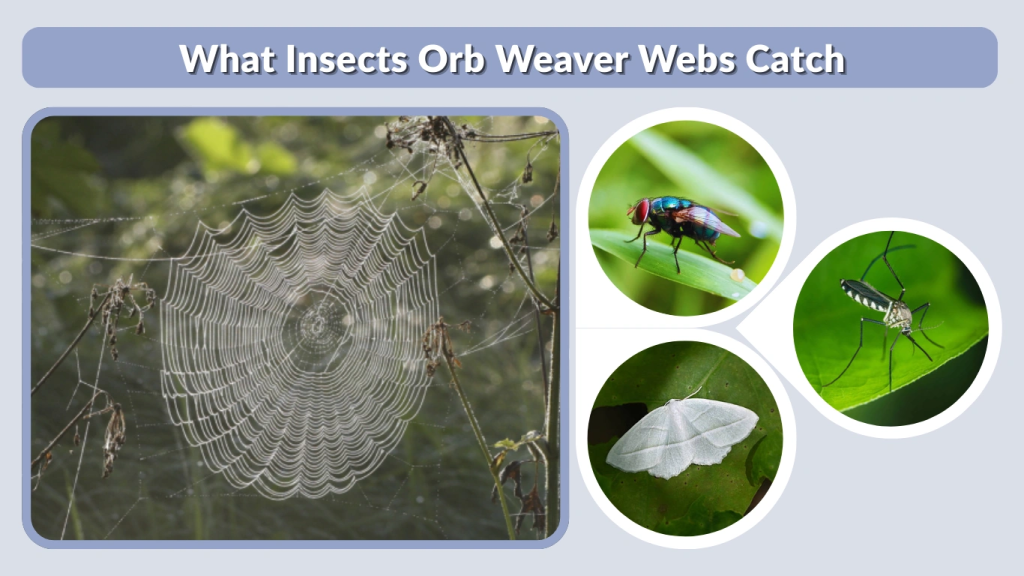
Orb weaver webs are designed to capture a wide variety of flying insects.
Common prey includes:
- Flies
- Mosquitoes
- Moths
- Beetles
- Wasps
- Small butterflies
When an insect becomes stuck in the sticky spiral threads, the spider quickly moves toward the prey and wraps it in silk.
The spider then injects venom to immobilize the insect before feeding.
Do Orb Weaver Spiders Rebuild Their Webs?
Many orb weaver spiders rebuild their webs frequently.
Daily Web Construction
Some species build a new web every night. During the daytime, they may hide nearby and return at night to construct a fresh web.
Building a new web ensures that the silk remains sticky and effective.
Why They Rebuild Webs
Orb weaver spiders rebuild webs for several reasons:
- Old webs lose stickiness
- Wind and rain may damage the web
- Large insects may tear parts of the web
Rebuilding allows the spider to maintain a highly efficient hunting trap.
Silk Recycling
Interestingly, many orb weaver spiders eat their old webs before constructing new ones. This allows them to recycle the silk proteins and conserve energy when producing new silk.
Are Orb Weaver Spider Webs Dangerous?
Orb weaver spider webs are completely harmless to humans.
Risk to Humans
The webs themselves are not toxic or harmful. At most, walking through a web may cause a mild surprise or inconvenience.
Orb weaver spiders are also not aggressive and rarely bite people.
Benefits of Orb Weaver Webs
Orb weaver webs actually provide benefits by helping control insect populations. By catching insects such as mosquitoes and flies, these spiders contribute to natural pest control.
For this reason, many gardeners consider orb weavers helpful allies.
FAQs
Why are orb weaver webs circular?
The circular design helps maximize the web’s surface area while maintaining strength and stability. This shape increases the chances of trapping flying insects.
How long does it take an orb weaver to build a web?
Most orb weaver spiders can build a complete web in 30 to 60 minutes.
Do orb weaver spiders stay in their webs all day?
Some orb weavers remain in the center of the web, while others hide nearby and return when prey becomes trapped.
Are orb weaver webs sticky?
Yes. The spiral threads of the web contain sticky silk that traps insects.
Conclusion
The orb weaver spider web is one of nature’s most impressive engineering achievements. Its circular structure, radial spokes, and sticky spiral threads create an efficient trap for flying insects. These webs demonstrate remarkable strength, flexibility, and geometric precision despite being built by tiny spiders. Beyond their beauty, orb weaver webs play an important role in natural pest control by capturing insects in gardens and outdoor environments. Understanding how these webs are built reveals the incredible abilities of orb weaver spiders.