
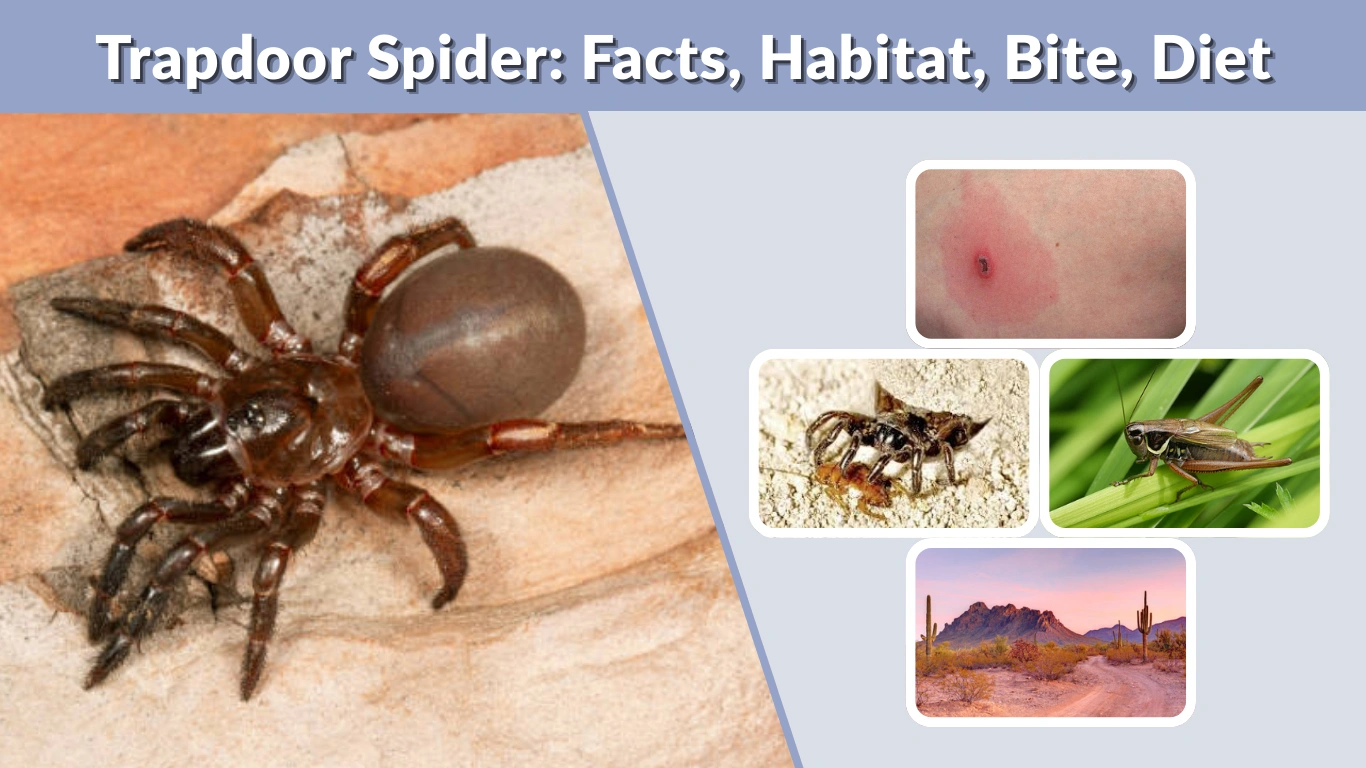
The trapdoor spider is one of nature’s most fascinating and secretive predators. Known for its unique underground burrow with a camouflaged trapdoor, this spider spends most of its life hidden beneath the soil. Instead of building large webs, it relies on stealth and patience to capture prey. Found in many parts of the world, trapdoor spiders are masters of ambush hunting, using their cleverly designed burrows to surprise insects that pass too close.
What Is a Trapdoor Spider?
A trapdoor spider is a type of burrowing spider famous for constructing underground tunnels sealed with a hinged door made from soil, silk, and plant material. These spiders belong to several families within the order Araneae, and many species share the same remarkable hunting strategy.
Unlike web-building spiders, trapdoor spiders spend most of their lives inside their silk-lined burrows, waiting patiently for prey to come near the entrance.
Scientific Classification
Trapdoor spiders are part of the mygalomorph group, which also includes tarantulas and funnel-web spiders. These spiders generally have strong bodies and large downward-pointing fangs.
Basic classification includes:
- Kingdom: Animalia
- Phylum: Arthropoda
- Class: Arachnida
- Order: Araneae
Several families include trapdoor spiders, such as:
- Ctenizidae
- Halonoproctidae
- Idiopidae
Although they belong to different families, these spiders share similar burrowing and hunting behaviors.
What Makes Them Unique?
Trapdoor spiders are best known for their ingenious burrows. The spider digs a deep tunnel in the soil and constructs a trapdoor at the entrance.
This door blends perfectly with the surrounding ground because it is made from:
- Soil particles
- Silk
- Small pieces of plants
When closed, the trapdoor is almost invisible, helping the spider stay hidden from predators and prey alike.
Types of Trapdoor Spiders
There are several types of trapdoor spiders, and they build different styles of doors depending on the species.
Cork-lid trapdoor spiders
These spiders build thick, sturdy doors that resemble a cork lid.
Wafer-lid trapdoor spiders
These spiders create thinner, lighter doors that are easier to open quickly.
Folding-door spiders
Instead of a rigid lid, these spiders build flexible doors that fold when the spider moves through them.
Each design helps the spider remain well concealed while waiting for prey.
Physical Characteristics
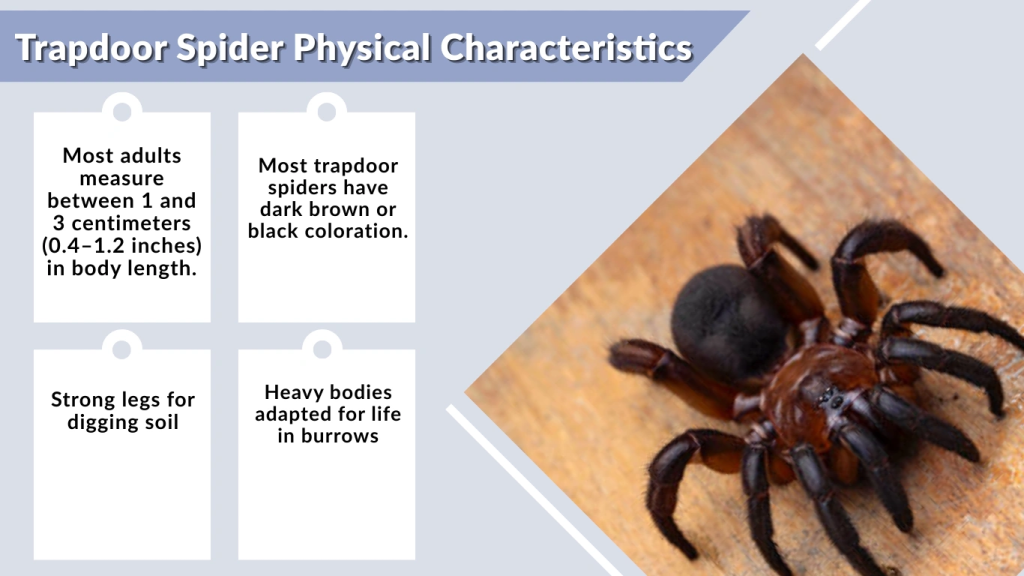
Trapdoor spiders may not be as colorful as some other spiders, but they possess powerful bodies built for digging and ambush hunting.
Size of Trapdoor Spiders
The size of trapdoor spiders varies depending on the species. Most adults measure between 1 and 3 centimeters (0.4–1.2 inches) in body length.
Although they are not extremely large, they appear robust because of their thick legs and sturdy body structure.
Body Structure
Trapdoor spiders have several physical adaptations that make them effective underground hunters.
Important features include:
- Strong legs for digging soil
- Large fangs for capturing prey
- Heavy bodies adapted for life in burrows
- Sensitive hairs that detect vibrations
Their legs and body are particularly well suited for digging tunnels and maintaining their underground homes.
Color and Appearance
Most trapdoor spiders have dark brown or black coloration. This coloring helps them blend in with the soil and leaf litter around their burrow entrances.
Unlike brightly colored spiders, trapdoor spiders rely heavily on camouflage rather than visual displays.
Their bodies are usually smooth and sturdy, giving them a somewhat tarantula-like appearance, though they are generally smaller.
Habitat and Distribution
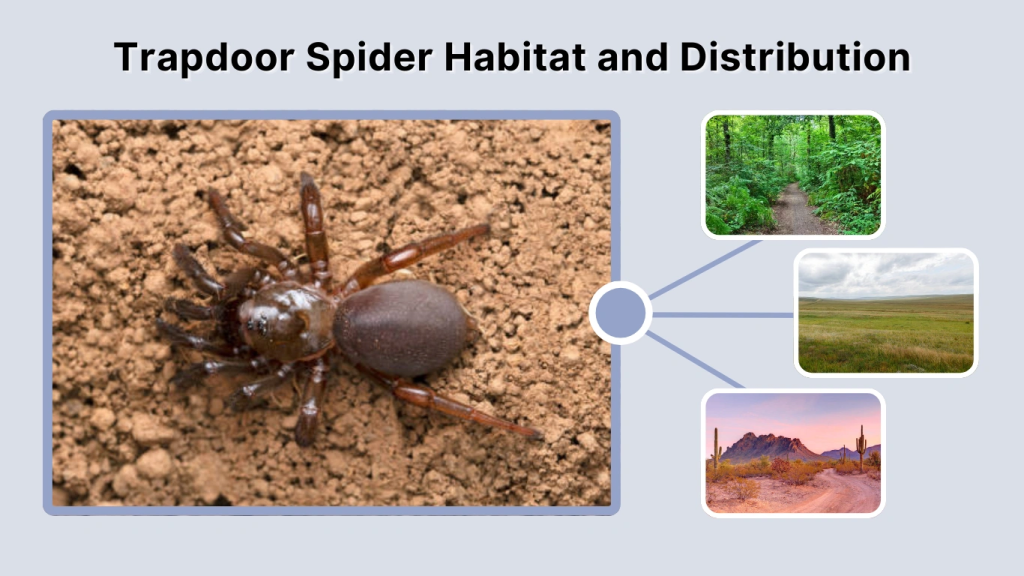
Trapdoor spiders are found in many regions around the world. They prefer environments where the soil is suitable for digging burrows.
Where Do Trapdoor Spiders Live?
Trapdoor spiders live on several continents, including:
- North America
- South America
- Australia
- Africa
- Asia
Many species are especially common in warm climates, where the ground remains suitable for burrowing.
Preferred Environment
These spiders thrive in habitats where the soil is stable and easy to dig.
Common environments include:
- Forests
- Grasslands
- Deserts
- Woodland areas
In these places, the spiders can build deep burrows that remain stable and protected.
Burrow Construction
A trapdoor spider begins its home by digging a vertical tunnel in the soil. The inside of the tunnel is lined with silk, which strengthens the structure and prevents the walls from collapsing.
The entrance of the burrow is then covered with the spider’s signature trapdoor. This door is carefully built to match the surrounding ground, making it extremely difficult to detect.
From inside the burrow, the spider holds the door shut with its legs, ready to spring into action when prey approaches.
The Famous Trapdoor Burrow
The burrow of a trapdoor spider is one of the most impressive structures created by any spider species.
How Trapdoor Spiders Build Their Doors
To create the trapdoor, the spider mixes silk with soil and plant materials. This combination forms a strong but flexible lid.
The door is attached to one side of the burrow entrance, creating a hinge-like structure that allows the spider to open and close it quickly.
Purpose of the Trapdoor
The trapdoor serves several important purposes:
- Hiding the spider from predators
- Protecting the burrow from weather
- Helping the spider ambush passing prey
Because the door blends into the environment, insects walking nearby rarely notice the hidden predator waiting beneath.
Camouflage Techniques
Trapdoor spiders are experts at camouflage. They carefully decorate the surface of the trapdoor with materials from the surrounding environment.
This might include:
- Small leaves
- Dirt particles
- Moss or plant fragments
As a result, the trapdoor often looks exactly like the surrounding ground.
Hunting Method – How Trapdoor Spiders Catch Prey
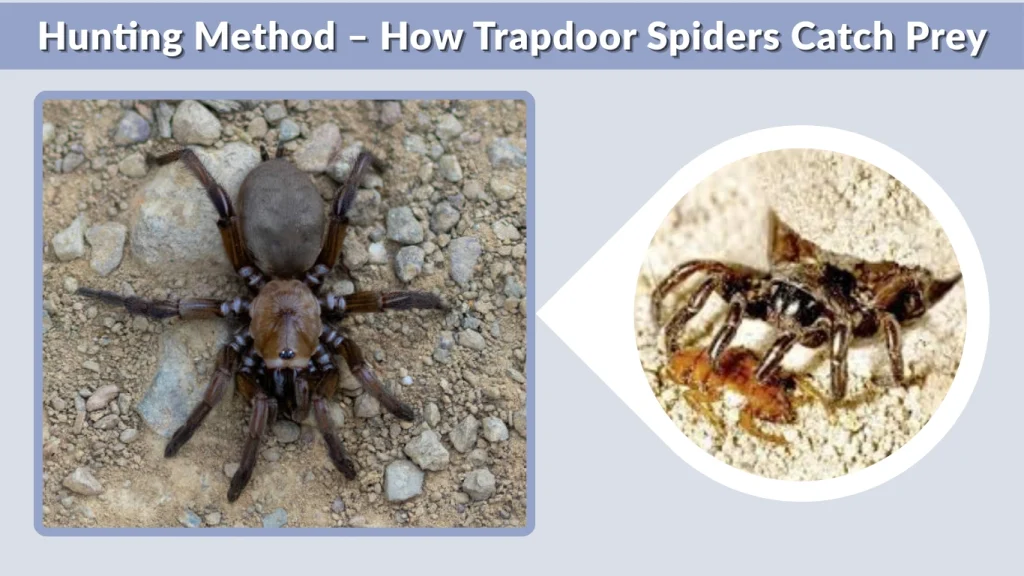
Trapdoor spiders use one of the most effective ambush strategies in the spider world.
Ambush Hunting Strategy
The spider waits just inside the entrance of its burrow with the trapdoor slightly open. When an insect walks close enough, the spider senses vibrations in the ground.
At the right moment, it bursts out of the burrow and grabs the prey with incredible speed.
Detecting Vibrations
Trapdoor spiders rely on sensitive hairs on their legs to detect vibrations caused by moving insects.
These vibrations travel through the soil and alert the spider when prey is nearby.
Lightning-Fast Attack
Once prey is detected, the spider launches a rapid attack, pulling the insect into the burrow before it has a chance to escape.
Inside the burrow, the spider injects venom and begins feeding.
Diet – What Do Trapdoor Spiders Eat?

Trapdoor spiders are carnivorous predators that feed mainly on insects and other small invertebrates. Because they spend most of their time inside their burrow, they rely on prey that walks close to the trapdoor entrance.
Their ambush hunting strategy allows them to catch animals that pass by without suspecting danger.
Common Prey
Typical prey for trapdoor spiders includes:
- Beetles
- Ants
- Crickets
- Grasshoppers
- Small arthropods
Occasionally, larger trapdoor spiders may capture small frogs, lizards, or other tiny animals, but this is less common.
Opportunistic Feeding
Trapdoor spiders are opportunistic hunters, meaning they will eat almost any suitable prey that comes within reach of their burrow.
Once prey is captured, the spider pulls it into the burrow and injects venom to immobilize it. The venom also begins the digestion process, allowing the spider to consume the liquefied tissues.
Behavior and Lifestyle
Trapdoor spiders are generally solitary and secretive animals. They spend most of their lives inside their burrows and rarely travel far from their homes.
Their lifestyle is centered around patience and stealth, making them highly effective ambush predators.
Nocturnal Activity
Many trapdoor spider species are nocturnal, meaning they are most active at night. During the daytime, they usually remain hidden inside their burrow.
At night, they may open the trapdoor slightly and wait for insects to pass nearby.
Solitary Nature
Trapdoor spiders live alone and defend their burrow territory. Each spider maintains its own burrow and does not tolerate other spiders nearby.
This solitary lifestyle helps reduce competition for food.
Territorial Behavior
A trapdoor spider’s burrow is extremely important to its survival. The spider invests a lot of energy building and maintaining it.
Because of this, the spider will protect its burrow from intruders, including other spiders or predators.
Trapdoor Spider Bite – Are They Dangerous?
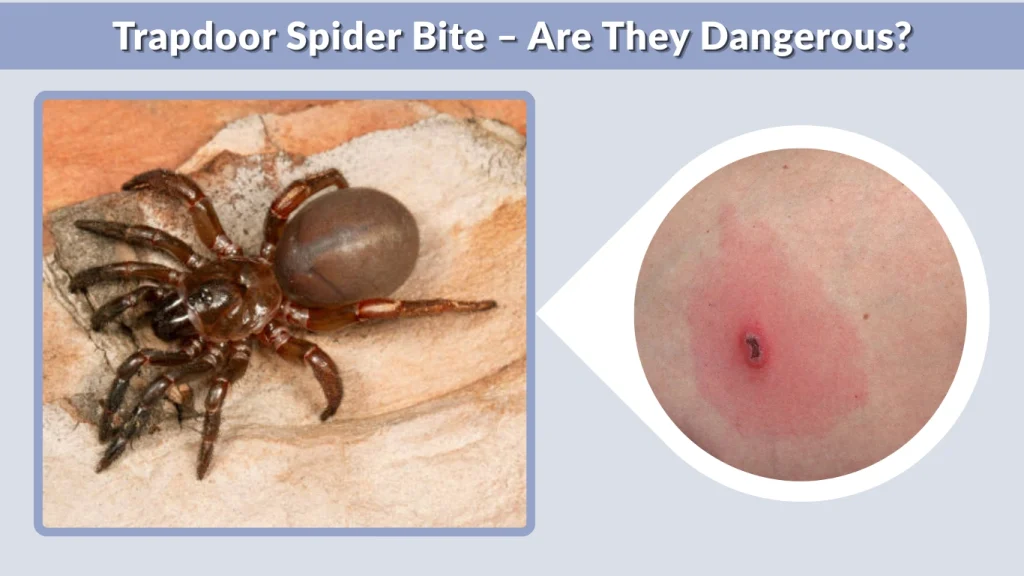
Many people wonder whether trapdoor spiders are dangerous to humans. While these spiders do have venom, they are generally not considered dangerous.
Venom Strength
The venom of most trapdoor spiders is used primarily for subduing prey rather than defending against large animals.
In most species, the venom is not medically significant for humans.
Bite Effects on Humans
If a trapdoor spider bites a person, the symptoms may include:
- Mild pain
- Redness or swelling
- Local irritation
These symptoms are usually temporary and similar to the effects of a bee sting.
When Bites Occur
Trapdoor spiders rarely bite humans because they usually stay inside their burrows. Bites typically occur only when the spider is disturbed or handled.
Because they are shy and secretive, encounters with humans are uncommon.
Lifespan and Reproduction
Trapdoor spiders are known for having relatively long lifespans compared to many other spiders.
Lifespan of Trapdoor Spiders
Female trapdoor spiders can live for 10 to 20 years, depending on the species. They remain inside the same burrow for most of their lives.
Male spiders usually live for a shorter time because they leave their burrows to search for females during the mating season.
Mating Behavior
When males reach maturity, they leave their burrow and begin searching for a female’s burrow.
The male carefully approaches the entrance and signals the female before entering. This helps prevent the female from mistaking him for prey.
If the female accepts the male, mating occurs inside or near the burrow.
Egg Sac and Spiderlings
After mating, the female lays eggs in a silk egg sac inside her burrow.
The eggs eventually hatch into tiny spiderlings, which remain inside the burrow for a short time before leaving to find new places to live.
Trapdoor Spider vs Other Burrowing Spiders
Trapdoor spiders are often confused with other spiders that also live in burrows.
Funnel-Web Spider
Funnel-web spiders also build burrows, but they create silk funnel-shaped webs extending from the entrance.
Unlike trapdoor spiders, funnel-web spiders usually do not build a trapdoor.
Wolf Spider
Wolf spiders sometimes dig shallow burrows, but they are active hunters that roam around instead of waiting inside a trapdoor.
Tarantula Comparison
Tarantulas are closely related to trapdoor spiders and also belong to the mygalomorph group.
However, tarantulas are typically larger and do not usually build camouflaged trapdoors over their burrows.
Interesting Facts About Trapdoor Spiders
Trapdoor spiders have many fascinating characteristics that make them unique among spiders.
Some interesting facts include:
- Some species can live for more than 20 years.
- They rarely leave their burrow except for mating.
- Their trapdoor can be almost impossible to see because of perfect camouflage.
- They can sense tiny vibrations through the soil.
- Their ambush attacks happen in a fraction of a second.
Conservation and Ecological Role
Trapdoor spiders play an important role in maintaining balanced ecosystems.
Importance in Ecosystems
By feeding on insects and other small animals, trapdoor spiders help control insect populations in their habitats.
This makes them beneficial predators within natural ecosystems.
Environmental Threats
Although many species are still common, some trapdoor spiders face threats from:
- Habitat destruction
- Urban development
- Soil disturbance
Protecting natural habitats helps ensure that these unique spiders continue to survive.
FAQs
Are trapdoor spiders dangerous to humans?
No. Most trapdoor spiders are not dangerous and rarely bite humans.
How long do trapdoor spiders live?
Female trapdoor spiders can live 10–20 years, while males usually live shorter lives.
Where can trapdoor spiders be found?
They live in many parts of the world, including North America, Australia, Africa, and Asia.
How do trapdoor spiders build their burrows?
They dig underground tunnels and create a camouflaged trapdoor using silk, soil, and plant material.
Conclusion
The trapdoor spider is one of nature’s most impressive ambush predators. Its hidden burrow and cleverly camouflaged trapdoor allow it to capture prey with remarkable efficiency. Although rarely seen, these spiders play an important role in controlling insect populations and maintaining ecological balance. With their patience, engineering skills, and stealthy hunting technique, trapdoor spiders remain one of the most fascinating spiders in the natural world.