
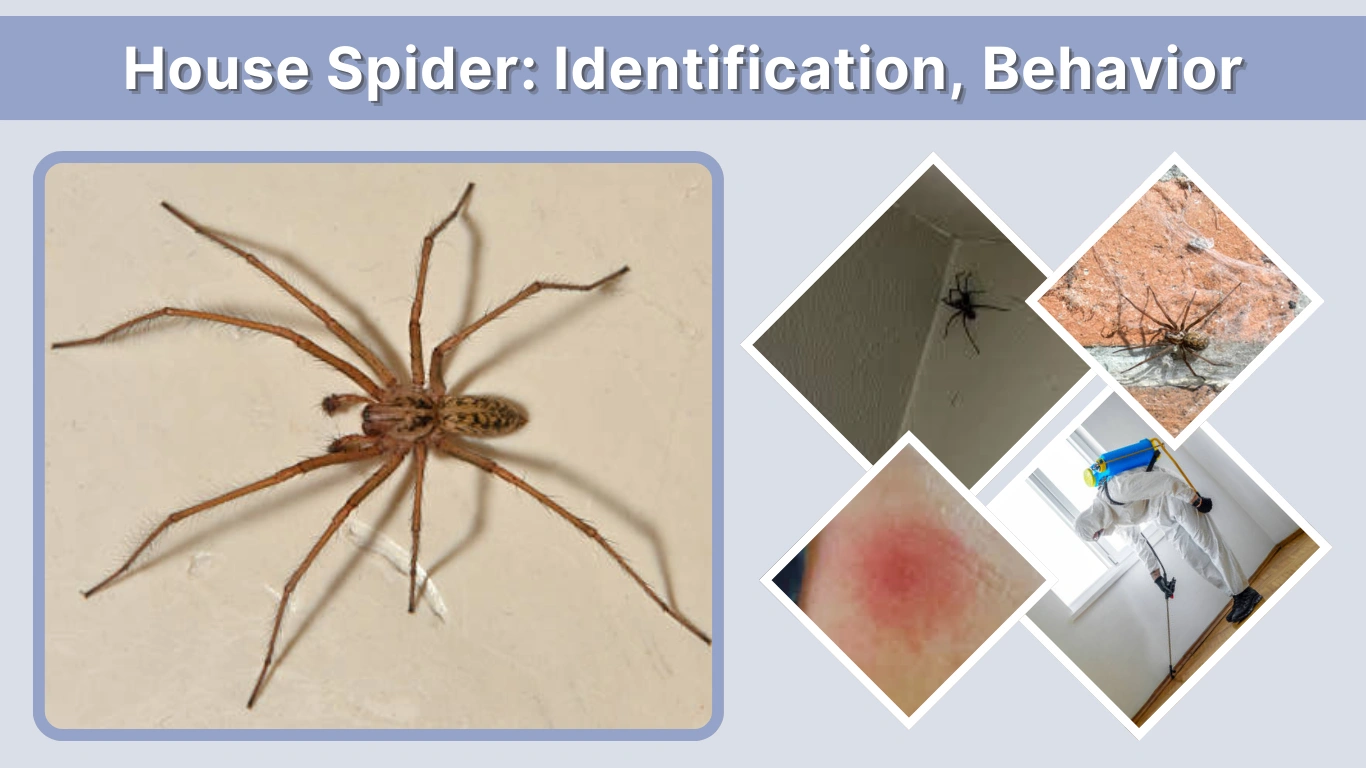
House spiders are among the most common arachnids found inside homes around the world. These small creatures often build webs in corners, ceilings, basements, and other quiet areas of houses. Although many people fear spiders, most house spiders are harmless to humans and can actually be beneficial. They help control insect populations by feeding on flies, mosquitoes, and other pests. Understanding their behavior, identification, and role in the environment can help homeowners manage them effectively and reduce unnecessary fear.
What Is a House Spider?
Basic Definition
A house spider is a type of spider that commonly lives inside human dwellings. Unlike many outdoor spiders that build webs in gardens or forests, house spiders prefer indoor environments where they can find shelter and food. The term “house spider” does not refer to just one species but rather several spider species that have adapted to living in buildings.
Most house spiders belong to families such as Theridiidae (cobweb spiders) or Agelenidae (funnel weavers). They build webs in undisturbed areas and feed mainly on small insects that wander into their traps.
Why House Spiders Live Indoors
House spiders are attracted to indoor spaces for several reasons. First, homes provide protection from harsh weather conditions such as rain, wind, and extreme temperatures. Indoor environments are generally stable and safe places for spiders to survive.
Another important reason is the availability of food. Many insects, including flies, ants, and moths, enter homes regularly. These insects become easy prey for spiders. As a result, spiders often settle in areas where insects are abundant.
Finally, houses offer plenty of hidden spaces for spiders to build webs and lay eggs. Corners of ceilings, behind furniture, basements, attics, and storage rooms provide quiet locations where spiders can live without much disturbance.
How to Identify a House Spider
Size and Appearance
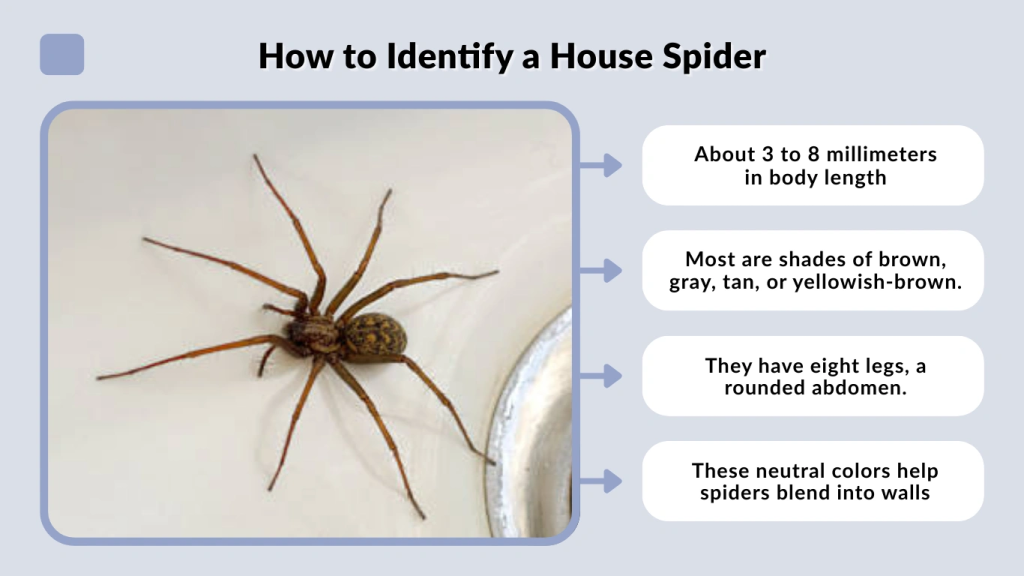
House spiders are typically small to medium-sized arachnids. Most common house spiders measure about 3 to 8 millimeters in body length, although their legs can make them appear larger. They have eight legs, a rounded abdomen, and a smaller head region known as the cephalothorax.
Their bodies are usually lightweight and delicate compared to larger outdoor spiders. Many house spiders also have thin, slightly curved legs that help them move quickly across surfaces or within their webs.
Color and Markings
The color of house spiders varies depending on the species. However, most are shades of brown, gray, tan, or yellowish-brown. Some spiders may have faint patterns, stripes, or spots on their abdomen.
These neutral colors help spiders blend into walls, ceilings, and furniture, making them difficult to notice. In many cases, people only realize a spider is present when they see its web.
Web Structure
One of the easiest ways to identify house spiders is by looking at their webs. House spider webs are usually irregular and tangled, often described as cobwebs. Unlike the symmetrical circular webs created by garden spiders, house spider webs appear messy and disorganized.
These webs are commonly found in:
- Corners of ceilings
- Behind furniture
- Window frames
- Basements and garages
The tangled structure of the web helps trap small flying or crawling insects that come into contact with the sticky threads.
Common Types of House Spiders
American House Spider
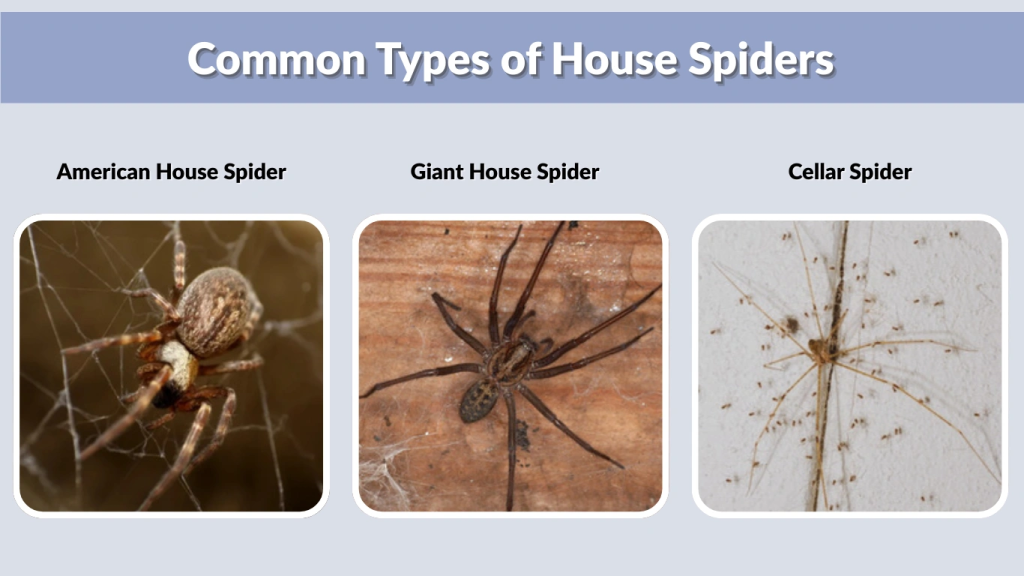
The American house spider (Parasteatoda tepidariorum) is one of the most frequently found spiders in homes. It is small, brown, and known for building irregular cobwebs in quiet indoor areas.
These spiders are commonly seen in corners, closets, garages, and basements. They are harmless to humans and mainly feed on household insects.
Giant House Spider
The giant house spider is larger than most indoor spiders and is known for its long legs and fast movement. Despite its intimidating size, it is generally not dangerous to humans.
Giant house spiders often live in basements, garages, and other dark areas. They build funnel-shaped webs and hunt insects that wander into their territory.
Cellar Spider
Cellar spiders are often mistaken for house spiders because they frequently live indoors. They have extremely long, thin legs and small bodies, giving them a delicate appearance.
These spiders are commonly found in basements, ceilings, and storage areas. Their webs are loose and irregular, and they often hang upside down while waiting for prey.
Habitat and Behavior of House Spiders
Common Hiding Places
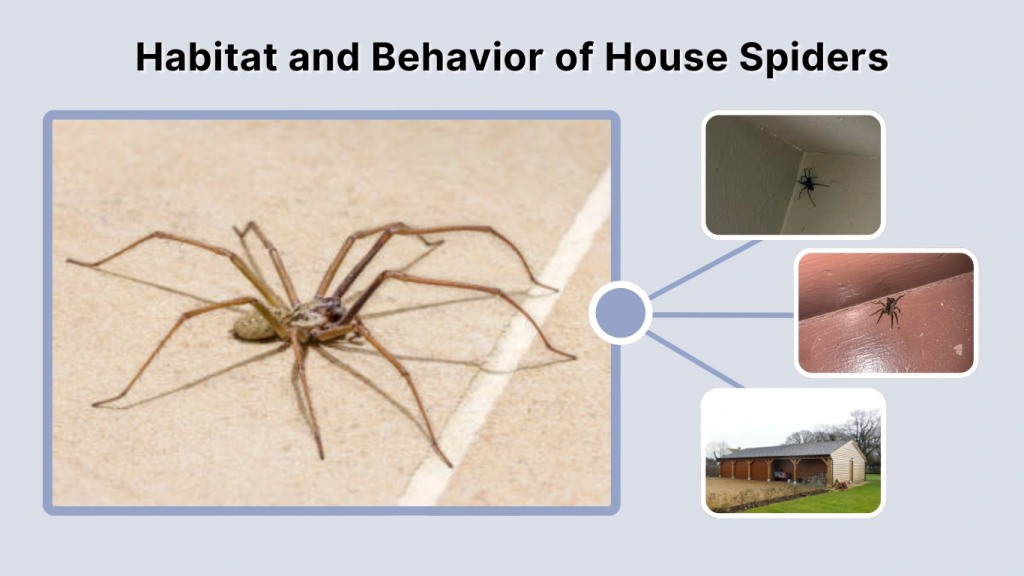
House spiders prefer quiet and undisturbed areas where they can build webs and capture prey without interruption. Inside homes, they are most commonly found in ceiling corners, basements, attics, garages, and behind large pieces of furniture. These locations provide darkness and safety, allowing spiders to remain hidden during the day.
Spiders also choose areas where insects are likely to appear. For example, they may build webs near windows, doors, lights, or vents because insects are attracted to these places. Storage rooms and cluttered spaces are also ideal hiding spots because they offer protection and fewer disturbances.
Daily Activity
Most house spiders are nocturnal, meaning they are more active during the night. During the daytime, they usually remain in their webs or hide nearby. At night, they may move around to repair their webs or search for food.
Unlike aggressive predators, house spiders typically wait patiently for insects to become trapped in their webs. Once an insect is caught, the spider quickly moves toward it, wraps it in silk, and begins feeding.
Web-Building Habits
House spiders are known for building irregular and tangled webs. These webs are often referred to as cobwebs because of their messy appearance. The sticky threads are designed to trap small insects that accidentally fly or crawl into them.
Spiders usually place their webs in locations where insects frequently travel. Over time, if a web becomes damaged or ineffective, the spider may repair it or build a new one nearby.
Are House Spiders Dangerous?
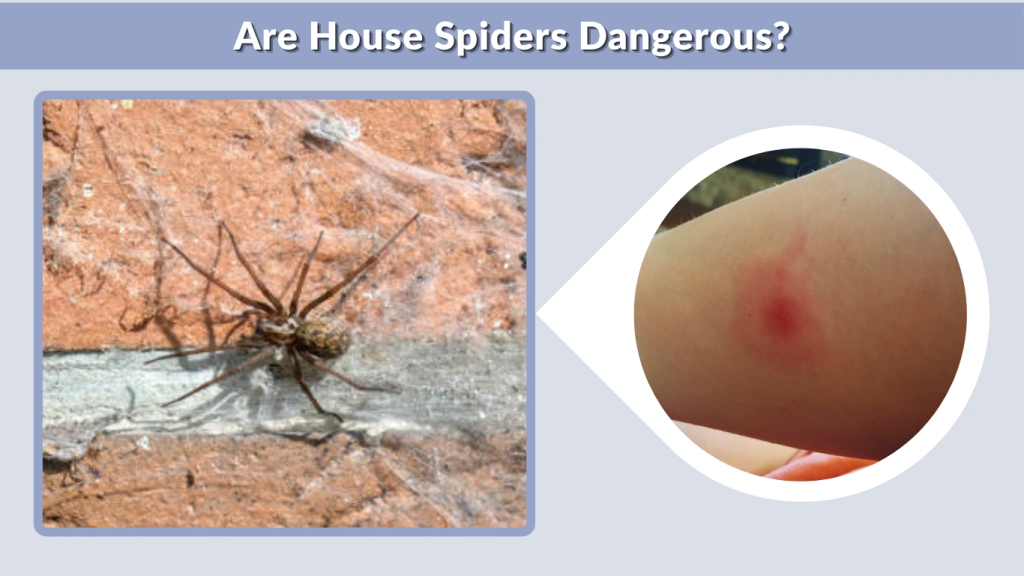
Do House Spiders Bite?
In most cases, house spiders are not dangerous to humans. They rarely bite people and usually avoid human contact whenever possible. A spider may bite only if it feels threatened, such as when it is accidentally trapped or pressed against the skin.
Even when bites occur, they are generally harmless and much less serious than bites from more dangerous spider species.
Symptoms of a Spider Bite
If a house spider does bite, the symptoms are usually mild. Most people may experience slight redness, itching, or minor swelling around the bite area. These symptoms typically disappear within a short period of time.
In many cases, people may not even realize they were bitten because the discomfort is minimal.
When to Seek Medical Attention
Although house spider bites are usually harmless, medical attention may be necessary if unusual symptoms appear. These may include severe pain, spreading redness, or signs of an allergic reaction.
If symptoms worsen or do not improve within a day or two, consulting a healthcare professional is recommended.
Benefits of House Spiders
Natural Pest Control
One of the biggest benefits of house spiders is their role in natural pest control. Spiders feed on a variety of insects, including flies, mosquitoes, ants, moths, and small beetles. By eating these pests, they help reduce insect populations inside the home.
This natural control can make indoor environments more comfortable and reduce the need for chemical pest treatments.
Maintaining Ecological Balance
Spiders play an important role in maintaining ecological balance. They are part of the natural food chain and help regulate insect populations both indoors and outdoors.
Even inside homes, spiders contribute to a small but important ecosystem by keeping pest numbers under control.
Reducing Other Pest Problems
Because spiders consume many common household insects, they indirectly help prevent larger infestations. For example, a spider that regularly catches flies or mosquitoes can limit how quickly these pests multiply indoors.
For this reason, some homeowners choose to leave harmless spiders alone rather than removing them immediately.
Why There Are Spiders in Your House
There are several reasons why spiders may appear inside your home. One of the most common reasons is the presence of insects. Since spiders rely on insects as their primary food source, they naturally move to areas where insects are abundant.
Spiders may also enter homes through small cracks, gaps around doors and windows, or ventilation openings. Seasonal changes can also encourage spiders to move indoors, especially during cooler months when outdoor conditions become less favorable.
Cluttered spaces, dark corners, and quiet rooms also make homes attractive environments for spiders to settle and build webs.
How to Get Rid of House Spiders
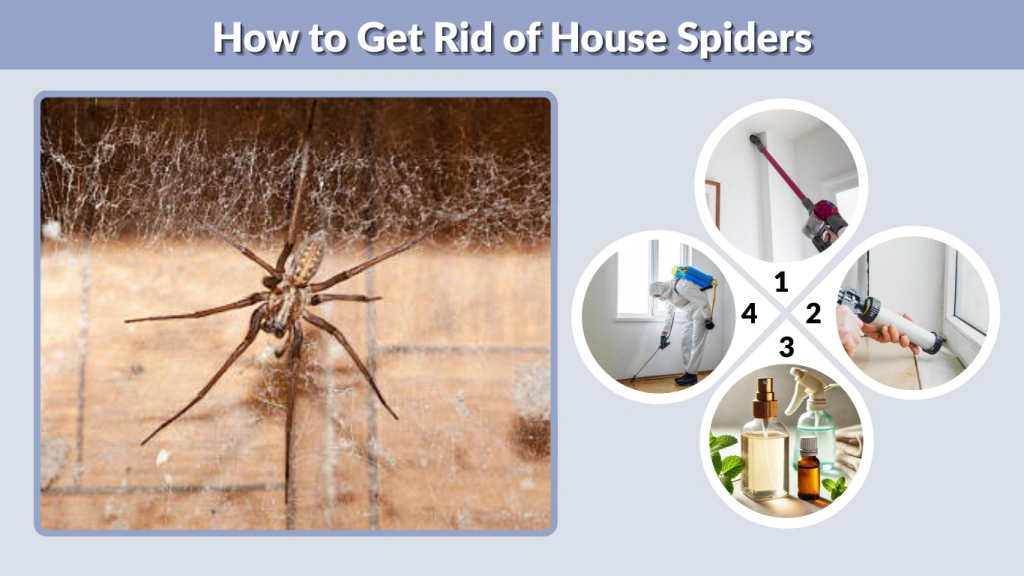
Keep Your Home Clean
Regular cleaning is one of the most effective ways to control house spiders. Vacuuming corners, ceilings, and hidden spaces can remove webs, egg sacs, and insects that attract spiders. Keeping rooms tidy also reduces hiding places.
Seal Entry Points
Spiders often enter homes through small openings. Sealing cracks in walls, repairing window screens, and closing gaps around doors can help prevent them from coming inside.
Use Natural Repellents
Natural solutions such as peppermint oil sprays or vinegar mixtures can help discourage spiders from certain areas. These scents are unpleasant to spiders and may keep them away from frequently used rooms.
Professional Pest Control
If a large number of spiders are present or an infestation develops, professional pest control services may be necessary. Pest control experts can identify the source of the problem and apply safe treatments to reduce spider populations.
How to Prevent House Spiders
Preventing house spiders is often easier than removing them after they appear. Reducing indoor insect populations is one of the most effective prevention strategies, since spiders are attracted to places where food is available.
Keeping storage areas organized, regularly cleaning corners and ceilings, and minimizing clutter can reduce potential hiding places. Outdoor lighting adjustments and proper home maintenance can also help keep insects—and therefore spiders—away from the house.
Conclusion
House spiders are common indoor creatures that often live quietly in corners, basements, and other hidden spaces. Although their appearance may cause concern, most house spiders are harmless and can even provide helpful pest control by feeding on insects. Understanding how to identify house spiders, where they live, and how they behave can make it easier to manage them effectively. With proper cleaning, prevention methods, and simple control measures, homeowners can maintain a comfortable living space while minimizing unwanted spider activity.