
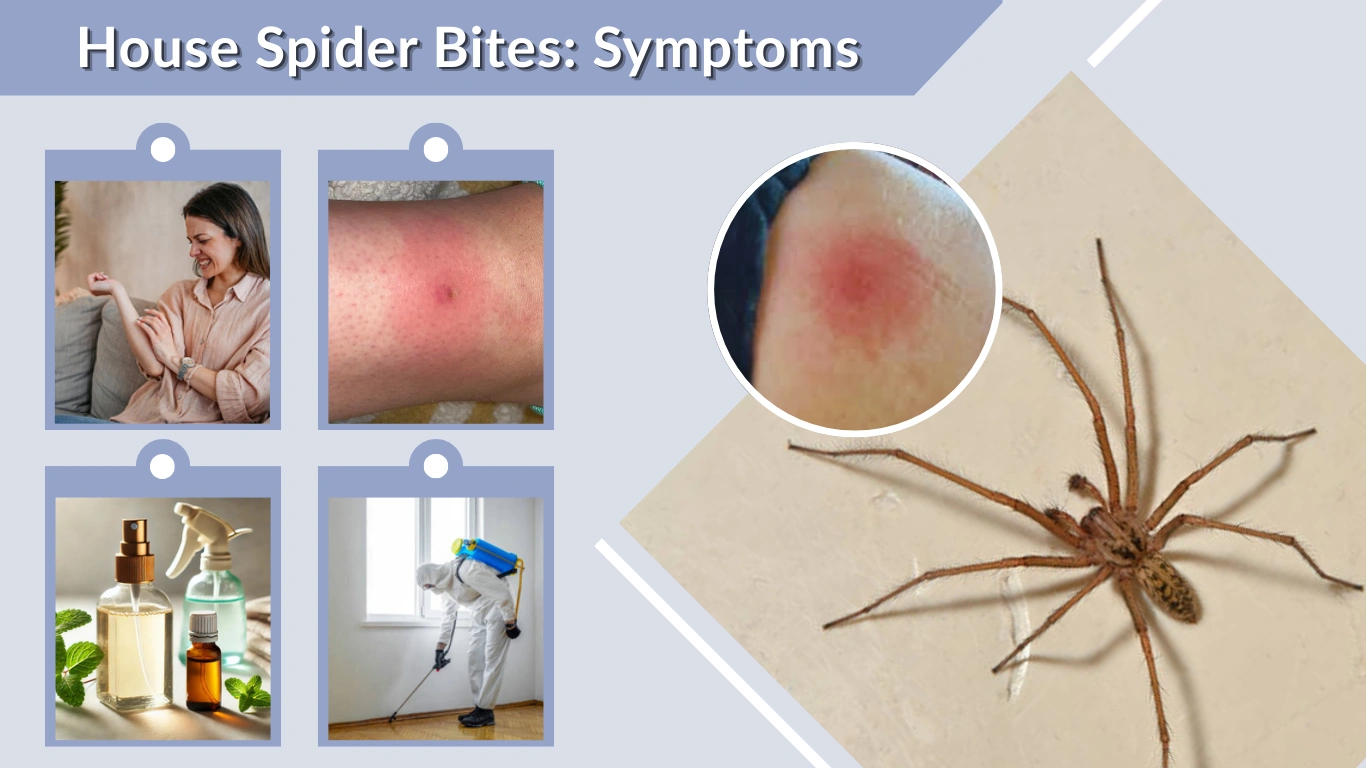
House spiders are common residents in many homes, often living quietly in corners, basements, and other undisturbed spaces. Although they may look intimidating, most house spiders are harmless and rarely interact with humans. In some situations, however, a spider may bite if it feels threatened or trapped. House spider bites are usually mild and cause only minor skin irritation. Understanding the symptoms, how to identify a bite, and the proper treatment methods can help reduce worry and ensure safe and effective care.
What Is a House Spider Bite?
Why House Spiders Bite
House spiders do not actively seek out humans to bite. In fact, they generally avoid human contact whenever possible. A spider bite usually occurs as a defensive reaction when the spider feels threatened or accidentally pressed against the skin.
For example, a spider might bite if it becomes trapped in clothing, bedding, or shoes. Disturbing a spider while cleaning, moving furniture, or reaching into storage boxes may also trigger a defensive bite. In most cases, the spider’s intention is simply to escape danger rather than attack.
How Spider Bites Occur
Spider bites often happen through accidental contact. People may unknowingly press a spider against their skin when putting on clothes that were left on the floor or stored for a long time. Similarly, spiders hiding in bedding or towels may bite if they are suddenly disturbed.
Another situation where bites can occur is when someone tries to handle or remove a spider directly. Since spiders rely on venom to subdue prey, they may instinctively bite when they feel threatened. Fortunately, such incidents are relatively rare with common house spiders.
Common Symptoms of House Spider Bites
Mild Skin Reactions
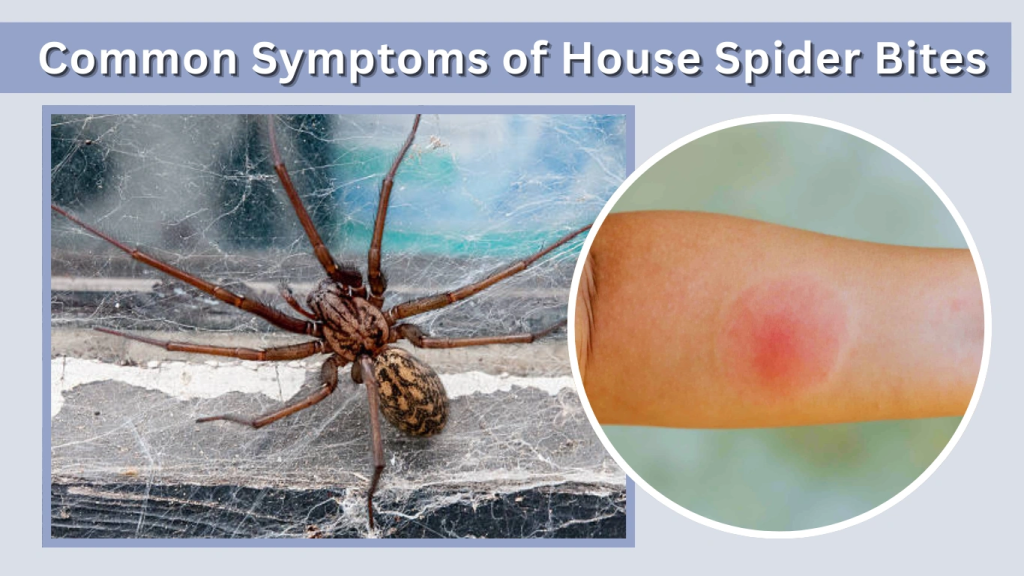
Most house spider bites cause only minor skin reactions. The area around the bite may appear slightly red and swollen. Some people may also experience mild itching or irritation at the site of the bite.
These symptoms are generally similar to other insect bites and often disappear within a short period of time. For most individuals, the discomfort is minimal and does not require medical treatment.
Bite Mark Appearance
A house spider bite may leave small puncture marks on the skin. Because spiders have two fangs, the bite may sometimes appear as two tiny dots close together. However, these marks are often difficult to see without careful inspection.
The surrounding skin may become slightly raised or tender. In some cases, people may notice a mild burning sensation or sensitivity around the bite area shortly after it occurs.
How Long Symptoms Last
The symptoms of a typical house spider bite usually do not last very long. Mild redness, swelling, or itching may remain for several hours or up to a couple of days. As the body heals, the irritation gradually fades without leaving lasting effects.
In most cases, simple home care such as cleaning the bite area and avoiding scratching is enough to allow the skin to recover naturally.
How to Identify a House Spider Bite
Visual Signs of a Spider Bite
Identifying a spider bite can sometimes be difficult because many insect bites produce similar symptoms. However, there are a few visual clues that may suggest a spider bite. The most noticeable sign is the presence of two small puncture marks created by the spider’s fangs.
The bite area is usually localized, meaning the redness and swelling remain close to the original puncture marks. Unlike some insect bites, the swelling does not typically spread far beyond the immediate area.
Spider Bite vs Other Insect Bites
It can be helpful to compare spider bites with other common insect bites. Mosquito bites usually appear as raised, itchy bumps and do not show two puncture marks. Bed bug bites often occur in clusters or lines and may appear on exposed skin after sleeping.
Ant bites can cause a sharp burning sensation and may develop into small blisters. In contrast, most house spider bites are isolated and produce only mild irritation. Because of these similarities, people sometimes mistake other insect bites for spider bites.
Are House Spider Bites Dangerous?
Toxicity of House Spider Venom
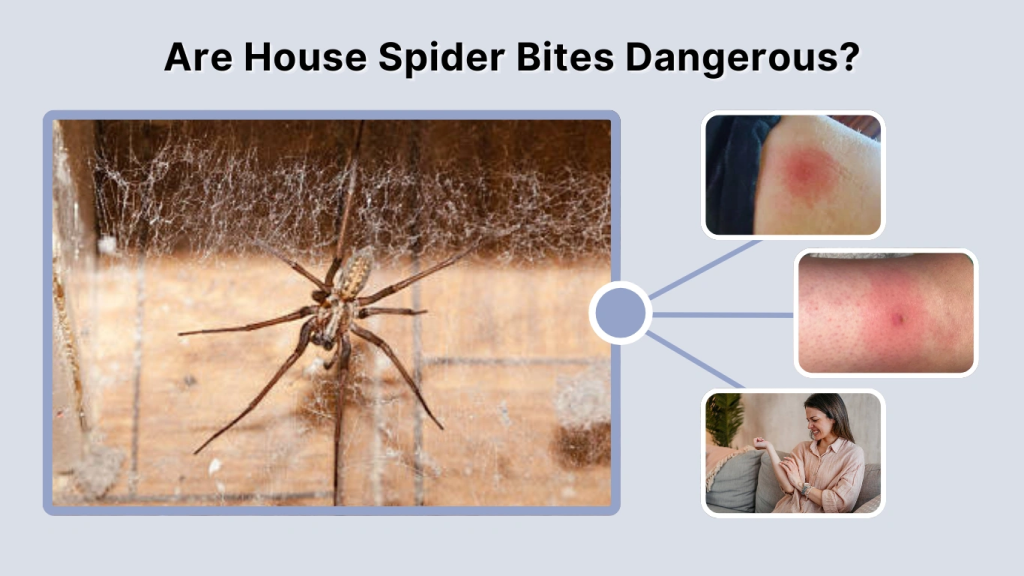
Most house spiders have venom that is designed to immobilize small insects rather than harm humans. Their venom is generally weak and does not pose a serious threat to people. Even if a house spider bites, the amount of venom injected is usually very small.
Because of this, the majority of house spider bites cause only mild irritation similar to a mosquito or ant bite. Serious medical problems from house spider bites are extremely rare.
Rare Complications
Although most bites are harmless, a few individuals may experience stronger reactions. Some people may develop more noticeable swelling, itching, or redness around the bite area. These symptoms can occur because the body reacts differently to spider venom.
Another possible complication is infection caused by scratching the bite repeatedly. When the skin is broken from scratching, bacteria can enter the wound and cause redness, warmth, or pus. Keeping the bite area clean can help prevent this problem.
Spiders That Can Be Dangerous
It is important to understand that some spider species have stronger venom than common house spiders. For example, spiders such as the black widow or brown recluse can cause more serious bites. However, these spiders are not typical house spiders found in most homes.
Most spiders that people encounter indoors are harmless and prefer to avoid human contact. Learning to recognize common house spiders can help reduce unnecessary fear and confusion.
First Aid and Treatment for House Spider Bites
Cleaning the Bite Area
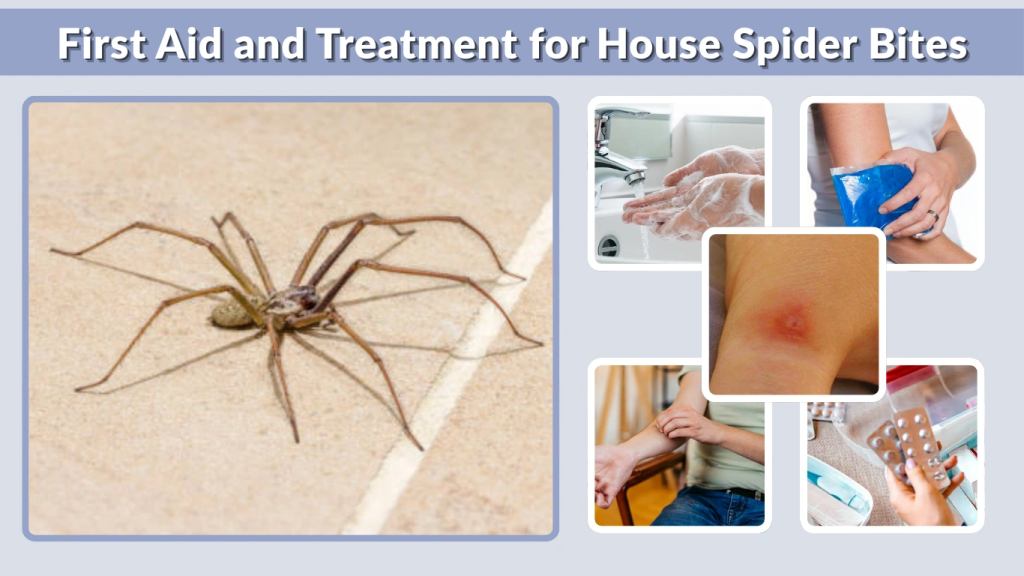
The first step in treating a house spider bite is to clean the affected area. Washing the bite with soap and warm water helps remove bacteria and reduces the risk of infection. After cleaning the area, gently pat the skin dry with a clean towel.
Keeping the bite clean is one of the most effective ways to support the body’s natural healing process.
Reducing Swelling and Pain
If the bite area becomes swollen or irritated, applying a cold compress or ice pack can help reduce discomfort. Wrapping the ice in a cloth and placing it on the bite for about 10–15 minutes may reduce swelling and soothe the skin.
Avoid placing ice directly on the skin for long periods, as this can cause irritation.
Over-the-Counter Treatments
In some cases, over-the-counter medications may help relieve symptoms. Anti-itch creams or antihistamines can reduce itching and redness. Pain relievers may also help if the bite causes mild discomfort.
Most house spider bites heal quickly, so medication is usually only needed for short-term relief.
When to See a Doctor
Although house spider bites are typically mild, medical attention may be necessary if unusual symptoms appear. For example, severe swelling, intense pain, or spreading redness around the bite may indicate a stronger reaction or infection.
Other warning signs include fever, chills, or the development of a wound that continues to worsen. In rare cases, allergic reactions can occur and may cause symptoms such as difficulty breathing, dizziness, or severe swelling.
If any of these symptoms develop, it is important to seek medical help promptly.
How to Prevent House Spider Bites
Keep Your Home Clean
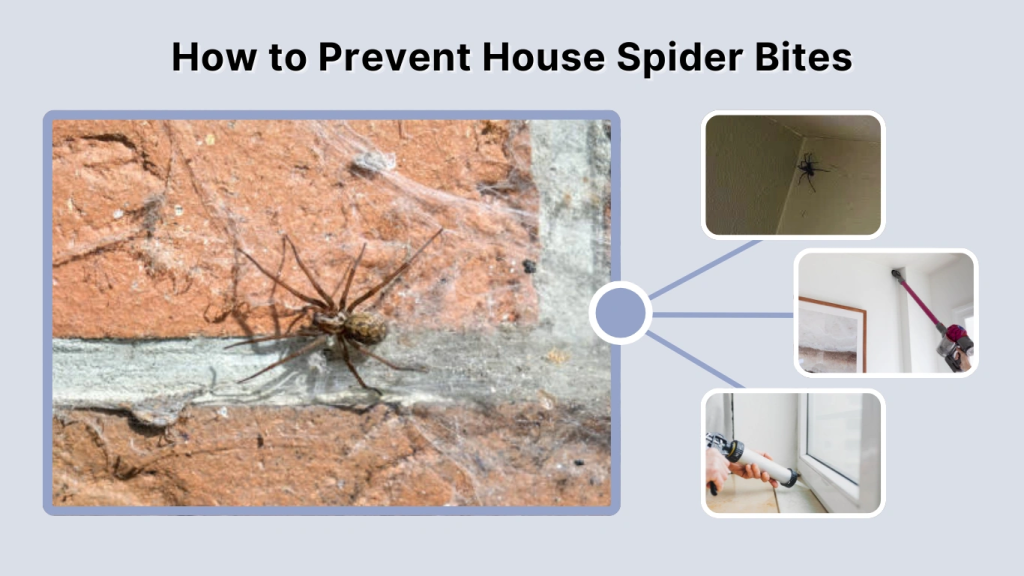
One of the easiest ways to prevent spider bites is to reduce the presence of spiders in the home. Regular cleaning can remove webs, egg sacs, and insects that attract spiders. Vacuuming corners, ceilings, and storage areas can make the environment less appealing for spiders.
Keeping living spaces tidy also reduces hiding places where spiders may settle.
Reduce Insects Indoors
Since spiders feed on insects, controlling insect populations inside the home can help discourage spiders from staying. Sealing food containers, cleaning kitchen areas, and repairing window screens can reduce the number of insects that enter the house.
When insects become less common, spiders are less likely to remain in the area.
Avoid Contact with Spiders
Taking simple precautions can help reduce the risk of accidental spider bites. Wearing gloves when handling items in basements, garages, or storage areas can provide protection. It is also helpful to shake out clothing, shoes, or towels that have been stored for a long time.
Avoiding direct contact with spiders and carefully removing webs can minimize unexpected encounters.
Why House Spiders Are Usually Harmless
Despite the fear they often cause, house spiders are generally harmless creatures. They prefer quiet areas and spend most of their time capturing insects in their webs. By feeding on pests such as flies, mosquitoes, and ants, spiders actually help maintain a balanced indoor environment.
Because they naturally control insect populations, house spiders can be beneficial in many homes. Understanding their behavior can make it easier to coexist with them without unnecessary worry.
Conclusion
House spider bites are uncommon and usually cause only mild symptoms such as redness, swelling, or itching. In most cases, these bites heal quickly with simple home care and do not require medical treatment. By learning how to identify spider bites, applying basic first aid, and taking steps to prevent spiders from entering the home, people can reduce the chances of being bitten. While spiders may seem frightening, most house spiders are harmless and even helpful in controlling household pests.