
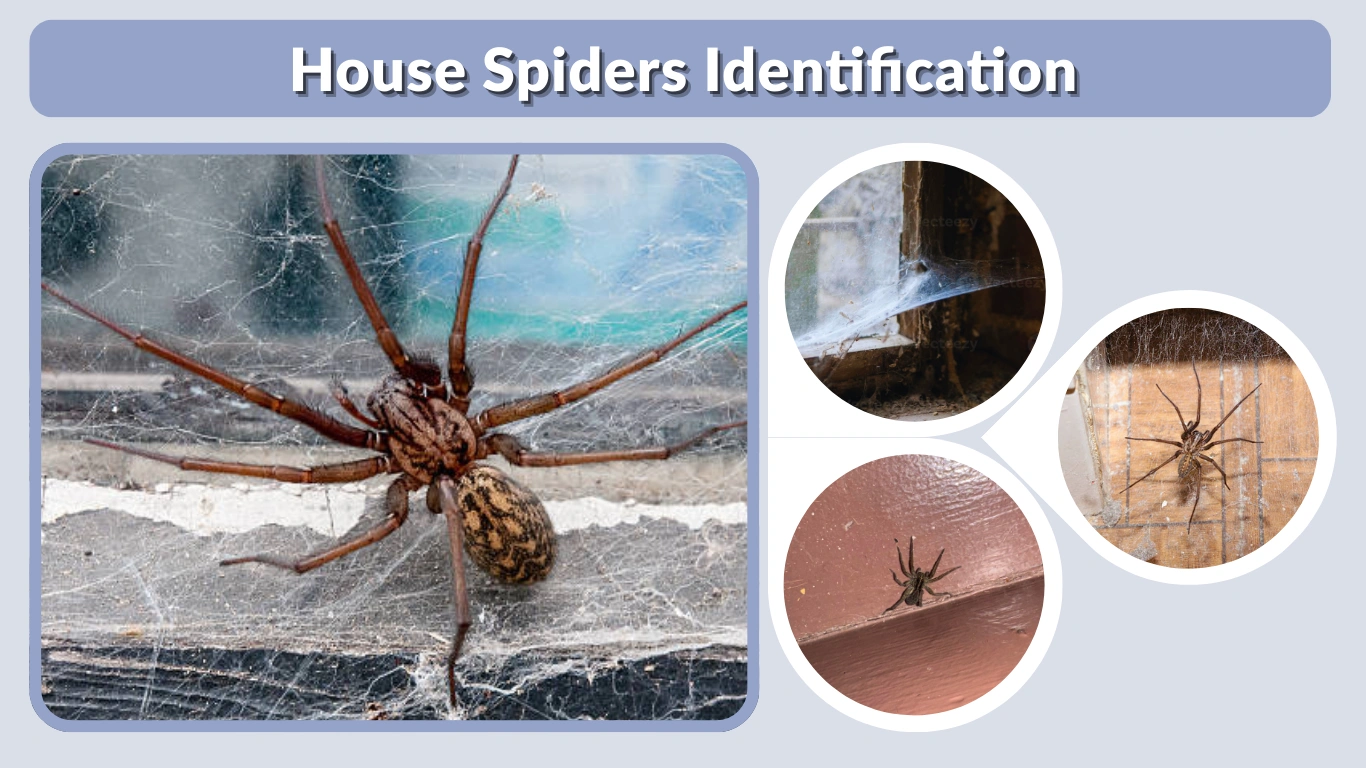
House spiders are commonly found in homes around the world, often living quietly in corners, basements, and other undisturbed areas. While their appearance may cause concern, most house spiders are harmless and play an important role in controlling household pests. Learning how to identify house spiders can help you understand whether the spiders in your home are dangerous or beneficial. By recognizing their physical features, web patterns, and behavior, homeowners can better manage spider encounters and avoid unnecessary fear.
What Are House Spiders?
Definition of House Spiders
House spiders are spider species that commonly live inside buildings such as homes, apartments, garages, and storage areas. Unlike outdoor spiders that build webs in gardens or forests, house spiders have adapted to indoor environments where they can find shelter and food.
The term “house spider” does not refer to just one species. Instead, it describes several different spider species that prefer indoor habitats. These spiders often build webs in quiet areas and feed on insects that enter the home.
Why Spiders Live in Homes
Spiders are attracted to homes for several practical reasons. One of the main reasons is protection from harsh weather conditions. Indoor spaces provide warmth and shelter from rain, wind, and extreme temperatures.
Another reason spiders live indoors is the availability of food. Many insects such as flies, mosquitoes, ants, and moths enter homes regularly. These insects become easy prey for spiders. When insects are plentiful, spiders are more likely to remain in that environment.
Homes also provide many hidden areas where spiders can safely build webs. Corners of ceilings, behind furniture, basements, attics, and storage rooms are ideal locations where spiders can live without much disturbance.
Physical Characteristics of House Spiders
Body Structure
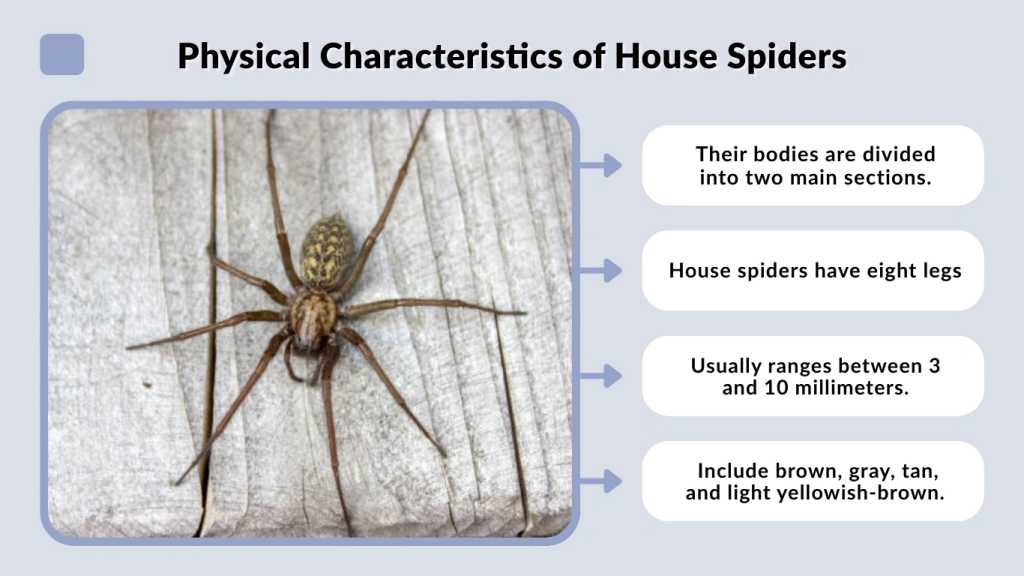
Like all spiders, house spiders have a unique body structure that helps identify them. Their bodies are divided into two main sections: the cephalothorax (front part) and the abdomen (rear part). The cephalothorax contains the spider’s eyes, mouthparts, and legs, while the abdomen contains important organs and silk-producing glands.
House spiders have eight legs, which is a key feature that distinguishes spiders from insects. Insects typically have six legs, while spiders always have eight.
Another identifying feature is their small fangs, which spiders use to inject venom into prey. The venom is designed to immobilize insects rather than harm humans.
Size and Shape
Most house spiders are relatively small compared to many outdoor spider species. Their body length usually ranges between 3 and 10 millimeters, although their legs can make them appear larger.
House spiders often have rounded abdomens and thin legs that allow them to move easily across surfaces or within their webs. Some species may appear delicate and lightweight, while others may have slightly thicker bodies.
The shape of the spider’s body can also provide clues about its species. For example, some house spiders have bulb-shaped abdomens, while others have more elongated bodies.
Colors and Markings
House spiders are usually neutral in color, which helps them blend into indoor environments. Common colors include brown, gray, tan, and light yellowish-brown. These colors allow spiders to hide easily on walls, ceilings, furniture, and wooden surfaces.
Some house spiders may also have faint patterns or markings on their abdomens. These patterns can include small spots, stripes, or mottled color variations. However, the markings are often subtle and difficult to notice without close observation.
Because their colors blend with household surfaces, people often notice spider webs before they actually see the spider itself.
How to Identify House Spider Webs
Cobweb or Tangle Webs
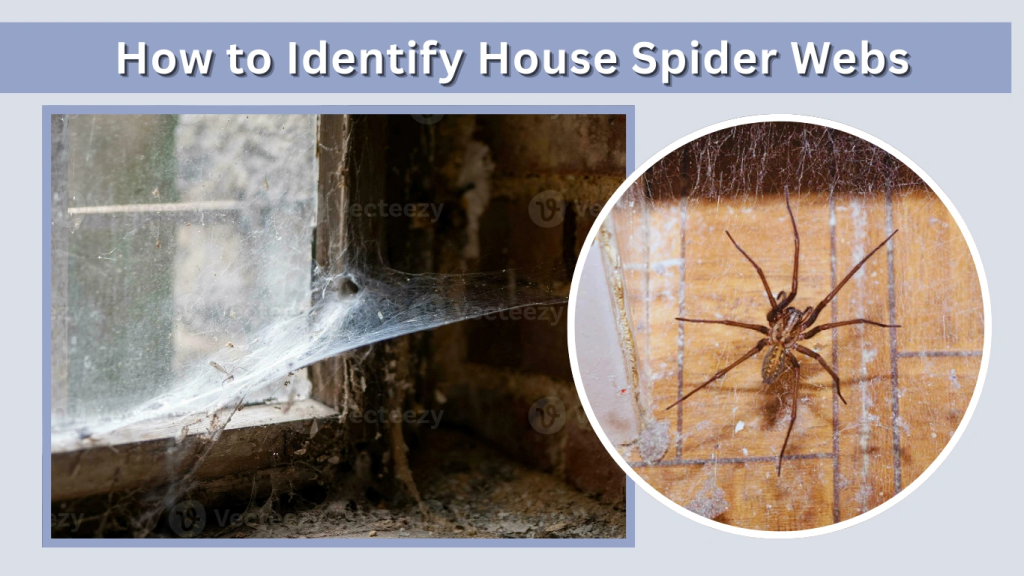
One of the easiest ways to identify house spiders is by examining their webs. Many common house spiders create cobwebs, also known as tangled webs. These webs appear messy and irregular rather than neat or symmetrical.
Cobwebs are often found in ceiling corners, behind furniture, along window frames, and in quiet storage areas. The tangled structure of the web helps trap insects that accidentally fly or crawl into the sticky threads.
Unlike the perfectly circular webs built by garden spiders, house spider webs usually look disorganized. This messy appearance is actually an effective design for catching prey indoors.
Funnel-Shaped Webs
Some house spiders create a different type of web known as a funnel web. This web structure includes a flat sheet of silk that leads into a small funnel or tunnel where the spider hides.
When an insect walks across the web, the spider quickly rushes out of the funnel to capture it. Funnel webs are commonly found in basements, garages, and dark corners where there is little disturbance.
Although funnel webs may look unusual, they are a normal web style for certain indoor spider species.
Locations Where Webs Are Found
The location of a spider web can also help identify the type of house spider present. Most house spiders prefer quiet places where their webs will not be disturbed frequently.
Common locations for house spider webs include:
- Corners of ceilings
- Window frames
- Behind furniture
- Basements and garages
- Storage rooms and closets
These areas allow spiders to catch insects while remaining hidden from human activity.
Common Types of House Spiders
American House Spider
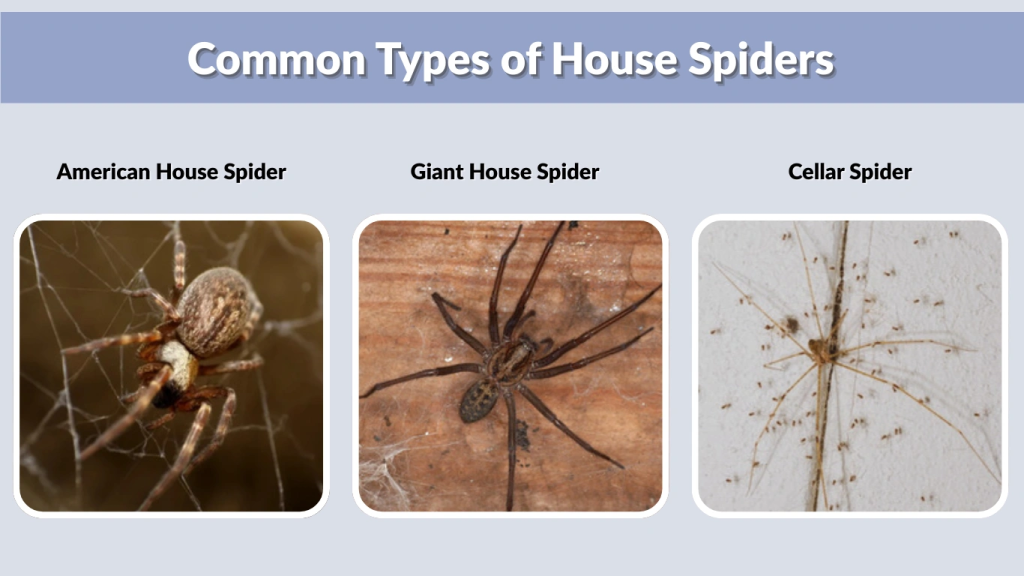
The American house spider (Parasteatoda tepidariorum) is one of the most common spiders found inside homes. It is small, usually brown or gray in color, and often builds irregular cobwebs in corners of rooms, garages, or basements.
These spiders prefer quiet locations where their webs can remain undisturbed for long periods. They mainly feed on small insects such as flies, ants, and mosquitoes that accidentally become trapped in their webs. American house spiders are harmless to humans and rarely bite.
Giant House Spider
The giant house spider is larger than most indoor spiders and is known for its long legs and fast movement. Because of its size, it can sometimes appear frightening to people who are not familiar with it.
Giant house spiders usually live in basements, garages, and dark areas of houses. They often create funnel-shaped webs and hide inside the narrow tunnel of the web until prey appears. Despite their intimidating appearance, they are not considered dangerous to humans.
Cellar Spider
Cellar spiders are easily recognized by their extremely long, thin legs and small bodies. They are sometimes called “daddy longlegs,” although this name is also used for other creatures.
These spiders are commonly found hanging upside down in loose webs in basements, attics, and ceiling corners. Cellar spiders are harmless and help control insect populations inside homes.
House Spider vs Other Spiders
House Spider vs Wolf Spider
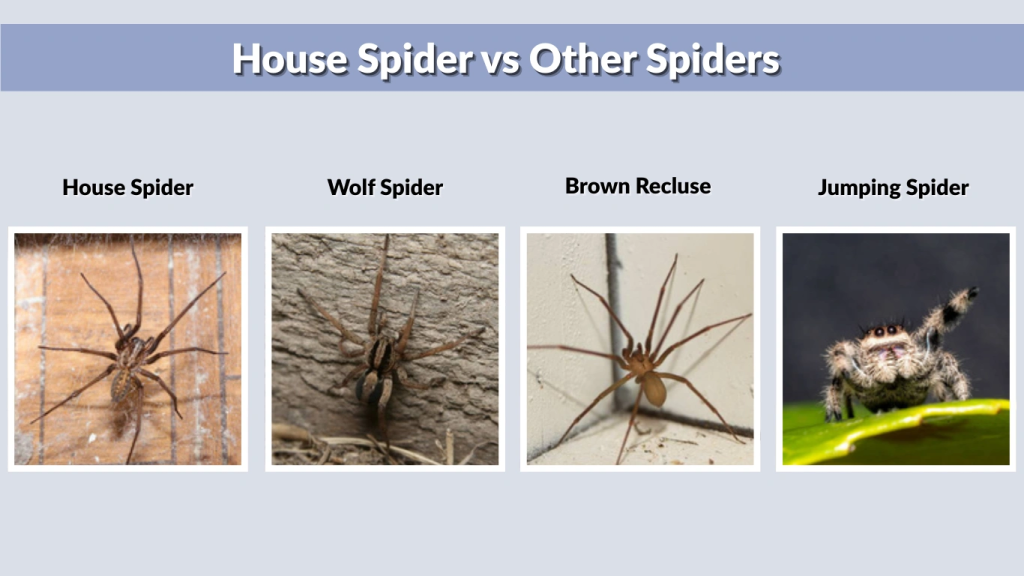
Wolf spiders are often confused with house spiders because they may enter homes occasionally. However, wolf spiders are quite different in behavior and appearance. They are larger, have stronger bodies, and usually hunt insects instead of building webs.
Unlike house spiders, wolf spiders actively chase their prey rather than waiting for insects to become trapped in webs.
House Spider vs Brown Recluse
Another spider people worry about is the brown recluse spider, which is known for its potentially harmful bite. Brown recluse spiders have a distinctive violin-shaped marking on their back and tend to hide in dark, undisturbed areas.
Common house spiders usually lack this violin marking and are much less dangerous. Correct identification is important so that harmless house spiders are not mistaken for more serious species.
House Spider vs Jumping Spider
Jumping spiders are small, compact spiders that move by jumping rather than building large webs. They have shorter legs and larger front eyes compared to house spiders.
Unlike house spiders, which rely on webs to capture prey, jumping spiders actively stalk insects before pouncing on them.
Where House Spiders Usually Live
Common Indoor Locations
House spiders prefer quiet areas inside homes where they can build webs without disturbance. Some of the most common indoor locations include ceiling corners, basements, attics, closets, and behind large furniture.
These areas provide darkness and protection, allowing spiders to remain hidden while they wait for insects to become trapped in their webs.
Outdoor Areas Near Homes
House spiders may also live in areas just outside the home. Garages, sheds, window frames, and doorways often provide suitable environments for spider webs.
From these locations, spiders can easily move indoors when insects are available or when outdoor conditions become less favorable.
Behavioral Clues for Identifying House Spiders
Web-Building Habits
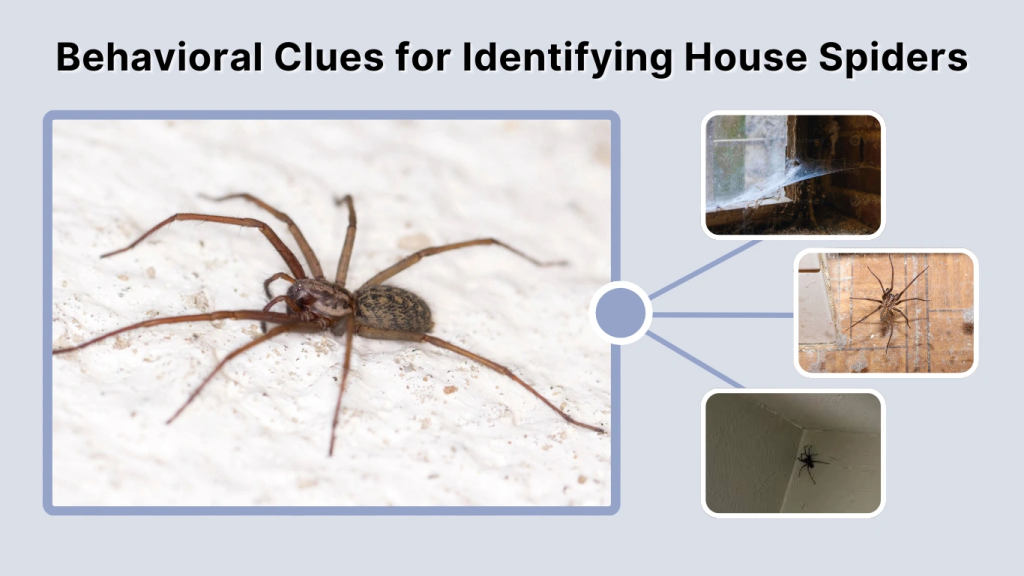
One important behavioral trait of house spiders is their tendency to build webs and remain near them. Many species wait patiently in or near their webs until an insect becomes trapped.
If the web becomes damaged, the spider will usually repair it or build a new web nearby. This behavior helps them maintain an effective trap for catching prey.
Activity Patterns
House spiders are usually more active at night. During the day, they often stay hidden in their webs or nearby hiding places. At night, they may move around to repair their webs or search for new locations to build them.
Because they are mostly nocturnal, people may rarely see them moving unless the lights are turned on during the night.
Signs That House Spiders Are Present
There are several signs that house spiders may be living inside your home. One of the most noticeable signs is the presence of cobwebs in ceiling corners, behind furniture, or along window frames.
You may also notice small egg sacs attached to spider webs. These sacs contain spider eggs and can indicate that spiders are actively reproducing in the area.
Occasional sightings of small spiders moving along walls or floors can also suggest that spiders are present, especially if insects are common inside the house.
Tips for Identifying House Spiders Safely
When identifying house spiders, it is best to observe them from a safe distance. Avoid trying to touch or handle spiders directly, as this can cause them to feel threatened.
Using a flashlight or taking a photo can help you examine the spider’s features more closely. Identification guides or online resources can also help compare the spider’s appearance with known species.
Careful observation of the spider’s size, color, web style, and behavior can provide helpful clues for accurate identification.
Conclusion
House spiders are common indoor creatures that usually live quietly in corners, basements, and other hidden spaces. Although their presence may cause concern, most house spiders are harmless and beneficial because they help control insects inside homes. Learning how to identify house spiders by their appearance, webs, habitats, and behavior can help homeowners better understand these creatures. With proper knowledge, it becomes easier to recognize harmless spiders and manage them safely without unnecessary fear.