
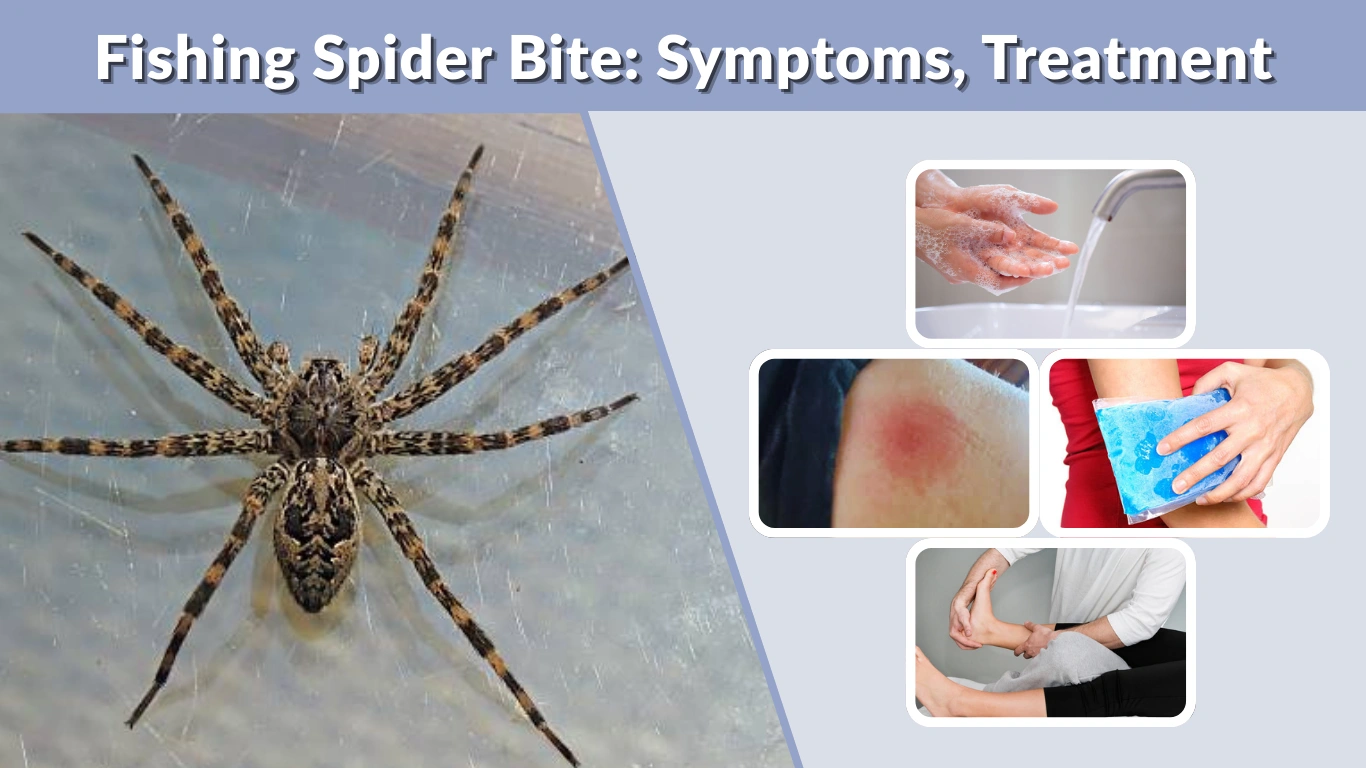
Fishing spiders are large, fast-moving spiders often found near lakes, rivers, and ponds. Because of their size and appearance, many people worry about the possibility of a fishing spider bite. These spiders belong to the genus Dolomedes and are known for their ability to walk on water and hunt aquatic prey. Despite their intimidating look, fishing spiders are generally harmless to humans. Bites are rare and usually cause only mild symptoms. Understanding their behavior, bite symptoms, and proper treatment can help reduce fear and improve safety when encountering these fascinating spiders.
What Is a Fishing Spider?
Fishing spiders are semi-aquatic spiders that belong to the nursery web spider family (Pisauridae). They are named for their ability to hunt insects and small animals on the surface of the water.
Scientific Classification
Fishing spiders are classified as follows:
- Kingdom: Animalia
- Phylum: Arthropoda
- Class: Arachnida
- Order: Araneae
- Family: Pisauridae
- Genus: Dolomedes
Several species exist within this genus, including the dark fishing spider (Dolomedes tenebrosus) and the six-spotted fishing spider (Dolomedes triton).
Why They Are Called Fishing Spiders
Fishing spiders earned their name because of their unique hunting behavior. Instead of spinning webs to catch prey, they often wait along the edges of water.
They use their front legs to detect vibrations on the water surface. When they sense movement, they quickly attack their prey. Fishing spiders may capture:
- Insects
- Aquatic insects
- Tadpoles
- Small fish
- Other small invertebrates
Some species can even run across water or dive underwater to escape predators or capture prey.
Do Fishing Spiders Bite Humans?
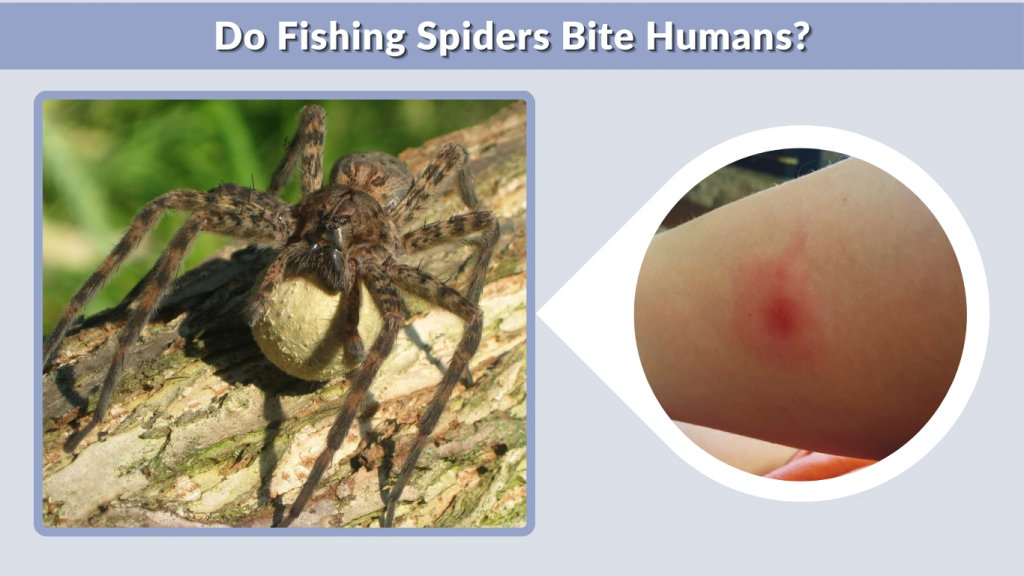
Fishing spiders are not aggressive toward humans. In most situations, they prefer to escape rather than bite.
When a Bite May Occur
A fishing spider bite usually happens only when the spider feels threatened or trapped. Situations where bites might occur include:
- Accidentally grabbing or handling the spider
- Pressing the spider against the skin
- Disturbing a female guarding her egg sac
Because fishing spiders are shy and defensive rather than aggressive, bites are uncommon.
Aggression Level
Fishing spiders generally display calm and cautious behavior around humans. When disturbed, they typically respond by:
- Running away
- Hiding in nearby vegetation
- Dropping into water to escape
Biting is usually their last line of defense.
Fishing Spider Bite Symptoms
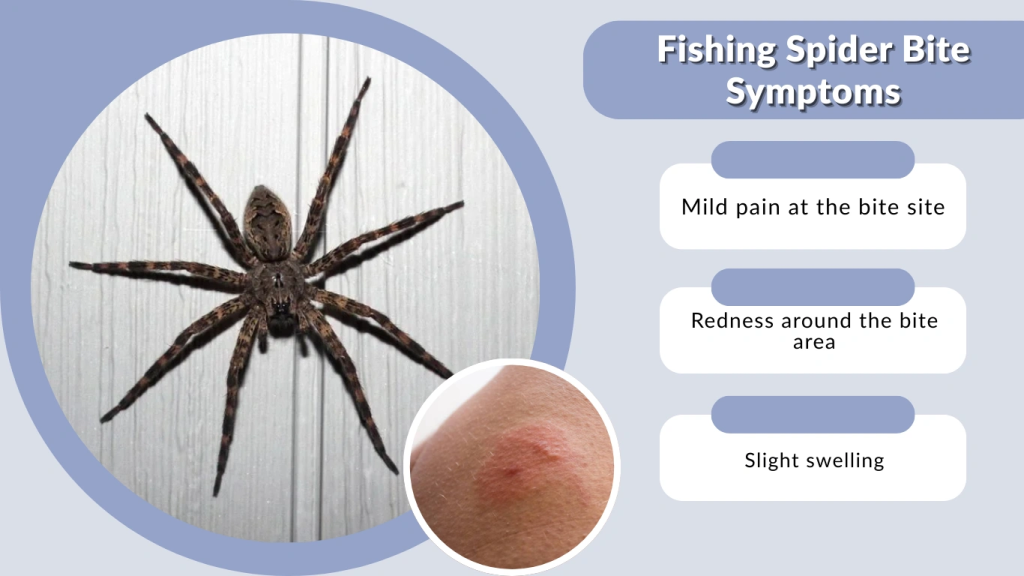
If a fishing spider does bite, the symptoms are usually mild and temporary. Their venom is designed to immobilize small prey rather than harm large animals like humans.
Immediate Symptoms
Most people experience mild symptoms shortly after the bite.
Common symptoms include:
- Mild pain at the bite site
- Redness around the bite area
- Slight swelling
- Small puncture marks from the spider’s fangs
The pain is often described as similar to a bee sting or insect bite.
Possible Reactions
In some cases, the bite may cause minor irritation for a short time.
Possible reactions may include:
- Itching
- Mild burning sensation
- Localized swelling
These symptoms typically disappear within several hours to a day.
Rare Reactions
Serious reactions to fishing spider bites are uncommon, but they can occasionally occur in sensitive individuals.
Rare reactions may include:
- Larger swelling around the bite area
- Temporary skin irritation
- Allergic response in very sensitive people
If symptoms worsen instead of improving, medical advice may be helpful.
How Painful Is a Fishing Spider Bite?
Many people assume that large spiders cause extremely painful bites, but fishing spider bites are usually mild to moderate in pain.
Pain Level
The pain from a fishing spider bite is commonly compared to:
- A bee sting
- A minor insect bite
Because the spider’s venom is not very strong for humans, the discomfort usually remains limited to the bite area.
Duration of Pain
In most cases, the pain lasts only a short time. Typical duration may include:
- Immediate discomfort lasting a few minutes
- Mild soreness for several hours
- Minor irritation for up to a day
Healing Time
For most people, a fishing spider bite heals quickly. The bite area usually improves within 1 to 3 days without medical treatment.
Keeping the area clean and avoiding scratching can help the skin heal faster.
Fishing Spider Bite Treatment
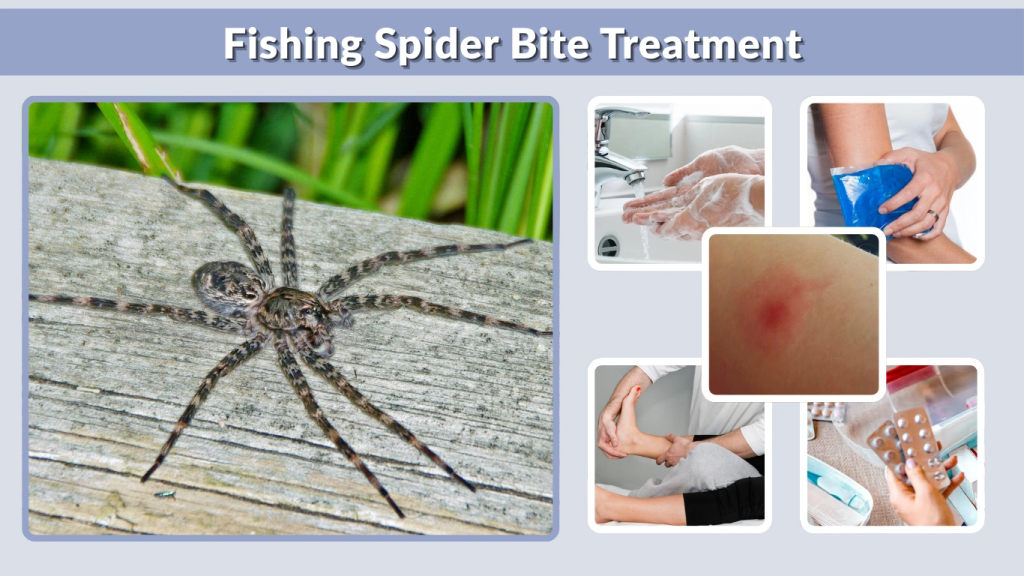
Although a fishing spider bite is usually mild, proper first aid can help reduce discomfort and prevent infection. Most bites heal quickly with simple home care.
First Aid Steps
If you suspect a fishing spider bite, follow these basic steps:
- Clean the bite area
Wash the area gently with soap and warm water to remove bacteria. - Apply a cold compress
Place an ice pack or cold cloth on the bite for about 10–15 minutes to reduce swelling and pain. - Elevate the affected area
If the bite is on an arm or leg, keeping it slightly elevated may help reduce swelling. - Use over-the-counter medication
Pain relievers or antihistamine creams may help relieve itching or irritation.
These simple treatments are usually enough for mild spider bites.
What to Avoid
To prevent complications, it is important to avoid certain actions after a bite.
Do not:
- Scratch the bite area
- Apply unverified home remedies
- Ignore increasing redness or swelling
Scratching can break the skin and increase the risk of infection.
When to Seek Medical Attention
Fishing spider bites rarely cause serious problems, but medical help may be necessary in some situations.
Warning Signs
Seek medical attention if you experience:
- Severe or spreading swelling
- Increasing redness or warmth around the bite
- Fever or chills
- Difficulty breathing
- Severe allergic reactions
These symptoms are uncommon but should be taken seriously.
People Who Should Be More Careful
Certain individuals may be more sensitive to insect or spider bites.
Extra caution is recommended for:
- Children
- Older adults
- People with allergies
- Individuals with weakened immune systems
If a bite occurs in these cases, monitoring symptoms closely is important.
Fishing Spider Bite vs Other Spider Bites
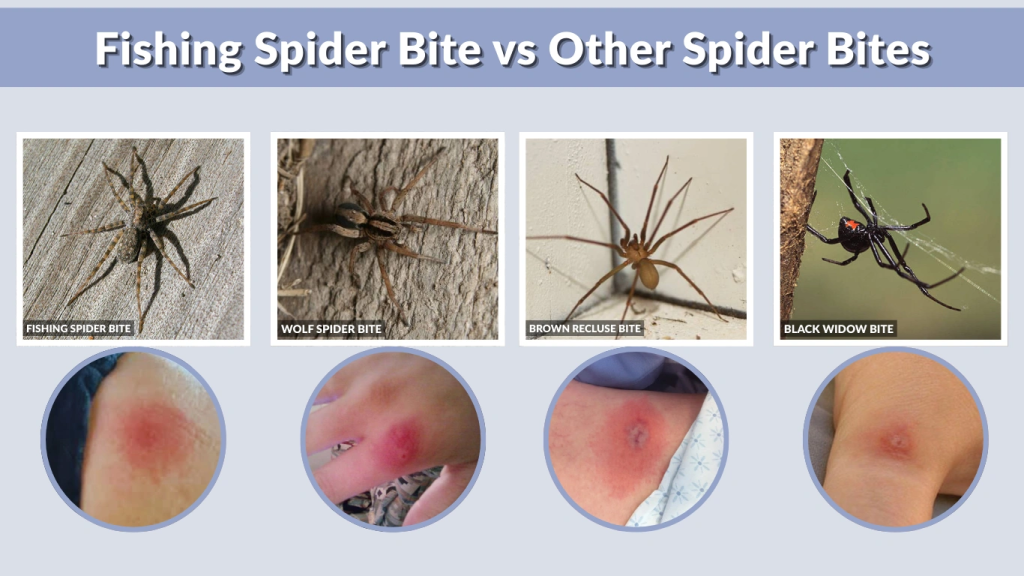
Many spider bites are confused with one another. Comparing fishing spider bites with other well-known spider bites can help people understand the differences.
Fishing Spider vs Wolf Spider Bite
Wolf spiders and fishing spiders look similar and are often mistaken for each other.
Both spiders:
- Are large hunting spiders
- Rarely bite humans
- Cause mild symptoms if they do bite
Their bites typically result in temporary pain, redness, and swelling.
Fishing Spider vs Brown Recluse Bite
Brown recluse spiders are medically significant, unlike fishing spiders.
Key differences include:
- Brown recluse venom can damage skin tissue
- Fishing spider venom is mild
- Brown recluse bites may cause serious skin lesions
Fishing spider bites rarely lead to serious medical problems.
Fishing Spider vs Black Widow Bite
Black widow spiders have strong venom that affects the nervous system.
Differences include:
- Black widow bites can cause muscle pain and severe symptoms
- Fishing spider bites usually cause only mild irritation
- Black widows have a distinctive red hourglass marking
Because of these differences, fishing spiders are far less dangerous.
Are Fishing Spiders Dangerous?
Despite their intimidating appearance, fishing spiders are not considered dangerous to humans.
Venom Strength
Fishing spiders use venom primarily to subdue small prey such as insects and aquatic animals. The venom is not strong enough to cause serious harm to humans.
Risk to Humans
For most people, a fishing spider bite results in:
- Mild pain
- Minor swelling
- Temporary irritation
Serious reactions are very rare.
Ecological Importance
Fishing spiders are beneficial predators in many ecosystems.
They help by:
- Controlling insect populations
- Reducing pests near water sources
- Supporting healthy aquatic environments
Because of this role, they are considered helpful in nature.
How to Avoid Fishing Spider Bites
Although fishing spider bites are rare, taking simple precautions can help reduce the chance of being bitten.
Avoid Handling Wild Spiders
The safest approach is to observe spiders without touching them. Most bites occur when people try to handle or disturb a spider.
Wear Protective Clothing Near Water
If you are exploring wetlands, forests, or riverbanks, protective clothing can help prevent accidental contact.
Consider wearing:
- Long sleeves
- Gloves
- Closed shoes
Keep Homes Sealed
Fishing spiders may occasionally wander indoors, especially in homes located near lakes or wooded areas.
To prevent this:
- Seal cracks around doors and windows
- Install window screens
- Reduce outdoor lights that attract insects
These steps make it less likely that spiders will enter living spaces.
FAQs
Are fishing spider bites dangerous?
Fishing spider bites are generally not dangerous. They usually cause mild pain, redness, and swelling that disappears within a short time.
What does a fishing spider bite look like?
A fishing spider bite often appears as small puncture marks with mild redness and slight swelling around the area.
How painful is a fishing spider bite?
The pain is typically described as similar to a bee sting or minor insect bite.
Do fishing spiders carry venom?
Yes, fishing spiders have venom used to capture prey. However, the venom is mild and not harmful to humans.
Can fishing spider bites cause infection?
Infections are rare but possible if the bite area becomes contaminated. Keeping the area clean and avoiding scratching helps prevent infection.