
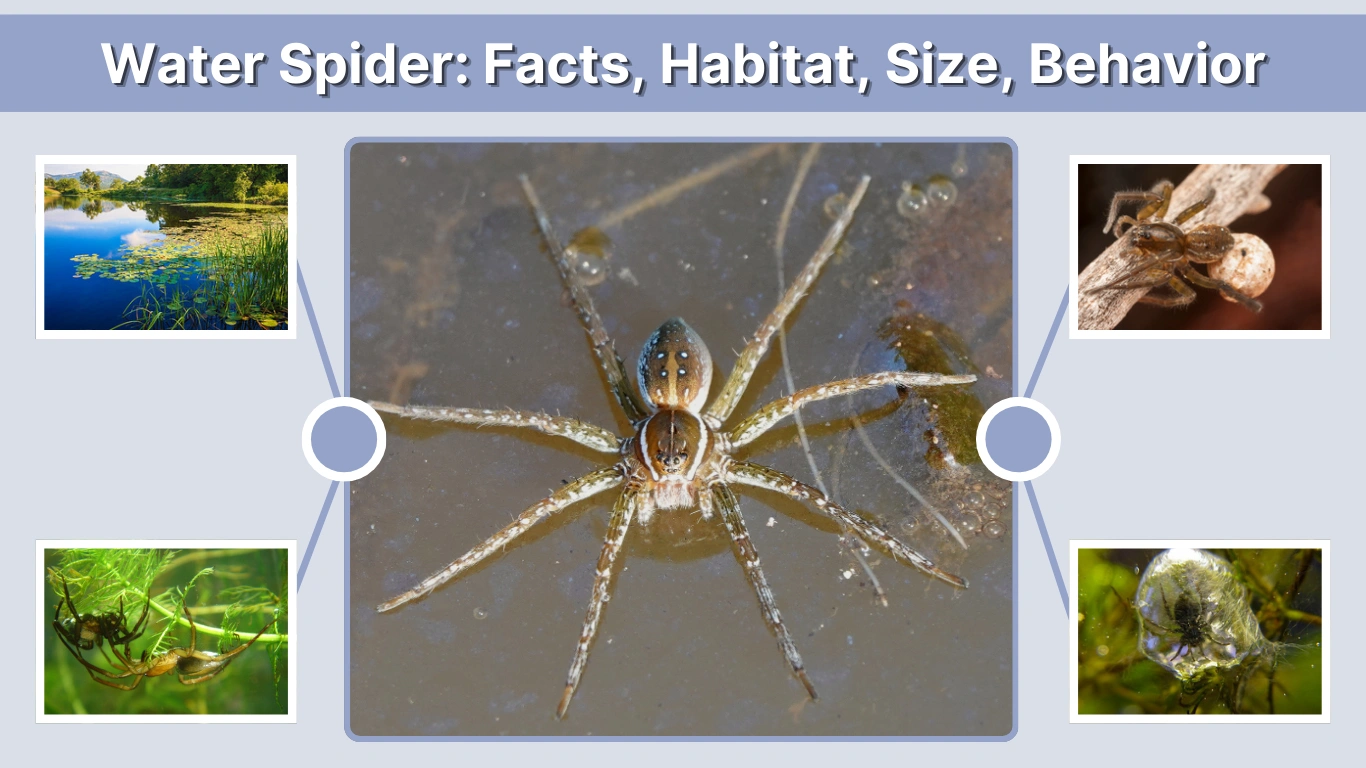
The water spider is one of the most unusual spiders in the world because it spends almost its entire life underwater. Unlike most spiders that live on land, this species builds a special underwater web filled with air that allows it to breathe below the surface. Many people are fascinated by how the water spider survives in aquatic environments and how it hunts beneath the water. Learning about the water spider’s habitat, size, web structure, and behavior reveals one of nature’s most remarkable adaptations.
What Is a Water Spider?
The water spider is a unique species that has adapted to live in freshwater environments. It is famous for creating an underwater air chamber that allows it to live, hunt, and even raise its young beneath the water’s surface.
Scientific Classification
The scientific name of the water spider is Argyroneta aquatica. It belongs to the spider family Dictynidae, although some classifications place it in the Cybaeidae family.
What makes this species truly remarkable is that it is the only spider known to spend nearly its entire life underwater. While many spiders can move across water surfaces, the water spider actually lives beneath the surface for long periods.
Scientists have studied this spider for many years because of its unusual aquatic lifestyle and its ability to survive in an environment that most spiders cannot tolerate.
Why It Is Called a Water Spider
The name “water spider” comes from the spider’s unusual habitat and behavior. Instead of living in trees, soil, or buildings, this spider lives in freshwater environments such as ponds and slow-moving streams.
It hunts underwater and builds its home below the surface. This home is a special structure made from silk and filled with air. Because of this behavior, the water spider is sometimes also called the diving bell spider.
The diving bell web functions like a tiny underwater air chamber where the spider can rest, eat, and store captured prey.
Discovery and Scientific Interest
The water spider has fascinated scientists for centuries. Early naturalists were amazed to discover that a spider could build a web underwater and carry air bubbles with it.
Modern research has shown that the diving bell web actually works like a natural scuba tank, allowing the spider to store oxygen and survive underwater for extended periods.
Because of its rare lifestyle, the water spider is often considered one of the most extraordinary examples of adaptation in the spider world.
Water Spider Habitat
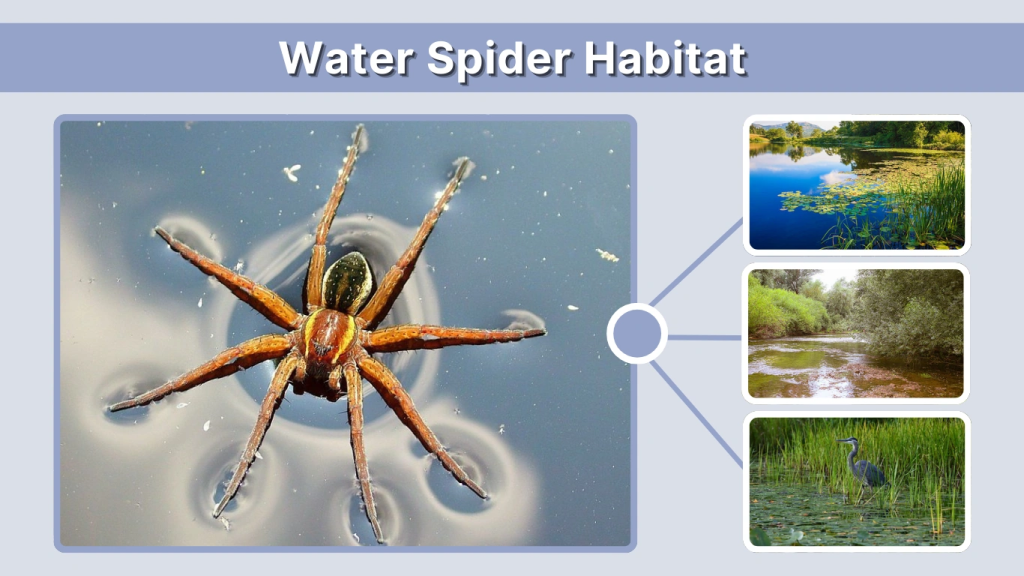
Water spiders require very specific environmental conditions in order to survive. Their habitat must provide both suitable water conditions and enough aquatic vegetation for building their underwater webs.
Where Water Spiders Live
Water spiders live primarily in freshwater habitats rather than saltwater environments.
Common habitats include:
- Quiet ponds
- Slow-moving streams
- Lakes with vegetation
- Marshes and wetlands
These environments provide calm water where the spider can safely build its diving bell web.
Aquatic plants are especially important because the spider anchors its web structures to underwater vegetation.
Geographic Distribution
Water spiders are mainly found in Europe and parts of northern Asia. They are most common in temperate regions where freshwater ecosystems are stable and vegetation is abundant.
Although they are not widely distributed across the entire world, they are relatively well known in the areas where they occur.
Because they live underwater and are small in size, they can be difficult to observe in the wild.
Preferred Environmental Conditions
Water spiders prefer environments that provide both shelter and a steady supply of prey.
Ideal conditions usually include:
- Clean freshwater
- Plenty of aquatic plants
- Calm or slow-moving water
- Small aquatic insects and larvae
These conditions allow the spider to build its diving bell web and capture prey efficiently.
How the Water Spider Lives Underwater
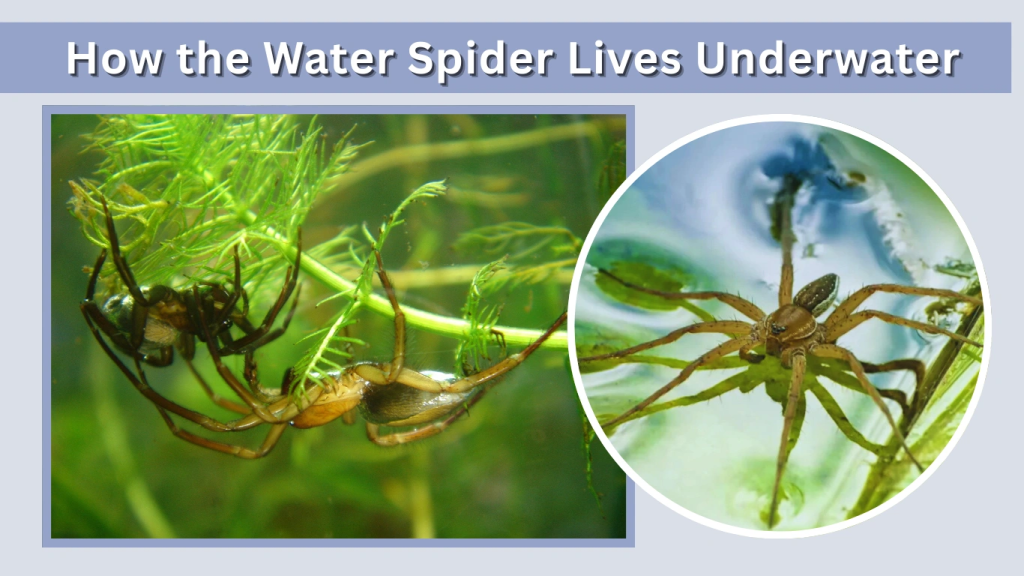
The ability of the water spider to live underwater is one of the most fascinating aspects of its biology. Its survival depends on a remarkable structure known as the diving bell web.
The Diving Bell Web
The diving bell web is a dome-shaped structure made from silk. The spider builds this web between underwater plants and then fills it with air bubbles.
This structure acts as a tiny underwater air chamber. The spider carries air from the water surface down to the web using bubbles trapped around its body.
Over time, the spider fills the web with enough air to create a stable breathing space beneath the water.
How the Spider Breathes
To breathe underwater, the spider repeatedly travels to the surface and collects air bubbles. These bubbles stick to the spider’s body hairs.
The spider then transports the bubble down to its diving bell and releases it inside the web. As more air bubbles are added, the air chamber grows larger.
This air pocket allows the spider to breathe normally while remaining underwater for long periods.
Why the Diving Bell Is Important
The diving bell web serves several important purposes for the water spider.
It functions as:
- A breathing chamber
- A resting place
- A location to eat captured prey
- A safe area for laying eggs
Without this special underwater web, the spider would not be able to survive beneath the water surface.
Water Spider Web Structure
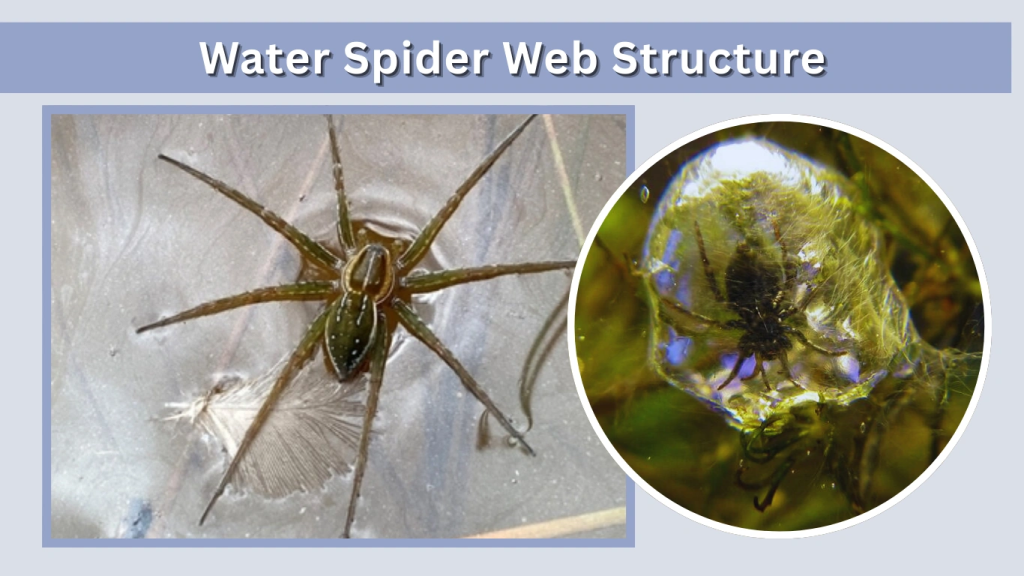
The web created by the water spider is unlike any other spider web in the animal kingdom. Instead of trapping flying insects, this web serves as an underwater shelter and breathing chamber.
What Is a Diving Bell Web
The water spider’s web is commonly known as a diving bell because its shape resembles a small bell or dome. This silk structure is built underwater and filled with air.
The spider anchors the silk threads between aquatic plants and then gradually forms a dome-shaped structure. Once the basic framework is built, the spider repeatedly brings air bubbles from the surface and releases them inside the web.
These air bubbles combine to form a large air pocket, creating a stable chamber where the spider can live beneath the water.
How the Spider Builds the Web
Building a diving bell requires patience and repeated trips to the water’s surface.
The process usually involves several steps:
- The spider attaches silk threads to nearby underwater plants.
- It forms a loose dome-like structure between the plants.
- The spider swims to the surface to collect an air bubble.
- The bubble is carried down and released inside the web.
- This process is repeated until the chamber becomes large enough.
Over time, the diving bell becomes a comfortable underwater shelter where the spider can spend much of its life.
Purpose of the Underwater Web
The diving bell web plays several important roles in the life of the water spider.
It provides:
- A breathing space filled with oxygen
- A safe shelter from predators
- A place to consume captured prey
- A nursery for eggs and young spiders
Because the diving bell serves so many purposes, it is essential for the spider’s survival.
Water Spider Size and Appearance
Although the water spider has an unusual lifestyle, its physical appearance is similar to many other small spiders.
Average Body Size
Water spiders are relatively small animals. Adult spiders usually measure about 8 to 15 millimeters in body length.
While this size may seem small, it is large enough for the spider to effectively hunt aquatic insects and maintain its diving bell.
Color and Body Structure
Water spiders typically have dark brown or gray bodies that help them blend into their underwater environment.
Their bodies are covered with tiny hairs that trap air bubbles when the spider dives underwater. These air bubbles give the spider a silvery appearance, which is why the species name Argyroneta means “silvery net.”
This air layer also helps the spider transport oxygen from the surface to its diving bell.
Female vs Male Size Differences
Unlike many spider species where females are larger, male water spiders are often slightly larger and more active than females.
Males also tend to build larger diving bells and may travel more frequently between different areas of the water while searching for mates.
Water Spider Hunting Behavior
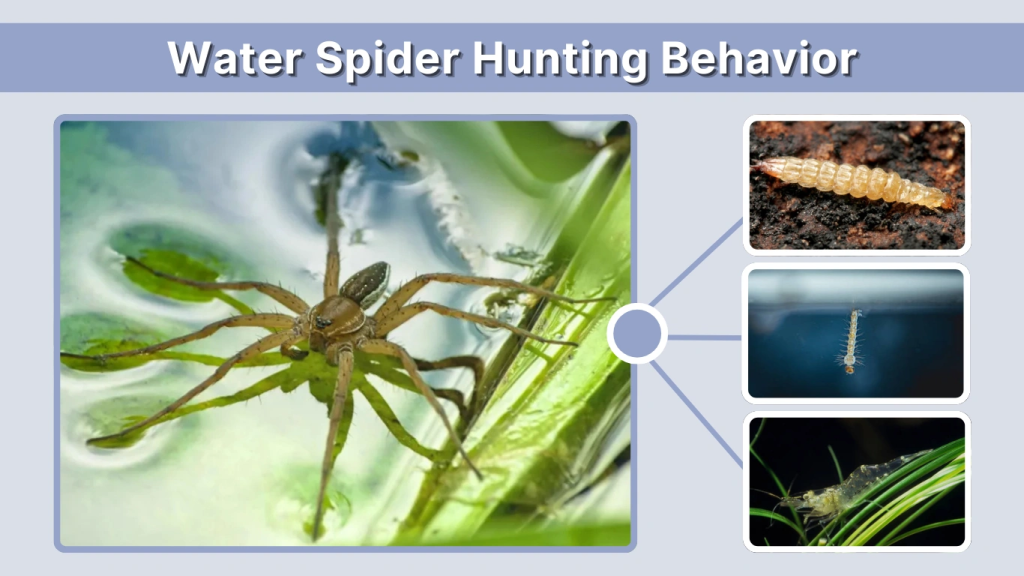
Water spiders are skilled aquatic predators that hunt small animals living in freshwater habitats.
How Water Spiders Catch Prey
Instead of using large trapping webs, water spiders actively hunt underwater.
They usually wait near their diving bell or move through vegetation searching for prey. When a suitable target approaches, the spider quickly attacks and injects venom to immobilize it.
The prey is then carried back to the diving bell to be eaten.
Typical Diet
The diet of water spiders mainly includes small aquatic organisms.
Common prey items include:
- Insect larvae
- Small aquatic insects
- Tiny crustaceans
- Other small invertebrates
Because many of these animals live near aquatic plants, the spider’s habitat provides plenty of hunting opportunities.
Role as an Aquatic Predator
Water spiders play an important role in freshwater ecosystems. By feeding on insect larvae and other small animals, they help regulate populations of aquatic insects.
This natural pest control contributes to maintaining ecological balance in ponds and wetlands.
Water Spider Bite
Although water spiders are fascinating creatures, some people worry about whether they might be dangerous.
Do Water Spiders Bite Humans?
Water spiders rarely interact with humans because they spend most of their time underwater. Bites are extremely uncommon and usually occur only if the spider is handled or disturbed.
In most cases, the spider will attempt to escape rather than bite.
Water Spider Bite Symptoms
If a bite does occur, the symptoms are typically mild.
Possible symptoms include:
- Minor pain or irritation
- Slight redness around the bite area
- Mild swelling
These symptoms usually disappear within a short time.
Bite Treatment
Basic first aid is generally enough to treat a water spider bite.
Recommended steps include:
- Wash the bite area with soap and water
- Apply a cold compress to reduce swelling
- Avoid scratching the area
Serious reactions are extremely rare.
Life Cycle of the Water Spider
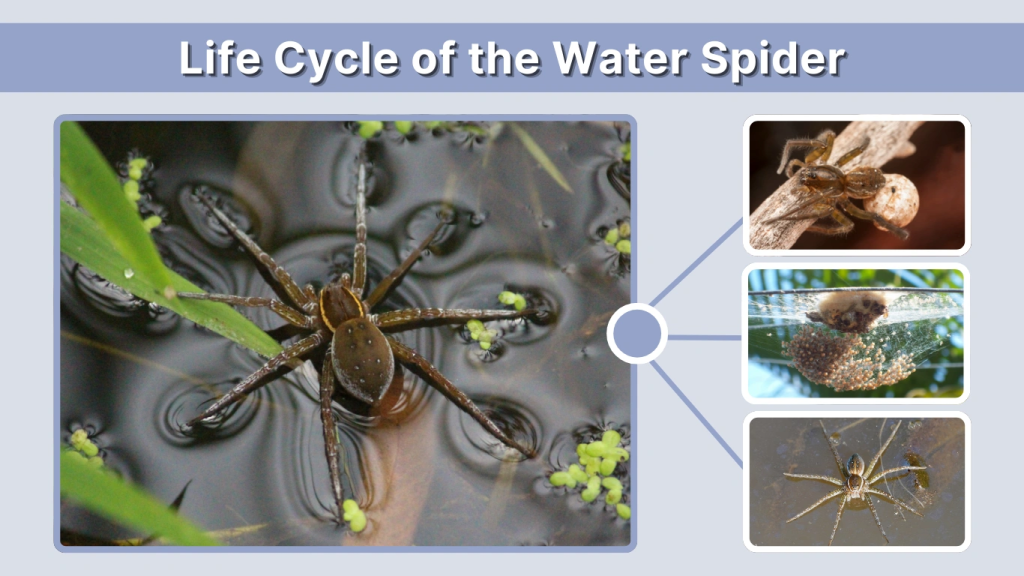
Like other spiders, water spiders pass through several stages of development.
Egg Laying Inside the Diving Bell
Female water spiders lay their eggs inside the diving bell. The eggs are protected inside silk structures that keep them safe from predators.
Spiderling Development
After hatching, the young spiders—called spiderlings—remain inside the diving bell for a short period before leaving to build their own underwater homes.
Growth Into Adult Spiders
As the spiderlings grow, they shed their outer exoskeleton several times in a process known as molting. Eventually they mature into adult spiders capable of building diving bells and hunting independently.
Behavior and Adaptations
Water spiders possess several unique adaptations that allow them to survive underwater.
Underwater Adaptations
Their bodies are covered with tiny hairs that trap air bubbles, allowing them to transport oxygen and maintain their diving bell.
Day and Night Activity
Water spiders may be active both during the day and at night, depending on environmental conditions and prey availability.
Predator Avoidance
Their underwater lifestyle helps them avoid many predators that typically hunt spiders on land.
Importance of Water Spiders in Ecosystems
Water spiders contribute to the health of freshwater ecosystems.
Controlling Aquatic Insects
By feeding on insect larvae and small aquatic animals, they help control populations that might otherwise grow too large.
Contribution to Freshwater Food Chains
Water spiders also serve as prey for larger aquatic animals, making them part of the natural food web.
Indicator of Healthy Water Ecosystems
Because they require clean freshwater environments, the presence of water spiders can indicate a healthy aquatic ecosystem.
Conclusion
The water spider is one of the most remarkable spiders in the natural world. Its ability to build a diving bell web and live underwater sets it apart from nearly all other spider species. Through specialized adaptations such as air-trapping body hairs and underwater hunting skills, the water spider has successfully adapted to life in freshwater habitats. Although it rarely interacts with humans, it plays an important role in maintaining ecological balance by controlling aquatic insect populations.