
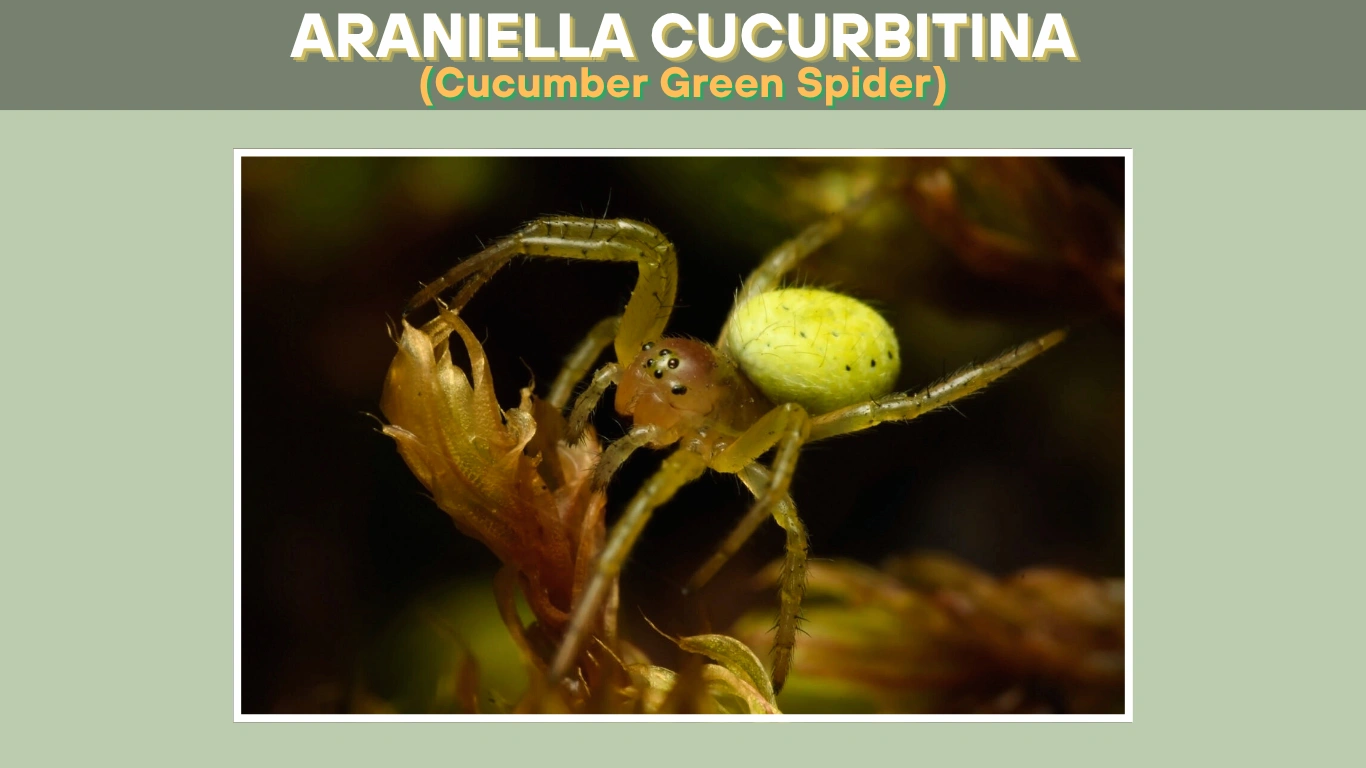
Araniella cucurbitina, commonly known as the cucumber green spider, is a small but striking orb-weaver known for its vivid green body and subtle red spot. Found across Europe and recently in Argentina, this spider plays a vital role in garden ecosystems. Many people question its bite, danger level, and whether it’s poisonous—but in truth, it’s harmless to humans and highly beneficial in controlling pests. This guide will help you identify it, understand its behavior, and clear up common misconceptions.
What is Araniella cucurbitina?

This species belongs to the orb-weaver family (Araneidae) and is best known for its lime green color. It often spins delicate webs in shrubs, hedges, and low vegetation, where it waits for prey. Although it looks exotic, it’s quite common across Europe, especially in the UK and Ireland, and has also been recorded in Argentina.
Due to its appearance, it’s often confused with Araniella opisthographa. Differentiating between the two typically requires microscopic examination of genital features, but there are a few visual hints covered later in this article.
Identification: How to Recognize Araniella cucurbitina
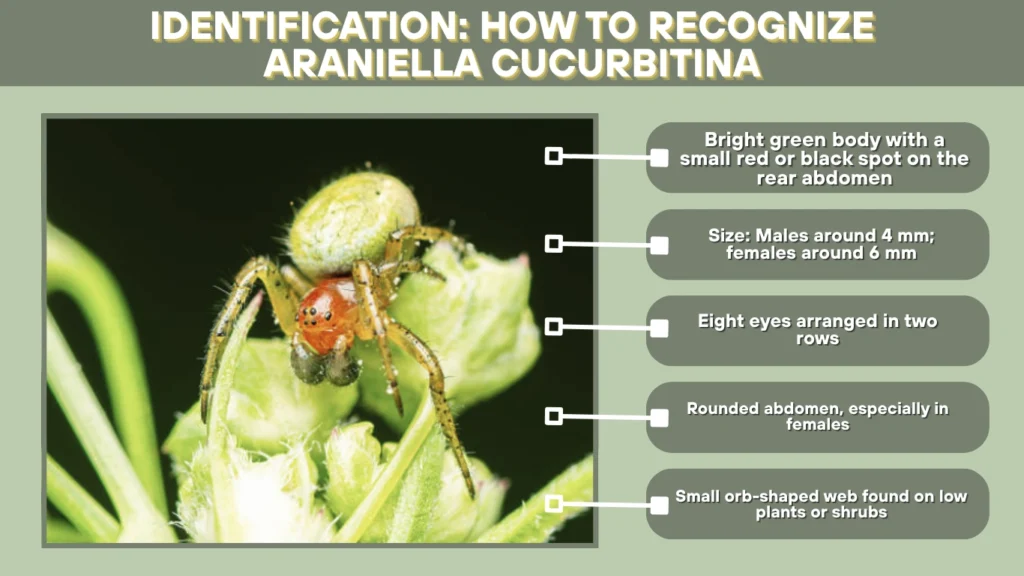
Even for non-experts, this spider is easy to identify. Here are the main features:
- Bright green body with a small red or black spot on the rear abdomen
- Size: Males around 4 mm; females around 6 mm
- Eight eyes arranged in two rows
- Rounded abdomen, especially in females
- Small orb-shaped web found on low plants or shrubs
Their bright green color offers excellent camouflage, especially when they rest on leaves or in hedges.
Male vs Female: Spotting the Difference

There are notable differences between males and females:
- Male:
- Slimmer and smaller body
- Longer legs
- More active during mating season
- Sometimes observed carrying prey as a mating gift
- Slimmer and smaller body
- Female:
- Larger with a fuller, rounded abdomen
- More stationary, often found guarding the web
- Brighter green coloration in most cases
- Larger with a fuller, rounded abdomen
The mating behavior of males often involves presenting a gift (usually a dead insect) to the female—a fascinating ritual that sometimes helps avoid aggression.t
Is Araniella cucurbitina Dangerous or Poisonous?

Many people search online for terms like bite, poisonous, or dangerous, but there’s no reason for alarm.
- Araniella cucurbitina does have venom like most spiders, but it’s used only to subdue small insects
- The spider is not aggressive toward humans
- Bites are extremely rare and typically harmless
- If bitten, symptoms may include minor redness or itching—similar to a mild insect sting
- No known medical risks or allergic reactions associated with this species
In short, while it may look exotic, this spider is entirely safe to have around homes and gardens.
Where Can You Find It?
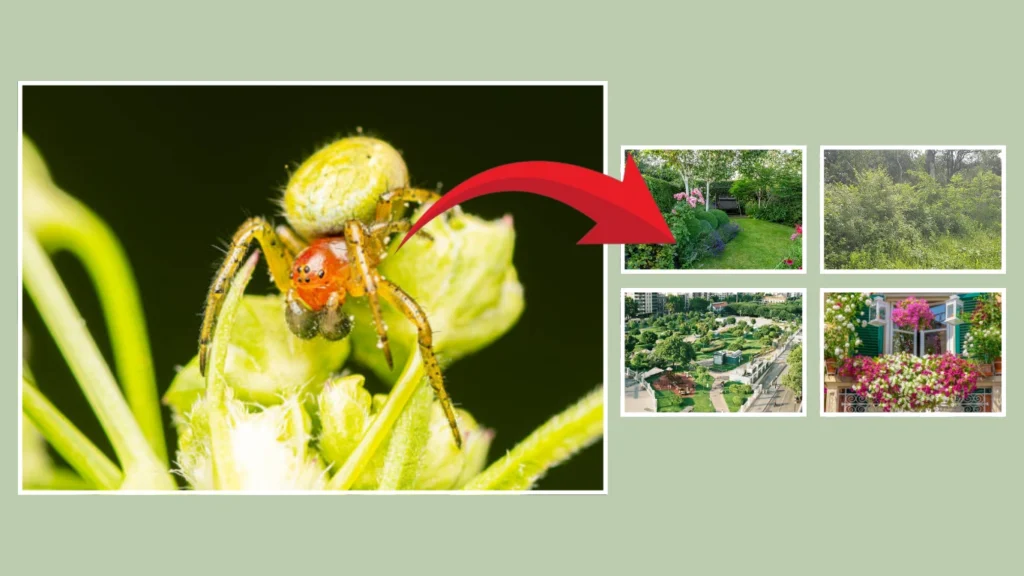
Araniella cucurbitina is widespread across Europe and recently found in South America.
Typical habitats include:
- Garden shrubs and low bushes
- Forest edges and hedgerows
- Parks and residential green areas
- Occasionally seen on balconies or outdoor walls
In Ireland and the UK, it’s considered a native species, while in Argentina, it’s a newer addition likely due to human-related distribution.
How It Compares to Araniella opisthographa
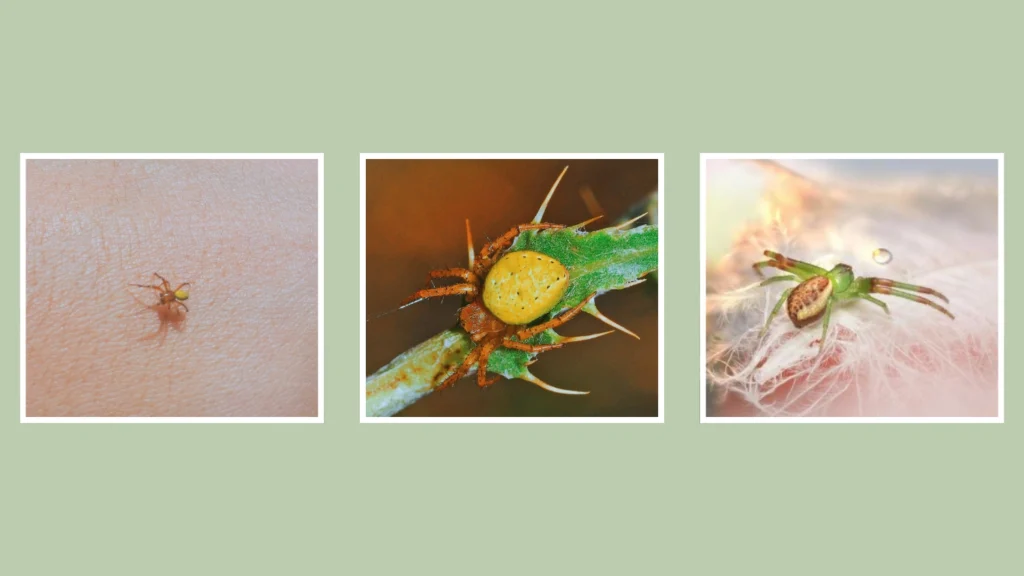
This is where it gets tricky. Visually, Araniella cucurbitina and Araniella opisthographa are almost identical. However:
- A. cucurbitina tends to be slightly brighter in color
- A. opisthographa may show fainter banding or patterning
- Final identification often requires close-up photos or microscopic examination
For enthusiasts and photographers, capturing both species might require expert consultation for accurate classification.
Additional Facts and Behavior

- The cucumber green spider is most active during spring and summer
- It is beneficial to gardens by feeding on aphids, flies, and other small pests
- The web is small but effective—usually found hidden in the shade of leaves
- Males may bring “mating gifts” to females to reduce the chance of rejection or aggression
- The term “araniella cucurbitina clerk” sometimes appears online, but it seems to be an error or mistranslation unrelated to biology
Conclusion
Despite its unique look, Araniella cucurbitina is nothing to fear. It’s a non-aggressive, helpful spider that quietly works to keep garden pests in check. With its bright green color and tiny web-spinning skills, it adds a touch of natural beauty to outdoor spaces. If you spot one in your hedge or flower bed, consider it a lucky sighting—not a threat.
Whether you’re in the UK, Ireland, or exploring the flora and fauna of Argentina, the cucumber green spider is a charming companion to your garden ecosystem.