

Fishing spiders are large, fast-moving spiders often found near ponds, lakes, and streams. Unlike most spiders, they can walk on water and even dive to catch prey like insects and tiny fish. With their unique hunting style and impressive size, they’re both fascinating and misunderstood. In this guide, we’ll explore the different types of fishing spiders, where they live, what they eat, and how to identify them.
What is a Fishing Spider?
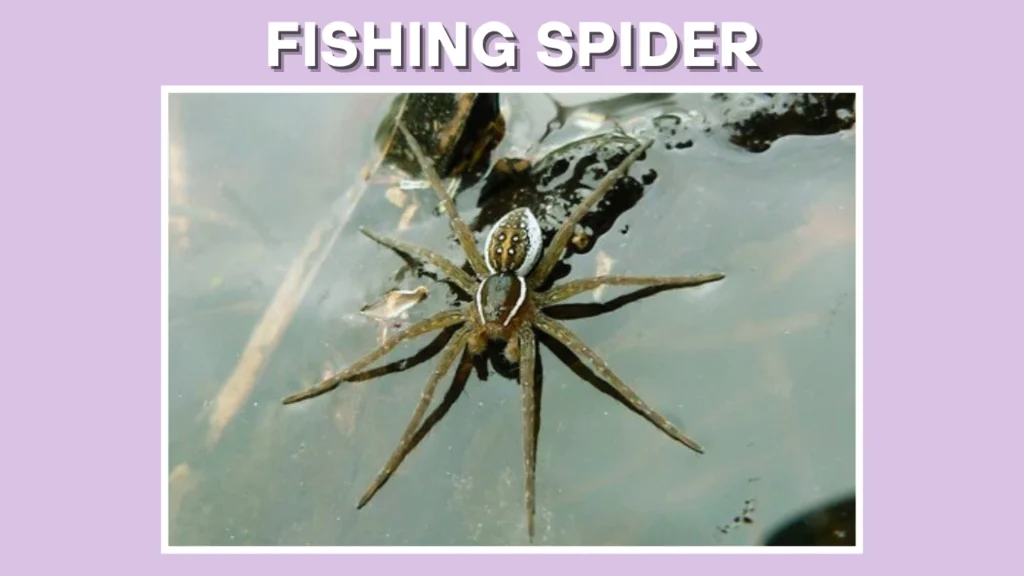
Fishing spiders belong to the genus Dolomedes and are often mistaken for wolf spiders due to their size and speed. However, they have a unique talent that sets them apart—they can walk on water and even dive below the surface to hunt.
These spiders are commonly found near bodies of fresh water like lakes, ponds, and slow-moving streams. They rest on floating leaves or rocks, waiting patiently for prey to ripple the surface.
Unlike web-building spiders, fishing spiders are active hunters. Their strong legs and sensitive hairs help them detect vibrations in the water, making them effective aquatic predators.
4 Types of Fishing Spiders
Fishing spiders are diverse and impressive hunters, with several species commonly found across North America and beyond. Each type varies in size, color, and habitat preferences but shares one trait: the ability to hunt in or near water. Below, we’ll explore five notable types of fishing spiders, including their appearance, behavior, and ecological roles.
1. Dark Fishing Spider (Dolomedes tenebrosus)

The dark fishing spider is one of the largest and most recognizable species in the Dolomedes genus. Found primarily in wooded areas near water sources, it’s known for its gray to brown coloration with darker markings along its legs and body.
Identification:
- Size: Females can reach up to 1.5 inches (body length), with a leg span over 3 inches
- Color: Brown to gray with dark chevrons on the abdomen
- Legs: Long, banded, and slightly fuzzy
- Eyes: Eight eyes in two horizontal rows
Habitat and Range
Dark fishing spiders are often found on tree trunks, dock pilings, and rocks close to freshwater lakes and rivers. They are native to the eastern and central regions of North America, including wooded areas in states like Pennsylvania, Ohio, and Michigan. Though they prefer moisture-rich environments, they can also be spotted some distance from water.
Diet and Hunting Behavior
This species is an ambush predator. Instead of weaving webs, it waits motionless for vibrations to ripple through the water or the ground. When it detects prey—such as insects, tadpoles, or small fish—it strikes quickly. Its hydrophobic legs allow it to rest comfortably on the water surface, while its speed ensures a successful catch.
Are They Dangerous?
While their appearance may seem intimidating, dark fishing spiders are not harmful to humans. They can bite if provoked, but symptoms are mild and similar to a bee sting. These spiders are more likely to flee than fight.
2. Six-Spotted Fishing Spider (Dolomedes triton)

The six-spotted fishing spider is another common species easily recognized by the six dark spots on the underside of its abdomen. Unlike the dark fishing spider, this one is more frequently seen on the water surface than on land.
Identification:
- Size: Females can grow up to 0.8 inches in body length
- Color: Light brown to olive green with pale stripes on the cephalothorax
- Abdomen: Six distinct dark spots on the underside
- Legs: Long, thin, and slightly translucent
Habitat and Range
This spider is highly aquatic and thrives in wetlands, pond edges, and marshes. It’s distributed across most of the United States and southern parts of Canada. It often rests on aquatic plants and lily pads, scanning the water for movement.
Diet and Hunting Behavior
The six-spotted fishing spider primarily preys on aquatic insects, small frogs, and even minnows. It relies on the surface tension of water to stay afloat and can dive underwater to escape predators or surprise prey. After catching its target, it drags it to a dry surface to consume it.
Are They Dangerous?
Like its relatives, this spider is not considered dangerous. Its bite is rare and non-lethal. They play an important role in controlling insect populations around aquatic habitats.
3. White-Banded Fishing Spider
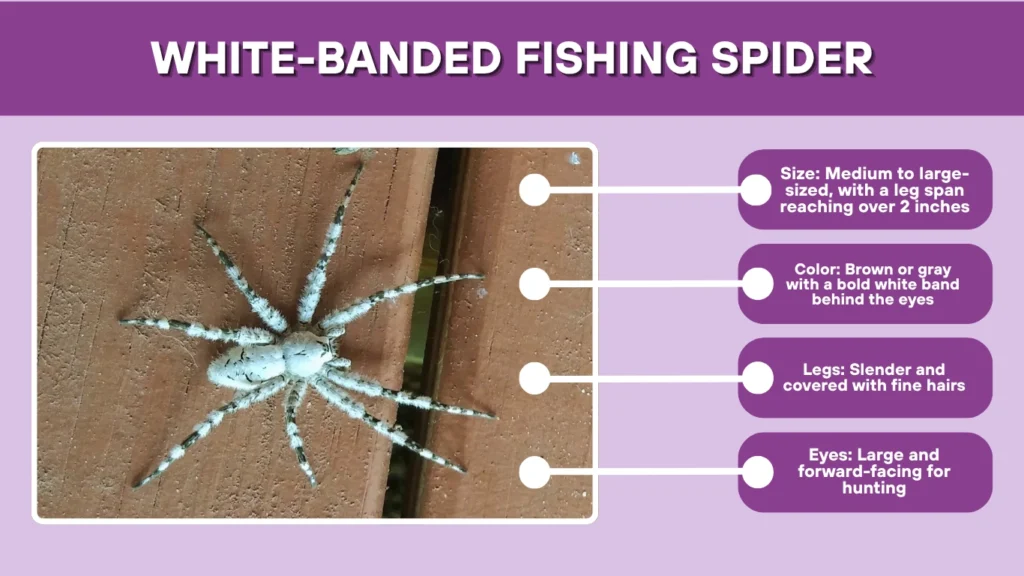
The white-banded fishing spider is known for the distinctive white band or ring that wraps around the front part of its cephalothorax. Though less frequently observed, it’s a striking species that thrives in moist and shaded environments.
Identification:
- Size: Medium to large-sized, with a leg span reaching over 2 inches
- Color: Brown or gray with a bold white band behind the eyes
- Legs: Slender and covered with fine hairs
- Eyes: Large and forward-facing for hunting
Habitat and Range
This species prefers shaded woodland areas near water bodies such as streams and creeks. It often hides under rocks, bark, or leaf litter. Its range includes parts of the eastern United States, especially in temperate forest regions.
Diet and Hunting Behavior
The white-banded fishing spider waits patiently in cover and detects prey using vibrations. It can dash out rapidly to subdue insects or other small creatures. While not as commonly seen on water as the six-spotted species, it does have the capability to walk on water surfaces when needed.
Are They Dangerous?
There is no known medical risk associated with this species. It rarely interacts with humans and will avoid confrontation when disturbed. Despite its large size, it’s harmless and helps manage pest insect populations.
4. Amazon Giant Fishing Spider

Native to the tropical regions of South America, the Amazon giant fishing spider is one of the largest known Dolomedes species. Its impressive size and aquatic hunting behavior make it a powerful predator in rainforest ecosystems.
Identification:
- Size: Can reach over 4 inches in leg span
- Color: Dark brown to reddish-brown with muted markings
- Legs: Thick, robust, and covered with water-resistant hairs
- Abdomen: Rounded and slightly glossy
Habitat and Range
These spiders are found in rainforests and flooded river basins throughout the Amazon region. They inhabit the edges of streams and swamps, often hidden in vegetation that overhangs water.
Diet and Hunting Behavior
This spider preys on large insects, small amphibians, and even fish. It is capable of diving and remaining underwater for several minutes, using air trapped on its body for buoyancy. It hunts primarily at night and relies on low-light vision and water surface vibrations to locate prey.
Are They Dangerous?
Though their bite may cause mild irritation, they are not considered medically significant to humans. Encounters with people are rare due to their remote habitats. Their role in rainforest ecology is crucial as they help maintain balance in aquatic insect populations.
4. Striped and Banded Species (Grouped)
Several species within the Dolomedes genus feature prominent striped or banded patterns. While they may not all be individually named, they share common traits and habitats. Their markings help with camouflage and species recognition during mating.
Identification:
- Size: Varies from 1 to 2 inches
- Color: Ranges from tan and yellow to deep gray with contrasting stripes
- Stripes: Often along the legs or running lengthwise on the cephalothorax
- Legs: Banding varies in boldness depending on species
Habitat and Range
These spiders are widespread across North America and are often seen near still or slow-moving waters. They prefer overgrown pond edges, marshy fields, and even backyard water gardens. Their stripes help them blend with vegetation and bark.
Diet and Hunting Behavior
Just like their larger relatives, striped and banded fishing spiders are skilled ambush hunters. They use the same water-skimming tactics, striking when prey is unaware. Their camouflage makes them difficult for both prey and predators to spot.
Are They Dangerous?
None of these spiders pose a serious risk to humans. While their size and sudden movements might startle people, their bites are harmless. They play a key role in keeping insect populations in check.
Fishing Spider Identification Guide
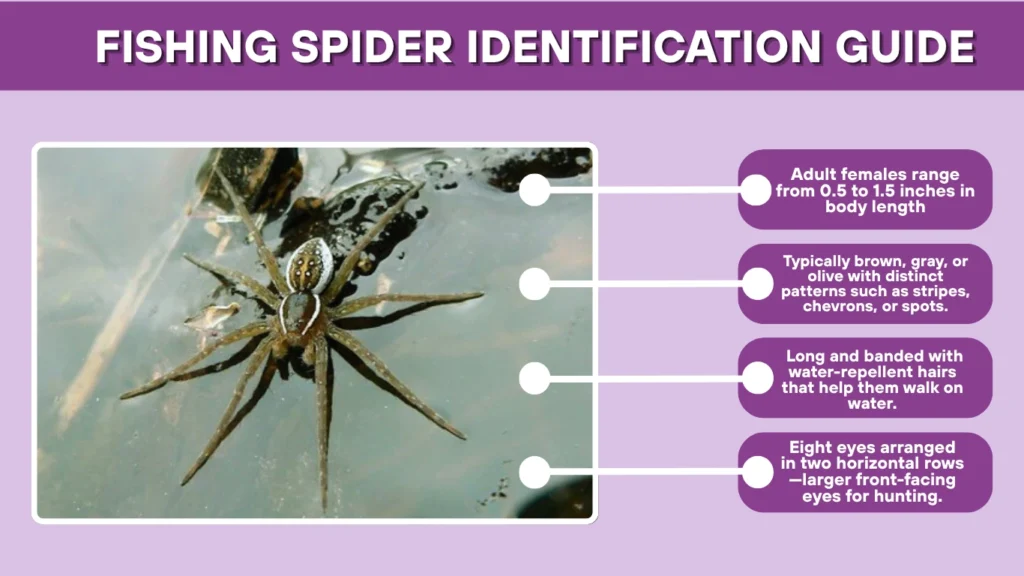
Fishing spiders are often mistaken for wolf spiders due to their similar size and shape, but several key features set them apart. Accurate identification can help distinguish between species and understand their behavior more clearly. Here are some traits to look for:
Key Identification Features:
- Body Size:
Adult females range from 0.5 to 1.5 inches in body length, with leg spans reaching over 3 inches. - Coloration:
Typically brown, gray, or olive with distinct patterns such as stripes, chevrons, or spots. - Legs:
Long and banded with water-repellent hairs that help them walk on water. - Eyes:
Eight eyes arranged in two horizontal rows—larger front-facing eyes for hunting. - Underside Markings:
Some species, like the six-spotted fishing spider, have unique dark spots on the underside of the abdomen. - Habitat Clue:
Commonly found near calm freshwater bodies, resting on plants, rocks, or tree bark close to water.
These details are helpful for quickly identifying and differentiating fishing spiders in the wild.
Geographic Distribution

Fishing spiders are widely distributed across North America, with some species also found in parts of South America, Europe, Asia, and Africa. Their presence is closely tied to freshwater environments, making their range highly dependent on geography that supports wetlands, ponds, lakes, and forest streams.
In the United States, species like the dark fishing spider and six-spotted fishing spider are commonly seen from the Northeast to the Midwest—including states such as:
- Pennsylvania
- Ohio
- Michigan
- Wisconsin
- Virginia
- Maine
- Minnesota
- Kentucky
- Illinois
They are also found in southern regions like Florida, Tennessee, and Texas, especially in shaded swampy areas and riverbanks.
In Canada, fishing spiders are recorded in Ontario and southern Quebec, while South American giants like the Amazon fishing spider inhabit rainforests of Brazil, Peru, and Colombia.
These spiders prefer environments where they can blend with tree bark, hide under rocks, or sit quietly on floating vegetation. Their adaptability allows them to survive in both wild forests and semi-urban garden ponds.
Habitat and Range

Fishing spiders thrive in moist, freshwater habitats like ponds, lakeshores, marshes, and slow-moving streams. They are often found on tree trunks, under rocks, or on floating vegetation near water. These spiders prefer quiet, undisturbed areas where they can hunt using surface vibrations and are especially active around dusk or at night.
Diet and Hunting Behavior

Fishing spiders are skilled predators that rely on vibrations to detect prey on or near the water surface. They hunt without webs, using speed and precision to ambush their targets. These spiders can even dive underwater briefly to escape danger or grab prey.
Common Diet Includes:
- Aquatic insects (mosquito larvae, water striders)
- Small fish and tadpoles
- Dragonflies and mayflies
- Small frogs or amphibians
- Other spiders or terrestrial insects near water
Fishing Spider vs Wolf Spider

Fishing spiders and wolf spiders are often mistaken for each other due to their size and ground-dwelling habits. However, there are clear differences in their appearance, behavior, and preferred habitat. The table below highlights the key differences:
| Feature | Fishing Spider (Dolomedes) | Wolf Spider (Lycosidae) |
| Habitat | Near water: ponds, lakes, marshes | Dry areas: leaf litter, grass, under rocks |
| Hunting Method | Ambush predator on water surface | Active ground hunter |
| Water Adaptation | Can walk and dive in water | Cannot survive on water |
| Body Size | Generally larger with long legs | Slightly smaller and more compact |
| Color Patterns | Banded legs, subtle body stripes | Bold markings, more uniform coloring |
| Web Use | Does not build webs for hunting | Does not use webs to catch prey |
| Eye Arrangement | Two horizontal rows, strong front vision | Three rows, with large central eyes |
| Bite Risk to Humans | Harmless, bite only if provoked | Harmless, may bite if handled |
Reproduction and Life Cycle

Fishing spiders have a fascinating life cycle, from mating rituals to egg-laying and the emergence of spiderlings. Their reproductive behavior is highly adapted to life near water and varies slightly between species.
Mating Behavior
Male fishing spiders approach females cautiously, often using vibration signals to avoid being mistaken for prey. Mating usually occurs in late spring or early summer. After mating, the male typically dies shortly after or is occasionally eaten by the female.
Egg Sac and Guarding
After mating, the female produces a round, white egg sac that she carries in her jaws. She remains very protective of it, often hiding in secluded areas near water. When hatching nears, she builds a nursery web in tall grass or vegetation and guards the sac until the spiderlings emerge.
Life Stages
- Egg: Enclosed in a silk sac, hatching in about 2–3 weeks.
- Spiderlings: Dozens to hundreds emerge and remain in the nursery web briefly before dispersing.
- Juvenile: Go through multiple molts as they grow; remain solitary and begin hunting independently.
- Adult: Reach maturity in several months; most live for about one year, though females may survive longer.
6 Fishing Spider Fun Facts
Fishing spiders are full of surprises. Here are six interesting facts that make them stand out among other spiders:
- They Can Walk on Water
Thanks to water-repellent hairs on their legs, fishing spiders can effortlessly move across the surface of ponds and streams without sinking. - They Hunt Small Fish
Unlike most spiders, fishing spiders can catch and eat small fish, tadpoles, and aquatic insects—making them true water predators. - They Can Dive Underwater
When threatened or stalking prey, they can dive below the water’s surface and stay submerged for several minutes by trapping air around their bodies. - They Don’t Use Webs to Catch Food
Fishing spiders are ambush predators. They rely on stillness and vibration detection, not webs, to catch prey. - Their Eyes Are Built for Hunting
With eight eyes and excellent forward vision, they can easily track movement and respond quickly to prey. - Females Carry Their Eggs in Their Jaws
The female carries her egg sac with her fangs and later builds a nursery web to protect her young.
FAQs
Are fishing spiders poisonous or dangerous to humans?
Fishing spiders are not dangerous to humans. While they are venomous like most spiders, their venom is meant for subduing prey and poses little threat to people. A bite may cause mild swelling or discomfort, similar to a bee sting, but serious reactions are extremely rare.
Can fishing spiders really catch and eat fish?
Yes, some larger species like the six-spotted or Amazon giant fishing spider have been observed catching small fish. They rely on vibrations in the water to detect movement, then strike with lightning speed to subdue prey.
How big do fishing spiders get?
Adult female fishing spiders can have a leg span of over 3 inches, with some tropical species reaching up to 4–5 inches. Males are typically smaller and more slender in appearance.
Where are fishing spiders commonly found?
Fishing spiders are widespread in North America, particularly near lakes, ponds, marshes, and slow-moving streams. They’re also found in parts of South America, Europe, Asia, and Africa, depending on the species.
How do fishing spiders walk on water?
Their legs are covered with fine, water-repelling hairs that trap air and distribute weight, allowing them to stay on the surface. They use this skill to patrol for prey or escape predators.
What should I do if I find a fishing spider near my home?
There’s no need to panic. Fishing spiders are non-aggressive and prefer avoiding humans. If found indoors, gently guiding them back outside is the best approach. They help control pests and don’t cause harm to property.