

Cellar spiders—often called “daddy long legs”—are harmless, long-legged spiders frequently found in basements, corners, and ceilings. But are they venomous? Can they bite? Should you get rid of them? This guide answers 35 of the most common questions about cellar spiders, from their behavior and diet to their safety and how to control them indoors. Whether you’re curious or cautious, here’s what you need to know about these gentle household arachnids.
General FAQs

Cellar spiders are thin-legged, long-bodied arachnids often confused with other harmless house spiders. They’re a common sight in basements, bathrooms, and corners of ceilings. This section helps clarify what cellar spiders are and how they’re commonly misunderstood.
What is a cellar spider?
A cellar spider refers to several species in the family Pholcidae. These spiders are known for their:
- Long, thin legs
- Small, rounded bodies
- Delicate, irregular webs
They’re commonly found in dark, damp indoor spaces like cellars, basements, garages, and closets. Despite their spooky appearance, they are harmless and beneficial predators that help control insect and spider populations.
Are cellar spiders daddy long legs?
This is a common confusion. The term “daddy long legs” is used for:
- Cellar spiders (Pholcidae) – actual spiders
- Harvestmen (Opiliones) – not true spiders, no venom or silk
- Crane flies – long-legged flying insects, also unrelated to spiders
So yes, cellar spiders are one of the creatures commonly called “daddy long legs,” but the name is also used for other unrelated arthropods. Only cellar spiders are true spiders.
Are cellar spiders male?

Cellar spiders come in both male and female, like all spider species. Males are generally:
- Smaller-bodied
- Thinner overall
- Equipped with enlarged pedipalps (appendages near the mouth) for mating
Most cellar spiders found in homes are females, as they stay in one area and tend to maintain webs longer.
Do cellar spiders have eyes?
Yes, cellar spiders typically have 8 eyes arranged in two clusters:
- One central group of six
- Two smaller side eyes
However, their vision is very poor, and they rely more on vibrations in their webs and surroundings to detect prey or danger. Their long legs help them feel around their environment, compensating for their weak eyesight.
FAQs About Biting & Venom
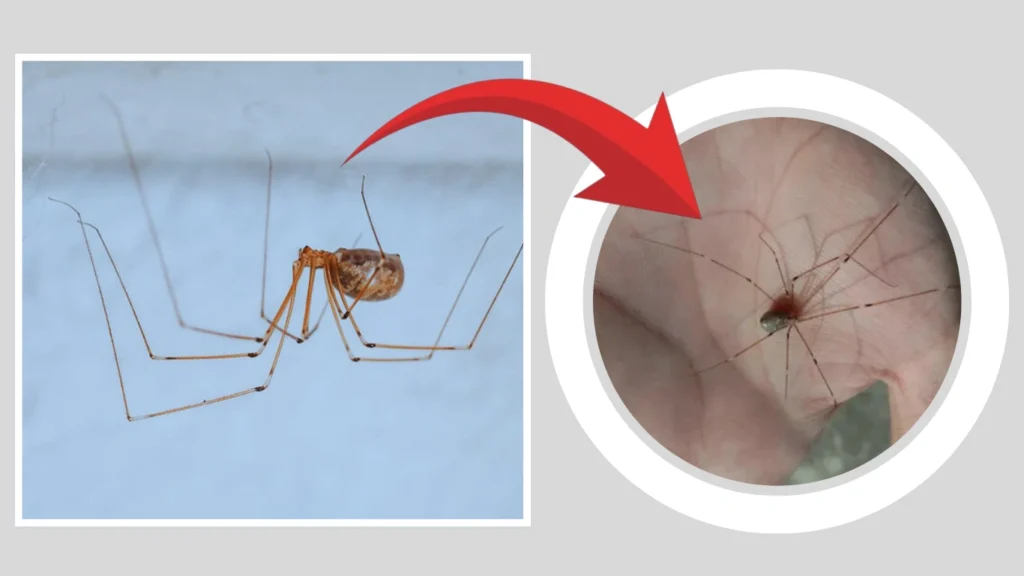
Cellar spiders often stir concern due to myths about their venom. In truth, they’re one of the most harmless spiders you’ll find indoors. This section clears up the confusion about their bite, venom, and whether they pose any danger to humans.
Do cellar spiders bite?
They can bite, but they almost never do. Their fangs are too short and weak to pierce human skin effectively, and they avoid interaction with people. Bites are extremely rare and not medically significant.
Can cellar spiders bite?
Technically, yes—but their fangs (chelicerae) are not strong enough to cause harm in most cases. Even in the unlikely event of a bite, it would feel like a small pinch and resolve without medical attention.
Can cellar spiders bite humans?

It’s possible, but highly unlikely. They are passive spiders that don’t see humans as threats or prey. Biting would only happen in extreme stress—like being trapped or crushed.
Can cellar spiders hurt you?
No. Cellar spiders are completely harmless to humans. They don’t transmit disease, damage property, or produce medically significant venom. Their main focus is on catching tiny insects, not interacting with people.
Are cellar spiders dangerous?
No, they are not dangerous. Despite urban legends, there’s no scientific evidence that cellar spiders pose any threat to humans, pets, or even larger insects unless caught in their web.
Are cellar spiders harmful?
Again, no. They don’t infest food, bite unprovoked, or cause allergic reactions in most people. They’re actually helpful by keeping fly and insect populations down in dark corners of the home.
Are cellar spiders venomous?
Yes—but only in the way that almost all spiders are venomous. They use venom to immobilize small prey like gnats or flies. Their venom is harmless to humans, with no toxic effects.
Do cellar spiders have venom?
Yes, they do—but it’s specialized for tiny insect prey. The myth that cellar spiders have deadly venom but can’t bite humans is false. Their venom is mild and irrelevant to human health.
Are cellar spiders poisonous?
No. “Poisonous” means harmful when touched or eaten. Cellar spiders are not poisonous, even if accidentally ingested (not recommended, of course).
Are cellar spiders poisonous in Connecticut?
No—they’re not poisonous anywhere, including Connecticut. This question stems from myths or regional fear, but there’s no danger associated with these spiders in any U.S. state.
Is cellar spider poisonous?
No, cellar spiders are not poisonous or medically threatening. They are often misunderstood but are completely safe to have in your home.
FAQs About Predation & Diet

Cellar spiders are effective predators that help control indoor pest populations. While they don’t look intimidating, they’re skilled hunters—sometimes even preying on other spiders. Here’s what they eat and how they hunt.
What do cellar spiders eat?
Cellar spiders eat a wide variety of small insects and arthropods, including:
- Mosquitoes
- Flies
- Moths
- Gnats
- Ants
- Small beetles
They rely on their web to detect vibrations, then rush to immobilize their prey with a quick bite.
Do cellar spiders eat other spiders?
Yes, they are known to hunt and eat other spiders, especially when food is scarce. This includes web-dwelling and ground-dwelling species they may encounter nearby.
Do cellar spiders eat house spiders?
They can and sometimes do. If a cellar spider encounters a smaller house spider in its web, it may attack and feed on it, particularly if it’s in competition for food or territory.
Do cellar spiders eat black widows?
Surprisingly, yes. Cellar spiders have been observed preying on black widows under controlled conditions. Their long legs allow them to strike from a distance, avoiding the widow’s fangs. However, such encounters are rare and usually happen in areas where both species coexist.
Do cellar spiders eat brown recluse spiders?
Yes, there are reports of cellar spiders preying on brown recluses. Although brown recluses are venomous, cellar spiders can sometimes outmaneuver them using their speed, reach, and web advantage.
These predatory habits are part of why cellar spiders are considered beneficial house guests—they help reduce both nuisance insects and potentially harmful spiders.
FAQs About Habitat & Lifespan

Cellar spiders are adaptable and thrive in human environments. From damp basements to dry ceiling corners, they quietly build webs and go unnoticed. This section explains where they live and how long they survive.
Can cellar spiders live outside?
Yes, but they prefer indoor environments where the temperature and humidity are stable. Outdoors, they may be found:
- Under decks
- In sheds or garages
- Beneath rocks or bark
However, they thrive better indoors, especially in undisturbed areas like cellars, attics, and crawl spaces.
Do cellar spiders live in Ohio?
Yes, cellar spiders are found in Ohio and across most of the U.S. They are not limited to any one state and are especially common in areas with basements, old homes, or humid storage spaces.
FAQs About How Long They Live

How long do cellar spiders live?
Cellar spiders generally live about 1 to 2 years, depending on environmental conditions.
- Females tend to live longer than males
- In safe indoor spaces, they can survive through multiple seasons
- Their life cycle includes several molts from juvenile to adult stage
With steady food sources and low disturbance, some may even live a bit longer, making them some of the longest-living household spiders.
FAQs About Removal & Control

While cellar spiders are harmless and even helpful, not everyone wants them hanging around. If you prefer a spider-free space, there are safe, effective ways to reduce or prevent their presence.
How to get rid of cellar spiders?
Here are practical steps to remove cellar spiders from your home:
- Vacuum regularly — remove webs and spiders from corners, ceilings, and under furniture.
- Seal cracks and gaps — around windows, doors, and foundations to block entry points.
- Use natural repellents — like diluted peppermint oil, citrus, or vinegar sprays around corners and baseboards.
- Reduce clutter — especially in basements and closets, where spiders tend to hide.
- Turn off unnecessary outdoor lights at night — light attracts insects, which in turn attract spiders.
Avoid using harsh chemical sprays unless necessary, as cellar spiders do not pose a health risk.
How to get rid of cellar spiders in the house?
For indoor-specific control, focus on:
- Dehumidifying damp areas like basements
- Keeping windows screened and closed at night
- Using sticky traps in corners or behind appliances to monitor spider activity
- Cleaning storage areas regularly
If an infestation is heavy or persistent, a pest control professional can assess and treat the problem using targeted, low-risk methods.