
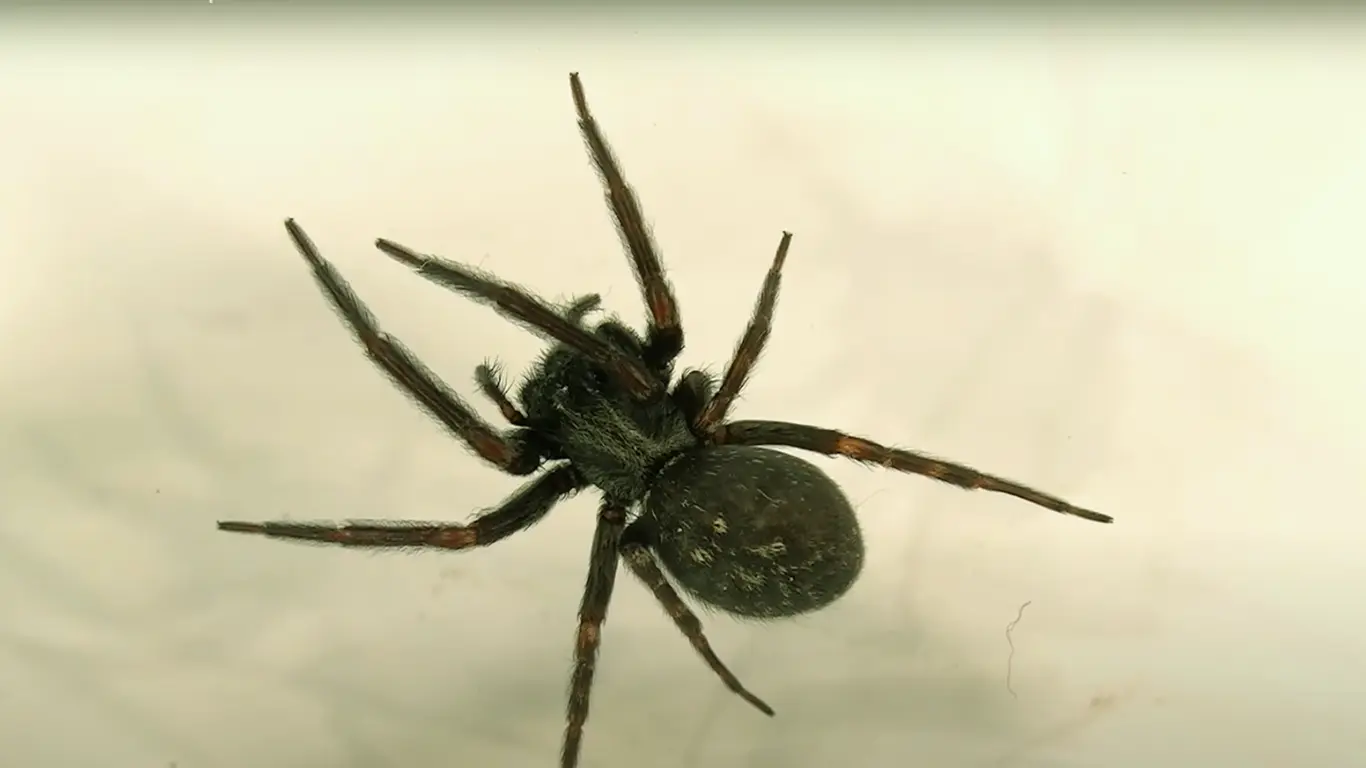
Black house spiders (Badumna insignis) are common in many urban areas and often build their messy, funnel-like webs in sheltered spots around buildings, fences, and window corners. Known for their dark, velvety appearance and secretive behavior, these spiders are not only fascinating but also beneficial—they feed on common pests like flies and mosquitoes.
But how long do black house spiders actually live? Their lifespan varies depending on sex, habitat, environmental conditions, and whether they’re in the wild or captivity. In this article, we’ll explore the average lifespan of black house spiders, examine the differences between males and females, and look into the factors that influence their longevity.
Black House Spider
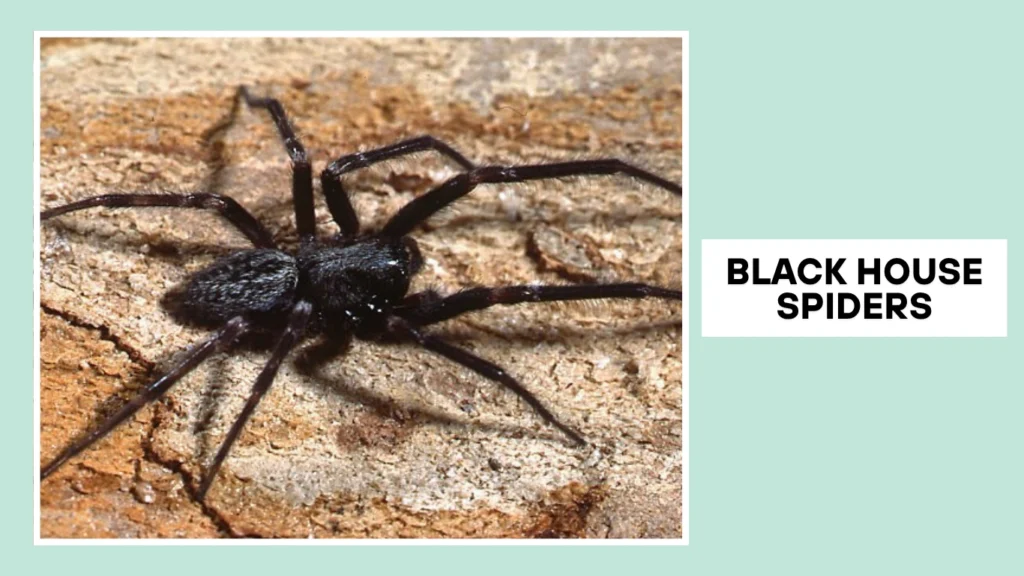
Before we dive into their lifespan, it’s useful to understand what sets black house spiders apart. Native to Australia but found in New Zealand and other regions, these spiders are a part of the Desidae family. They have robust, dark-colored bodies with thick legs and typically stay in or near their webs.
Unlike aggressive spiders, black house spiders are shy and rarely bite unless provoked. Their bite is mildly venomous but not dangerous to humans—symptoms usually include localized pain and swelling.
Average Lifespan of Black House Spiders

General Lifespan Range
The average lifespan of a black house spider is between 1 to 2 years in the wild. However, under optimal conditions, especially in captivity, females can live up to 3 years or more.
- Female black house spiders: 2–3 years (sometimes more in captivity)
- Male black house spiders: 1–1.5 years (typically die soon after mating)
This noticeable difference between male and female lifespan is common in many spider species.
Why Females Live Longer
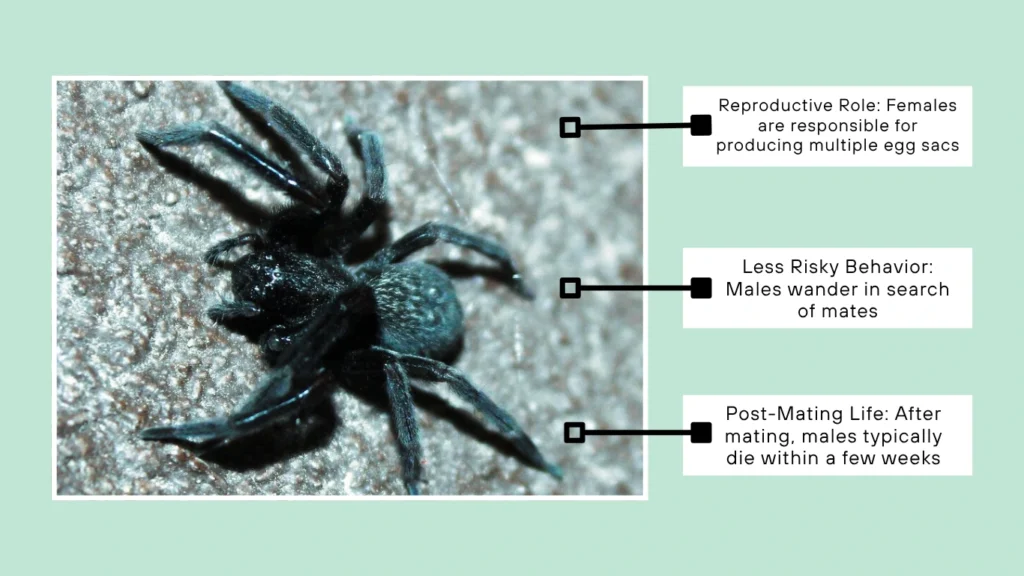
There are several reasons why female black house spiders outlive males:
- Reproductive Role: Females are responsible for producing multiple egg sacs and guarding their territory. Their biology is built for longevity.
- Less Risky Behavior: Males wander in search of mates, exposing themselves to predators, dehydration, and other threats.
- Post-Mating Life: After mating, males typically die within a few weeks, while females continue living to care for future egg sacs.
Life Cycle of the Black House Spider
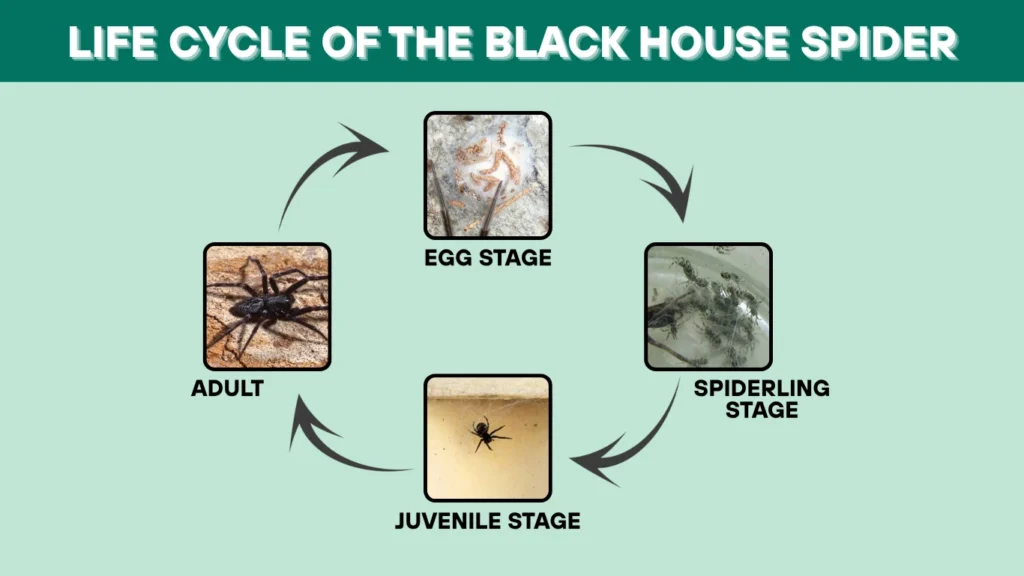
Understanding the life cycle helps clarify how their lifespan is structured. These spiders undergo gradual development through several stages:
1. Egg Stage
- Females lay up to 15 egg sacs in their web retreat.
- Each sac may contain 50–200 eggs.
- Eggs hatch in 2–3 weeks, depending on temperature and humidity.
2. Spiderling Stage
- Tiny spiderlings disperse from the sac shortly after hatching.
- Many die due to predation, lack of food, or cannibalism.
- Survivors begin constructing small webs and start hunting insects.
3. Juvenile Stage
- Over a few months, spiderlings molt several times as they grow.
- Each molt brings them closer to adulthood.
- This stage lasts roughly 4–6 months, though environmental conditions may affect timing.
4. Adult Stage
- Males mature faster and die earlier—usually within a year.
- Females mature more slowly but live longer and continue to produce egg sacs for up to two years.
Lifespan in Captivity vs Wild
Black house spiders tend to live longer in captivity due to a controlled environment and steady food supply.
| Condition | Average Female Lifespan | Average Male Lifespan |
| In the wild | 1.5 – 2 years | 10 – 12 months |
| In captivity | 2.5 – 3+ years | 1 – 1.5 years |
Captive spiders are less likely to face predators, starvation, or dehydration. That said, stress or incorrect care can reduce lifespan even in a protected environment.
What Affects the Lifespan of Black House Spiders?
1. Environment
- Temperature: Colder climates slow development and may extend juvenile stages.
- Humidity: Low humidity can be deadly for spiderlings and adults alike.
- Shelter: Spiders living in secure spots—like wall crevices or under eaves—have higher survival rates.
2. Food Availability
- An abundant supply of prey (insects) is critical.
- Starved spiders grow slowly, may not reproduce, and are more prone to death from stress.
3. Predation
- Birds, wasps, and even larger spiders prey on black house spiders.
- Males are especially vulnerable during their search for mates.
4. Human Interference
- Pest control measures and home renovations often disturb or kill these spiders.
- However, some people preserve them as natural pest control agents.
Do Black House Spiders Die After Mating?
Not exactly. Here’s how it works:
- Males: Typically die soon after mating, sometimes within weeks. They invest most of their energy in finding and mating with females, leaving little energy for survival afterward.
- Females: Do not die after laying eggs. They continue to maintain their web and may produce several egg sacs over the course of their life.
Are Black House Spiders Harmful to Humans?
While they may look intimidating, black house spiders are not dangerous. Their venom is mild and rarely causes anything more than localized pain and swelling. In fact, they can be beneficial in homes by reducing the population of flies, moths, and mosquitoes.
Final Thoughts
Black house spiders are long-living compared to many other common household spiders—especially the females. While males live short and focused lives centered around mating, females continue to reproduce and defend their webs for years. If you spot one in the corner of your window frame or garage, chances are it’s been living there for a while—and it may be keeping unwanted pests at bay.