

Tarantulas are some of the longest-lived spiders in the world, especially when compared to typical house spiders or even other large arachnids. These hairy giants are not only fascinating in appearance but also known for their unusually extended lifespans, particularly among females. Whether you’re a curious enthusiast or planning to adopt a tarantula as a pet, understanding their average lifespan helps in care and expectations.
This article explores how long tarantulas live, the differences between males and females, species-specific lifespans, and the factors that influence how long they survive in the wild versus captivity.
What Are Tarantulas?
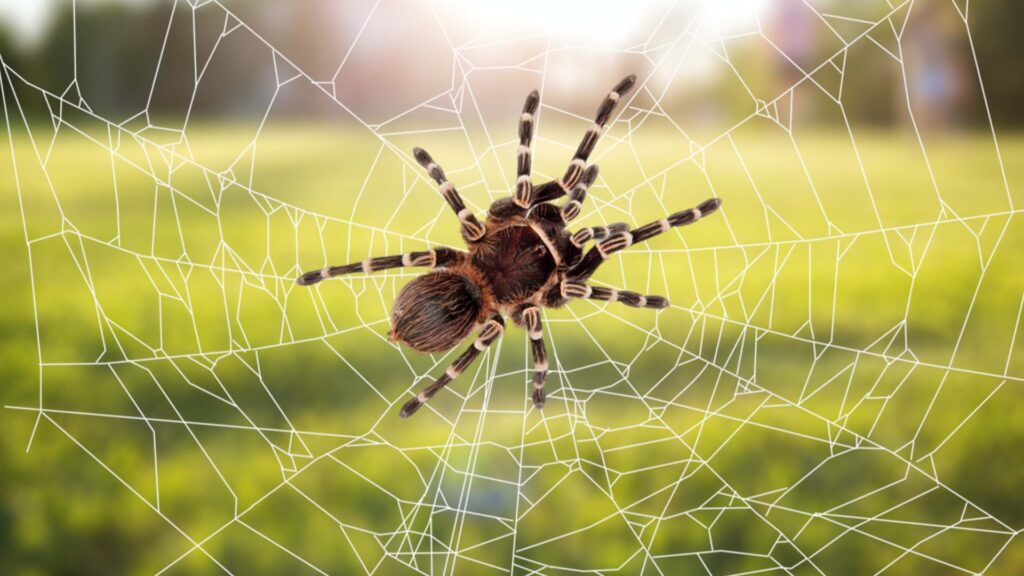
Tarantulas belong to the family Theraphosidae, comprising over 900 known species. They are found on nearly every continent except Antarctica, thriving in diverse environments such as deserts, grasslands, and tropical forests.
Despite their intimidating look, tarantulas are generally shy and non-aggressive toward humans. Many people keep them as exotic pets due to their docile nature and manageable behavior.
Average Lifespan of Tarantulas
Females vs Males
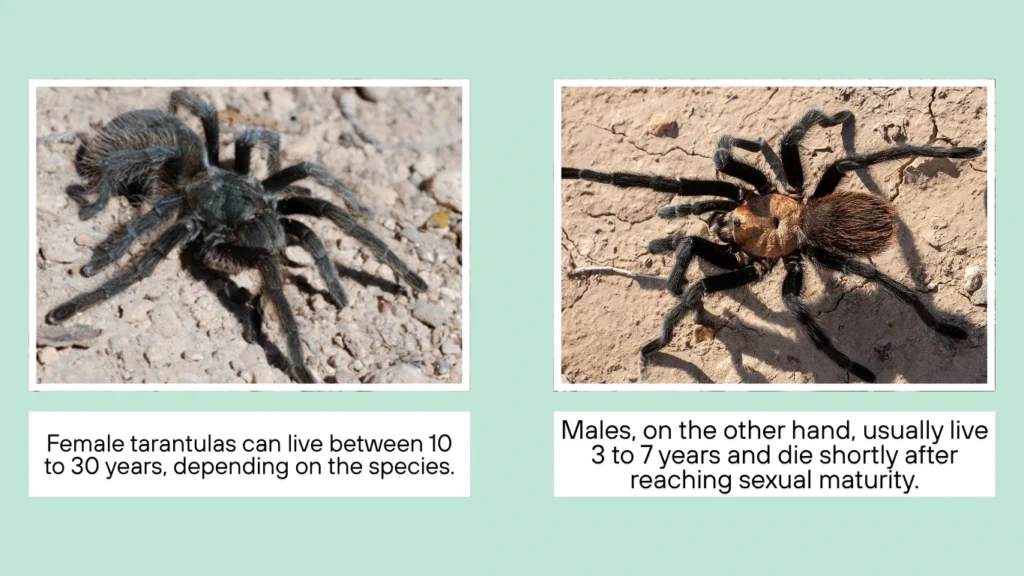
One of the most striking facts about tarantulas is the massive gap in lifespan between females and males.
- Female tarantulas can live between 10 to 30 years, depending on the species.
- Males, on the other hand, usually live 3 to 7 years and die shortly after reaching sexual maturity.
This disparity exists because males are biologically designed to mature quickly, find a mate, reproduce, and then die—often within a few months of maturity. Females mature more slowly and can continue to molt and reproduce for many years.
Lifespan by Popular Species
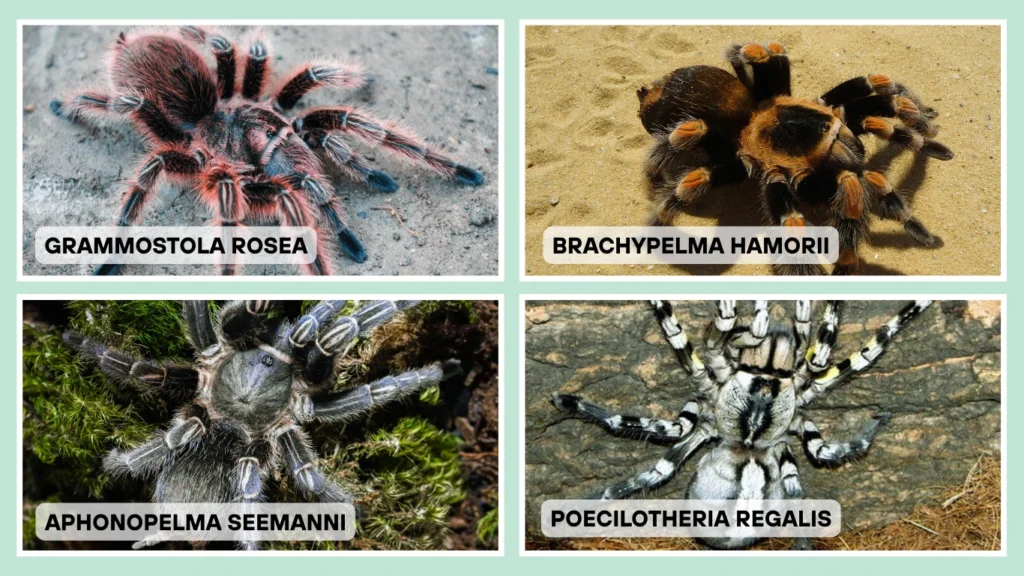
Different tarantula species have slightly different life expectancies. Some of the most common tarantulas in captivity and the wild include:
| Species Name | Female Lifespan | Male Lifespan | Native Region |
| Grammostola rosea | 15–20 years | 4–6 years | Chile |
| Brachypelma hamorii | 20–30 years | 5–7 years | Mexico |
| Aphonopelma seemanni | 15–20 years | 4–5 years | Central America |
| Poecilotheria regalis | 10–12 years | 3–4 years | India |
| Theraphosa blondi | 12–15 years | 3–6 years | Northern South America |
From the table, you can see that Brachypelma species often have the longest-living females, especially in captivity. Meanwhile, Poecilotheria species generally have a shorter life expectancy, especially in harsher or less controlled environments.
Tarantulas in Captivity vs the Wild
Tarantulas kept as pets tend to live longer than their wild counterparts due to several advantages:
Captivity Lifespan
- Controlled temperature and humidity
- Regular feeding schedules
- No threats from predators or parasites
- Reduced injury risk from prey or other spiders
With proper care, captive females can exceed their species’ average lifespan, while males still tend to die shortly after maturity regardless of conditions.
Wild Lifespan
In the wild, tarantulas face various survival challenges:
- Natural predators like birds, wasps, or mammals
- Climate extremes
- Food shortages
- Parasites and diseases
These factors can significantly reduce the lifespan of wild tarantulas, particularly males who must leave their burrows to find mates.
Factors That Influence Lifespan
Several elements affect how long a tarantula lives:
1. Species
Different species have genetic differences that affect growth rates, maturity age, and overall longevity. Some tarantulas like Brachypelma species grow slowly and live longer, while others mature fast and die young.
2. Gender
This is one of the strongest indicators. Males are short-lived by design; females are biologically built to survive, molt, and reproduce over many years.
3. Environmental Conditions
- Temperature: Tarantulas in colder regions grow and molt slower, which may increase lifespan.
- Humidity: Some species need high humidity to thrive. Incorrect humidity levels may cause failed molts or dehydration.
- Shelter: Wild tarantulas need secure burrows. In captivity, inadequate enclosures can stress or injure them.
4. Feeding and Nutrition
Regular feeding and access to appropriate food sources (like crickets or roaches) can help tarantulas grow steadily and molt properly, avoiding fatal complications.
5. Molting Success
Molting is when tarantulas shed their old exoskeleton to grow. If a molt is unsuccessful—especially in adulthood—it can lead to deformities or death. Proper humidity and nutrition are essential during this stage.
Why Do Male Tarantulas Die So Early?
Male tarantulas are biologically programmed to live fast and die young. Once mature, males become more active, leaving their burrows in search of females. This exposes them to danger and often leads to exhaustion or predation.
Even after a successful mating, males usually die soon afterward—some are even eaten by the female. But in most cases, they simply reach the end of their natural cycle within months of mating.
How to Tell If a Tarantula Is Aging
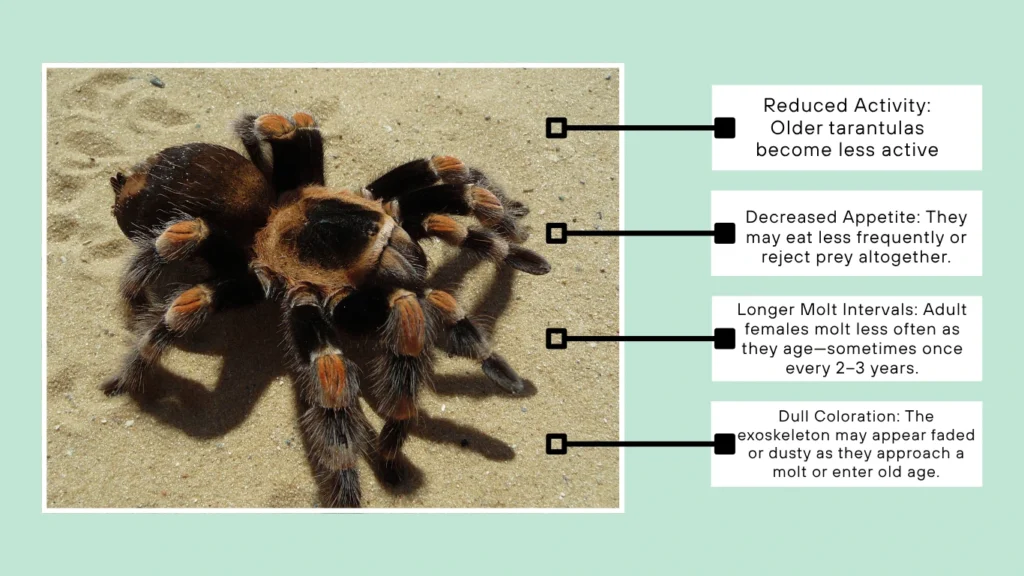
Tarantulas don’t show age like mammals, but several signs indicate when one is getting older:
- Reduced Activity: Older tarantulas become less active and may spend more time hiding.
- Decreased Appetite: They may eat less frequently or reject prey altogether.
- Longer Molt Intervals: Adult females molt less often as they age—sometimes once every 2–3 years.
- Dull Coloration: The exoskeleton may appear faded or dusty as they approach a molt or enter old age.
FAQs
Can tarantulas live over 30 years?
Yes, especially female Brachypelma hamorii and similar species in captivity have been documented to live up to or over 30 years.
Do male tarantulas always die after mating?
Not always from mating itself, but shortly after reaching adulthood and completing reproduction, males naturally decline.
Can you extend a tarantula’s lifespan?
You can’t exceed a tarantula’s biological limit, but proper care (temperature, feeding, humidity) can help them reach their maximum potential lifespan.
How long before a tarantula becomes an adult?
Depending on species, tarantulas may take 2 to 8 years to reach full maturity—females usually take longer than males.
Final Thoughts
Tarantulas are among the most patient, long-living spiders on Earth. While males are designed for short but intense lives centered around mating, females can live for decades under the right conditions. If you’re considering keeping a tarantula, be prepared for a long-term commitment, especially if you choose a female.