

Black house spiders often startle homeowners when they appear in corners, sheds, or window frames. With their dark, hairy appearance and funnel-shaped webs, these spiders can seem intimidating. But how dangerous are they really? Can their bite harm you or your pets?
Let’s dive deep into everything you need to know about the black house spider—its venom, behavior, risks, and benefits.
Are Black House Spiders Dangerous?

Yes, But Not in the Way You Might Think
Technically, black house spiders are venomous—but the word “dangerous” needs context. Their venom is potent enough to subdue insects, which are their main prey, but not strong enough to harm healthy humans seriously.
Their Bite: Painful, But Not Life-Threatening
A black house spider bite can be painful. Some people report swelling, redness, and mild nausea. In rare cases, symptoms might include headache or sweating, especially if the person is allergic or sensitive.
Unlike the more feared Australian funnel-web or redback spider, the black house spider has not been linked to any deaths or severe reactions requiring antivenom.
Medical Risk Level: Low
For most people, black house spider bites are minor and self-resolving. Children and pets may show stronger symptoms, but even then, medical emergencies are extremely rare.
What Is a Black House Spider?
Scientific Name and Classification
The black house spider (Badumna insignis) is part of the Desidae family. It is native to Australia but is also found in New Zealand and parts of Southeast Asia. Despite its creepy look, it’s not considered aggressive or life-threatening.
Appearance and Size
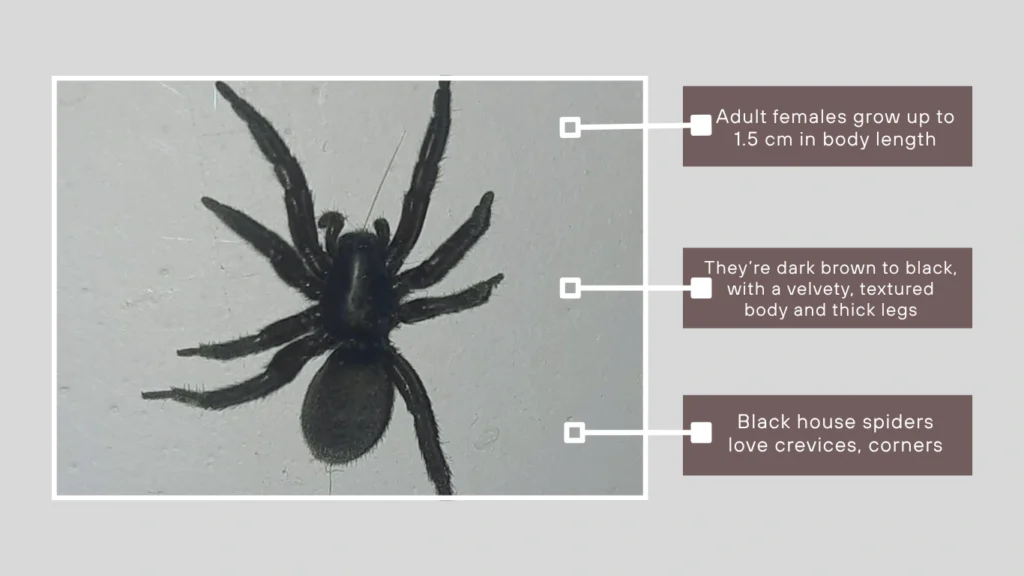
These spiders are small to medium-sized. Adult females grow up to 1.5 cm in body length (excluding legs), while males are slightly smaller. They’re dark brown to black, with a velvety, textured body and thick legs. Their webs are messy and often found in sheltered areas.
Habitat
Black house spiders love crevices, corners, and window frames—especially in outdoor sheds, old wood piles, or rock walls. Inside homes, they stay near windows or vents where insects are likely to fly in.
Why Do Black House Spiders Bite?
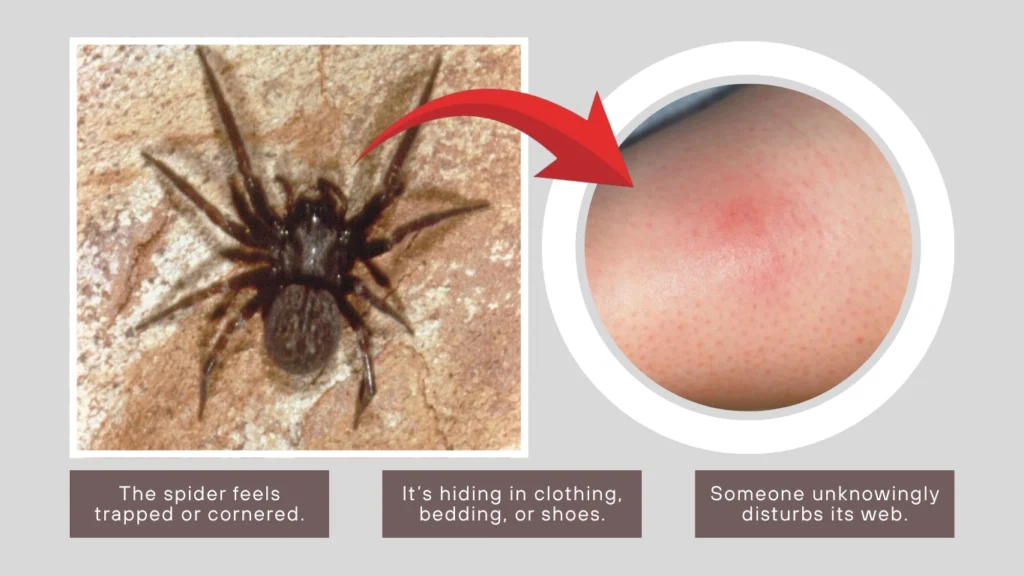
These spiders are shy and avoid contact with humans. They don’t wander around the house looking for a fight. Bites usually happen if:
- The spider feels trapped or cornered.
- It’s hiding in clothing, bedding, or shoes.
- Someone unknowingly disturbs its web.
They use bites purely as a defensive mechanism.
First Aid for a Black House Spider Bite
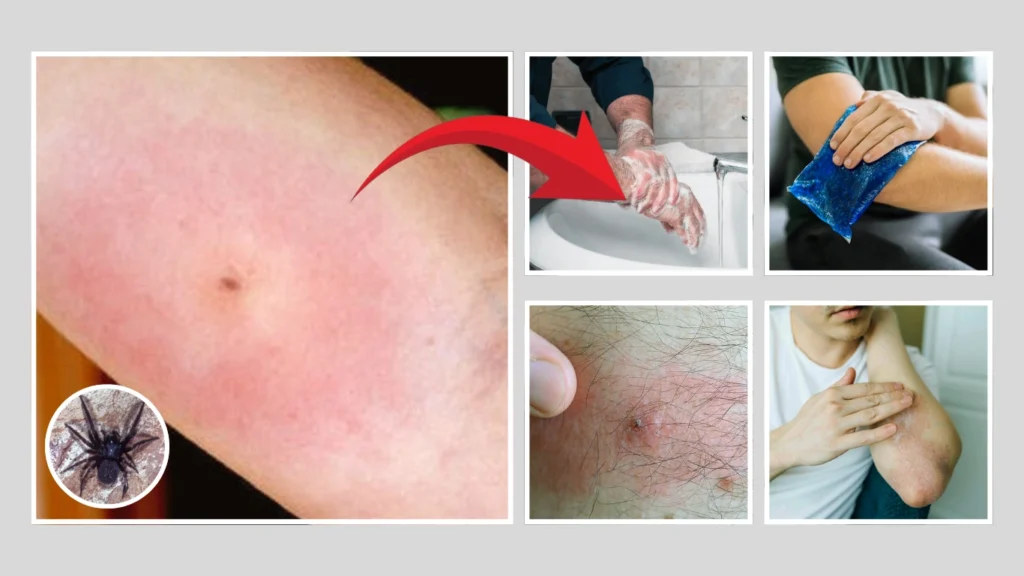
If you think you’ve been bitten, follow these simple steps:
- Clean the area with soap and water.
- Apply a cold compress to reduce swelling.
- Avoid scratching to prevent infection.
- Watch for symptoms like increased pain, pus, or spreading redness.
When to See a Doctor:
- If symptoms worsen after 24–48 hours.
- If the bite site becomes infected.
- If nausea, headache, or dizziness appears.
- If the person bitten is a small child, elderly, or has allergies.
Are Black House Spiders Dangerous to Pets?
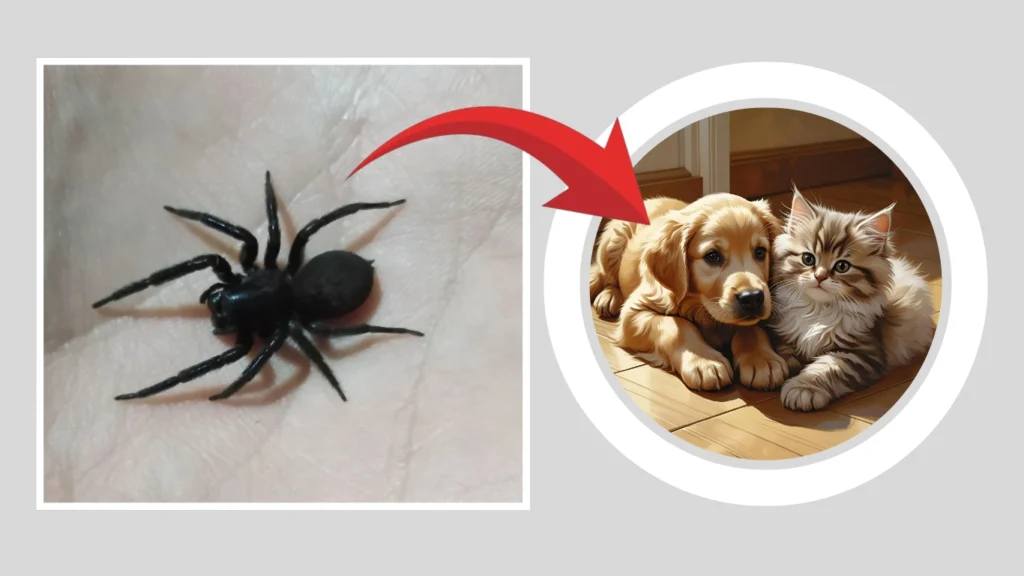
Generally, no. Most cats and dogs are unaffected by a black house spider bite. However, small pets like hamsters, birds, or reptiles could have a stronger reaction if bitten, though it’s still uncommon.
Contact a vet if you suspect your pet was bitten and is showing unusual behavior, such as limping, swelling, or lethargy.
Do Black House Spiders Benefit Your Home?
Surprisingly, yes.
They Help Control Insects
These spiders are natural pest controllers, feeding on:
- Cockroaches
- Flies
- Moths
- Mosquitoes
- Ants
Their webs are placed where insects commonly enter the home, such as near lights or vents. If you leave them alone, they may quietly work as free pest managers.
How to Prevent Black House Spiders in Your Home
Even though they’re not dangerous, many people prefer to keep spiders out of living spaces. Here are some practical prevention tips:
- Seal entry points: Check windows, doors, and vents for gaps.
- Use essential oils: Peppermint or eucalyptus can deter spiders.
- Declutter corners: Spiders love quiet, undisturbed areas.
- Keep outdoor lights off: Lights attract insects—and insects attract spiders.
- Regularly clean windows and sheds: Their webs are sticky and easy to spot.
If you already have one in your home and don’t want to kill it, use a cup-and-card method to gently trap and release it outside.
Common Myths About Black House Spiders
Myth 1: They’re Deadly
Fact: Their venom is not considered medically significant for humans. While bites may hurt, they rarely lead to complications.
Myth 2: They Invade in Large Numbers
Fact: They are solitary and territorial. You’re unlikely to find more than one or two in the same area.
Myth 3: They Jump or Chase People
Fact: These spiders stay in their webs and only move when threatened or hunting insects. They’re more scared of you than you are of them.
Final Verdict – Are They Dangerous?
The black house spider looks scary but poses very little risk to humans or pets. Its venom isn’t deadly, and bites are rare and typically harmless. In fact, they help maintain a healthier home by feeding on insect pests.
If you’re not comfortable having one around, it’s okay to relocate it, but there’s no need to panic or reach for the bug spray every time you spot one.
FAQs
1. Can a black house spider kill you?
No, a black house spider cannot kill you. Its venom is not potent enough to cause life-threatening effects in humans. While a bite may be painful and cause localized symptoms like swelling or itching, there are no recorded fatalities or serious complications from its bite.
2. What does a black house spider bite look like?
A bite from a black house spider usually appears as a red, swollen bump—similar in appearance to a mild bee sting. It may feel warm, itchy, or slightly painful. In most cases, the discomfort fades within a day or two without medical intervention, unless there’s an allergic reaction.
3. Are black house spiders aggressive?
Black house spiders are not aggressive. They are shy, solitary creatures that prefer to stay hidden in their webs. They only bite when directly threatened or accidentally pressed against the skin, such as when hiding in clothes or shoes. Otherwise, they avoid human interaction entirely.
4. How long do black house spiders live?
Female black house spiders can live up to two years or more, especially in safe and undisturbed environments. Males typically live less than a year, often dying shortly after mating. Their long lifespan allows females to build stable webs and reproduce several times during their life.
5. Can I remove a black house spider without killing it?
Yes, you can easily remove a black house spider without harming it. Use a cup or jar to cover the spider, then gently slide a stiff paper or cardboard underneath. Carefully carry it outside and release it in a quiet, sheltered area like a garden, tree base, or fence corner.