

Mouse spiders are a group of ground-dwelling spiders found mainly in Australia, known for their powerful jaws, burrowing habits, and often mistaken identity with funnel-web spiders. Despite their alarming appearance and medically significant bites in some species, mouse spiders are not commonly discussed in terms of conservation. But are they endangered of extinction? Let’s examine their current status, threats, ecological role, and public misconceptions.
Are Mouse Spiders Endangered?

No, mouse spiders are not endangered. As of now, no species in the Missulena genus (the scientific name for mouse spiders) is listed as endangered or vulnerable under global databases such as the IUCN Red List or Australia’s Environmental Protection and Biodiversity Conservation Act (EPBC).
These spiders are generally considered to have stable populations within their native habitats. Although not commonly seen due to their underground lifestyle, they are not rare or in danger of extinction.
What Are Mouse Spiders?
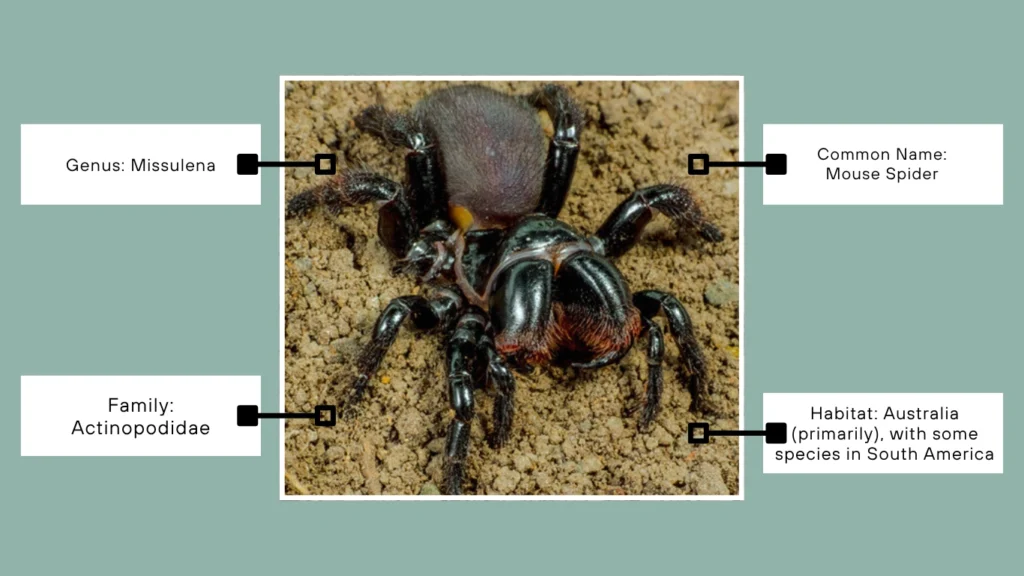
Basic Identification
- Genus: Missulena
- Family: Actinopodidae
- Common Name: Mouse Spider
- Habitat: Australia (primarily), with some species in South America
Mouse spiders are medium to large-sized mygalomorphs (primitive spiders), with stout bodies and glossy, often black or blue-colored carapaces. The males sometimes have red heads or jaws.
Behavior and Lifestyle
Mouse spiders are solitary and live in burrows with trapdoors. They are mostly active during early spring or after heavy rainfall when males leave their burrows to search for mates. Despite their fearsome look, they are not aggressive and rarely bite unless provoked.
Where Do Mouse Spiders Live?
Mouse spiders are native to Australia, where they are found in a range of habitats including forests, grasslands, and arid zones. A few species are also present in Chile. Each species tends to favor a specific ecological niche, but overall, mouse spiders are well-adapted to different environments.
They build silk-lined burrows, often with a hinged trapdoor made of soil and silk. This lifestyle keeps them safe from predators and environmental stressors.
Why People Think They Might Be Endangered

1. Rare Sightings
Mouse spiders are not often seen, mainly because they live underground for most of their lives. This leads some people to think they’re rare or disappearing.
2. Confusion with Other Spiders
Mouse spiders are frequently mistaken for funnel-web spiders due to their similar size and appearance. This confusion may cause an overestimation or underestimation of their population numbers in the wild.
3. Fear-Based Assumptions
Because of their venomous reputation and frightening look, people may associate them with rarity or risk—fearing that they are dangerous and simultaneously on the decline, neither of which is accurate.
Current Conservation Status
No Official Threat Listing
No mouse spider species is currently listed as:
- Endangered
- Vulnerable
- Near Threatened
- Critically Endangered
They are not subject to international trade regulations and are not considered at risk by Australia’s Department of Climate Change, Energy, the Environment and Water.
What Threats Do Mouse Spiders Face?

While mouse spiders are not endangered, they do face localized threats that could affect specific populations.
1. Habitat Destruction
Urban development, road building, and agriculture can damage their burrows or reduce the range of suitable habitat, especially in expanding suburban areas.
2. Pesticide Use
Widespread chemical use in gardens and farms can affect prey availability or poison the spiders directly.
3. Climate Changes
Changes in rainfall patterns and temperature may influence the spider’s activity periods and ability to find mates, especially for males that rely on specific environmental cues to emerge.
Ecological Importance of Mouse Spiders
Mouse spiders are predators of insects and other arthropods, helping to balance ecosystems. Their burrows also aid soil aeration and moisture retention. Though feared, they serve a vital role in Australia’s natural world.
Misconceptions About Mouse Spiders
| Misconception | Fact |
| All mouse spider bites are deadly | Serious bites are rare, and antivenom is available |
| They’re as dangerous as funnel-web spiders | Only a few species have potent venom; others are harmless |
| They’re commonly found indoors | They prefer outdoor burrows and rarely enter homes |
| Mouse spiders are aggressive | They’re usually shy and defensive, not hostile |
FAQs
1. How dangerous are mouse spiders to humans?
Mouse spiders can bite, and some species—particularly the Eastern Mouse Spider (Missulena bradleyi)—have medically significant venom. However, bites are rare, and most documented cases involve mild to moderate symptoms. Antivenom developed for funnel-web spiders is effective against severe mouse spider bites, though it’s rarely needed. Most bites occur when someone accidentally disturbs a spider, such as during gardening.
2. What is the lifespan of a mouse spider?
Mouse spiders are long-lived for arachnids. Females can live up to 10–15 years in the wild, mostly remaining in the same burrow. Males have much shorter lifespans—usually 2 to 3 years—as they die soon after reaching sexual maturity and mating. The long life of females helps ensure population stability over time.
3. How can you identify a mouse spider?
Mouse spiders are stout-bodied with short, powerful legs. Males of some species have distinctive red-colored heads or jaws. Unlike funnel-web spiders, mouse spiders often have a smoother carapace and a more compact look. If you find a spider in a trapdoor burrow or see one walking around after rain, especially in the morning, there’s a chance it could be a male mouse spider.
4. Are any mouse spider species considered rare?
While not endangered, some species may be locally uncommon due to limited ranges or specific habitat requirements. For example, Missulena pinguipes is only found in small parts of Western Australia. However, even these localized species have not shown significant decline, and no official rarity or threat status has been declared. Continued monitoring may be needed in fragmented habitats, but there’s no current conservation concern.
5. Could mouse spiders become endangered in the future?
It’s possible, though unlikely in the near term. Mouse spiders are resilient due to their burrowing lifestyle and wide distribution across Australia. However, long-term threats like urban expansion, climate change, and habitat fragmentation could affect some species. If environmental changes disrupt rainfall patterns, prey availability, or soil conditions, male spiders may have difficulty locating mates, leading to population dips over time. Still, because they are not reliant on a specific prey or microclimate, the overall genus remains relatively secure.