

The hobo spider (Tegenaria agrestis) is a funnel-web spider commonly found in homes across the northwestern United States and parts of Europe. While these spiders are often misunderstood and mistaken for more dangerous species, they remain a fascinating subject—especially when trying to distinguish males from females.
Although the differences are subtle, understanding them can offer insights into their behavior, lifespan, and ecological roles. This article dives into the visual, behavioral, and reproductive distinctions between male and female hobo spiders.
Appearance Comparison
Size and Body Structure
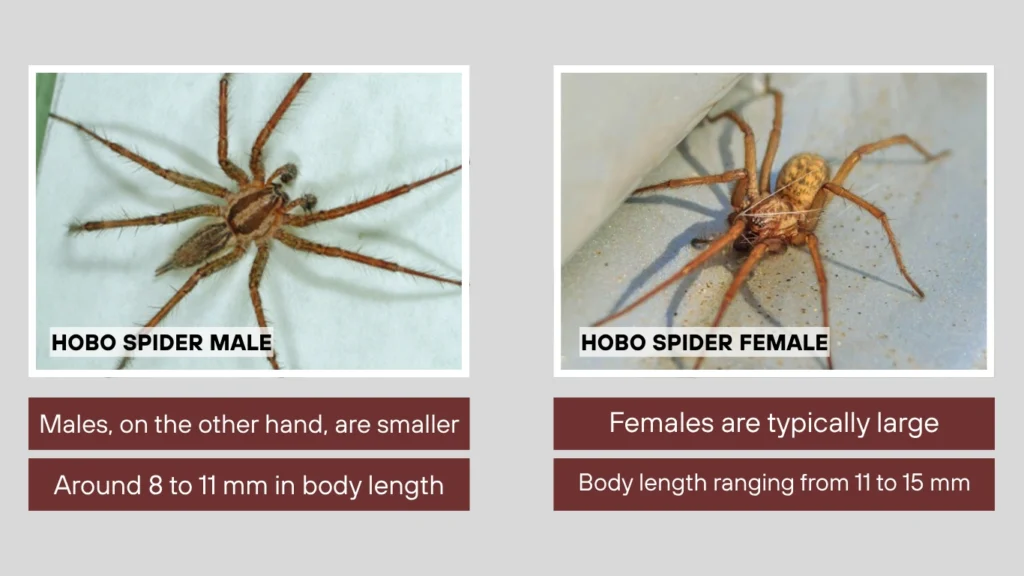
The first noticeable difference between male and female hobo spiders lies in their body size and structure. Females are typically larger, with a body length ranging from 11 to 15 mm, excluding their legs. Their overall build is bulkier, especially around the abdomen. Males, on the other hand, are smaller and more slender, usually measuring around 8 to 11 mm in body length. However, their legs are longer in proportion to their bodies, which sometimes gives them a deceptively larger appearance.
Color and Markings
Both sexes exhibit similar coloring—light to medium brown with a series of darker chevron patterns on their abdomens. These markings help them blend into their surroundings, especially in low-light environments like basements and crawl spaces. The chevrons may appear more defined in females due to the broader, flatter shape of their abdomens, while males often have a shinier, leaner appearance. Despite minor shade differences, color alone is not a reliable gender indicator.
Behavioral Differences
Web Building and Movement
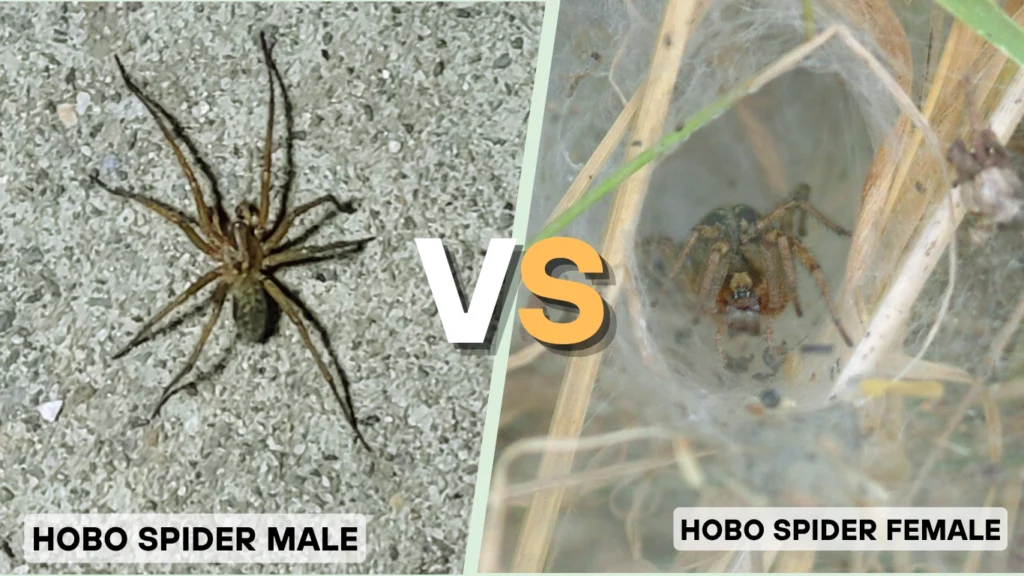
Females are web dwellers. They construct and remain close to their funnel-shaped webs, which are typically located in dark, quiet, and undisturbed places like corners, under furniture, or basement crevices. They rarely leave the web unless disturbed.
Males, by contrast, are wanderers. Once they reach maturity—usually in late summer—they leave their webs and begin roaming in search of females. This roaming behavior makes male hobo spiders more likely to be spotted by homeowners. If you see a hobo spider on a wall or floor during mating season (typically July to September), it’s most likely a male.
Aggression and Defense
Neither male nor female hobo spiders are naturally aggressive. They will usually retreat if disturbed. That said, females guarding an egg sac may display slightly more defensive behaviors, such as standing their ground or rearing up when threatened. Males, being wanderers, are more prone to fleeing and are less likely to bite unless cornered.
Reproductive Roles

Mating Behavior
Male hobo spiders reach sexual maturity earlier and live shorter lives. After leaving their web, a male will seek out females by following pheromone trails. Once he finds a receptive female, mating takes place near or within the female’s web. The male typically dies soon after mating—either naturally or in rare cases, he may be eaten by the female.
Egg Sac and Baby Care
Females take on the role of egg-laying and egg protection. After mating, the female hobo spider lays her eggs inside a silk sac within her funnel web. She remains near the sac to guard it until the spiderlings hatch. This behavior is crucial for the survival of the young, as the protected environment increases their chances of reaching maturity.
Identification Chart

| Feature | Male Hobo Spider | Female Hobo Spider |
| Body Size | 8–11 mm | 11–15 mm |
| Abdomen Shape | Narrow, lean | Round, full |
| Leg Proportion | Longer relative legs | Shorter relative legs |
| Web Use | Rarely builds web | Builds and stays in web |
| Behavior | Roams to find mates | Guards web and eggs |
| Palps | Enlarged (reproductive organs) | Small, not swollen |
Lifespan and Habitat Preferences
How Long They Live
The lifespan of a hobo spider depends heavily on gender.
- Males: Usually live about 1 year. Once they reach sexual maturity and mate, their biological purpose is fulfilled, and death soon follows.
- Females: Tend to live longer, often up to 2–3 years under undisturbed conditions. They may lay several egg sacs over a lifetime.
Where They Prefer to Stay
- Males: More commonly found inside homes during the late summer months. They may crawl along baseboards, window ledges, or bathtubs looking for a mate.
- Females: Prefer darker, more stable locations such as basements, closets, and garages. Their webs are often built in corners, under furniture, or between stored boxes.
Can You Tell the Difference Easily?
While some external features like size and behavior help distinguish males from females, it’s not always easy without close inspection. The most definitive visual cue is the male’s pedipalps—the small leg-like structures near the mouth. In males, these appear enlarged and bulbous, resembling boxing gloves. These are reproductive organs used to transfer sperm to the female.
Females lack these swollen palps and instead have a larger, rounder abdomen. If you observe the spider closely and safely (preferably with a magnifying glass or photo), you may be able to spot this key difference.
Final Thoughts
Distinguishing between male and female hobo spiders may seem like a small detail, but it’s incredibly useful for those dealing with household spiders, studying their behavior, or working in pest control. Males are more likely to be seen wandering inside homes and die shortly after mating, while females spend most of their time in their webs, laying and guarding eggs. Understanding these differences helps us coexist with these spiders—or control them more effectively if needed—while appreciating their role in the ecosystem.
FAQs
1. Can male hobo spiders bite?
Yes, but they rarely do. Male hobo spiders may bite only if they feel cornered or threatened. Their bites are not considered dangerous to humans and are generally mild, causing minor redness or swelling.
2. Are female hobo spiders more dangerous?
Not particularly. Though females are larger and stay near their webs (including egg sacs), their bites are also not medically significant. They usually avoid confrontation and will only bite if directly provoked.
3. Do male hobo spiders live in webs?
Males leave their webs once they mature and generally do not build new ones. Instead, they roam to find females. Occasionally, they may use existing webbing for temporary shelter, but web construction is primarily a female behavior.
4. How do I identify a hobo spider’s sex visually?
Look at size, behavior, and palps. Males have swollen palps near the mouth and a leaner body, while females have a larger abdomen and stay near their webs. Males are more likely to be seen crawling on floors or walls.
5. What time of year are male hobo spiders most active?
Late summer to early fall (July to September) is peak activity for mature male hobo spiders. During this period, they leave their webs and start searching for mates, making them more visible inside homes.