Not all bites are created equal. While a red, itchy bump might seem harmless, it could be something more serious—like a spider bite. Bug bites and spider bites often look alike at first, but the symptoms, risks, and treatments can vary greatly. Understanding the difference is key to proper care and peace of mind. In this guide, we’ll help you identify what bit you and what steps to take next.
Key Differences Between Spider Bites and Bug Bites
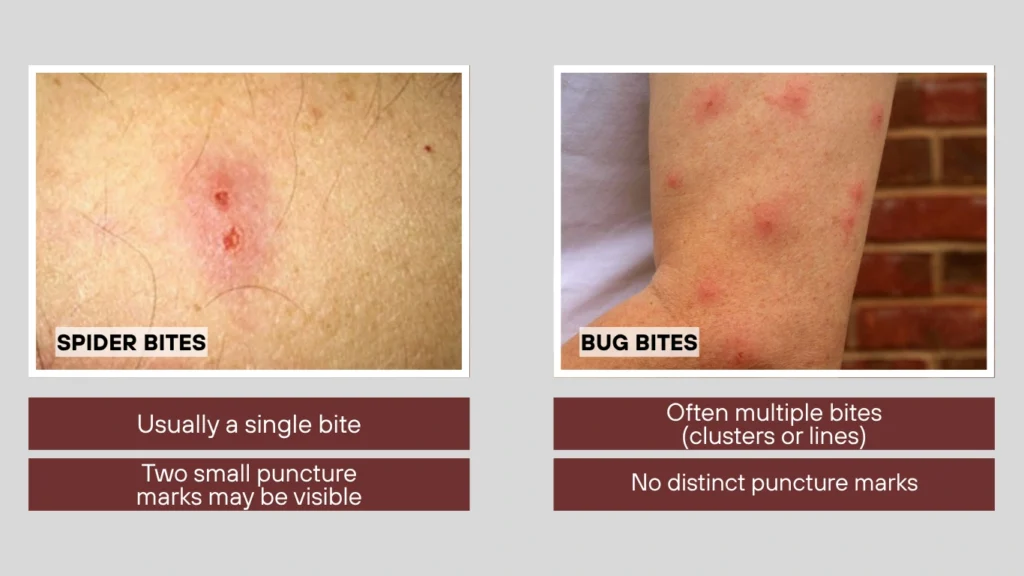
| Feature | Spider Bites | Bug Bites |
| Number of Bites | Usually a single bite | Often multiple bites (clusters or lines) |
| Bite Marks | Two small puncture marks may be visible | No distinct puncture marks |
| Pain or Itch | Typically painful | Mostly itchy |
| Swelling | Moderate to severe swelling possible | Mild swelling |
| Progression | May worsen over 24–72 hours | Usually improve within a day or two |
| Blistering/Necrosis | Possible, especially with venomous spiders | Rare |
| Common Locations | Arms, legs, hands, feet | Exposed skin areas like arms, legs, ankles |
| Severity | Can be serious depending on spider type | Generally mild, but may cause allergies |
| Reaction Type | Local pain, redness, possible systemic signs | Itch, mild redness, occasional allergic reaction |
Common Appearance
Spider bites often appear as a single red bump with two small puncture marks in the center. Some may develop into a blister, ulcer, or even necrotic tissue in rare cases.
Bug bites (like those from mosquitoes or fleas) usually show up as small, raised, itchy bumps, often in clusters or lines, without a visible puncture.
Symptoms Over Time
Spider bites may worsen over 24 to 72 hours, especially if it’s from a venomous species. The area may swell, turn red, and become increasingly painful.
Bug bites typically peak in irritation within a few hours and begin healing within a day or two unless scratched excessively.
Pain vs Itch
Spider bites are generally painful, especially in the case of bites from black widows or brown recluses.
Bug bites are more likely to be itchy rather than painful. Intense itching is common with flea, mosquito, and bed bug bites.
Types of Spiders That Bite Humans
Common Biting Spiders
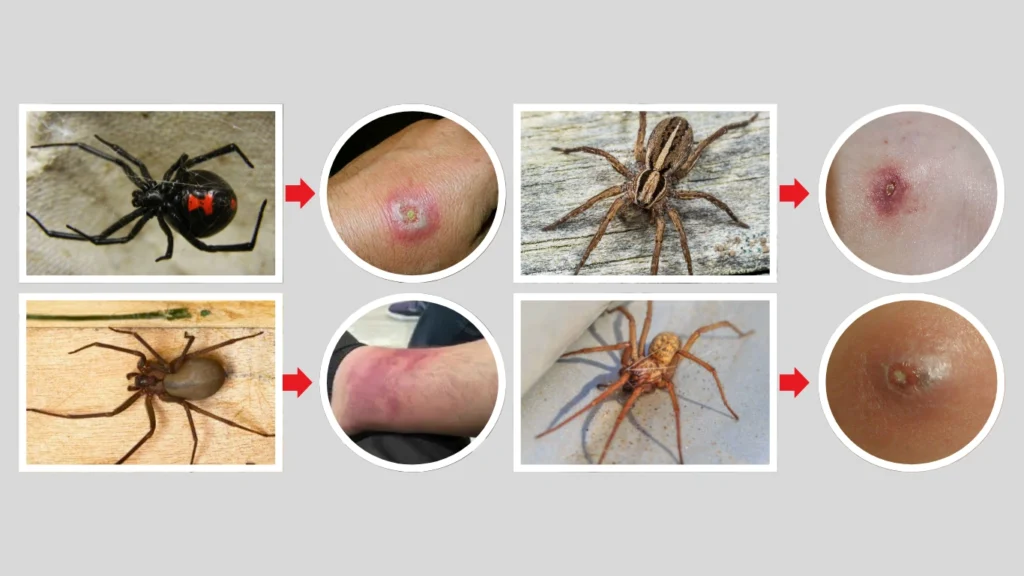
While most spiders are harmless, a few species can bite humans and cause noticeable reactions. Some of the most common biting spiders include:
Black Widow (Latrodectus spp.) – Recognizable by its shiny black body and red hourglass marking, its bite can cause muscle pain and cramping.
Brown Recluse (Loxosceles reclusa) – Known for its violin-shaped marking; its venom can lead to tissue damage and necrosis.
Wolf Spider (Lycosidae family) – Large and fast-moving, their bite causes swelling and mild pain, but is not dangerous.
Hobo Spider (Eratigena agrestis) – Found in the Pacific Northwest, it may cause redness and localized discomfort.
Symptoms of Dangerous Spider Bites
Not all spider bites are medical emergencies, but certain symptoms may signal a serious reaction:
- Severe or spreading pain around the bite
- Muscle cramps or spasms, particularly in the abdomen or back
- Fever, chills, or sweating
- Headache or dizziness
- Blistering or ulceration at the bite site
- Blackening of the skin in cases of necrotic venom (common with recluse bites)
If any of these signs appear, medical attention should be sought immediately.
Common Biting Bugs and Their Bite Traits
Mosquitoes
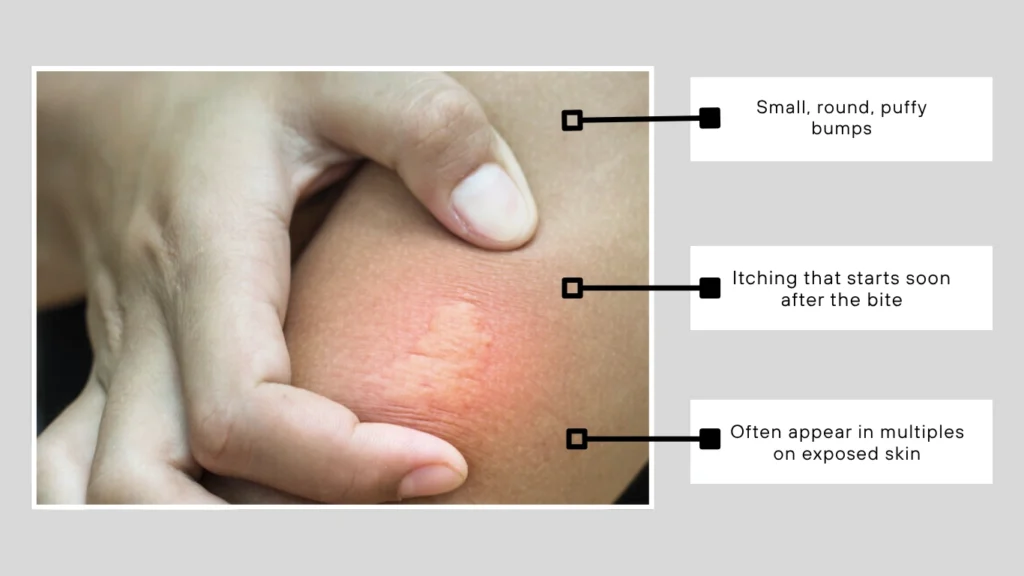
Mosquito bites are some of the most common and recognizable. They typically result in:
- Small, round, puffy bumps
- Itching that starts soon after the bite
- Often appear in multiples on exposed skin
- Usually harmless, but some may carry diseases like dengue, malaria, or West Nile virus
Fleas
Flea bites are more common among pet owners and often occur in clusters:
- Small red bumps with a red halo
- Extremely itchy and usually located around ankles, legs, or waist
- May cause allergic reactions in some people
- Persistent exposure may lead to secondary infections due to scratching
Bed Bugs, Ticks, and Other Common Culprits

Bed Bugs
Bed bug bites usually occur at night and present as:
- Rows or clusters of bites
- Most commonly found on arms, shoulders, or neck
- Mild swelling and itching
- Typically discovered after waking up
Ticks
Tick bites can go unnoticed at first due to their anesthetic saliva:
- A small bump at the site of the bite
- The tick may still be attached
- Can transmit diseases like Lyme disease or Rocky Mountain spotted fever
- Watch for bullseye rash—a telltale sign of Lyme infection
Other Bugs (Chiggers, Lice, Mites)
- Chiggers: Cause intensely itchy red welts, often near waistbands or tight clothing
- Lice: Itchy bites near the scalp or body hair
- Mites: Tiny red bumps, sometimes confused with allergic reactions
Recognizing the specific pattern and location of bites can help you determine what bug may be responsible.
How to Identify the Bite Source
Location on Body
The part of your body where the bite appears can offer important clues:
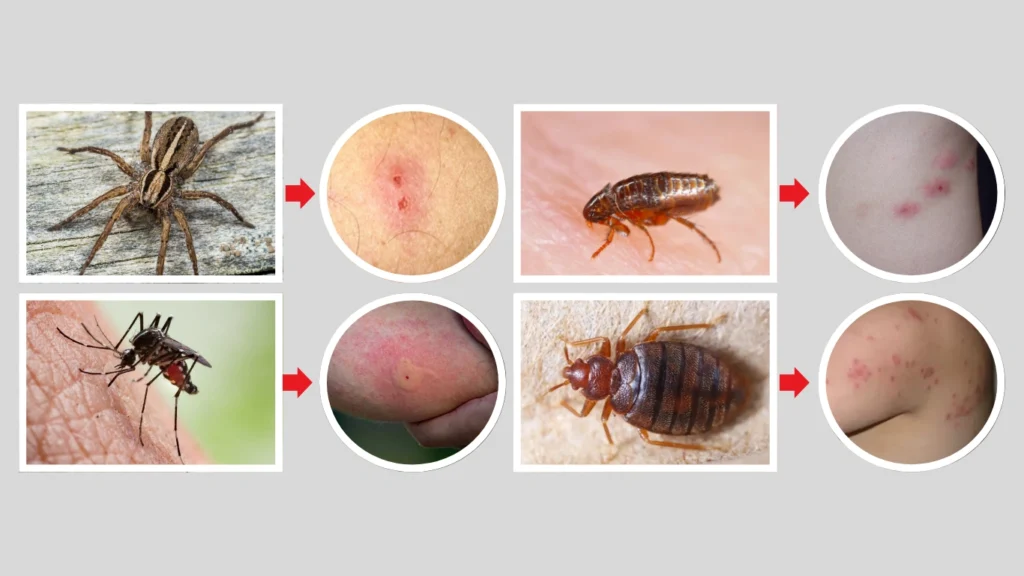
- Spider bites often occur on arms, legs, hands, or feet—places where spiders may get trapped between skin and clothing or bedding.
- Mosquitoes bite exposed areas like arms and legs.
- Fleas prefer ankles and lower legs, especially if you have pets.
- Bed bugs bite exposed areas such as the face, neck, arms, and shoulders, usually while you sleep.
- Ticks attach to warm, hidden areas—behind knees, underarms, or groin.
Time of Occurrence
When you notice the bite can also help identify the culprit:
Spider bites may not be noticed until hours later when symptoms begin.
Bed bug bites are usually found after waking up, as they feed at night.
Mosquito bites occur any time you’re outdoors, especially at dusk or dawn.
Flea bites often happen during or shortly after contact with infested animals or carpets.
Tick bites may remain unnoticed for several hours or even days, as ticks stay attached to feed.
First Aid for Bites
Spider Bite Treatment
For most non-venomous spider bites, home care is enough:
- Clean the bite area with soap and water to prevent infection
- Apply a cold compress to reduce swelling and pain
- Take over-the-counter pain relievers like ibuprofen or acetaminophen
- Elevate the area if swelling occurs
- Avoid scratching to prevent secondary infection
- Monitor the bite for worsening symptoms; seek help if blisters or tissue breakdown appears
For potentially venomous bites (black widow or brown recluse), get medical help immediately.
Bug Bite Treatment
Most bug bites heal with simple care:
- Wash the area with soap and water
- Use anti-itch creams (hydrocortisone) or oral antihistamines for relief
- Apply calamine lotion or aloe vera to soothe skin
- Avoid scratching—even mild bites can become infected if the skin breaks
- Watch for signs of allergic reaction or infection and seek help if needed
How to Prevent Bites
Spider Prevention
- Declutter areas like basements, attics, and closets
- Shake out shoes, clothes, and bedding before use
- Seal cracks and gaps around windows, doors, and baseboards
- Use spider repellents or natural deterrents like vinegar or peppermint oil
- Regularly dust and vacuum to keep spiders from settling in
Bug Bite Prevention
- Apply insect repellent (with DEET or picaridin) before going outdoors
- Wear long sleeves and pants, especially in grassy or wooded areas
- Use mosquito nets, especially when sleeping outdoors or in infested areas
- Keep pets clean and use flea and tick prevention treatments
- Wash and vacuum bedding regularly to prevent bed bugs
Final Thoughts
While bug bites are usually just annoying, spider bites—especially from venomous species—can be more serious. Being able to recognize the differences in symptoms and appearance can help you take the right action early. Always clean and monitor any bite, avoid scratching, and don’t hesitate to seek medical help if you notice signs of infection, severe pain, or allergic reaction. Prevention is the best defense—stay aware of your surroundings and take steps to protect yourself and your home.
FAQs
How do I know if it’s a spider bite?
A spider bite often shows two small puncture marks, is more painful than itchy, and may worsen over time. Some may blister or form a dark center.
Can bug bites turn into infections?
Yes. Excessive scratching can introduce bacteria into the skin, leading to swelling, redness, pus, and pain—signs of infection.
Are all spider bites dangerous?
No. Most spider bites are harmless and heal without medical care. Only a few species, like the black widow or brown recluse, pose serious risk.
Do spider bites always hurt immediately?
Not always. Some spider bites start with mild discomfort or itching, then become increasingly painful over several hours.
Can a doctor test what bit me?
Not usually. There’s no lab test to identify a bite source. Doctors rely on the bite’s appearance, your symptoms, and where/when it occurred.
.