

The hobo spider (Eratigena agrestis) is a ground-dwelling funnel-web spider found in Europe and parts of North America, especially in the Pacific Northwest. Its name and appearance have led to speculation, fear, and controversy—especially due to reports suggesting that its bite causes necrotic wounds similar to those from a brown recluse.
But are hobo spiders truly dangerous to humans? Let’s explore what science says, how their behavior influences bite risk, and what symptoms to watch for.
Are Hobo Spiders Dangerous to Humans?
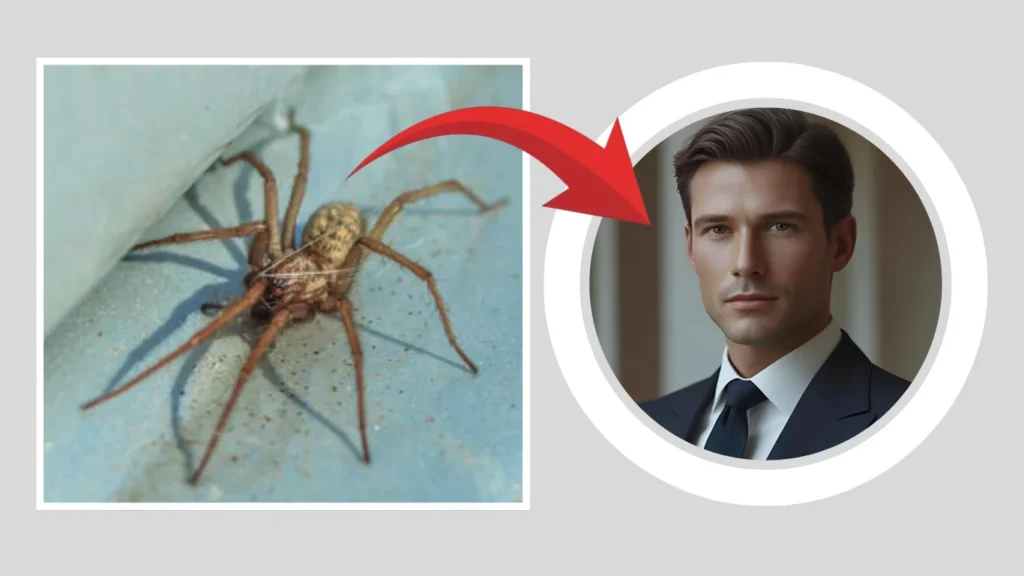
Modern scientific research suggests that hobo spiders are not significantly dangerous to humans.
While early studies (particularly in the 1980s and 1990s) claimed that their bite could lead to necrotic lesions, more recent evidence has found no solid proof of such effects. The Centers for Disease Control and Prevention (CDC) no longer lists the hobo spider as a medically significant species.
In fact, many spider bites previously blamed on the hobo spider were likely misidentified—either caused by other spiders like the brown recluse, or even by non-spider infections such as MRSA.
Understanding Hobo Spider Bites

Do Hobo Spiders Bite Humans?
Yes—but only under specific circumstances. Hobo spiders are not naturally aggressive. They are reclusive hunters that build funnel webs in basements, garages, or cluttered outdoor areas. Bites typically happen only if the spider:
- Becomes trapped between skin and clothing
- Is accidentally crushed or disturbed
- Wanders indoors during mating season and encounters a human by chance
In most cases, hobo spiders retreat rather than bite. Their venom is designed for subduing small insects, not for defense against humans or large animals.
Symptoms of a Hobo Spider Bite
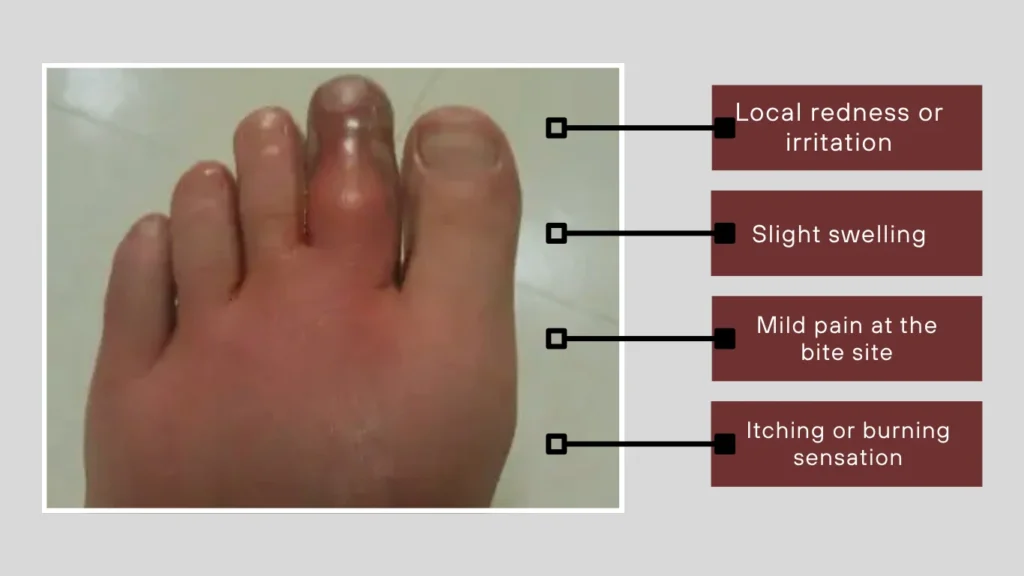
Despite old rumors, hobo spider bites generally cause mild and temporary symptoms, if any. Here’s what people might experience:
Common, Mild Reactions:
- Local redness or irritation
- Slight swelling
- Mild pain at the bite site
- Itching or burning sensation
Unconfirmed or Rare Claims:
- Necrotic (flesh-destroying) wounds
- Persistent ulcers
- Systemic symptoms like headache, fatigue, or nausea
It’s important to note that necrosis has never been definitively linked to hobo spider bites in controlled laboratory conditions. Most severe wound cases in earlier decades lacked conclusive evidence, and no toxins capable of causing necrosis have been found in hobo spider venom through modern research.
Scientific Evidence and Medical Consensus
In the early 1990s, hobo spiders were labeled as potentially dangerous based on anecdotal reports and limited toxicology studies. However, over the years, comprehensive evaluations have led to a different understanding:
2003: The CDC removed the hobo spider from its list of venomous species with dangerous medical effects.
University of California researchers have repeatedly stated that there’s no credible evidence supporting necrosis from hobo spider bites.
In Europe, where hobo spiders are native, they are not considered harmful, and bites are rarely reported.
Today, entomologists and arachnologists agree that hobo spiders do not pose any serious health risk to humans. The fear largely stems from confusion with more harmful species and internet-fueled misinformation.
Behavior: Are Hobo Spiders Aggressive?
No, hobo spiders are not aggressive.
They are shy, ground-dwelling spiders that prefer to avoid human contact. Most hobo spiders spend their lives hidden in funnel-shaped webs, venturing out only to catch prey or during mating season.
The myth of their aggressiveness likely stems from misinterpreted behavior. For example:
- Male hobo spiders may wander indoors in search of mates, especially during late summer and early fall. This leads to more human encounters—but not because the spider is hunting people.
- If cornered or handled, a hobo spider may bite defensively—but this is not an intentional attack.
In general, they would rather retreat to their web than fight, making them non-confrontational and low-risk to humans.
Hobo Spider vs Truly Dangerous Spiders
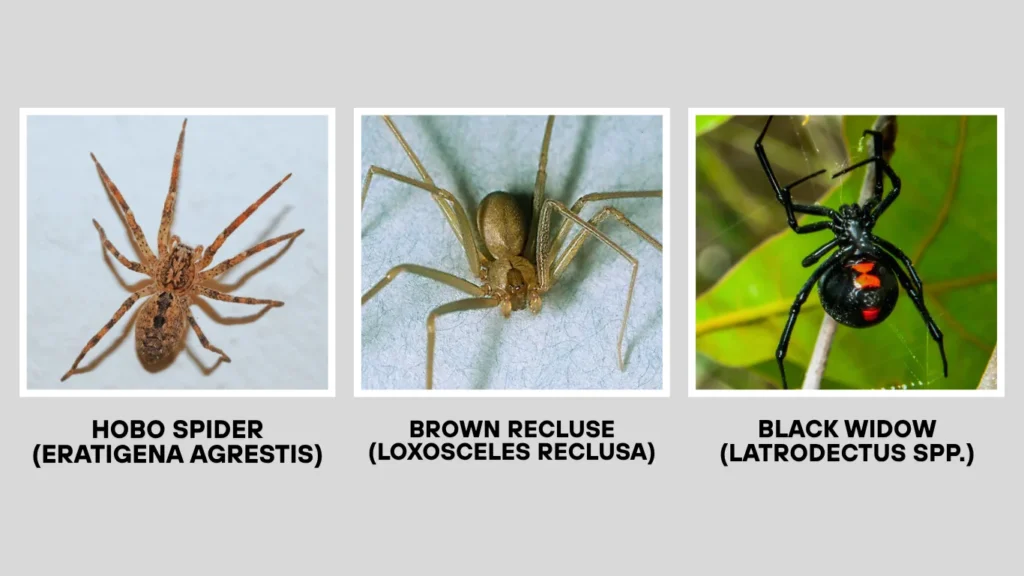
It’s helpful to compare the hobo spider with other spiders that are medically significant to understand the real risk:
| Feature | Hobo Spider (Eratigena agrestis) | Brown Recluse (Loxosceles reclusa) | Black Widow (Latrodectus spp.) |
| Native Range | Europe, Pacific NW USA | Southern & central USA | Worldwide |
| Aggressiveness | Low | Low | Low |
| Bite Effects | Mild, local irritation | Necrosis in some cases | Neurotoxic pain, cramps |
| Medical Significance | Low (no confirmed necrosis) | High (potential tissue damage) | High (muscle and nerve effects) |
| Scientific Consensus | Not dangerous | Dangerous | Dangerous |
This comparison clearly shows that the hobo spider’s danger has been overstated, especially when compared to the brown recluse or black widow.
What to Do If You Encounter One
If you see a hobo spider in your home or yard, follow these simple, safe steps:
1. Avoid direct contact
Do not touch it with bare hands. Hobo spiders only bite when they feel trapped.
2. Use a jar or container
Gently trap the spider and slide a piece of paper underneath. Release it outside, away from your house.
3. Seal entry points
Use caulk or weather stripping to seal gaps under doors, around windows, and in basements where spiders may enter.
4. Reduce clutter and dampness
Hobo spiders like dark, undisturbed, and moist areas. Clean up clutter and use dehumidifiers to make your space less inviting.
5. Call pest control (if necessary)
If you have a large spider presence or repeated sightings, a professional can assess and manage the situation.
Conclusion
So, are hobo spiders dangerous?
No—based on modern science, hobo spiders are not considered dangerous to humans. Despite old rumors about necrotic bites and aggression, updated studies show that these shy spiders pose minimal risk, even when they do bite.
FAQs
1. Can a hobo spider bite cause necrosis?
There is no scientific evidence confirming that hobo spider venom causes necrotic wounds. Earlier claims have been largely debunked or attributed to other causes.
2. How can I identify a hobo spider?
They are medium-sized brown spiders with chevron markings on the abdomen and no distinct stripes on the legs. Misidentification is common, so expert confirmation may be needed.
3. Are hobo spiders dangerous to pets?
No. Pets are rarely bitten, and even if bitten, symptoms are typically mild or unnoticeable. There are no documented pet fatalities from hobo spiders.
4. Are hobo spiders aggressive toward humans?
No. They are reclusive and avoid interaction. They may bite if trapped but do not chase or attack humans.
5. Should I kill a hobo spider if I find one indoors?
Not necessarily. If you’re uncomfortable, it’s fine to relocate it outdoors. They help control pest populations and are not a threat to people or pets.
