
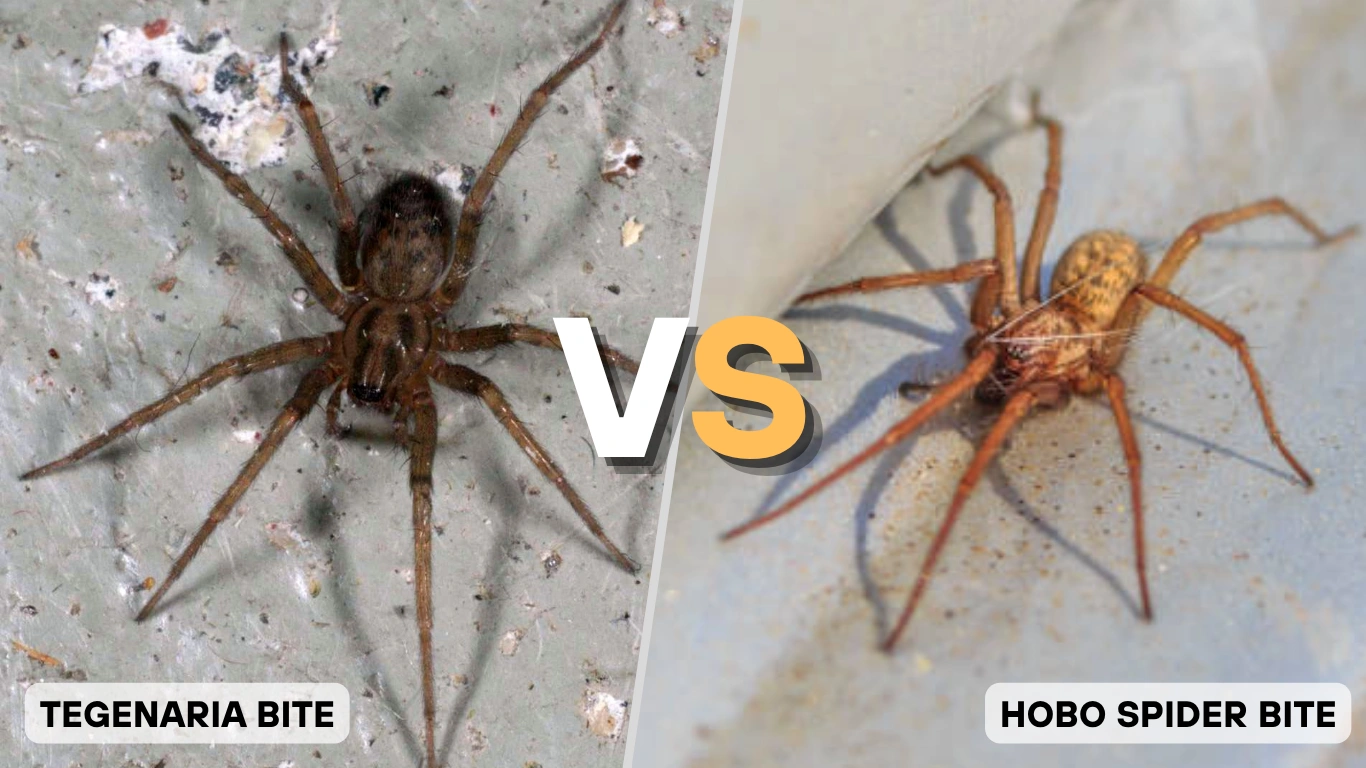
The world of spider identification can be confusing, especially when scientific names change and common names overlap. One such case is the “hobo spider,” which was once known as Tegenaria agrestis. While many still use these names interchangeably, it’s important to understand the distinctions and the reasons behind the confusion. This article will explore the differences, clarify the naming history, and help you better identify these common funnel-web spiders.
Comparison Table: Hobo Spider vs. Tegenaria agrestis
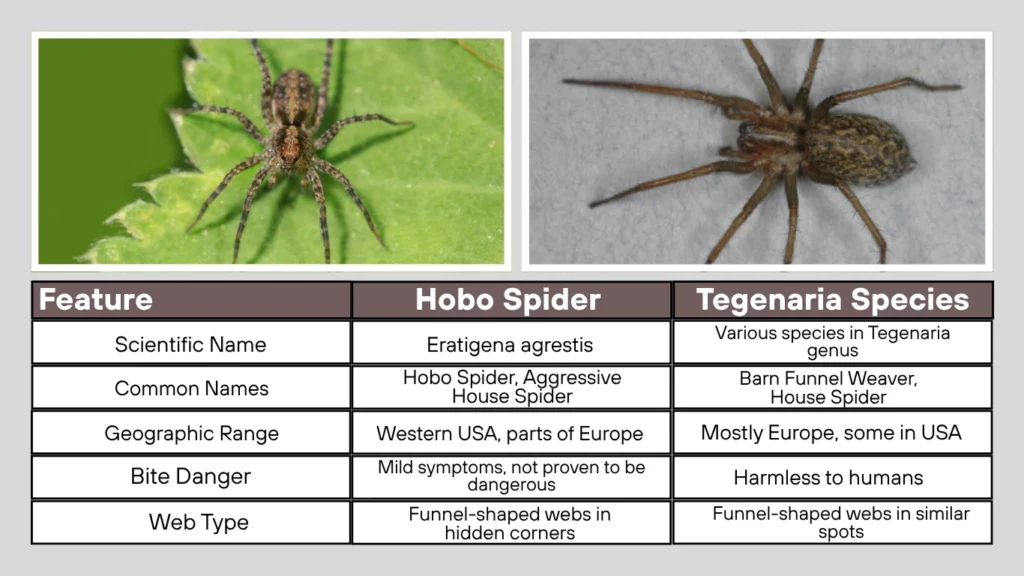
| Feature | Hobo Spider (Eratigena agrestis) | Tegenaria Species |
| Scientific Name | Eratigena agrestis | Various species in Tegenaria genus |
| Common Names | Hobo Spider, Aggressive House Spider | Barn Funnel Weaver, House Spider |
| Geographic Range | Western USA, parts of Europe | Mostly Europe, some in USA |
| Bite Danger | Mild symptoms, not proven to be dangerous | Harmless to humans |
| Web Type | Funnel-shaped webs in hidden corners | Funnel-shaped webs in similar spots |
| Behavior | Fast-moving, rarely aggressive | Shy, non-aggressive |
Scientific Classification and Naming Confusion
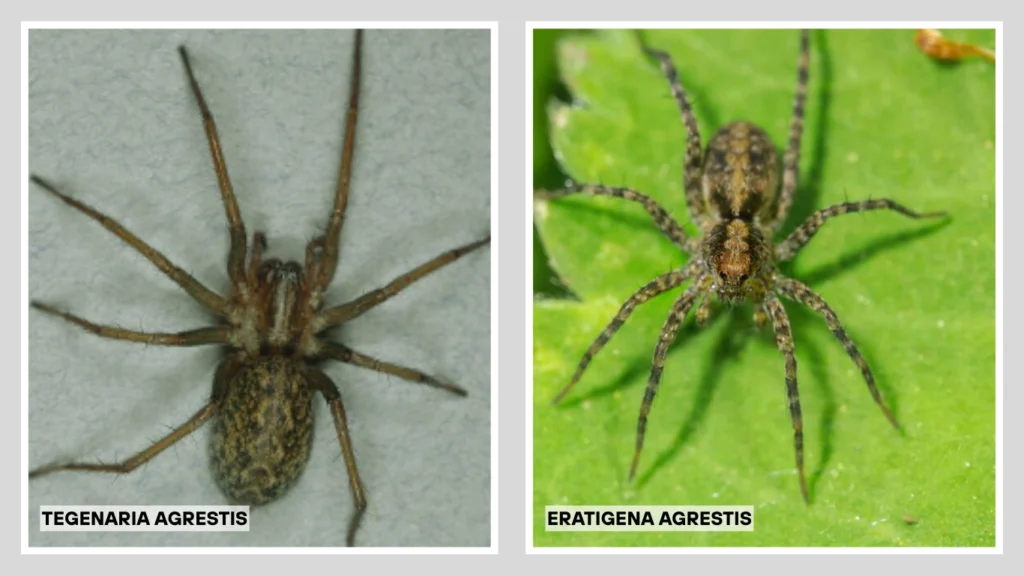
Why the Name Tegenaria agrestis Is Outdated
The hobo spider was first classified as Tegenaria agrestis, leading to confusion with other Tegenaria species. In 2013, arachnologists reclassified it under a new genus, Eratigena, making the correct name Eratigena agrestis. Despite this change, many pest control sites and articles still use the older name, which causes continued misunderstanding.
Current Valid Name: Eratigena agrestis
The hobo spider is now officially recognized as Eratigena agrestis. This distinguishes it from other Tegenaria species such as Tegenaria domestica (the common house spider). While both belong to the same family (Agelenidae), they are separate genera.
Identification Differences
Physical Appearance
- Brown or grayish color
- Slight chevron markings on the abdomen
- No distinctive stripes on the legs
- Body length: about 7-14 mm (females), slightly smaller for males
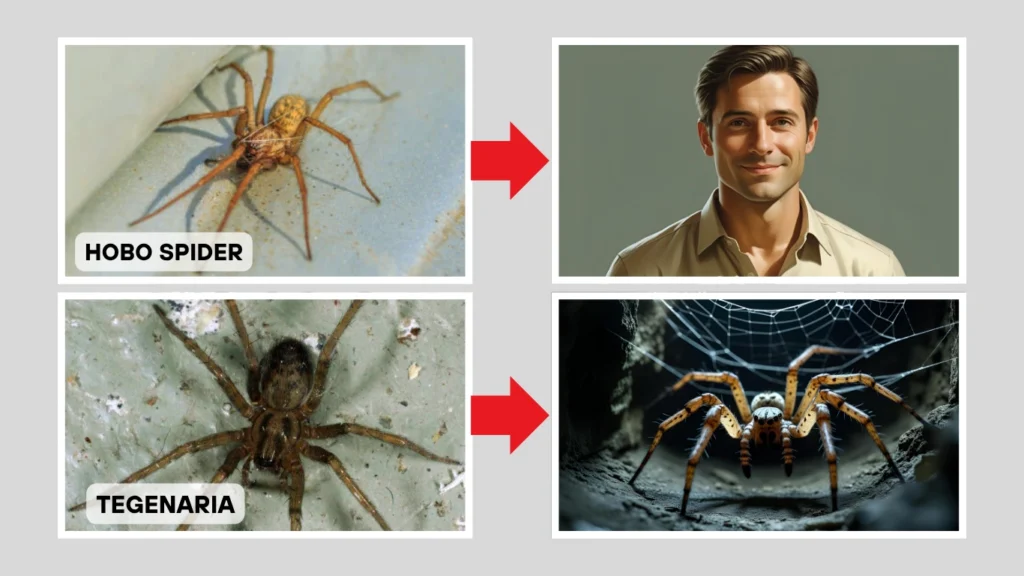
Hobo spiders and other Tegenaria species look quite similar, but microscopic examination is often needed for accurate identification.
Web Type and Structure
Both hobo spiders and Tegenaria species spin funnel-shaped webs. These are usually built in cracks, corners, or undisturbed areas of basements, crawlspaces, and garages. The spider hides in the funnel, waiting for prey to cross the sheet-like web.
Geographic Distribution
Hobo Spider Range
The hobo spider is mostly found in the Pacific Northwest and some inland northwestern parts of the United States. It is believed to have been introduced from Europe in the early 20th century.
Tegenaria Species Distribution
Tegenaria species are more widely distributed in Europe, especially in damp areas like barns and cellars. Some species, like Tegenaria domestica, can also be found in North America but are less common than Eratigena agrestis in the West.
Bite Danger and Medical Relevance
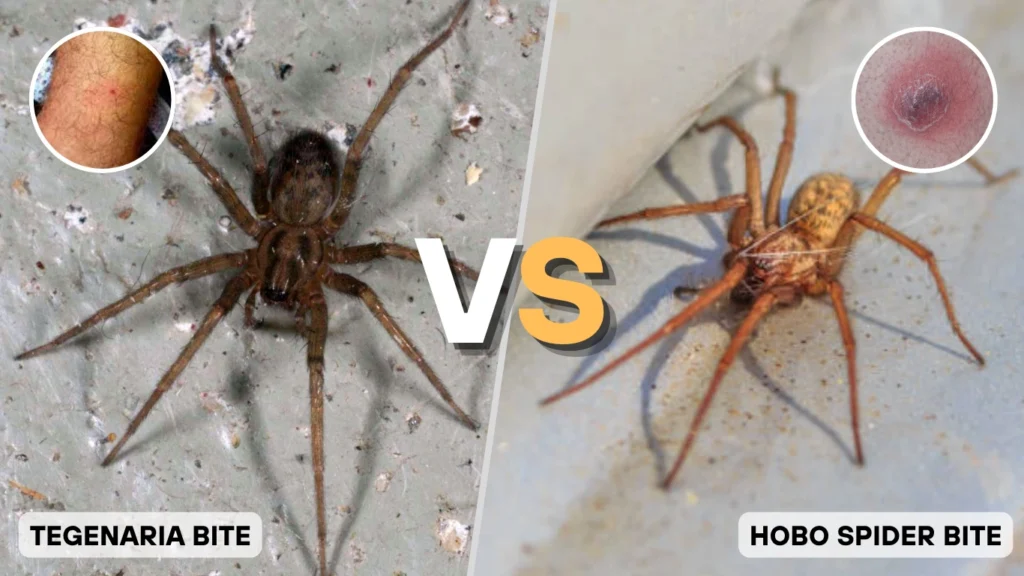
Are Hobo Spider Bites Dangerous?
In the past, hobo spiders were believed to cause necrotic bites, similar to brown recluse spiders. However, modern research has challenged these claims. Studies by the CDC and other organizations have found no strong evidence linking hobo spider bites to serious medical conditions. Most bites, if they occur, are mild and may result in minor redness or swelling.
Tegenaria Bites and Human Risk
Tegenaria spiders are considered harmless. They are not known to bite humans unless provoked, and their venom is not medically significant. If bitten, symptoms are usually limited to mild irritation.
Behavior and Human Interaction
Aggressiveness and Movement
Despite the nickname “aggressive house spider,” the hobo spider is not unusually aggressive. It may move quickly, especially when disturbed, but it prefers to avoid humans. The term “aggressive” came from a misunderstanding of its behavior during mating season when males wander more actively.
Tegenaria spiders are even more reclusive. They build webs in dark, quiet locations and rarely interact with people.
When They Might Enter Homes
Hobo spiders are more likely to enter homes in late summer and early fall during mating season. They often enter through cracks, vents, or gaps under doors. Tegenaria spiders follow a similar seasonal pattern but tend to stay hidden in undisturbed parts of buildings.
Common Misconceptions
Why People Confuse the Two
The confusion stems from outdated naming. Since hobo spiders were once classified under Tegenaria, many assume all similar-looking funnel-web spiders belong to the same group. Additionally, their physical appearance and web structure are nearly identical, making visual identification challenging.
Media Influence on Spider Fear
Sensational headlines and viral social media stories have fueled fear of hobo spiders, portraying them as highly venomous. In reality, these spiders are shy and unlikely to bite unless trapped or provoked. Most medical reports once attributed to them were never conclusively proven.
How to Safely Identify and Manage These Spiders
When to Call a Professional
If you see a large number of funnel-shaped webs or are concerned about bites, consider consulting a pest control expert. While these spiders are not dangerous, infestations can be a nuisance.
Safe Removal and Prevention Tips
- Seal cracks and crevices around doors, windows, and foundations
- Use door sweeps and mesh screens
- Reduce clutter, especially in basements or storage areas
- Vacuum webs and spiders regularly
- Lower indoor humidity using dehumidifiers
Final Thoughts
The hobo spider (Eratigena agrestis) and Tegenaria species may look alike, but they are not the same. While once classified under the same genus, modern taxonomy has clarified their differences. Both spiders are relatively harmless to humans and play a role in controlling insect populations. Understanding their true nature helps reduce unnecessary fear and supports safe, informed pest management.
FAQs
1. Is Tegenaria agrestis the same as a hobo spider?
Not anymore. The hobo spider is now classified as Eratigena agrestis, following taxonomic updates.
2. Are hobo spider bites medically dangerous?
Recent studies suggest that hobo spider bites are not as harmful as once believed. Most cause only minor symptoms.
3. Do both spiders build funnel-shaped webs?
Yes, both species build similar funnel-shaped webs in undisturbed indoor and outdoor areas.
4. Which spider is more common in North America?
The hobo spider (Eratigena agrestis) is more common in the western USA, while Tegenaria domestica appears sporadically.
5. How can I prevent these spiders from entering my home?
Seal cracks, reduce moisture, remove clutter, and maintain cleanliness to discourage spiders from settling indoors.