

The Goliath bird-eating spider (Theraphosa blondi) is one of the most fascinating—and feared—creatures in the spider world. Known for its record-breaking size and eerie presence, it sparks curiosity among nature lovers, exotic pet owners, and wildlife enthusiasts alike. In this guide, we answer 52 of the most common questions people ask about this massive tarantula, covering everything from size and diet to venom, habitat, and pet care.
1. What is a Goliath bird-eating spider?

The Goliath bird-eating spider (Theraphosa blondi) is a species of tarantula native to the rainforests of northern South America. It holds the record for the largest spider in the world by mass and size. Despite its name, it rarely eats birds; instead, it feeds on insects, amphibians, and small rodents. Its size and hairy appearance often make it seem more intimidating than it actually is.
2. How big is the Goliath bird-eating spider?

Adult Goliath bird-eating spiders can grow up to 11 inches (28 cm) in leg span and weigh around 6.2 ounces (175 grams). Their body alone can measure over 4 inches. When fully stretched, their size is comparable to a large dinner plate. Although not the longest-legged spider, they are the heaviest and most massive, making them truly impressive in size.
3. How large can a Goliath bird-eating spider get?
The largest recorded Goliath bird-eating spider reached just over 12 inches in leg span. While most individuals measure between 10–11 inches, some exceptionally large specimens in the wild or captivity can grow slightly beyond that. Their sheer size, along with thick hair and bulky bodies, helps them intimidate predators and makes them one of the most iconic arachnids known today.
4. Where does the Goliath bird-eating spider live?
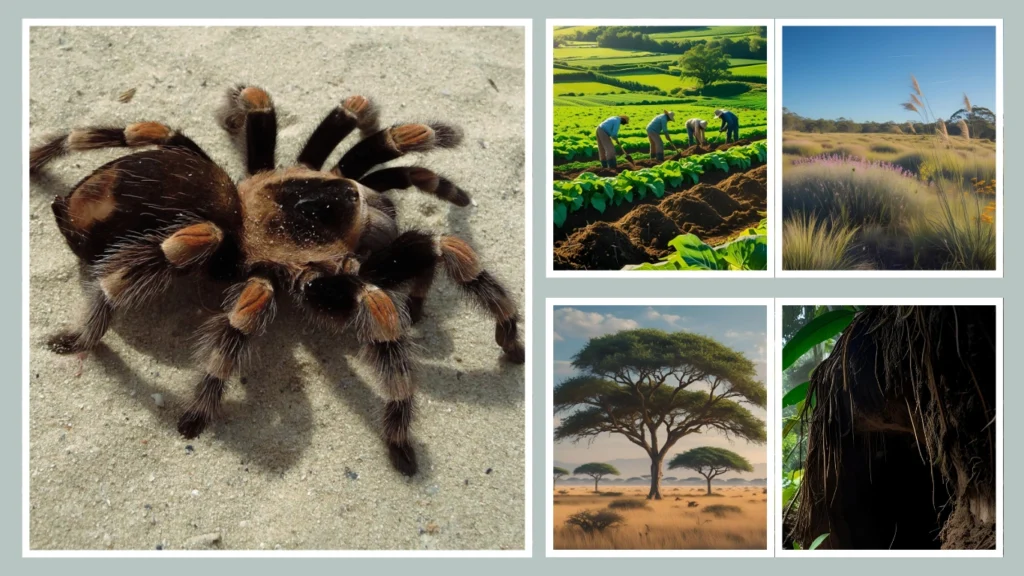
This spider is found deep in the tropical rainforests of northern South America, especially in Venezuela, Brazil, Suriname, Guyana, and French Guiana. It prefers swampy or marshy areas and builds burrows in the soft forest floor. These burrows are lined with silk and provide shelter from predators and environmental changes. They are nocturnal hunters, emerging after dark to feed.
5. Are Goliath bird-eating spiders poisonous?

Technically, Goliath bird-eating spiders are venomous but not dangerously so to humans. Their venom helps subdue prey but is mild in toxicity compared to other spiders. A bite can cause localized pain, redness, and swelling, much like a wasp sting. However, they rely more on their size and strength than venom. They’re not considered medically significant unless an allergic reaction occurs.
6. What does the Goliath bird-eating spider eat?
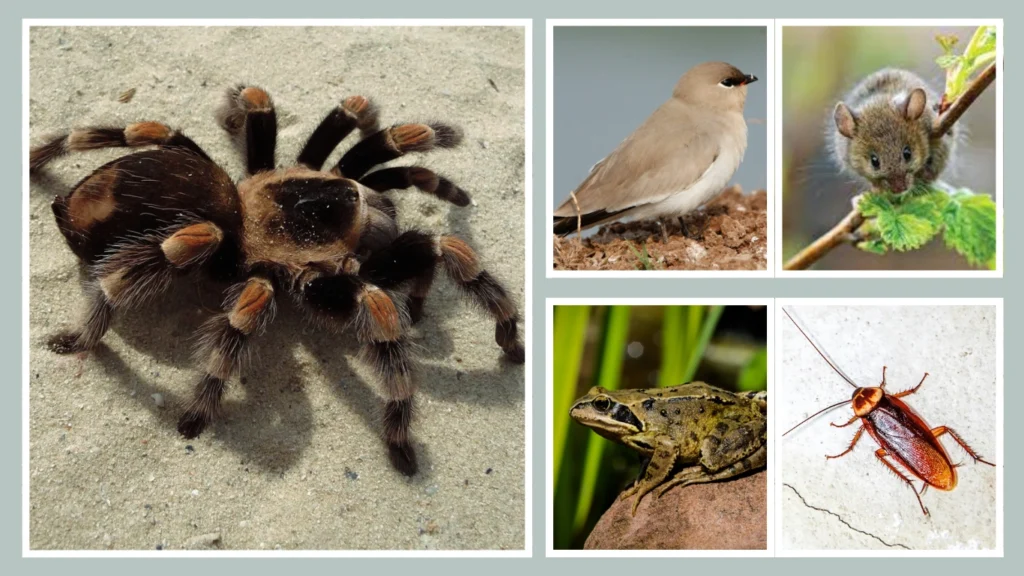
Despite its dramatic name, the Goliath bird-eating spider rarely preys on birds. Its diet includes insects, frogs, lizards, small snakes, and rodents. Occasionally, it may capture small birds if the opportunity arises, but this is rare. It uses its strong fangs to pierce prey and inject digestive enzymes, liquefying the insides to be consumed. The spider is a nocturnal ambush predator, relying on stealth rather than webs.
7. Where is the Goliath bird-eating spider found?
Goliath bird-eating spiders are native to the tropical rainforests of northern South America. They are most commonly found in countries like Venezuela, Guyana, Suriname, northern Brazil, and French Guiana. These spiders inhabit humid, lowland forests where they can dig burrows in soft, moist soil. Their natural habitat provides the dense vegetation and humidity they need for survival and hunting.
8. How to draw a Goliath bird-eating spider?
To draw a Goliath bird-eating spider, start with a large oval body for the abdomen and a smaller one for the cephalothorax. Add eight thick, hairy legs radiating outward, bent at angles. Include small details like the two pedipalps, fangs near the mouth, and fine hairs covering the body. For accuracy, look at real spider images and emphasize their bulky, intimidating appearance and leg span.
9. Can Goliath birdeaters jump?
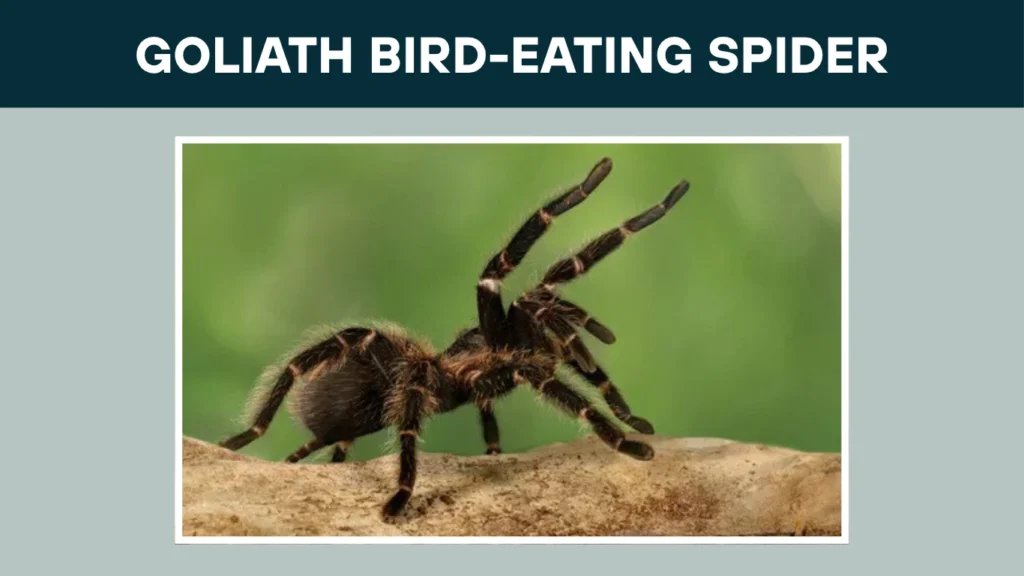
Goliath bird-eating spiders are not known for jumping like jumping spiders. Due to their size and weight, they are more ground-oriented and rely on ambushing rather than pouncing. While they can lunge forward slightly during a strike or escape, they don’t leap significant distances. Their strength lies in stealth, speed over short distances, and powerful legs—not agility or vertical movement.
10. Are Goliath bird-eating spiders aggressive?
Goliath bird-eating spiders are not naturally aggressive toward humans but can be defensive if threatened. They may hiss loudly by rubbing their legs (a behavior called stridulation), rear up to show fangs, or flick urticating hairs from their abdomen to irritate predators. Bites are rare and usually occur only when they feel cornered or provoked. In the wild, they prefer to retreat than attack.
11. Can you buy a Goliath bird-eating spider?

Yes, Goliath bird-eating spiders can be purchased from exotic pet dealers or online reptile and arachnid shops. However, they require specialized care, humidity control, and space due to their size. Buyers should always check local wildlife laws, as regulations about owning large spiders vary by country and region. Purchasing from reputable, licensed breeders is crucial to avoid contributing to wildlife exploitation.
12. How many eyes does a Goliath bird-eating spider have?

Like most spiders, the Goliath bird-eating spider has eight eyes. They are arranged in two horizontal rows on the top of the cephalothorax. Despite this, their vision is poor—they primarily rely on vibrations and touch to detect movement and sense prey. Their sensitivity to ground vibrations allows them to be highly effective nocturnal ambush predators even in complete darkness.
13. Is the Goliath bird-eating spider venomous?
Yes, the Goliath bird-eating spider is venomous, but its venom is not harmful to humans in most cases. It uses venom to immobilize and digest its prey. In humans, a bite may cause localized pain, swelling, and redness, similar to a wasp or bee sting. While not fatal, the experience can be painful and unpleasant, especially if the person has an allergic reaction.
14. Can you own a Goliath bird-eating spider?
Yes, in many places, you can legally own a Goliath bird-eating spider as a pet. However, it’s not recommended for beginners due to their size, special care needs, and defensive nature. They require proper temperature, humidity, and a spacious terrarium. Owners must also handle them with caution, as they can release irritating hairs and may bite if provoked or mishandled.
15. Do Goliath spiders eat birds?

Goliath bird-eating spiders can eat birds, but it’s very rare. The name comes from an 18th-century observation of one eating a hummingbird, but their diet mostly includes insects, small amphibians, and rodents. If a small bird is nesting or on the ground and the spider encounters it, it may attack, but birds are not a staple food. The spider’s powerful fangs can pierce bird flesh if necessary.
16. Are Goliath bird-eating spiders dangerous?
Goliath bird-eating spiders are not considered dangerous to humans. Their venom is mild and not life-threatening, though their bite can cause pain, swelling, and irritation. More concerning is their defensive behavior—especially the flicking of tiny urticating hairs, which can cause severe itching and eye irritation. With proper handling precautions, they pose little danger, but they’re best observed rather than handled directly.
17. Can a Goliath bird-eating spider kill you?
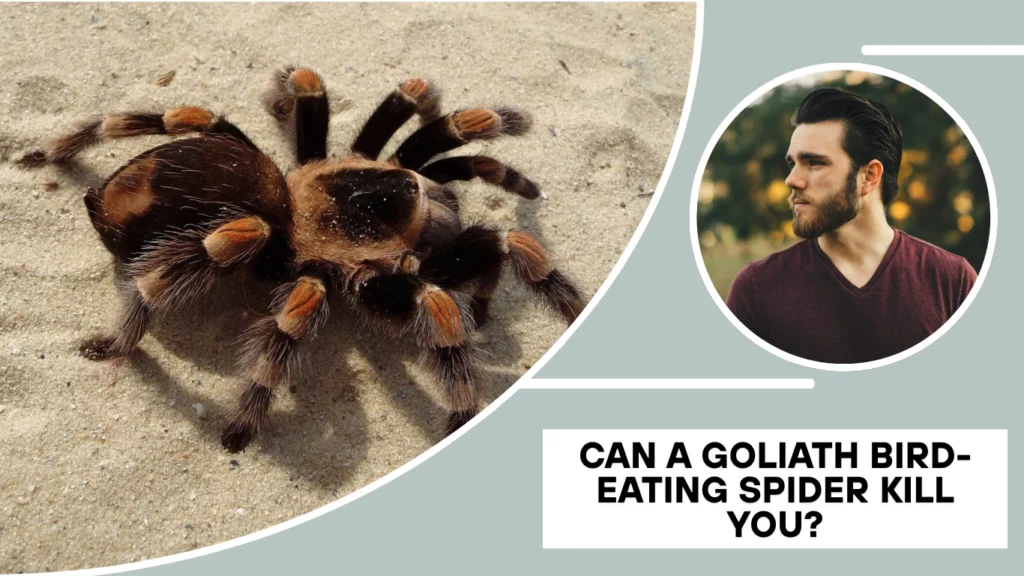
No, a Goliath bird-eating spider cannot kill a human. Its venom is not potent enough to be fatal. The spider’s size and fangs may seem intimidating, but bites are rare and typically only occur in self-defense. The most serious risk is an allergic reaction or secondary infection if the bite is not treated properly. In healthy individuals, a bite is uncomfortable but not deadly.
18. Do Goliath bird-eating spiders bite?

Yes, they are capable of biting and will do so if they feel threatened or cornered. The bite is powerful due to their large fangs—up to 1.5 inches long. Though not venomous to humans in a life-threatening way, the bite can be painful and may cause localized swelling. Their first line of defense, however, is usually to flee or use urticating hairs rather than bite.
19. Do Goliath bird-eating spiders bite humans?
Goliath bird-eating spiders rarely bite humans unless provoked or mishandled. They are generally defensive rather than aggressive. If they do bite, the effects include sharp pain, redness, and mild swelling. Serious medical attention is rarely needed unless there’s an allergic reaction. In most cases, they prefer to hiss, rear up, or release hairs as a warning before resorting to biting.
20. Do Goliath bird-eating spiders live in Australia?
No, Goliath bird-eating spiders do not live in Australia. They are native to the rainforests of northern South America, particularly in countries like Venezuela, Brazil, and Guyana. Australia has its own large spider species, such as the huntsman and tarantulas, but the Goliath is not naturally found there. Any presence in Australia would be limited to captivity or controlled environments.
21. Do Goliath bird-eating spiders make good pets?

Goliath bird-eating spiders can be kept as exotic pets, but they are not ideal for beginners. They require high humidity, specific temperatures, and a large enclosure with deep substrate for burrowing. They are defensive, not cuddly, and shouldn’t be handled often. Their urticating hairs can cause skin or eye irritation. Enthusiasts enjoy them for observation, but they’re more suited for display than interaction.
22. Do Goliath bird-eating spiders make webs?
Goliath bird-eating spiders do not spin typical orb webs like many other spiders. Instead, they line their burrows with silk to reinforce walls and create a soft resting area. They use silk to detect vibrations from approaching prey but rely more on ambush hunting than web trapping. Their silk is also used during molting and to protect egg sacs, not for catching food.
23. How fast can a Goliath bird-eating spider run?
While not built for sprinting, Goliath bird-eating spiders can move surprisingly quickly over short distances. On average, they can run at speeds of up to 1 mile per hour (1.6 km/h) when startled or hunting. Their large size doesn’t stop them from making quick lunges toward prey or retreating rapidly when they sense danger. However, they tire quickly and don’t maintain speed for long.
24. How many babies does a Goliath bird-eating spider have?
A female Goliath bird-eating spider can lay between 100 to 200 eggs in a single egg sac. She guards the sac aggressively and remains near the burrow until the spiderlings hatch, which takes about 6–8 weeks. Once hatched, the young spiders stay close to the mother’s burrow for a short time before dispersing. Not all will survive to adulthood due to predators and environmental factors.
25. How many legs does a Goliath bird-eating spider have?
Like all arachnids, the Goliath bird-eating spider has eight legs. In addition, it has two pedipalps near its mouth, which look like shorter legs and are used for sensing, mating, and handling food. These eight strong, hairy legs support its heavy body and help it move across the forest floor or burrow in loose soil. The legs are also essential in hunting and defense.
26. How much does a Goliath bird-eating spider weigh?
An adult Goliath bird-eating spider can weigh up to 6.2 ounces (around 175 grams), making it the heaviest known spider species. This weight is due to its thick body, dense leg muscles, and mass of hair covering its body. Compared to other large spiders, it’s more robust and bulky, giving it a stronger presence and an intimidating appearance in the wild.
27. Is it legal to own a Goliath bird-eating spider?
In many countries and U.S. states, it is legal to own a Goliath bird-eating spider, but local laws vary. Some areas may require permits or have restrictions due to concerns about exotic species. Before buying one, it’s important to check local wildlife regulations and ensure the spider is captive-bred. Illegal importation or wild-caught specimens can harm natural ecosystems and violate conservation laws.
28. Is the Goliath bird-eating spider a tarantula?
Yes, the Goliath bird-eating spider is a member of the tarantula family (Theraphosidae). It belongs to the genus Theraphosa and is closely related to other large, hairy tarantulas. As a tarantula, it shares common traits such as urticating hairs, large fangs, and a preference for burrowing. However, its exceptional size and weight distinguish it as the largest known species in the group.
29. What does a Goliath bird-eating spider look like?
Goliath bird-eating spiders have a large, hairy body typically colored in shades of brown, tan, or reddish-brown, often with subtle striping on the legs. Their leg span can reach up to 11–12 inches. Their fangs are thick and black, and their entire body is covered in fine hairs, including urticating hairs used for defense. The spider’s size and bulky build give it a powerful, intimidating look.
30. What is the size of the Goliath bird-eating spider?
The Goliath bird-eating spider can grow to a leg span of 11–12 inches (28–30 cm) and a body length of 4–5 inches (10–13 cm). It also holds the record for the heaviest spider, weighing over 6 ounces. Though other spiders may have longer legs, none match its sheer bulk and mass, which contribute to its reputation as the world’s largest spider by size.
31. What to feed a Goliath bird-eating spider?
In captivity, Goliath bird-eating spiders are typically fed crickets, roaches, locusts, mealworms, and occasionally small mice or frogs. Their diet should be protein-rich and appropriately sized to avoid stress or injury. Feeding once a week is usually enough. Avoid overfeeding or using wild-caught insects, which may carry parasites. Fresh water should also be available in a shallow dish inside the enclosure.
32. Where can you find a Goliath bird-eating spider?
In the wild, Goliath bird-eating spiders are found in the tropical rainforests of northern South America, especially in Venezuela, Brazil, Guyana, French Guiana, and Suriname. They dwell in humid, lowland forests with soft soil where they can dig burrows. You may also find them in captivity, housed in exotic pet collections or zoos that specialize in large invertebrates.
33. Where would you find a Goliath bird-eating spider?
In their natural habitat, Goliath bird-eating spiders are found in burrows on the forest floor, often hidden under logs or leaf litter. They prefer damp, swampy areas and are nocturnal, coming out at night to hunt. Their burrows are often lined with silk to detect prey movement. Finding one in the wild requires patience, caution, and knowledge of their native range.
34. Are Goliath bird-eating spiders dangerous to humans?
No, Goliath bird-eating spiders are not deadly to humans. Their bite may cause pain, swelling, and itching, but it’s not medically serious unless an allergic reaction occurs. The main defense humans should worry about is the urticating hairs they release, which can irritate skin and eyes. With proper precautions, they are not dangerous and pose minimal risk to experienced handlers.
35. Are Goliath bird-eating spiders endangered?
Goliath bird-eating spiders are not currently listed as endangered, but habitat loss due to deforestation in the Amazon basin is a growing concern. While they are still relatively common in remote areas, over-collection for the pet trade and environmental degradation could affect future populations. Conservation efforts and responsible breeding are essential to ensure their survival in both wild and captive environments.
36. Are Goliath bird-eating spiders friendly?
Goliath bird-eating spiders are not friendly in the traditional sense. They are solitary, defensive, and do not form bonds with humans. While not typically aggressive unless provoked, they don’t enjoy handling or interaction. Attempting to handle them can lead to stress, biting, or the release of urticating hairs. They are best kept as observation pets, admired for their size and unique behavior—not for companionship.
37. Are Goliath bird-eating spiders in Australia?
No, Goliath bird-eating spiders are not native to Australia. They are found exclusively in the rainforests of northern South America. Australia does have large spiders like huntsmans and Australian tarantulas, but the Goliath bird-eating spider is not one of them. Any found in Australia would only exist in zoos or private exotic collections, not in the wild.
38. Does Australia have Goliath bird-eating spiders?
No, Australia does not have Goliath bird-eating spiders in its natural ecosystem. The species is native to South America and is not found in the Australian wild. While Australia is known for its own large spider species, including funnel-webs and trapdoor spiders, the Goliath remains confined to its native South American habitat unless imported for captivity under strict regulations.
39. How big can Goliath bird-eating spiders get?
Goliath bird-eating spiders can reach a leg span of up to 12 inches (30 cm) and weigh over 6 ounces (around 175 grams). Their body alone can be more than 4.5 inches long. While leg span varies by individual, they are consistently the heaviest spiders in the world. Their size contributes to their reputation and makes them standout predators in their environment.
40. How big do Goliath bird-eating spiders get?
On average, adult Goliath bird-eating spiders reach a leg span of 10 to 12 inches (25 to 30 cm) and a body length of about 4 to 5 inches. They also have some of the largest fangs among spiders—up to 1.5 inches long. Their massive frame, hairy body, and overall weight make them the largest spider species by mass.
41. How big is Goliath bird-eating spider?
The Goliath bird-eating spider is the largest spider by mass in the world. It can have a leg span of up to 12 inches (30 cm), a body length of 4–5 inches, and can weigh over 6 ounces (170–175 grams). Its immense size, combined with thick legs and a hairy body, gives it a highly intimidating appearance in the wild and captivity.
42. How does the Goliath bird-eating spider protect itself?
The Goliath bird-eating spider uses several defense mechanisms. First, it rears up and displays its fangs when threatened. It can also produce a hissing sound (stridulation) by rubbing its legs together. Its most effective defense is flicking urticating hairs from its abdomen, which can irritate the skin and eyes of predators. If cornered, it may bite, but usually prefers to flee or threaten first.
43. How long do Goliath bird-eating spiders live?
Females live much longer than males. Females can live up to 15–25 years in captivity, sometimes more in ideal conditions. Males usually live only 3–6 years, often dying shortly after reaching sexual maturity. Proper care, consistent humidity, and a safe environment can extend their lifespan, making them a long-term commitment for spider enthusiasts.
44. What are the predators of the Goliath bird-eating spider?
Despite their size, Goliath bird-eating spiders have natural predators. The most dangerous are pepsis wasps (tarantula hawks), which paralyze the spider and lay eggs inside its body. Other threats include large snakes, frogs, mammals, and even humans through habitat destruction. Their best defenses are hiding in burrows and using their size, urticating hairs, and hissing to deter predators.
45. What is bigger than the Goliath bird-eating spider?
While no spider outweighs the Goliath bird-eating spider, the Giant Huntsman spider (Heteropoda maxima) has a longer leg span, reaching up to 12 inches or slightly more. However, it is lighter and more slender than the Goliath. In terms of sheer mass and body bulk, nothing surpasses the Goliath, which makes it the largest spider in the world by weight and size.
46. Where do you find Goliath bird-eating spiders?
You can find Goliath bird-eating spiders in the dense rainforests of northern South America, particularly in Venezuela, Brazil, Guyana, Suriname, and French Guiana. They inhabit humid, lowland forests, often in burrows they dig themselves. These spiders prefer secluded, damp environments near swamps or marshy areas, where they can remain hidden during the day and hunt at night.
47. Where is Goliath bird-eating spider located?
The Goliath bird-eating spider is located in tropical regions of northern South America. Most wild populations are concentrated in Amazon Basin rainforests. Their distribution is limited to areas with high humidity, dense leaf litter, and soft soil for burrowing. Though not widespread globally, they are sometimes seen in zoos, research centers, or with licensed exotic pet keepers.
48. Where is the Goliath bird-eating spider from?
The Goliath bird-eating spider originates from the Amazon rainforest, specifically in northern South American countries like Brazil, Venezuela, and Guyana. It evolved in this biodiverse ecosystem, adapting to thrive in wet, warm, and dim forest floors where it can ambush prey, avoid predators, and build stable burrows for protection and molting.
49. Can you buy a Goliath bird-eating spider online?
Yes, Goliath bird-eating spiders are available for sale online through licensed exotic pet dealers. However, due to their size, care needs, and defensive behavior, they are recommended only for experienced tarantula keepers. It’s important to verify the seller’s credibility, ensure the spider is captive-bred, and check local or national wildlife import/export laws before purchasing.
50. Can Goliath bird-eating spiders be kept as pets?
Yes, they can be kept as pets, but they require strict environmental control—including 75–85% humidity, 75–85°F (24–29°C) temperatures, and a large enclosure with deep substrate for burrowing. While not suitable for handling, they are fascinating to observe. Their long lifespan (especially females), large size, and exotic appearance appeal to advanced hobbyists who prioritize proper care and safety.
51. Can a Goliath bird-eating spider climb glass?
Yes, Goliath bird-eating spiders can climb smooth surfaces like glass, though not as easily as smaller spiders. Their weight makes vertical climbing more difficult, but they can scale enclosure walls if necessary. This is why secure lids and proper ventilation are crucial when keeping them as pets. If startled, they may attempt to climb and could injure themselves in the process.
52. What is the lifespan of the Goliath bird-eating spider?
The lifespan differs significantly between sexes. Females can live 15–25 years, sometimes even longer in captivity with ideal care. Males typically live only 3–6 years, often dying soon after mating. This long lifespan in females makes them a significant commitment for keepers, while males are usually shorter-term additions to collections.
