
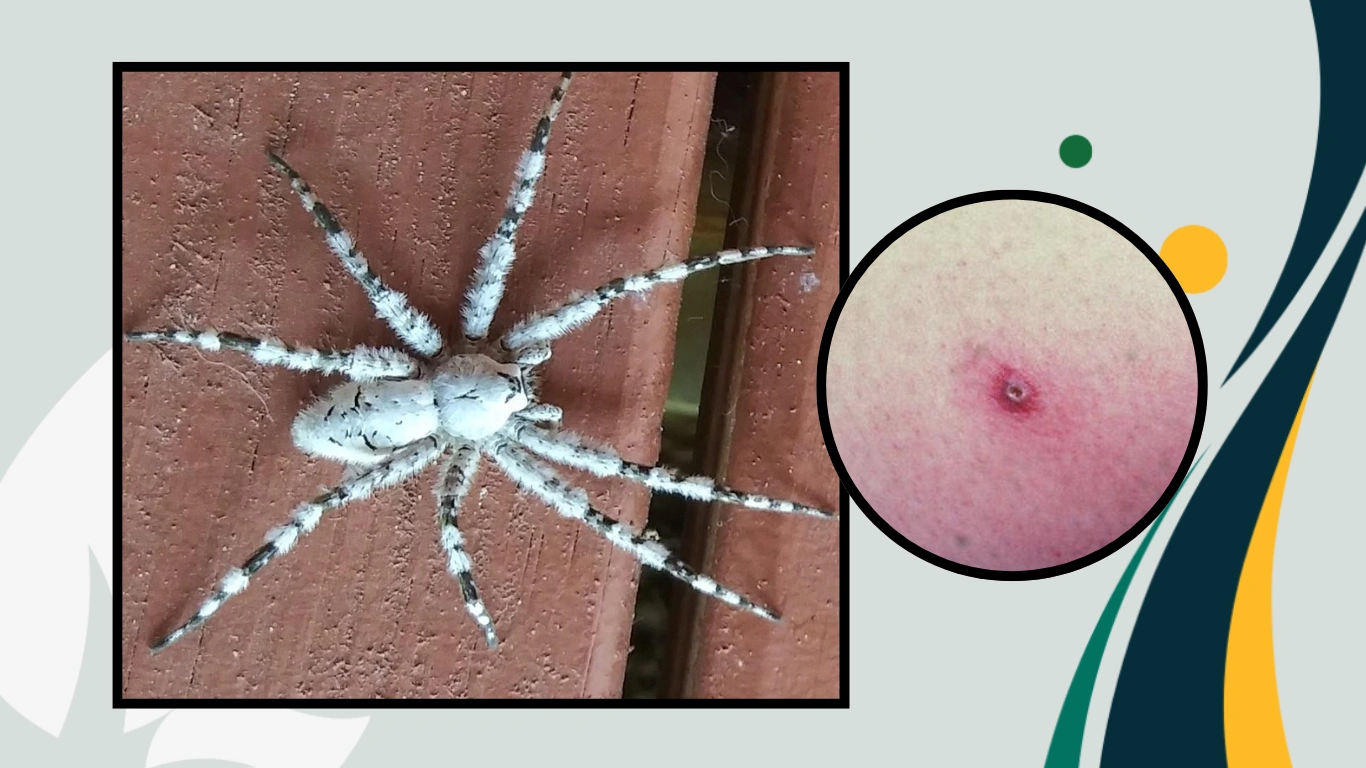
The white-banded fishing spider (Dolomedes albineus) is a large, semi-aquatic spider that often catches the attention of anyone who spots it skimming across a pond or clinging to the side of a tree near water. Its large size, long legs, and distinct white markings can look intimidating—leading many to wonder: is this spider poisonous or dangerous?
In this article, we’ll explore everything you need to know about the white-banded fishing spider, including its venom, whether it bites humans, symptoms to watch for, and how it compares to other large spiders commonly found in the U.S.
What Is the White-Banded Fishing Spider?

Scientific Classification
- Common Name: White-Banded Fishing Spider
- Scientific Name: Dolomedes albineus
- Family: Pisauridae (Nursery Web Spiders)
- Order: Araneae
- Class: Arachnida
This species belongs to a group of spiders known as fishing spiders, named for their unique ability to hunt aquatic prey. Like other members of the genus Dolomedes, D. albineus is capable of walking on water and even diving below the surface to catch insects or small aquatic creatures.
Physical Appearance
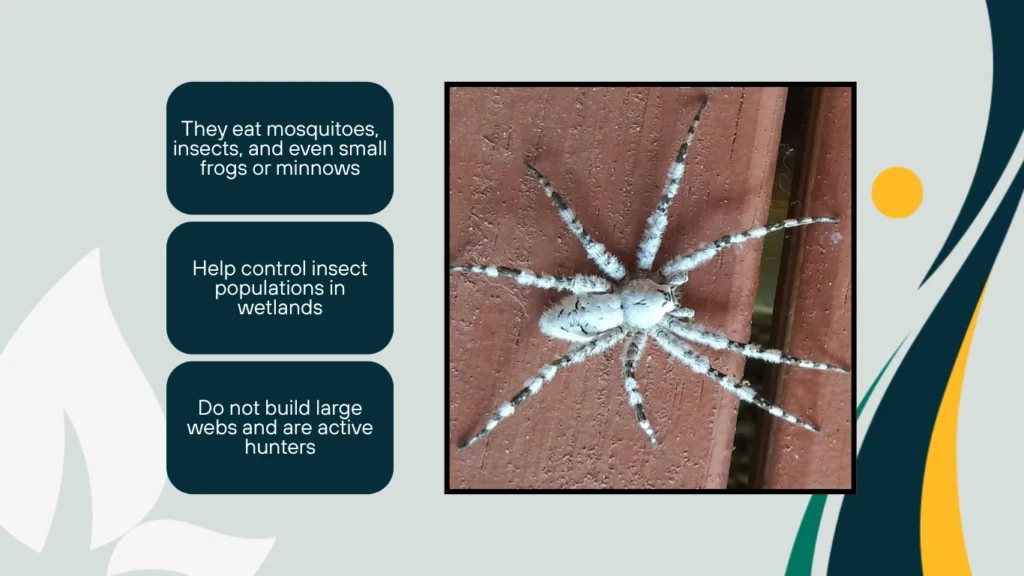
The white-banded fishing spider is large and robust. Its body can reach about 1 inch (25 mm) in length, and the leg span can exceed 3 inches (75 mm). The key identifying feature is a distinct white or pale stripe that runs along the cephalothorax (the front part of the body).
- Color: Brownish-gray body
- Markings: Pale to white banding
- Legs: Long, fuzzy, and banded
These features make it easily distinguishable from other fishing spiders like the six-spotted or dark fishing spiders.
Habitat and Distribution
White-banded fishing spiders are commonly found in:
- The southeastern United States, including Florida, Georgia, Alabama, and Mississippi
- Areas near lakes, ponds, rivers, and swamps
- Vegetation surrounding still or slow-moving water
They are active hunters, often seen at night, and usually rest during the day in shaded areas like tree trunks or under rocks near water.
Is the White-Banded Fishing Spider Poisonous or Venomous?
Venom vs. Poison
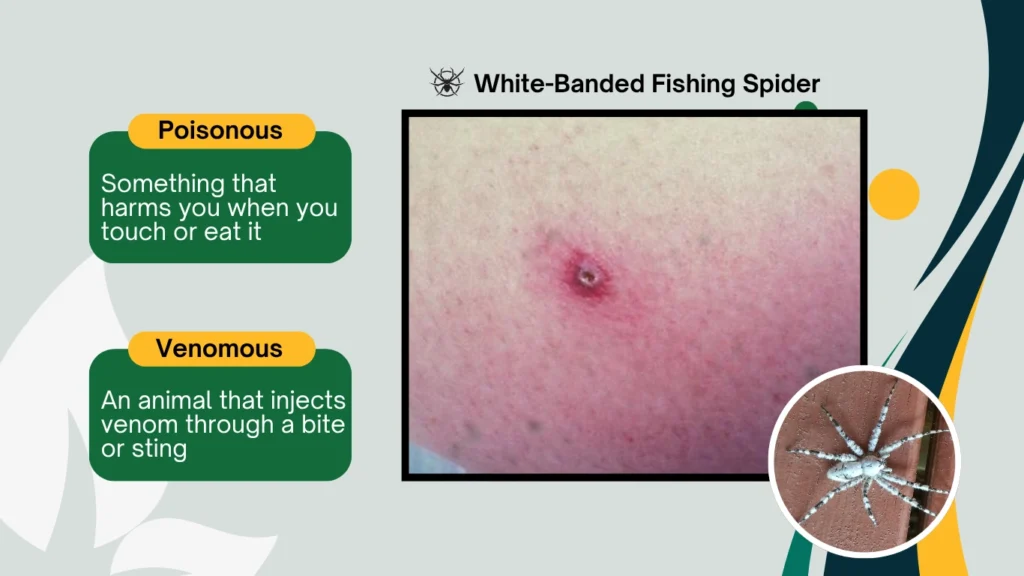
Before diving deeper, it’s important to distinguish between “poisonous” and “venomous”:
- Poisonous: Something that harms you when you touch or eat it
- Venomous: An animal that injects venom through a bite or sting
By this definition, the white-banded fishing spider is venomous but not poisonous. Like nearly all spiders, it has venom glands that help it subdue prey. However, this venom is not dangerous to humans.
Is the Venom Harmful to Humans?
No, the venom of the white-banded fishing spider is not medically significant. While it is effective at paralyzing insects and small aquatic animals, it poses no serious threat to humans. In rare cases, a bite may cause mild irritation, but nothing more severe.
Some people may experience minor allergic reactions, such as redness or itching, but these symptoms usually resolve on their own.
Can White-Banded Fishing Spiders Bite Humans?
Biting Behavior
White-banded fishing spiders are not aggressive toward humans. They prefer to retreat or escape when approached. Bites occur only under specific conditions:
- If the spider is handled roughly
- If it’s trapped (e.g., between clothing and skin)
- If it’s accidentally provoked
Even then, a bite is considered a defensive act, not an attack.
What Happens If They Do Bite?
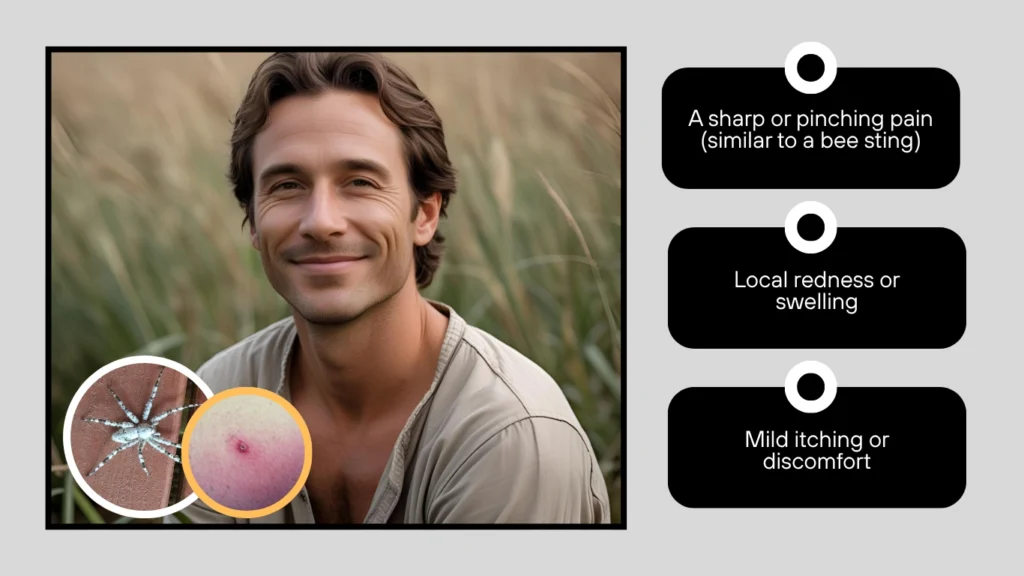
If you are bitten by one, the symptoms may include:
- A sharp or pinching pain (similar to a bee sting)
- Local redness or swelling
- Mild itching or discomfort
These effects are generally short-lived and go away within a few hours to a day. Medical treatment is rarely needed unless the person has an allergic reaction.
Comparison with Other Fishing Spiders
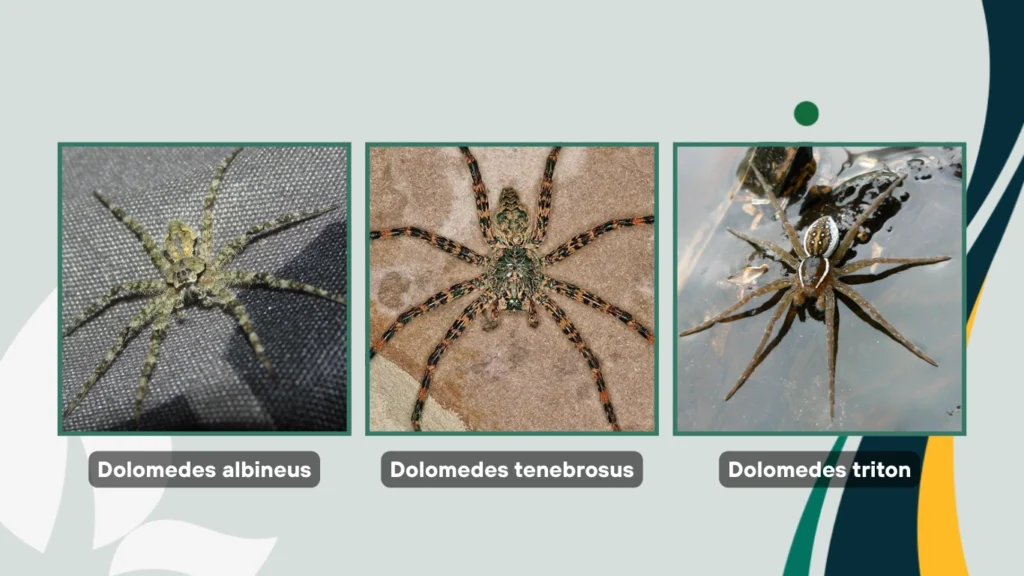
There are other common species of fishing spiders in the U.S., and it helps to understand how they compare.
| Spider Species | Venomous | Bite Danger | Key Feature |
| Dolomedes albineus | Yes | Mild | White band across cephalothorax |
| Dolomedes tenebrosus | Yes | Mild | Brown body with chevron pattern |
| Dolomedes triton | Yes | Mild | Six white spots on abdomen |
All three spiders are venomous but not dangerous to humans. Their bites are more of a nuisance than a medical concern.
Misconceptions and Fear Around Fishing Spiders
Why People Fear Them
The white-banded fishing spider is often mistaken for dangerous spiders like wolf spiders or even small tarantulas because of its:
- Large size
- Hairy appearance
- Fast movement
However, unlike some notorious species, these spiders do not pose a threat to people or pets.
Their Role in the Ecosystem
These spiders are beneficial:
- They eat mosquitoes, insects, and even small frogs or minnows
- Help control insect populations in wetlands
- Do not build large webs and are active hunters
They play a vital role in keeping pond and wetland ecosystems balanced.
When to See a Doctor (Precaution Only)
Rare Allergic Reactions
Most bites don’t require medical attention, but you should see a doctor if you experience:
- Swelling that spreads
- Severe itching or rash
- Nausea, dizziness, or difficulty breathing
These could indicate an allergic reaction, though such cases are extremely rare with fishing spider bites.
First Aid Tips
If bitten:
- Wash the area with soap and water
- Apply a cold compress to reduce swelling
- Take an over-the-counter antihistamine if itching occurs
- Monitor for signs of infection
Usually, the bite will heal without any complications.
FAQs
1. Are white-banded fishing spiders dangerous to humans?
No, they are not dangerous. While they are technically venomous like most spiders, their venom is only potent enough to subdue small aquatic prey. For humans, their bite—if it happens—is mild, causing only temporary symptoms like redness, slight swelling, or itching, with no long-term effects.
2. Can white-banded fishing spiders bite people?
Yes, but it’s extremely rare. These spiders are naturally shy and avoid human contact. Bites typically occur only when the spider feels trapped, such as being accidentally pressed against the skin. Even then, the bite is not medically serious and usually heals on its own without treatment.
3. What do white-banded fishing spiders eat?
Their diet mainly includes aquatic insects, mosquito larvae, small tadpoles, and occasionally tiny fish. They are active hunters and rely on the vibrations of water to detect prey, pouncing with impressive speed and using venom to immobilize it before consuming it.
4. Where do white-banded fishing spiders live?
They are typically found in the southeastern United States, especially near ponds, lakes, swamps, or marshy woodland areas. These spiders prefer moist environments and are usually seen resting on vegetation or tree trunks close to the water’s edge, where they can easily hunt for food.
5. Are they the same as wolf spiders or tarantulas?
No, but they’re often mistaken for them due to their size and hairy appearance. Unlike wolf spiders or tarantulas, white-banded fishing spiders are semi-aquatic and rely heavily on water environments to survive. Their hunting style, habitat, and body markings also help distinguish them from other large spiders.