

Brown spiders are some of the most frequently encountered arachnids in homes and gardens across the United States. Their coloring helps them blend in with tree bark, soil, and wooden structures, making them easy to overlook—and often misunderstood. While some brown spiders like the infamous brown recluse can pose medical risks, most brown spiders are harmless and play an important role in pest control.
In this article, we’ll explore the different types of brown spiders found in key states like Florida, California, Georgia, Texas, and Ohio, detailing their appearance, habitat, and whether they’re dangerous to humans.
Brown Spiders in Florida

Florida’s warm and humid environment provides an ideal habitat for several species of brown spiders.
1. Brown Widow Spider (Latrodectus geometricus)
This is the most medically significant brown spider in Florida. Though not as toxic as its cousin the black widow, the brown widow can deliver a venomous bite that causes muscle pain, nausea, or cramps in rare cases. These spiders are often found under patio furniture, around fences, or inside plant pots.
Color & Features:
- Brown or gray body with orange hourglass on the underside
- Spiny-looking egg sacs
- Long legs, similar to black widow’s body shape
2. Southern House Spider (Kukulcania hibernalis)
Often mistaken for a brown recluse, the Southern house spider is harmless and frequently found on walls, behind shutters, or under eaves. They build flat, sheet-like webs and prefer dry, protected places.
3. Other Brown Spiders in Florida
- Orb-weaving spiders (build large round webs in gardens)
- Funnel weavers
- Nursery web spiders
Are They Dangerous?
Except for the brown widow, most brown spiders in Florida are harmless. If bitten, symptoms are usually mild and don’t require medical attention.
Brown Spiders in California

California’s varied climate supports both native and non-native species of brown spiders.
1. Desert Recluse (Loxosceles deserta)
Unlike popular belief, the true brown recluse is not common in California. However, its cousin—the desert recluse—is found in arid parts of Southern California. It looks very similar and has medically significant venom.
Identifying Traits:
- Violin-shaped marking on its back
- Six eyes (unlike most spiders with eight)
- Flattened body, light to dark brown in color
2. California Trapdoor Spider
These are stocky, brown spiders that live in burrows. Although their bite may be painful due to strong jaws, they are not venomous to humans. They are more secretive and rarely seen.
3. Western Parson Spider
Fuzzy and fast, this spider is often brown with a lighter stripe down the back. It’s often seen in homes and sheds but does not pose a threat to people.
Are They Dangerous?
Most brown spiders in California are not dangerous. Although desert recluses have venom, their range is limited, and bites are rare.
Brown Spiders in Georgia

With its mix of urban and forested areas, Georgia is home to several species of brown spiders.
1. Brown Recluse (Loxosceles reclusa)
This spider has been confirmed in parts of Georgia, particularly in the northern counties. Its bite can cause necrotic skin damage, but verified bites are rare.
Identifying Features:
- Uniform brown body with a violin mark on the cephalothorax
- Six eyes in three pairs
- No spines on legs
2. Woodlouse Hunter Spider
Though aggressive in appearance and quick to bite when provoked, its venom is not harmful to humans. Its jaws are prominent, and it preys on woodlice.
3. Common House Spiders
Various brown cobweb spiders may be found in basements, garages, and crawl spaces. They spin irregular webs in corners and are not dangerous.
Are They Dangerous?
The brown recluse is the only real concern, but sightings and bites are uncommon. Most brown spiders in Georgia are safe and help keep insect populations in check.
Brown Spiders in Texas

Texas has a higher concentration of recluse spiders, making awareness especially important.
1. Brown Recluse
Widespread in central and north Texas, the brown recluse is one of the most medically important spiders in the U.S. Its bite may result in:
- Ulceration or skin necrosis
- Fever or nausea in rare cases
- Slow healing wounds
Bites often occur when the spider is trapped in clothing or bedding.
2. Texas Recluse (Loxosceles devia)
A less-known but similar species, the Texas recluse is also venomous and found in dry, dark places.
3. Southern House Spider
Common in barns and homes, this spider is often mistaken for a recluse. It is harmless and non-aggressive.
Are They Dangerous?
Yes, the recluse spiders in Texas are a real concern, though bites are still infrequent. Accurate identification is key.
Brown Spiders in Ohio
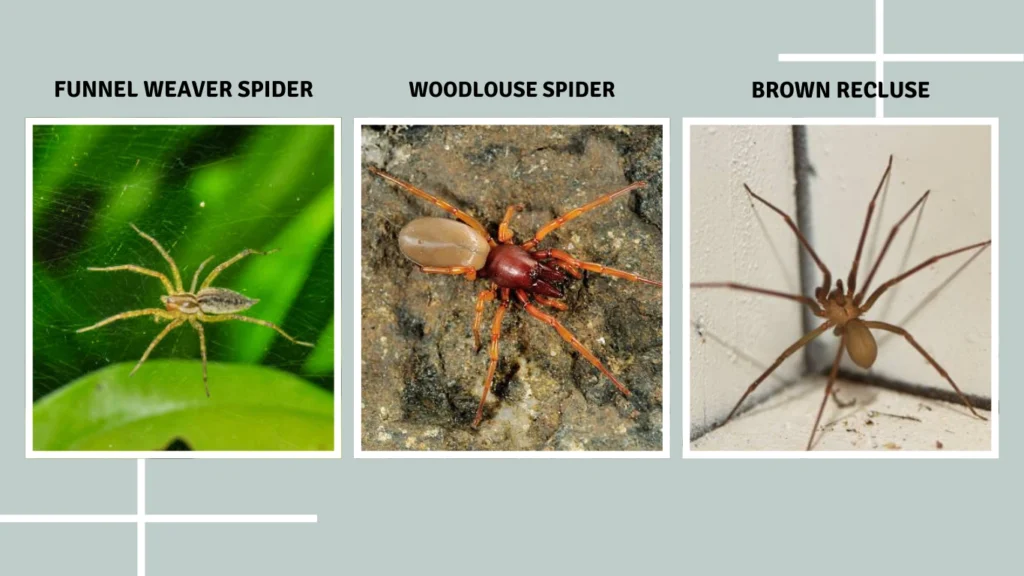
Ohio has fewer venomous spiders than southern states, but brown spiders are still common.
1. Funnel Weaver Spider
These spiders build funnel-shaped webs in grass or corners of porches. They are fast movers but not harmful.
2. Woodlouse Spider
Often seen in gardens or under rocks, it has a reddish-brown body and strong jaws. While its bite may sting, it is not medically dangerous.
3. Brown Recluse (Rare)
Though not native, isolated reports of brown recluse spiders in Ohio exist. However, established populations are rare, and verified bites are extremely uncommon.
Are They Dangerous?
For the most part, brown spiders in Ohio are harmless. If you believe you’ve found a brown recluse, it’s best to consult a pest control expert or entomologist for accurate identification.
Brown Spider Identification Tips
To identify brown spiders and assess risk, consider these features:
1. Color and Markings
- Light to dark brown
- Violin-shaped mark (recluse)
- Spiny or shiny abdomen (widow types)
2. Eye Pattern
- Brown recluse has six eyes arranged in pairs
- Most other spiders have eight eyes
3. Web Type
- Orb webs: orb-weavers (harmless)
- Irregular webs: house spiders
- No web: recluse or hunting spiders
4. Behavior
- Recluse spiders are nocturnal and reclusive
- Harmless brown spiders are often seen out in the open
When to Worry: Dangerous vs Harmless Brown Spiders
Dangerous Species
- Brown Recluse: Venom can cause necrosis
- Brown Widow: Venomous but rarely serious
- Texas Recluse: Similar effects to brown recluse
Harmless or Beneficial Brown Spiders
- Southern House Spider
- Funnel Weaver
- Orb-Weavers
- Trapdoor and Wolf Spiders
What to Do If Bitten
- Wash the bite with soap and water
- Apply a cold compress
- Watch for signs of allergic reaction or spreading redness
- Seek medical help if symptoms worsen, especially with suspected recluse bites
Conclusion
Brown spiders are common across the United States, from Florida to California and Ohio to Texas. While their appearance might cause concern, most of them are harmless and beneficial, quietly controlling pest insects in gardens, homes, and woodlands.
Understanding how to identify and respond to brown spiders helps reduce fear and unnecessary extermination. With the exception of a few species like the brown recluse or brown widow, most brown spiders pose no danger to you or your family. Respect their space, and they’ll continue doing the quiet work of maintaining a balanced ecosystem.