

Black widow spiders are among the most feared spiders in the world, and for good reason. Their venom is highly potent, causing painful cramps, sweating, and other systemic symptoms. While fatalities are rare, a bite should always be taken seriously. Whether you or your pet is bitten, the right immediate response can make all the difference. This guide explains what happens when bitten by a black widow spider, the symptoms to watch for, and the urgent steps you should take right away.
Understanding Black Widow Spider Bites
Black widows belong to the genus Latrodectus and are easily identified by the female’s shiny black body and red hourglass marking. Most medically significant bites come from female black widows, as their venom is far stronger than that of the smaller males.
When a female bites, she injects venom that targets the nervous system. This venom contains latrotoxin, a chemical that overstimulates nerves, leading to muscle spasms and intense pain. The effects can vary depending on the victim’s age, health, and where the bite occurred.
Symptoms of Being Bit by a Black Widow Spider
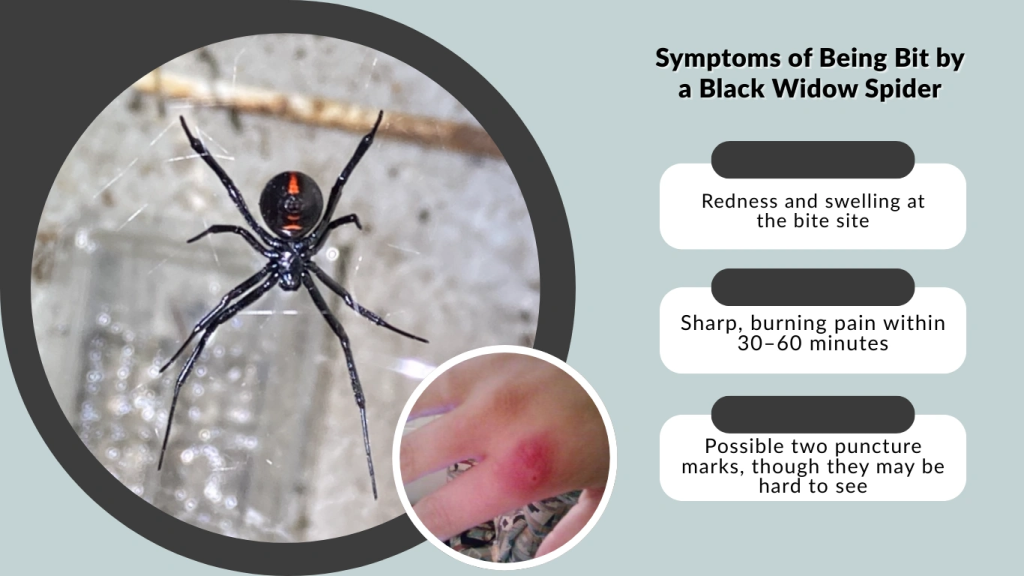
Not every bite causes severe symptoms, but knowing the warning signs is critical.
Common Local Symptoms
- Redness and swelling at the bite site
- Sharp, burning pain within 30–60 minutes
- Possible two puncture marks, though they may be hard to see
Systemic Symptoms
- Muscle cramps spreading from the bite site to the abdomen, back, or chest
- Sweating and chills
- Nausea, headache, or dizziness
- Rapid pulse and elevated blood pressure
Severe Reactions
- Difficulty breathing
- Chest pain or extreme muscle rigidity
- Vomiting or tremors
Symptoms often develop within the first two hours and can last anywhere from a few hours to several days, depending on treatment and individual health.
What Happens If You’re Bit by a Black Widow Spider?
The experience of being bitten often begins with a sharp sting, followed by localized pain. Within one to two hours, muscle cramps and systemic symptoms may appear. In some cases, people report feeling like they have severe flu or even a heart attack due to chest pain and muscle spasms.
Not every bite injects venom — these are known as “dry bites.” However, when venom is injected, the effects can escalate quickly, making it important to act without delay. Children, elderly people, and pets are particularly vulnerable.
What to Do Immediately After Being Bitten
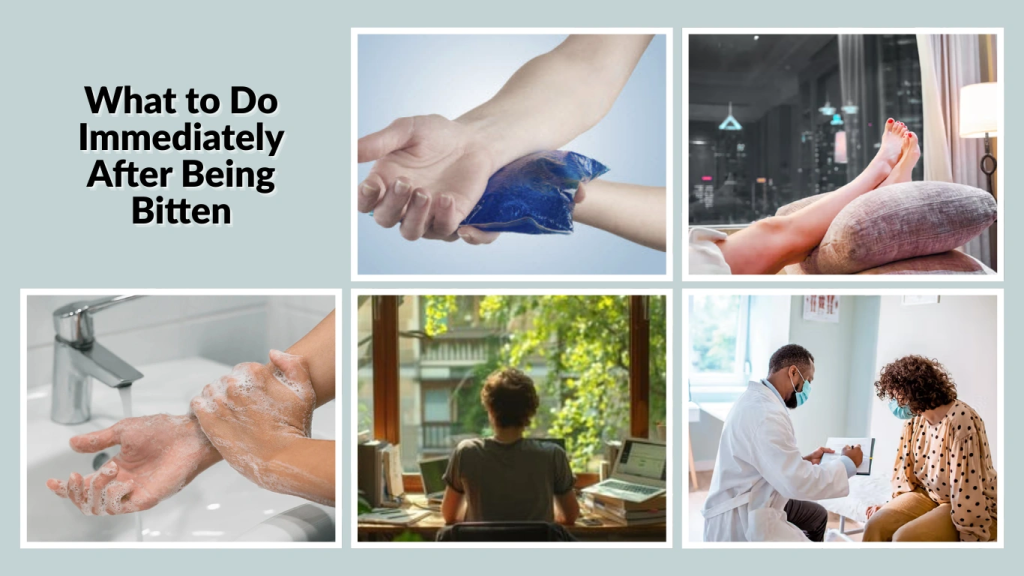
If you suspect you’ve been bitten by a black widow spider, take these steps right away:
- Wash the bite area – Use soap and water to clean the wound and reduce infection risk.
- Apply a cold pack – Place ice wrapped in cloth on the bite for 10 minutes at a time to reduce pain and swelling.
- Keep the limb elevated – This slows the spread of venom through the bloodstream.
- Stay calm and still – Movement increases heart rate, which can circulate venom more quickly.
- Seek medical care – Call your doctor or visit the emergency room, especially if symptoms worsen.
For children, elderly individuals, or anyone experiencing severe reactions such as chest pain or breathing difficulty, call emergency services immediately.
Medical Treatment for Black Widow Bites
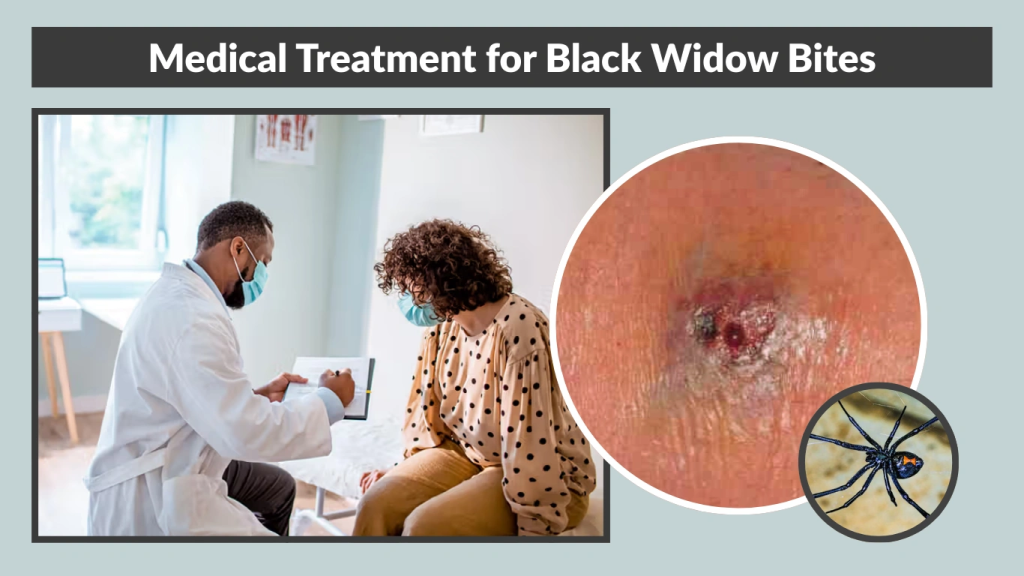
After first aid, medical professionals provide more advanced care.
- Pain management: Over-the-counter medication or prescription pain relievers.
- Muscle relaxants: To ease spasms and stiffness.
- Antivenom: Used for severe bites, especially in children, elderly, or those with systemic symptoms.
- Hospital care: In serious cases, patients may need intravenous fluids, oxygen, or monitoring for heart complications.
Most patients recover fully within a few days to a week when treated promptly
What to Do If Your Pet Is Bit by a Black Widow Spider

Pets, especially cats, are more vulnerable than humans.
- Signs in dogs and cats: Restlessness, drooling, muscle rigidity, vomiting, and paralysis in severe cases.
- Immediate steps: Keep the animal calm and transport them to a veterinarian right away.
- Veterinary treatment: May include antivenom, IV fluids, pain relief, and hospitalization.
Unlike humans, untreated bites in pets can often be fatal, so rapid vet care is essential.
Special Scenarios People Search For
- Two bites on the neck: Bites near the neck or chest are more dangerous due to proximity to vital organs. Immediate medical care is crucial.
- Children and elderly: These groups have higher complication risks and need faster treatment.
- Dream about being bitten: Often interpreted as a symbol of fear, hidden danger, or anxiety. Not medically related, but commonly searched.
- Paxton/Peyton getting bit: Popular culture or personal references show how often people look up scenarios of others being bitten, emphasizing the wide curiosity about black widow bites.
What If You Don’t Treat a Black Widow Bite?
Without treatment, symptoms can intensify. Severe muscle cramps, high blood pressure, and prolonged pain may persist for days. Secondary infections are possible if the wound is scratched. While fatalities are rare in humans, untreated bites can be life-threatening for vulnerable individuals and almost always dangerous for pets.
Prevention and Safety Tips
- Shake out shoes, gloves, and clothing stored outdoors.
- Keep garages, basements, and sheds free from clutter.
- Seal gaps and cracks around the home.
- Wear gloves and long sleeves when working in woodpiles or storage areas.
- Avoid disturbing webs or corners where black widows may hide.
FAQs
What happens if you get bit by a black widow spider?
You may feel sharp pain at the bite site, followed by muscle cramps, sweating, and nausea within a few hours. Severe cases may cause chest pain or breathing problems. Quick first aid and medical care reduce risks, and most people recover fully with proper treatment.
What to do if your dog or cat is bit by a black widow spider?
If your pet is bitten, stay calm and get them to a veterinarian immediately. Cats are especially vulnerable and may show paralysis or seizures. A vet can administer antivenom, fluids, and supportive care. Delay in treatment greatly increases the risk of death in pets.
How long does it take to recover from a black widow bite?
Recovery time varies but most people feel better within two to three days after treatment. Muscle pain or fatigue may linger for up to a week. With antivenom or strong pain management, symptoms improve quickly. Without treatment, recovery can take longer and be more painful.
Can a black widow bite kill you?
Deaths are extremely rare today due to modern medical care and antivenom. However, untreated bites can cause life-threatening complications in children, elderly individuals, and those with weak immune systems. While fatality is unlikely, a bite should always be treated as a medical emergency.
Do black widows bite unprovoked?
No, black widow spiders are shy and prefer to hide in dark, undisturbed areas. They usually bite only when accidentally pressed against the skin or when threatened. Most encounters happen when people put on clothes, gloves, or shoes where a spider is hiding.