
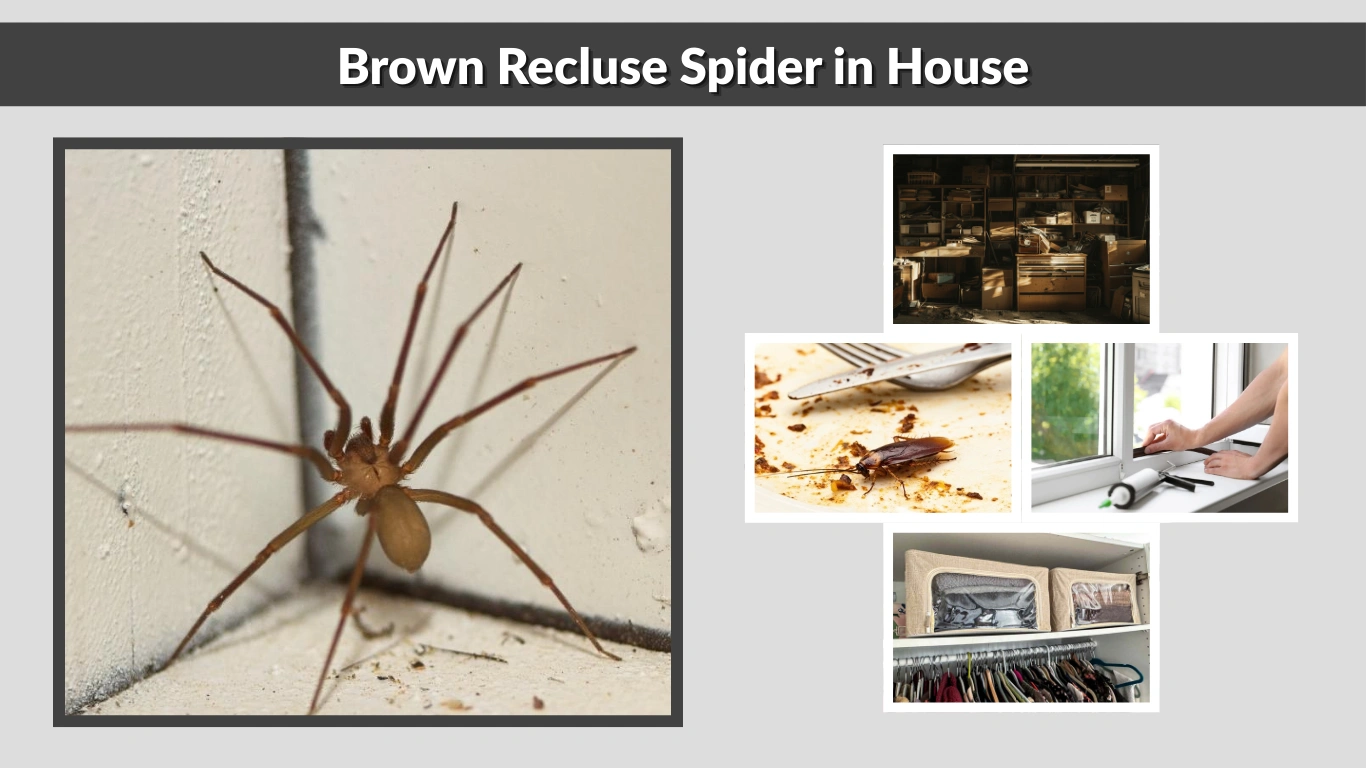
Discovering a brown recluse spider in your house can be unsettling, especially if you know about its venomous reputation. While these spiders rarely bite humans, their presence indoors poses a risk you should not ignore. Understanding how to identify them, why they may enter your home, and what steps you should take can help you stay safe and keep your living space spider-free.
What Is a Brown Recluse Spider?
The brown recluse spider (Loxosceles reclusa) is one of the most well-known venomous spiders found in the United States. True to its name, it prefers to stay hidden in dark, undisturbed areas rather than actively seeking human interaction. Most bites occur accidentally when the spider is trapped against skin, often inside clothing or bedding.
Although their venom can cause significant skin reactions, brown recluse spiders are not naturally aggressive. In fact, they generally avoid confrontation and only bite as a defensive response.
How to Identify a Brown Recluse Spider

Correct identification is crucial because many harmless spiders are often mistaken for brown recluses.
Physical Features
- Light to medium brown color, sometimes with a grayish tone
- Distinctive violin-shaped marking on the back (cephalothorax) with the “neck” pointing toward the abdomen
- Six eyes arranged in pairs (most spiders have eight)
- Legs uniformly colored, without stripes or bands
Web Type
Unlike orb-weaver spiders, brown recluses do not build large, decorative webs. Instead, they spin irregular, thin webs in hidden corners primarily as retreats, not for catching prey.
Behavior
Brown recluses are nocturnal hunters. They come out at night to search for small insects and retreat during the day to safe, dark areas. Their shy and secretive nature makes them hard to notice until one crosses your path indoors.
Why Brown Recluse Spiders Enter Houses
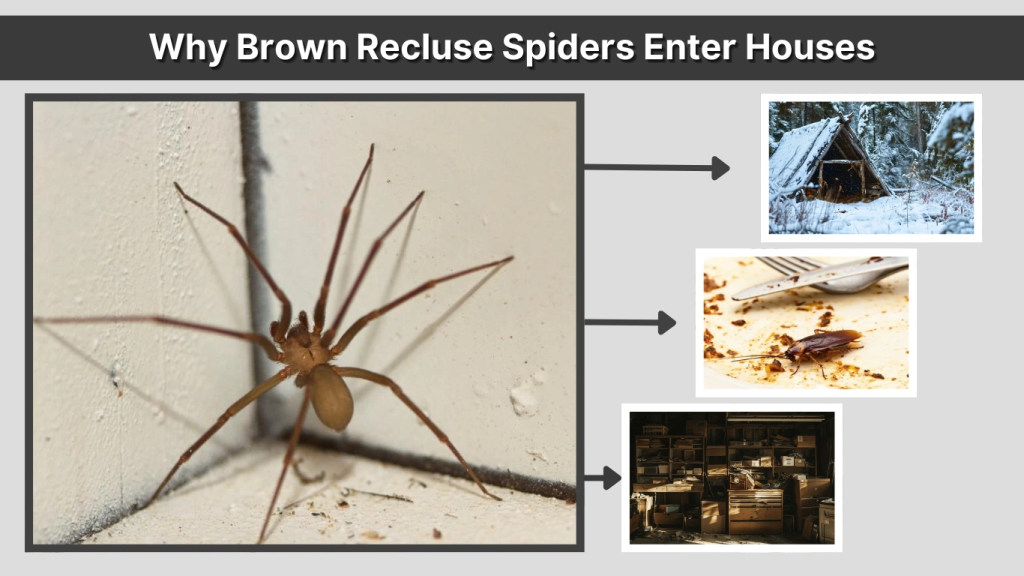
Brown recluse spiders generally prefer outdoor environments such as woodpiles, barns, or sheds. However, several factors may lead them inside:
- Shelter and Warmth: Indoor spaces provide stable temperatures, especially during colder months.
- Food Sources: If your home has insects such as cockroaches, crickets, or flies, it becomes an attractive hunting ground.
- Undisturbed Areas: Basements, attics, and storage rooms are perfect hiding spots where they are less likely to be disturbed.
Understanding these motivations helps in planning effective prevention strategies.
Common Places They Hide Indoors
If a brown recluse spider does find its way into your home, it will likely settle in areas that are dark, quiet, and cluttered. Some common hiding places include:
- Inside shoes, clothing, or folded towels
- Cardboard boxes, storage bins, and stacks of paper
- Behind furniture, picture frames, or appliances
- In basements, attics, and crawl spaces
- Under beds, dressers, or cabinets
Because they avoid open areas, people often encounter them by accident—reaching into a closet, slipping on unworn shoes, or unpacking stored belongings.
Are Brown Recluse Spiders Dangerous?
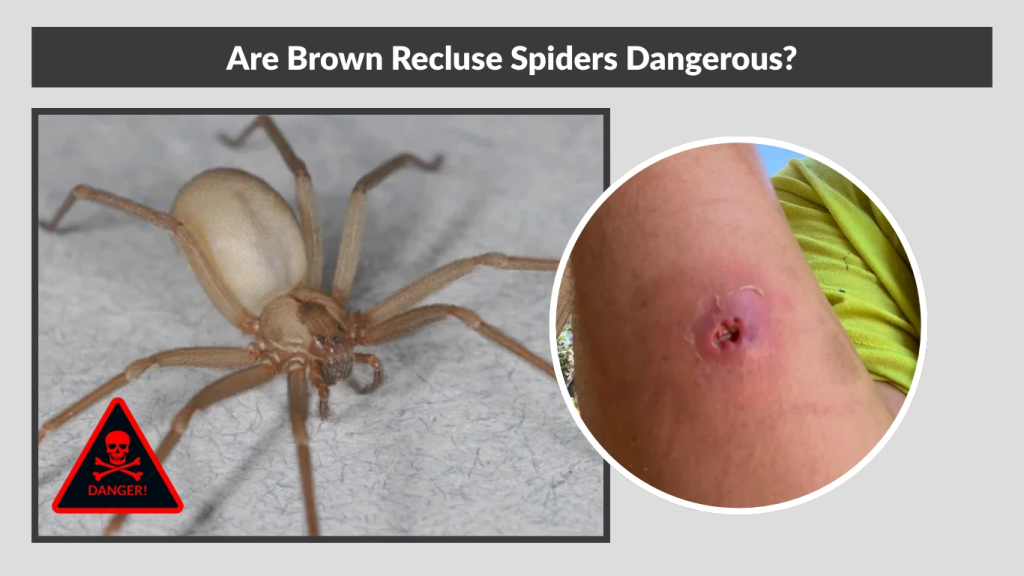
The brown recluse’s reputation comes from its venom, which contains a substance called sphingomyelinase D. This toxin can destroy skin and underlying tissue, sometimes leading to slow-healing ulcers. However, severe reactions are rare, and many bites heal without major complications.
- Mild Bites: Redness, itching, and minor discomfort.
- Moderate to Severe Bites: Blistering, open sores, or tissue necrosis in rare cases.
- Systemic Reactions: In children, elderly individuals, or those with weakened immune systems, the bite may cause fever, chills, or nausea.
Despite the dangers, fatalities from brown recluse bites are extremely uncommon. Still, it’s wise to treat any suspected bite with caution and seek medical attention if symptoms worsen.
What to Do If You Spot a Brown Recluse
Seeing a brown recluse spider in your house doesn’t mean you need to panic. They are reclusive by nature and usually avoid contact. However, taking smart steps ensures safety.
- Stay Calm: Sudden movements can scare the spider, making it more likely to hide in deeper, harder-to-reach places.
- Do Not Handle It Bare-Handed: Never attempt to squash or grab it directly.
- Capture Safely: If you feel confident, you can trap it under a glass jar or cup and carefully slide a piece of stiff paper underneath to carry it outside.
- Seek Pest Control: If you see more than one spider or signs of an infestation, professional pest services are the safest option.
Preventing Brown Recluse Spiders in Your House

Prevention is always better than dealing with an infestation. Simple changes can make your home less inviting to these spiders:
- Seal cracks, gaps, and crevices around windows, doors, and foundation.
- Store clothes, shoes, and linens in sealed containers rather than cardboard boxes.
- Reduce clutter, especially in basements, attics, and storage rooms.
- Shake out shoes, clothes, and blankets before using them if they’ve been left untouched for a while.
- Keep other insect populations under control since they serve as the recluse’s food source.
Safe Removal Methods
If you’re dealing with brown recluse spiders, safe removal is key.
- Sticky Traps: Place glue traps in corners, under furniture, and near walls to catch wandering spiders.
- Vacuuming: A vacuum with a hose attachment can safely remove spiders, webs, and egg sacs. Be sure to empty the vacuum bag outdoors afterward.
- Professional Extermination: In cases of multiple sightings, pest control specialists can apply treatments designed for recluses.
- Avoid Harsh Chemicals Indoors: Sprays are rarely effective on recluses since they hide in protected spaces. Overuse may also harm pets and children.
What to Do If Bitten by a Brown Recluse
Most bites heal without major problems, but proper care is important.
- Clean the Area: Wash the bite with mild soap and water.
- Apply a Cold Compress: This reduces swelling and slows the spread of venom.
- Elevate the Limb: If bitten on an arm or leg, keep it elevated.
- Avoid Home Remedies: Do not apply heat, vinegar, or attempt to cut the wound.
- Seek Medical Help: Visit a doctor if symptoms worsen—such as spreading redness, blistering, or severe pain. Children and elderly people should always see a doctor for suspected recluse bites.
FAQs
What attracts brown recluse spiders to your home?
They are drawn to quiet, undisturbed spaces with abundant insects for food. Cluttered basements, closets, and storage boxes are their favorite hiding spots.
How do you tell a brown recluse from a harmless spider?
Look for the violin-shaped marking on the back, uniform leg color, and six eyes arranged in pairs. Most common house spiders lack these features.
Can brown recluse spiders infest a house?
Yes, but infestations are rare. Usually, a few spiders enter through gaps or boxes. Large infestations often occur in storage-heavy or neglected homes.
Should I kill a brown recluse if I see one?
It’s safer to trap and remove it than to try to kill it by hand. Crushing them can be risky if you miss, and they may retreat deeper into your home.
Do brown recluse spiders travel in groups?
No. They are solitary hunters. If you see more than one, it likely means your house provides suitable hiding conditions rather than them moving in packs.