Spotting a black widow spider inside your home can be unnerving. Known for their shiny black bodies and distinctive red hourglass marking, these spiders carry a venom that is medically significant to humans. While black widow bites are rarely fatal, they can cause severe discomfort, making safe removal essential. With the right knowledge and precautions, you can protect yourself and your household while humanely dealing with the spider.
Understanding Black Widow Spiders
Black widows are one of the most recognized spiders in North America. Females are easy to identify by their glossy black appearance and the red or orange hourglass marking on their abdomen. Males are smaller, lighter in color, and less threatening. These spiders typically live outdoors but may wander inside in search of food or shelter, especially in dark, undisturbed areas.
Despite their reputation, black widows are not aggressive. They bite only when threatened or accidentally disturbed. Recognizing their behavior and habits can help you approach removal calmly and safely.
Identifying a Black Widow in Your Home
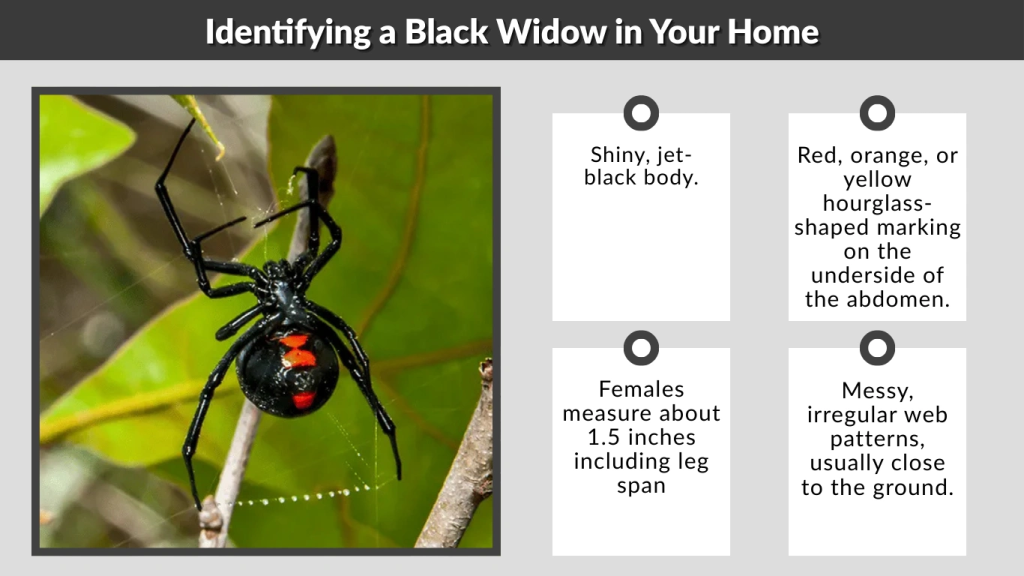
Physical Characteristics
- Shiny, jet-black body.
- Red, orange, or yellow hourglass-shaped marking on the underside of the abdomen.
- Females measure about 1.5 inches including leg span; males are smaller.
- Messy, irregular web patterns, usually close to the ground.
Common Hiding Places
Black widows prefer quiet, dark corners where they won’t be disturbed. Indoors, they may be found:
- In basements or crawl spaces.
- Behind furniture, boxes, or clutter.
- In garages, sheds, and storage areas.
Outdoors, they often hide in woodpiles, under rocks, or inside outdoor equipment.
Are Black Widow Spiders Dangerous?
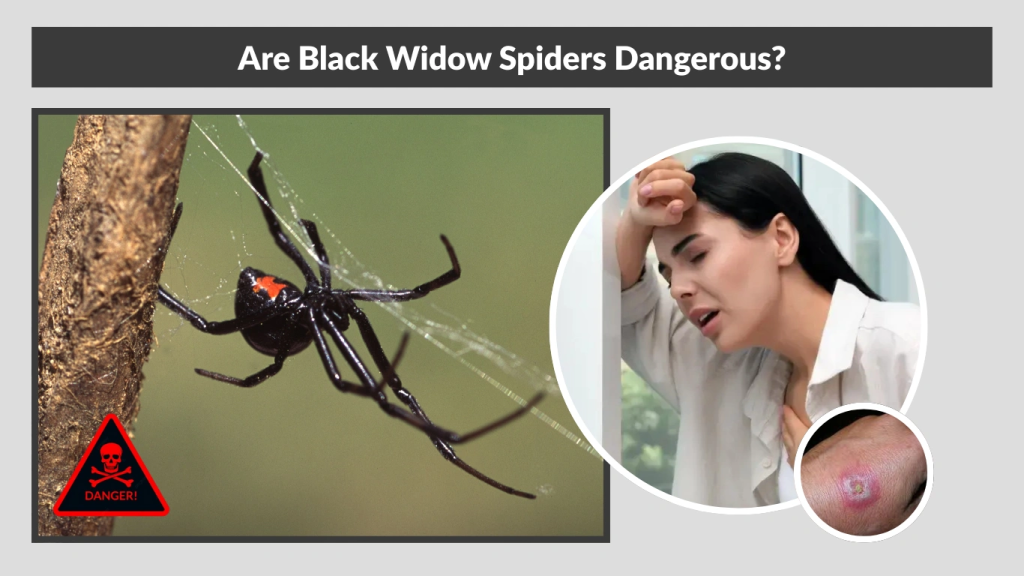
The venom of a black widow spider contains neurotoxins that affect the nervous system. While rarely life-threatening, a bite can cause sharp pain, muscle cramps, nausea, and in severe cases, difficulty breathing. Children, elderly adults, and people with compromised health are more vulnerable to serious reactions.
It’s worth noting that fatalities are extremely rare thanks to modern medical treatments and antivenom. Still, caution is essential, as even non-fatal bites can cause intense discomfort and require medical care.
Safety Precautions Before Removal
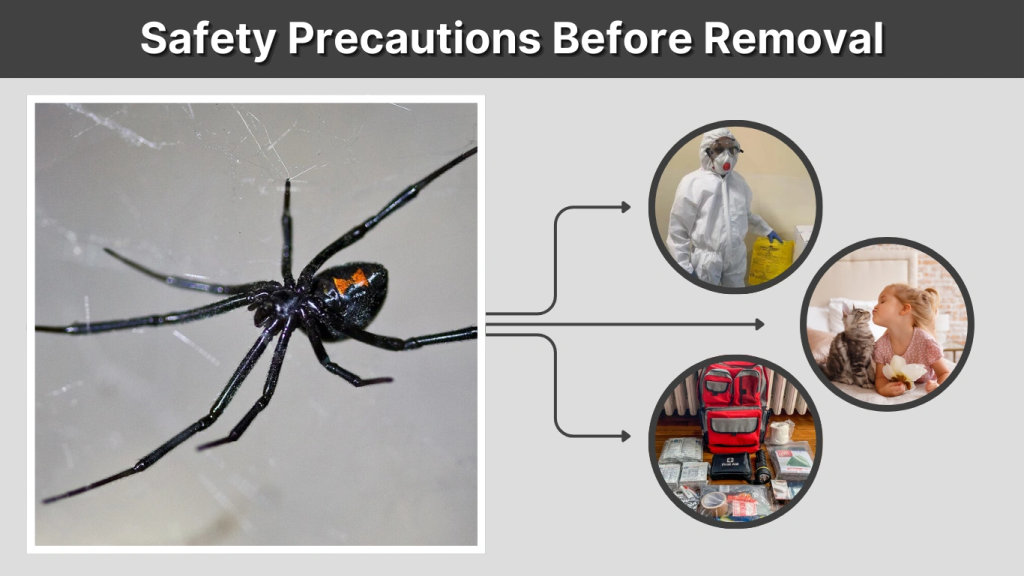
Before attempting to remove a black widow spider, it’s important to put safety first. These steps help reduce risks:
- Wear protective clothing: Long sleeves, pants, gloves, and closed-toe shoes offer a layer of protection.
- Avoid direct contact: Never attempt to handle the spider with your bare hands.
- Keep pets and children away: Ensure the area is clear to prevent accidental encounters.
- Gather the right tools: A clear container, stiff piece of paper or cardboard, and a flashlight are useful for safe capture.
Step-by-Step Guide: How to Safely Remove a Black Widow Spider
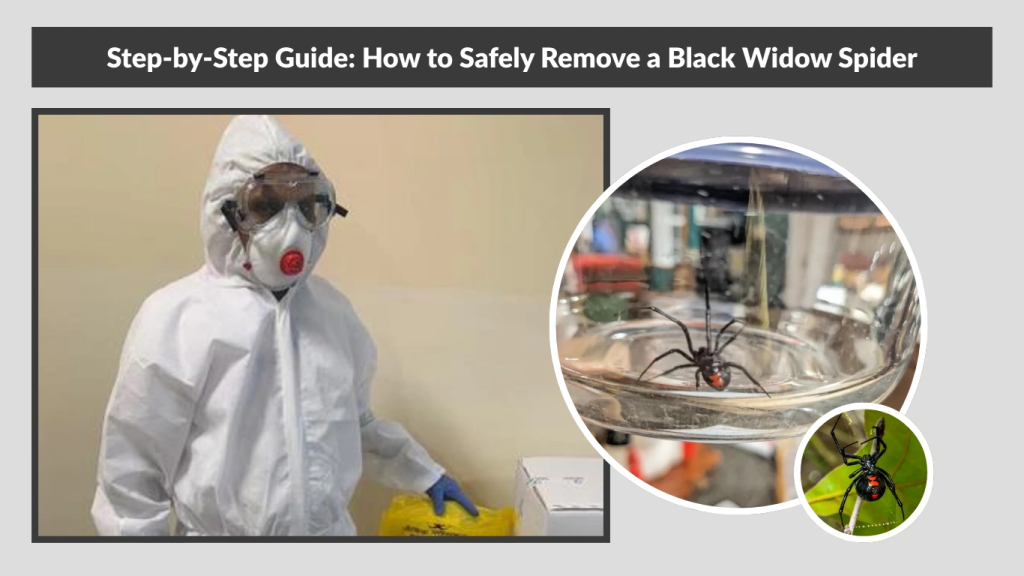
Step 1: Stay Calm and Keep Distance
When you spot a black widow, avoid sudden movements that might cause it to retreat deeper into hiding. Take a moment to observe its exact location and plan your approach.
Step 2: Use a Container Trap
One of the safest ways to capture a black widow is with a container:
- Slowly place a clear jar or cup over the spider.
- Slide a stiff piece of paper or cardboard underneath until the spider is trapped inside.
- Gently lift the container, keeping the paper in place.
- Seal it temporarily to prevent escape.
Step 3: Relocate Outdoors
Once contained, carry the spider outside and release it far from your home. A wooded area or field away from pets and play zones is ideal. Simply tilt the container and allow the spider to crawl out on its own.
Alternative Safe Methods
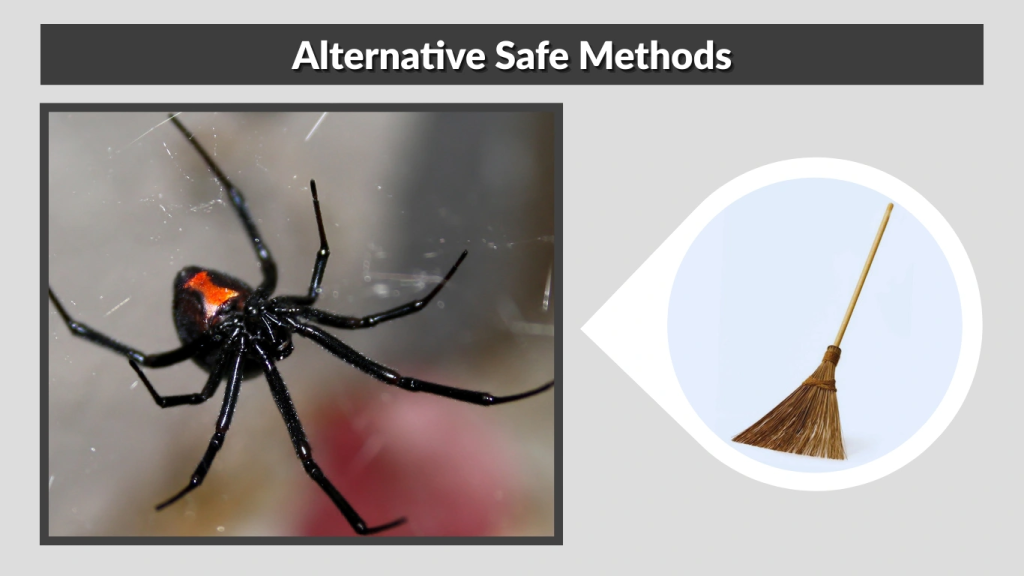
While the container method is one of the safest ways to remove a black widow spider, there are other approaches you can use if direct capture feels difficult.
Using a Long Stick or Broom
If you don’t have a container on hand, a long stick or broom can help. Gently guide the spider into an open box or bucket, keeping as much distance as possible between you and the spider. Once secured, carry it outside for release.
Vacuum Method (With Caution)
A shop vacuum with a disposable bag can also be used to remove black widows. Place the nozzle close to the spider and gently suck it up. Immediately seal and remove the vacuum bag before disposing of it outdoors. While this method is effective, it should be done carefully, as spiders may survive inside the vacuum if not handled properly.
What NOT to Do
When faced with a black widow, it’s just as important to know what actions to avoid:
- Do not squash with bare hands – even a dead spider may pose risks if you touch it directly.
- Avoid chemical sprays indoors – many commercial sprays release harmful fumes that are unsafe for humans and pets.
- Never provoke or corner the spider – this increases the chance of a defensive bite.
Preventing Black Widows from Returning
Removing one spider is only part of the solution. Taking preventive steps ensures they don’t come back.
Seal Entry Points
Inspect your home for cracks, gaps, and broken screens where spiders might slip in. Caulking and sealing these openings can drastically reduce indoor encounters.
Reduce Attractants
Since black widows prey on insects, controlling their food source helps discourage them from settling indoors. Keep storage areas clutter-free, move woodpiles away from walls, and avoid leaving outdoor lights on that attract insects at night.
Maintain Cleanliness
Regular cleaning is one of the most effective deterrents. Sweep away webs in corners, vacuum basements and garages, and keep storage areas organized. The fewer hiding spots available, the less likely spiders will stay.
When to Call Pest Control

Sometimes professional help is the safest choice. Consider contacting a pest control service if:
- You find multiple black widows or egg sacs.
- You are uncomfortable removing the spider yourself.
- The spider is in a hard-to-reach or risky location.
Professionals have the right protective equipment and targeted treatments to deal with infestations without endangering your family or pets.
Myths and Misconceptions About Black Widows
Black widows carry a notorious reputation, but many fears are based on myths:
- They don’t chase people – black widows prefer to retreat, not attack.
- Not every black spider with red spots is a black widow – other harmless species can look similar.
- Bite fatalities are almost nonexistent today – with modern medicine, deaths are extremely rare.
Understanding these facts can help reduce unnecessary fear while still respecting the spider’s danger.
Final Thoughts
Removing a black widow from your home may feel intimidating, but with calm steps and proper precautions, it can be done safely. Most encounters end without bites, and the spider can often be relocated outdoors without harm. Prevention, such as sealing entry points and keeping spaces clutter-free, remains the best long-term solution.
FAQs
What should I do if I get bitten by a black widow spider?
Seek medical attention immediately. Wash the bite area, apply a cold pack, and avoid strenuous activity until evaluated by a healthcare professional.
Can black widows kill pets?
Yes, small pets may be vulnerable to black widow venom. Veterinary care is essential if a bite is suspected.
Are black widow spiders common in houses?
They are more common in outdoor areas but may enter homes if there are gaps or cluttered storage spaces that provide shelter.
What’s the difference between a black widow and a false widow?
False widows are smaller, brownish spiders that lack the distinct red hourglass marking. Their bites are far less dangerous.
Is it safe to relocate a black widow spider myself?
Yes, if done carefully with protective gear and a container method. If you’re unsure, it’s best to call a professional.