

The Carolina wolf spider (Hogna carolinensis) is the largest wolf spider species in North America. Known for its imposing size, distinctive burrowing lifestyle, and nocturnal hunting habits, this spider has captured both fear and fascination. As the official state spider of South Carolina, it represents a unique part of the region’s natural heritage. Despite its intimidating appearance, the Carolina wolf spider is more beneficial than dangerous, helping to control insect populations across its wide range.
What is the Carolina Wolf Spider?
The Carolina wolf spider belongs to the family Lycosidae, a group of active hunters commonly known as wolf spiders. Unlike web-building spiders, they do not trap their prey with silk but rely on speed and stealth.
It holds the distinction of being the largest wolf spider in North America, with females reaching impressive sizes. South Carolina recognized it as its official state spider in 2000, making it the first state to give such recognition to a spider.
These spiders are often misunderstood due to their size and speed, but they play a vital role in natural pest control.
Identification and Appearance
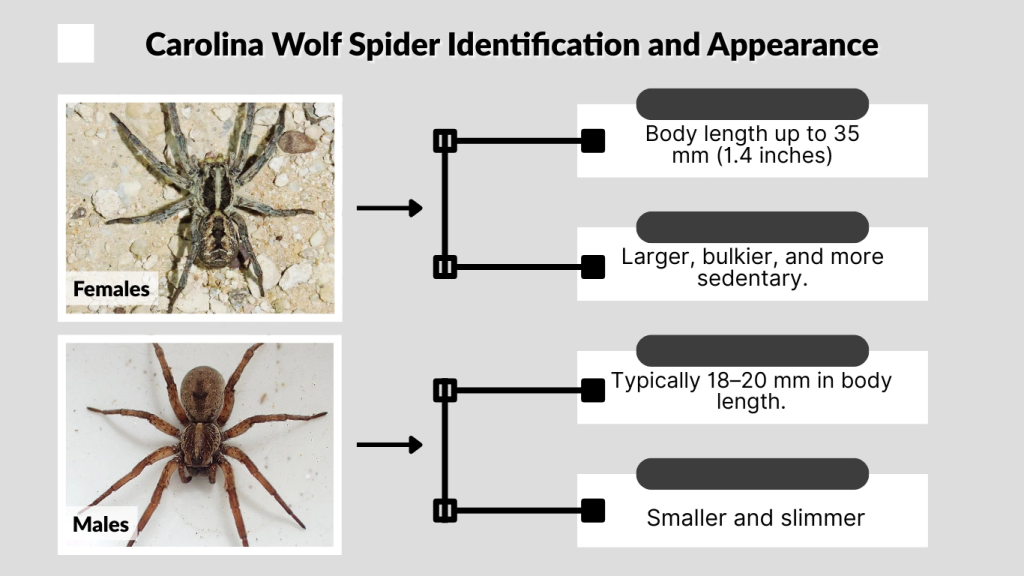
Carolina Wolf Spider Size
The Carolina wolf spider can grow significantly larger than most household spiders.
- Females: Body length up to 35 mm (1.4 inches) with a leg span reaching 3–4 inches.
- Males: Smaller, typically 18–20 mm in body length.
When their legs are fully extended, they look even larger, leading many people to mistake them for tarantulas or huntsman spiders.
Color Patterns
Carolina wolf spiders have excellent camouflage, blending into their surroundings with mottled brown, black, or grey patterns. Some individuals appear nearly black, leading to the term “black Carolina wolf spider.”
Their markings are not just for looks—they help them remain hidden from predators and ambush unsuspecting prey.
Male vs Female Carolina Wolf Spider
- Females: Larger, bulkier, and more sedentary. They often stay close to their burrows.
- Males: Smaller and slimmer, more active during breeding season as they search for mates.
- Differences in markings: Females may appear slightly lighter, while males sometimes show more defined striping.
The sexual dimorphism between male and female makes them relatively easy to distinguish in the field.
Habitat and Range

Geographic Distribution
The Carolina wolf spider is widespread across the United States. While it is strongly associated with South Carolina and North Carolina, it is also found in:
- Texas
- Arizona
- Utah
- Colorado
- Ohio
Its range extends across varied climates, from humid southeastern states to drier western regions.
Preferred Habitat
Carolina wolf spiders are burrowers. They prefer habitats with soft soil where they can dig:
- Grasslands and meadows
- Forest edges and woodlands
- Deserts and scrubland
- Suburban gardens and lawns
Their burrows may be up to several inches deep and lined with silk for stability. These burrows serve as both shelter and hunting bases.
Behavior and Lifestyle
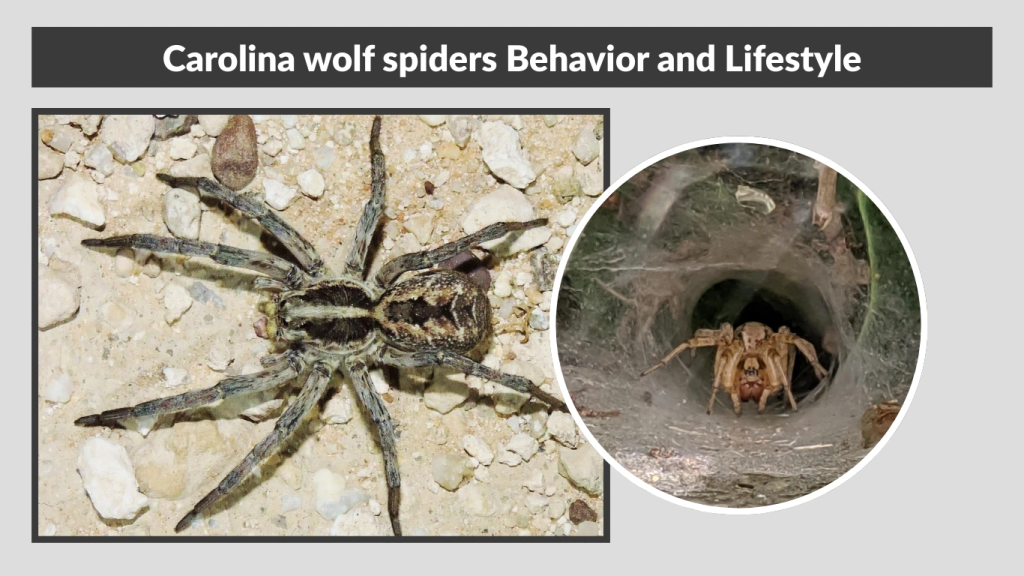
Burrows and Dens
Carolina wolf spiders spend much of their time underground. Their burrows protect them from predators, temperature extremes, and weather conditions. Some burrows have small silk coverings at the entrance, which help conceal them.
Females, in particular, rely on these burrows to rear their young. Observers often identify Carolina wolf spider presence by spotting circular holes in lawns or open fields.
Hunting and Diet
Unlike web-weaving spiders, Carolina wolf spiders are active hunters. They use their powerful legs and sharp eyesight to ambush prey at night. Their diet includes:
- Crickets
- Beetles
- Grasshoppers
- Cockroaches
- Other small arthropods
Their ability to eat cockroaches and other pests makes them natural allies in controlling insect populations.
Adaptations
Carolina wolf spiders are built for survival.
- Night vision: Their large eyes reflect light, glowing when hit by a flashlight beam.
- Speed: Capable of short bursts of rapid movement, allowing them to chase prey.
- Camouflage: Body coloration blends perfectly with soil, leaves, and rocks.
These adaptations make them highly effective nocturnal predators.
Carolina Wolf Spider Bite

Symptoms of a Bite
Bites from the Carolina wolf spider are rare, as these spiders generally avoid human contact. When bites do occur, symptoms are usually mild:
- Local pain or stinging sensation
- Redness and swelling around the bite site
- Itching or irritation
Some individuals may experience stronger reactions, such as headache or nausea, but these cases are uncommon.
Is the Carolina Wolf Spider Poisonous?
Yes, the Carolina wolf spider is venomous—like most spiders—but its venom is not considered dangerous to humans. The venom is designed to paralyze insects, not harm people. Misconceptions often exaggerate its toxicity, but in reality, bites are far less serious than those from black widows or brown recluse spiders.
First Aid and Treatment
If bitten:
- Wash the wound with soap and water.
- Apply a cold compress to reduce swelling.
- Use over-the-counter pain relievers if needed.
- Seek medical attention if symptoms worsen or if the victim is allergic to insect bites.
There are no recorded fatalities linked to Carolina wolf spider bites.
Giant Carolina Wolf Spider

The Carolina wolf spider is often referred to as the “giant wolf spider” because of its size. With females reaching up to 35 mm in body length and large leg spans, it is the biggest wolf spider in North America.
While intimidating, its large size is not linked to increased danger. Instead, its size helps it overpower larger prey, making it an efficient nighttime hunter.
Life Cycle and Reproduction
Breeding Season
Carolina wolf spiders typically breed in the warmer months. Males leave their burrows and wander widely to locate females.
Egg Sac and Spiderlings
One of the most fascinating aspects of their biology is maternal care:
- Females attach their egg sac to their spinnerets.
- After hatching, the tiny spiderlings climb onto the mother’s back.
- She carries them for several days until they are ready to disperse.
This unique behavior is rarely seen in other spider families.
Lifespan
Carolina wolf spiders usually live 1–2 years, though some females may survive up to 3 years under favorable conditions. Males typically have shorter lifespans due to their wandering lifestyle.
Carolina Wolf Spider Facts
- Largest wolf spider species in North America.
- Official state spider of South Carolina.
- Known for excellent night vision—eyes glow in torchlight.
- Natural pest controllers, often eating cockroaches.
- Female carries her young on her back after hatching.
- Despite their size, they are not aggressive toward humans.
Are Carolina Wolf Spiders Dangerous?

Carolina wolf spiders are more fearsome in appearance than in reality. Their venom is not lethal to humans, and bites are rare. They usually flee when disturbed rather than attack.
In fact, they are beneficial predators, keeping insect populations under control. Seeing one in your yard or garden usually means you have a natural pest controller nearby.
Carolina Wolf Spiders in Homes and Gardens
Why They Enter Houses
Occasionally, Carolina wolf spiders may enter homes while searching for prey or mates. They may also seek shelter in garages, basements, or sheds.
Should You Remove Them?
Yes, but relocation is better than extermination. They are harmless to humans and pets, and they help control insects indoors and outdoors. A container-and-cardboard method works best for safely moving them outside.
Carolina Wolf Spider Images and Pictures
Carolina wolf spiders are often photographed for their impressive size and striking appearance. Common photo highlights include:
- Females carrying spiderlings on their backs.
- Side-by-side size comparisons with human hands.
- Darker “black Carolina wolf spider” variations.
- Burrow entrances in gardens and fields.
FAQs
How big is a Carolina wolf spider?
The Carolina wolf spider is the largest wolf spider in North America. Females can grow up to 35 millimeters in body length, with a leg span that reaches nearly 4 inches. Males are smaller, but still large compared to most other spiders. Their impressive size often makes them seem more intimidating than they really are.
Are Carolina wolf spiders poisonous to humans?
Yes, Carolina wolf spiders are venomous, but their venom is not considered medically dangerous to humans. The venom is designed to immobilize insect prey, not people. Most bites result in mild symptoms like pain, redness, or swelling. Serious complications are very rare, and they are generally not considered a threat to human health.
Where are Carolina wolf spiders most common?
Carolina wolf spiders are found across much of the United States, with the highest populations in South Carolina, North Carolina, and surrounding regions. They are also recorded in states like Texas, Arizona, Colorado, and Ohio. These spiders thrive in grasslands, deserts, woodlands, and suburban gardens, adapting well to a variety of environments.
What do Carolina wolf spiders eat?
The Carolina wolf spider is an active hunter that feeds on a wide variety of insects. Its diet includes crickets, beetles, grasshoppers, cockroaches, and other small arthropods. They use their speed and excellent eyesight to chase down prey rather than building webs. This makes them important natural pest controllers in gardens and fields.
How long do Carolina wolf spiders live?
On average, the Carolina wolf spider lives between one and two years, although some females may survive up to three years in good conditions. Males usually live shorter lives, especially since they wander in search of mates. Their life cycle includes egg sacs, spiderlings carried on the mother’s back, and eventual independence.