

Wolf spiders are among the most widespread arachnids in California. Belonging to the family Lycosidae, these ground-dwelling hunters are frequently spotted in both wild landscapes and residential areas. Unlike web-building spiders, wolf spiders are active hunters, relying on speed and stealth to capture prey. Because of their large size, hairy bodies, and fast movements, they are often mistaken for more dangerous spiders such as the brown recluse or even tarantulas. However, wolf spiders play a crucial role in controlling insect populations and are generally harmless to humans.
Wolf Spider Identification in California
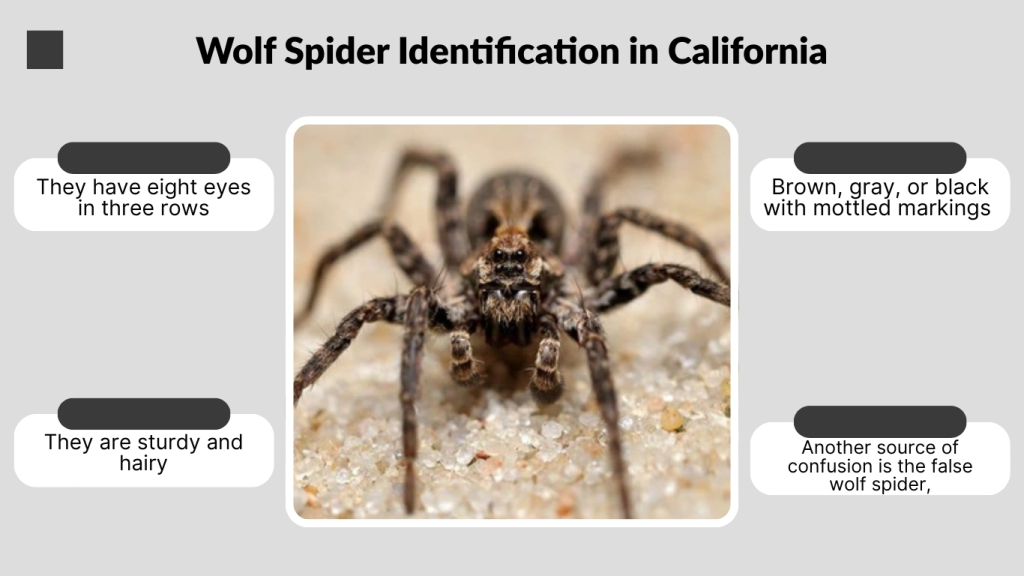
One of the easiest ways to identify wolf spiders is by their eye arrangement. They have eight eyes in three rows—a top row of two large eyes that shine in light, a middle row of four small eyes, and a bottom row of two medium eyes. This arrangement gives them excellent night vision and a reflective “eye shine” that can be seen with a flashlight.
Wolf spiders in California vary widely in color, but they are usually brown, gray, or black with mottled markings that provide camouflage. They are sturdy and hairy, often giving them a tarantula-like appearance, though they are smaller. Unlike web spiders, they do not spin webs to catch prey, though they may use silk to line burrows or wrap eggs.
Common misidentifications occur with grass spiders (funnel weavers), which also have striped patterns, but grass spiders are slimmer and build sheet webs. Another source of confusion is the false wolf spider, a term sometimes applied to other large wandering spiders.
Size and Appearance Variations
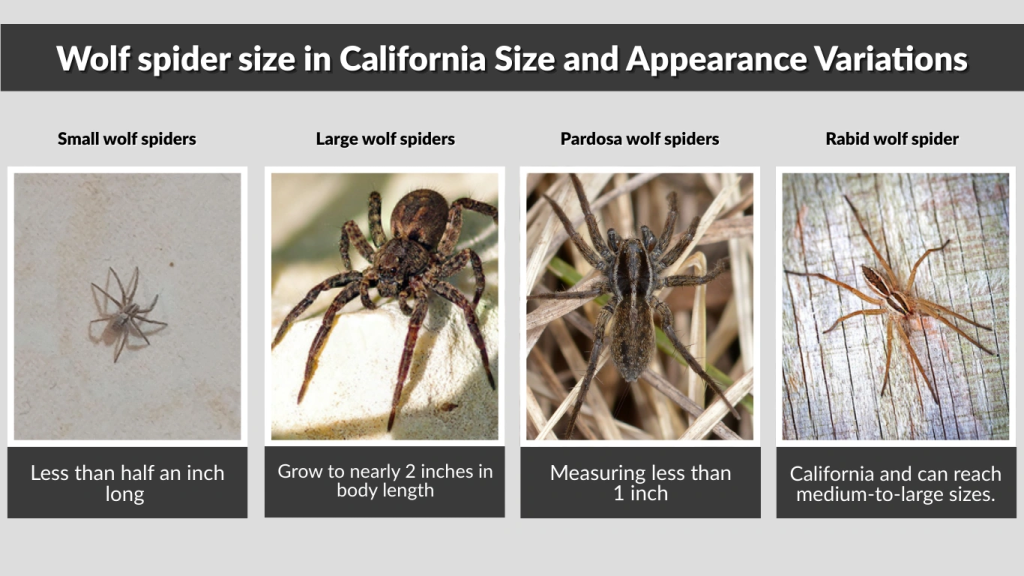
Wolf spider size in California can range dramatically depending on the species.
- Small wolf spiders: Some species, particularly in Southern California, are less than half an inch long and can easily be mistaken for common house spiders.
- Large wolf spiders: Desert species and the Carolina wolf spider (Hogna carolinensis) can grow to nearly 2 inches in body length, with leg spans reaching over 4 inches. These are among the largest wolf spiders in North America.
- Pardosa wolf spiders: Typically smaller, measuring less than 1 inch, but are fast-moving and often found near water or in grassy areas.
- Rabid wolf spider (Rabidosa rabida): Named for its erratic movements rather than aggression, this spider is occasionally reported in California and can reach medium-to-large sizes.
The coloration can also vary. Some appear black, others are more brown or gray. Desert wolf spiders tend to be lighter for camouflage against sand, while forest-dwelling ones are darker.
Wolf Spider Habitat in California

Wolf spiders are highly adaptable and occupy diverse habitats across California:
- Southern California: Found in deserts, rocky outcrops, and sandy soils. Desert wolf spiders thrive here, often hiding under stones or in burrows.
- Northern California: In cooler, wetter climates, they are commonly found in forests, gardens, and grasslands.
- Central California: Agricultural zones provide plenty of prey, so wolf spiders can be found in fields and even in suburban yards.
- Urban areas: While they don’t build webs inside homes, wolf spiders sometimes wander into garages, basements, and walls while hunting for insects.
They do not rely on webs for food but instead roam the ground at night in search of prey. During the day, they hide under rocks, logs, or leaf litter. Some species even dig small burrows lined with silk to retreat into when threatened.
Behavior and Diet

Wolf spiders are solitary hunters, unlike social or web-building spiders. They rely on ambush or short bursts of speed to catch insects, other spiders, and even small lizards or frogs if available. Their strong eyesight makes them formidable predators.
They are primarily nocturnal, which is why they are more commonly spotted during nighttime walks or when shining a flashlight outdoors. Their glowing eyes make them easy to spot.
One of the most fascinating behaviors of wolf spiders is their unique parenting. Female wolf spiders carry their egg sacs attached to their spinnerets, and after hatching, dozens of tiny spiderlings ride on her back until they are ready to disperse. This sight—often called “a spider covered in babies”—is common in California gardens and fields during summer.
Wolf spiders do not spin capture webs, but they may use silk for burrow construction, egg protection, or draglines while moving. Their hunting strategy makes them an important part of California’s natural pest control system.
Wolf Spider Bites in California

Wolf spider bites are uncommon, as these spiders are not aggressive. Most bites occur when they are accidentally crushed against the skin or handled. A typical wolf spider bite causes mild pain, redness, swelling, and itching, similar to a bee sting. In rare cases, individuals may experience nausea, headaches, or allergic reactions.
Importantly, wolf spider venom is not medically significant in humans. Unlike the brown recluse or black widow, wolf spiders do not cause necrotic wounds or severe systemic effects. California wolf spider bite cases are rarely reported to medical facilities, and most symptoms resolve within a few days without treatment.
Are Wolf Spiders in California Dangerous or Poisonous?
Wolf spiders are often labeled “dangerous” due to their size and appearance, but this is misleading. Their venom is designed to subdue small prey, not humans. They are not deadly or highly poisonous.
In contrast, dangerous spiders in California include:
- Black widow spiders, which have neurotoxic venom.
- Brown recluse spiders, though they are extremely rare in California and often misidentified.
Wolf spiders may look intimidating, but they are beneficial predators that help control insect populations.
False Wolf Spiders and Look-Alikes

Because of their size and markings, wolf spiders are often mistaken for other species:
- Grass spiders (Agelenidae): Slender, build funnel-shaped webs, and are often miscalled wolf spiders.
- Brown recluse: Rare in California, but many harmless brown wolf spiders are misidentified as recluses. The recluse has a distinct violin marking, while wolf spiders are hairy and patterned.
- Tarantula wolf spider confusion: Some people mistakenly call large wolf spiders “tarantulas,” though true tarantulas are heavier-bodied.
- False wolf spiders: A general term for wandering spiders that resemble wolf spiders but belong to different families.
Learning the differences helps prevent unnecessary fear and ensures correct identification.
California Wolf Spider Species

California hosts multiple wolf spider species, each adapted to different environments:
- Carolina wolf spider (Hogna carolinensis) – The largest wolf spider in North America, sometimes seen in California.
- Pardosa wolf spiders – Smaller, common in grassy and wetland areas.
- Desert wolf spiders – Found in Southern California deserts, sandy and light-colored.
- Common house wolf spiders – Often wander indoors, mistaken for dangerous spiders.
These species vary in size and markings but share the same hunting behaviors and solitary lifestyle.
Wolf Spider vs Other Spiders in California
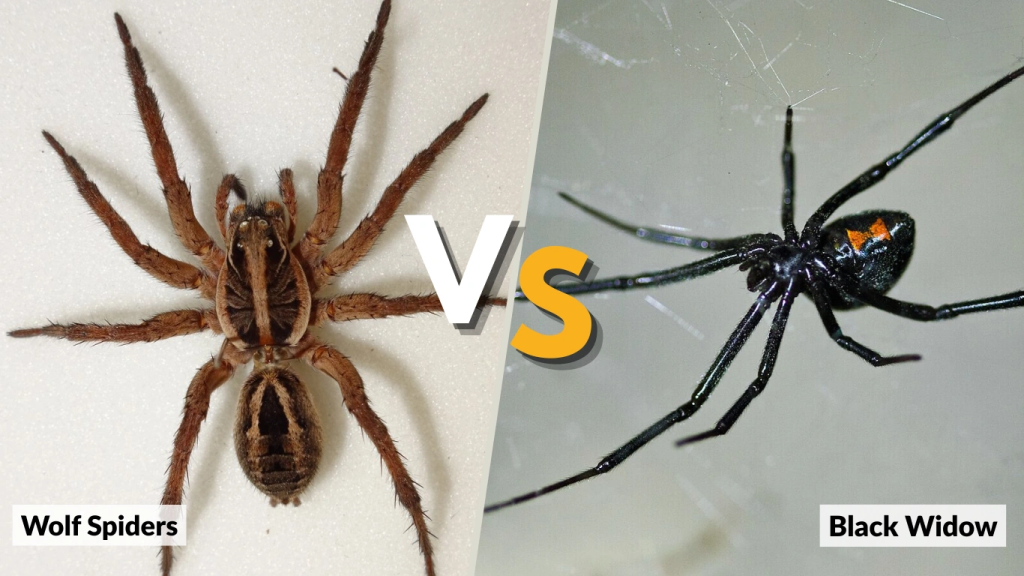
Wolf spiders are frequently compared to other well-known spiders in the state:
- Wolf spider vs black widow: Black widows are smaller, glossy black with a red hourglass mark, and spin messy webs. Wolf spiders are hunters, hairy, and non-lethal.
- Wolf spider vs brown recluse: Wolf spiders are hairy with patterned bodies; recluses are smooth, smaller, and extremely rare in California.
- Wolf spider vs grass spider: Grass spiders build webs and have longer spinnerets; wolf spiders hunt freely without webs.
These comparisons are important because misidentification often causes unnecessary fear.
Unique Wolf Spider Facts
- Wolf spiders have excellent night vision, with reflective eyes that glow under light.
- Females are unique among spiders for carrying egg sacs and later babies on their backs until they are independent.
- They are skilled hunters, sprinting and ambushing prey instead of using webs.
- Wolf spiders can climb walls and enter houses, though they do not build indoor webs.
- They play an important role in controlling pests, especially in agricultural regions of California.
Images and Identification Guide
If you see a large, hairy spider running across your garage floor or garden at night, chances are it’s a wolf spider. Some visual identifiers include:
- Brown, gray, or black mottled patterns.
- Large, forward-facing eyes that reflect light.
- Babies riding on a female’s back.
- Strong, quick movements without web-building.
Photographs of wolf spiders in California often show them on walls, desert sands, or grassy areas. Images also highlight their resemblance to tarantulas and grass spiders.
FAQs
Are wolf spiders in California poisonous?
Wolf spiders in California are not considered poisonous to humans. Their venom is mild and designed to immobilize insects. While a bite may cause pain, swelling, or redness, it is not medically significant. Unlike black widows or brown recluses, wolf spiders do not pose a serious danger to people or pets.
Do wolf spiders live in Southern California?
Yes, wolf spiders are commonly found in Southern California, especially in desert areas, gardens, and sandy soils. They are ground hunters and may wander into garages, patios, or walls. Despite their intimidating appearance, these spiders are not aggressive and typically avoid human contact unless accidentally disturbed or provoked.
How big are wolf spiders in California?
Wolf spider size varies across California. Smaller species, such as Pardosa wolf spiders, measure less than ½ inch, while large species like the Carolina wolf spider can reach up to 2 inches in body length. Including leg span, some can appear even larger, often startling people who encounter them indoors.
Are wolf spiders in Northern California dangerous?
Wolf spiders in Northern California are not dangerous. Their bites are rare and typically result in mild local reactions. They are often mistaken for brown recluse spiders, but recluses are extremely rare in California. Northern populations thrive in woodlands, fields, and gardens, helping reduce insect numbers in natural and suburban environments.
What do baby wolf spiders look like in California?
Baby wolf spiders in California are tiny, pale versions of adults. They are unique because they ride on their mother’s back after hatching, clinging until they are strong enough to hunt on their own. This behavior is often observed in summer months and is a key identification feature of wolf spiders.