
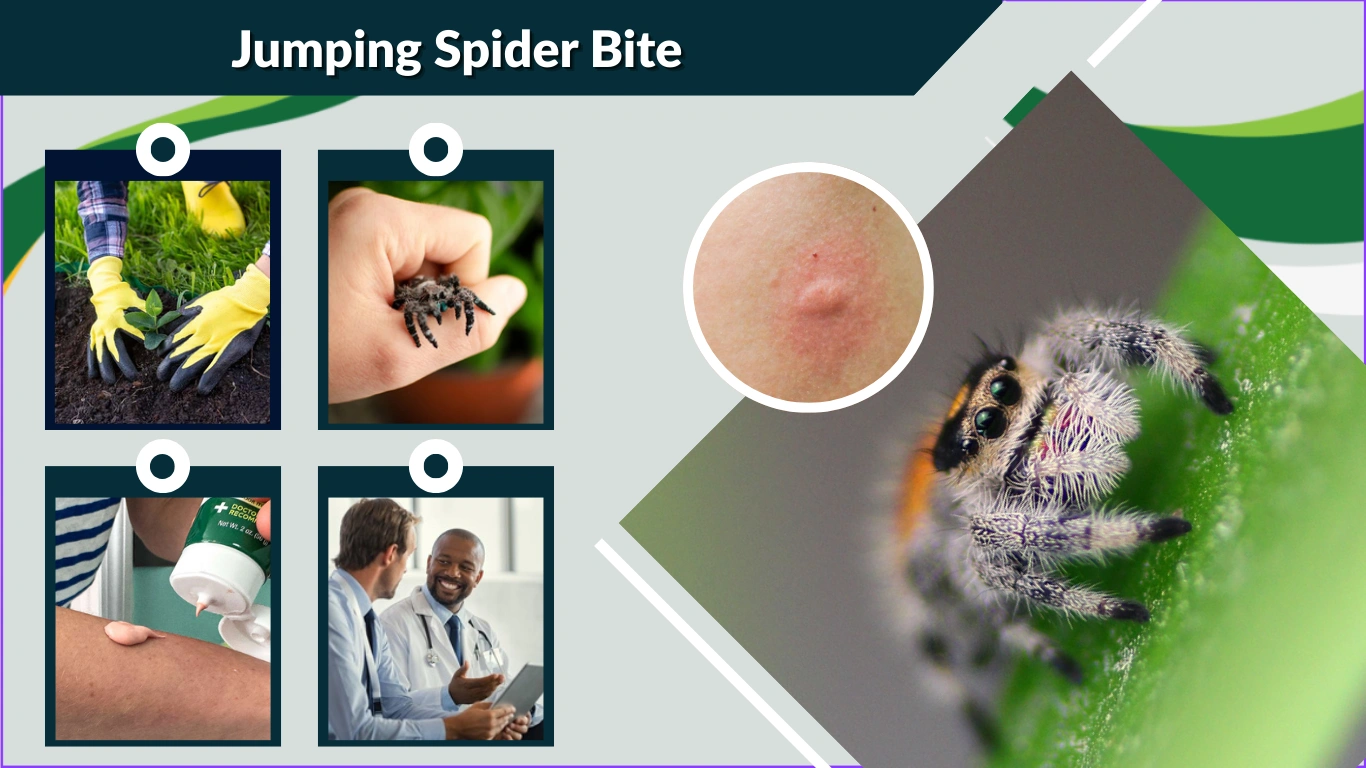
Jumping spiders are one of the most fascinating arachnids found in gardens and homes. With their bright eyes, quick movements, and unique hunting style, they are often admired by nature lovers. But many people wonder: what happens if a jumping spider bites you? While these spiders are generally harmless, understanding their bite, symptoms, and treatment can help ease fears and prevent unnecessary panic.
What Are Jumping Spiders?
Jumping spiders belong to the Salticidae family, which includes more than 6,000 species worldwide. They are well-known for their ability to leap several times their body length when hunting or escaping predators. Instead of spinning webs to catch prey, they actively stalk insects, using their sharp vision and agility to pounce like tiny cats.
Some common jumping spider species include the bold jumping spider (Phidippus audax), regal jumping spider (Phidippus regius), and zebra jumping spider (Salticus scenicus). They are often found on walls, windowsills, plants, and gardens. Unlike many spiders, jumping spiders are curious and may approach humans instead of hiding immediately.
Do Jumping Spiders Bite Humans?

Jumping spiders are not aggressive toward humans. In most cases, they prefer to run or jump away when disturbed. However, like many small animals, they may bite if they feel threatened or trapped.
Situations that can lead to bites include:
- Accidentally pressing or trapping one under clothing or bedding.
- Picking one up with bare hands.
- Disturbing them while they are guarding eggs.
Even in these situations, their small fangs and mild venom mean that their bite is more of a nuisance than a threat.
Identification of a Jumping Spider Bite
Recognizing a jumping spider bite can be tricky because it looks very similar to mosquito or ant bites. The typical features include:
- A small, red raised bump at the site.
- Mild swelling or irritation.
- Occasionally, a central puncture mark.
The bite is usually localized and does not spread widely unless the person has an allergic reaction.
Differentiating from Other Spider Bites
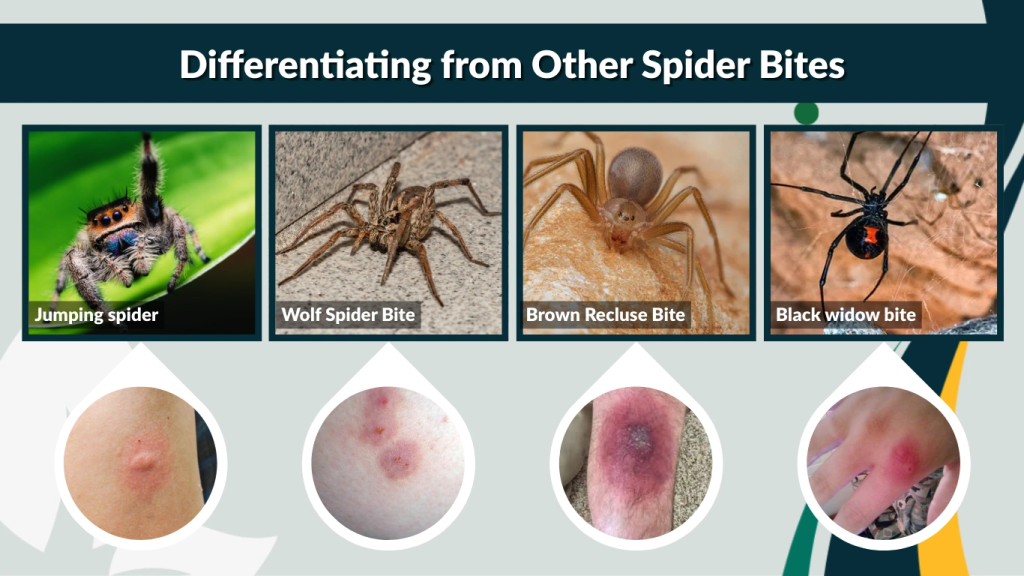
- Jumping spider vs wolf spider bite: Wolf spider bites may cause more pain and swelling due to their larger fangs, while jumping spider bites remain mild.
- Jumping spider vs brown recluse bite: Recluse bites can lead to tissue damage and ulceration, while jumping spider bites heal without complications.
- Jumping spider vs black widow bite: Widow bites cause systemic symptoms such as cramps and sweating; jumping spider bites do not.
This comparison highlights why jumping spiders should not be feared the same way as dangerous species.
Symptoms of a Jumping Spider Bite
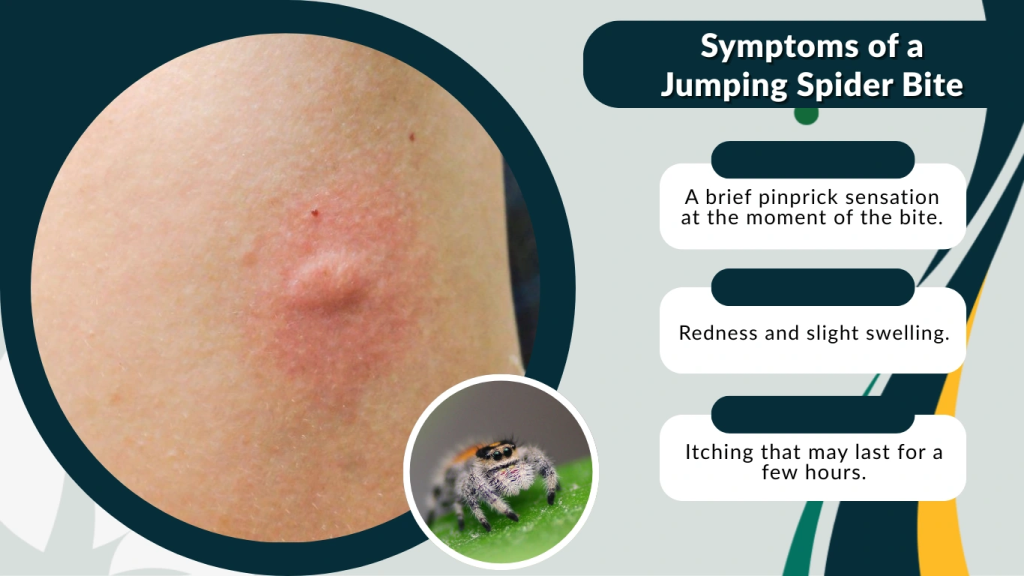
The symptoms of a bite are generally mild and temporary. Most people experience:
- A brief pinprick sensation at the moment of the bite.
- Redness and slight swelling.
- Itching that may last for a few hours.
In rare cases, symptoms may include:
- Localized pain lasting more than a day.
- Allergic skin reactions, such as a rash.
- Systemic symptoms, like nausea or dizziness, but these are extremely uncommon.
For healthy adults, the discomfort fades within a few days without medical treatment.
Are Jumping Spider Bites Dangerous?
Jumping spider venom is designed to immobilize small insects, not harm humans. Studies show that their venom contains enzymes that break down insect tissue, but these components are too weak to cause serious damage to people.
Most experts agree that jumping spider bites are not medically significant. The risk comes only in special cases:
- People with severe insect allergies.
- Children or elderly with sensitive skin.
- Those with weakened immune systems.
In these rare instances, monitoring the bite site and seeking medical advice is recommended.
First Aid and Treatment for Jumping Spider Bites

If bitten, basic first aid is usually all that’s required. Here are the steps:
- Clean the bite site with soap and water to prevent infection.
- Apply a cold compress for 10–15 minutes to reduce swelling.
- Use over-the-counter antihistamines if itching persists.
- Pain relievers like acetaminophen or ibuprofen may help with discomfort.
Seek medical attention if:
- The bite becomes increasingly swollen, warm, or filled with pus.
- You experience difficulty breathing, dizziness, or hives.
- The symptoms last longer than 3–4 days.
These situations are rare but worth being cautious about.
Special Cases: Bite Reactions in Different People
Not everyone reacts the same way to a jumping spider bite.
- Children: Their skin is more sensitive, so bites may appear larger and itch more. Parents should monitor closely.
- Adults: Most adults experience only minor irritation that resolves quickly.
- Allergic individuals: People with a history of allergies may react more strongly, with swelling spreading beyond the bite.
- Pets: Dogs and cats are not seriously harmed by jumping spider bites, though they may lick or scratch the area if bitten.
Prevention of Jumping Spider Bites

Although bites are rare, you can take steps to avoid them:
- Wear gloves when gardening or working in wood piles where spiders may hide.
- Shake out clothing and shoes before wearing them if stored outdoors.
- Use a container to gently capture and release jumping spiders instead of handling them directly.
- Keep living spaces tidy, reducing insect populations that attract spiders indoors.
These precautions are simple but effective in preventing accidental bites.
Jumping Spiders as Beneficial Predators
Instead of fearing them, it’s worth remembering the benefits of having jumping spiders around.
- They prey on flies, mosquitoes, moths, and other small pests.
- Unlike web-building spiders, they actively hunt and help naturally control insect populations.
- Gardeners often welcome them since they reduce the need for pesticides.
Their presence indoors or outdoors can actually be helpful, making them one of the most “friendly” spiders to coexist with.
When to Consult a Doctor

While most bites heal quickly, there are certain warning signs to take seriously:
- Spreading redness beyond the bite site.
- Severe swelling that worsens after 24 hours.
- Signs of infection, including pus, warmth, or fever.
- Systemic symptoms such as dizziness, chest tightness, or breathing difficulties.
These reactions are uncommon, but knowing when to seek professional care ensures peace of mind.
Comparisons With Other Common Spiders
Jumping spider bites are often confused with bites from other species. Understanding the differences helps with accurate identification.
- House spider bites vs jumping spider bites: House spiders rarely bite, but when they do, the reaction is similar—slight redness and itching. Neither is dangerous.
- Bold jumper vs regal jumping spider bites: Both are harmless; reported bites from these species show only mild irritation.
- South African jumping spiders: Some species in South Africa are larger, but even their bites are reported as non-dangerous and comparable to ant bites.
Compared to medically significant spiders such as brown recluse or black widow, jumping spiders are safe companions.
Real-Life Reports of Jumping Spider Bites
Accounts from homeowners and gardeners show that bites are uncommon and usually mild.
- Case reports: People describe the sensation as a “bee sting” followed by redness that disappears in a day or two.
- Garden encounters: Gardeners often note that spiders run away rather than bite, even when disturbed.
- Expert opinions: Entomologists confirm that jumping spiders are among the least threatening spiders to humans.
These experiences reinforce that panic over a jumping spider bite is unnecessary.
FAQs
Are jumping spider bites poisonous?
Jumping spiders do have venom, but it is harmless to humans. Their venom is designed to subdue small insects, not people. A bite may cause minor redness, swelling, or itching, but it does not pose serious health risks. Only in rare allergic cases does medical care become necessary.
How long does a jumping spider bite last?
Most jumping spider bites heal quickly within one to three days. Redness and irritation usually fade in less than 48 hours, while itching or swelling may linger slightly longer. With basic care like cleaning and applying a cold compress, symptoms resolve without leaving scars or long-term effects.
Can jumping spiders bite through clothing?
No, jumping spiders cannot usually bite through clothing. Their fangs are too small and weak to penetrate fabrics. Bites occur only when the spider comes into direct contact with bare skin, typically if it feels trapped or threatened. Wearing gloves and protective clothing outdoors greatly reduces the risk.
What should I do if my child is bitten by a jumping spider?
Clean the bite area gently with soap and water, apply a cold compress, and monitor for reactions. Most bites cause only mild irritation and fade quickly. If swelling spreads, or if your child shows signs of breathing difficulty or dizziness, seek medical attention immediately as a precautionary measure.
Do all jumping spider species bite the same way?
Yes, all jumping spider species produce similar bite reactions in humans. Whether bold jumpers, regal jumpers, or zebra jumpers, their venom is mild and their fangs small. Bites are rare and cause only temporary irritation. Species differences mostly affect appearance and habitat, not the impact of their bite.