

Spiders with bold orange and black coloration are among the most eye-catching arachnids in nature. Their striking patterns, whether in fuzzy jumping spiders, large tarantulas, or delicate orb-weavers, make them easy to spot and fascinating to study. Found in gardens, forests, deserts, and even homes, these spiders combine vivid beauty with unique survival traits. This guide explores 15 remarkable species of orange and black spiders, covering their appearance, habitats, behaviors, and diets.
1. Bold Jumping Spider (Phidippus audax)

The Bold Jumping Spider is one of the most recognizable arachnids in North America. Often called a black and orange jumping spider, this species stands out for its compact, shiny black body marked with bright orange or white spots on the abdomen. Its fuzzy appearance has also earned it the name orange and black fuzzy spider among nature enthusiasts.
Identification
- Shiny black body with vivid orange or reddish abdominal spots
- Dense hair covering, giving it a fuzzy texture
- Compact size: 8–18 mm, with females larger than males
- Metallic green or blue mouthparts (chelicerae)
- Large, forward-facing eyes that provide excellent vision
Habitat
This spider is widespread across the United States and Canada. It thrives in gardens, fields, forests, and even near homes, which is why people often notice a black and orange spider in the house or in backyard spaces.
Behaviors
True to its name, the Bold Jumping Spider actively hunts during the day. Rather than spinning webs to catch prey, it stalks and pounces with accuracy. Curious by nature, it may even turn to watch humans closely, creating the impression of intelligence.
Lifecycle & Lifespan
Its lifespan averages around one year. Females lay eggs in silken sacs hidden in sheltered spots, carefully guarding them until spiderlings emerge. Juveniles pass through multiple molts before reaching maturity.
Diet
The spider feeds on flies, moths, crickets, and other small insects. Larger adults sometimes catch smaller spiders, making them effective natural pest controllers.
2. Regal Jumping Spider (Phidippus regius)
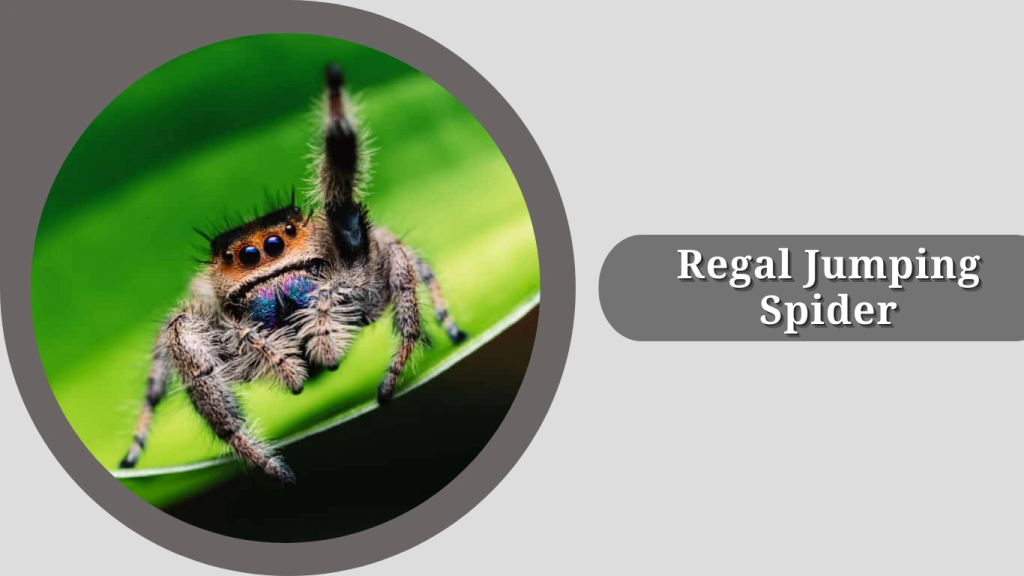
The Regal Jumping Spider is a large, charismatic species found mainly in the southeastern United States. Known for its bold coloration, it is often described as an orange and black fuzzy spider due to its hairy body and vivid markings. This species is admired for both its beauty and its active hunting style.
Identification
- Females often display bright orange abdomens with black banding
- Males typically appear black with white highlights
- Stocky build with dense hair covering
- Large forward-facing eyes for precise vision
- Can grow up to 22 mm, making it one of the largest jumping spiders in North America
Habitat
Common in Florida, Georgia, and throughout the southeastern U.S., it is often spotted around gardens, walls, and fences. Its striking appearance makes it one of the most noticed black and orange spiders in Florida.
Behaviors
Like other jumping spiders, it is diurnal and hunts by stalking and leaping on prey rather than building webs. It is highly alert and often watches observers closely.
Lifecycle & Lifespan
The Regal Jumping Spider typically lives for about one year. Females produce silken retreats where they lay and guard egg sacs. Spiderlings disperse soon after hatching.
Diet
Feeds on flies, moths, grasshoppers, and other insects. Larger individuals may also capture small butterflies and other spiders.
3. Phidippus clarus

The Phidippus clarus is a small but vibrant species of jumping spider often identified as an orange and black spider. With its striking abdomen and bold hunting behavior, it is frequently seen in meadows and gardens.
Identification
- Bright orange abdomen with black markings
- Black cephalothorax and legs, giving strong contrast
- Fuzzy appearance typical of jumping spiders
- Small to medium size: around 6–12 mm
- Males are generally darker, females more vividly orange
Habitat
This spider is common across North America, especially in grasslands and gardens. It is sometimes noticed indoors, leading people to mistake it for a black and orange spider in the house.
Behaviors
Active during the day, it uses excellent vision to stalk and leap onto prey. It builds silken retreats among vegetation but does not spin webs for capturing food.
Lifecycle & Lifespan
Lives about one year. Females lay eggs in silk sacs attached to leaves or stems, guarding them until spiderlings emerge.
Diet
Feeds primarily on small insects such as flies, aphids, and moths. It helps control pest populations in gardens and fields.
4. Phidippus princeps
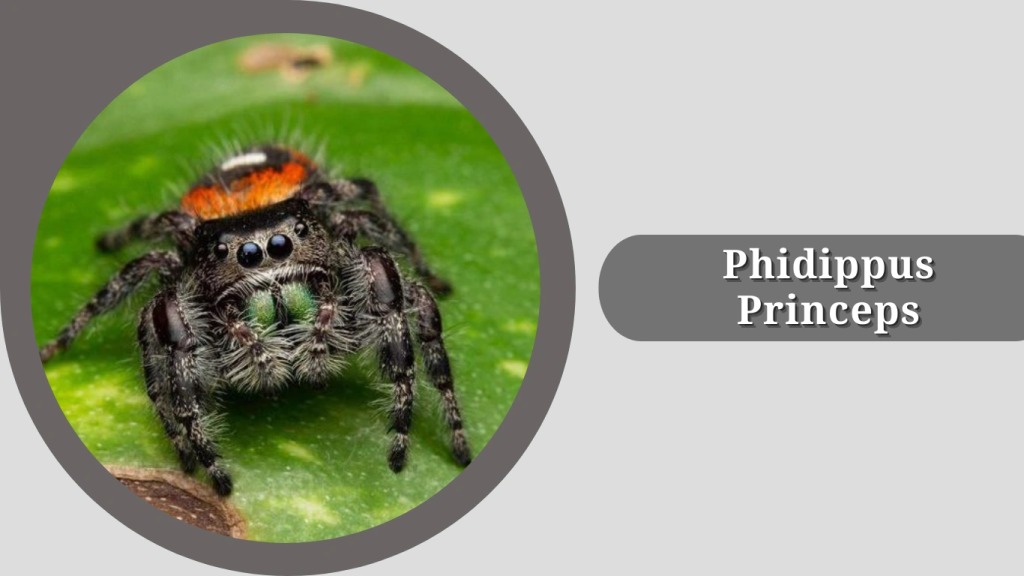
The Phidippus princeps is another striking member of the jumping spider family. Frequently described as an orange and black jumping spider, it is admired for its vivid colors and bold behavior. Its compact body and fuzzy appearance often make it mistaken for an orange and black fuzzy spider.
Identification
- Abdomen usually orange to reddish with bold black markings
- Shiny black cephalothorax with dense hair coverage
- Compact build typical of jumping spiders
- Medium size: 8–12 mm in length
- Bright, forward-facing eyes that give excellent vision
Habitat
Found throughout North America, particularly in gardens, woodlands, and open fields. It is sometimes noticed near human dwellings, where people may identify it as a black and orange spider in the house.
Behaviors
An active hunter, this spider stalks and leaps onto its prey during daylight hours. It is inquisitive and often turns to watch human observers.
Lifecycle & Lifespan
Lives for about one year. Females lay eggs in silken sacs, guarding them until the spiderlings hatch. Juveniles molt several times before reaching adulthood.
Diet
Feeds on flies, moths, beetles, and other small insects. Occasionally preys on smaller spiders.
5. Pumpkin Spider (Araneus marmoreus)

The Pumpkin Spider, a variety of the Marbled Orb-Weaver, is one of the most colorful orb-weavers in North America. Its vivid hues often lead to it being described as an orange and black garden spider or simply a large orange and black spider.
Identification
- Bright orange abdomen, sometimes marked with black marbling
- Round, bulbous body resembling a small pumpkin
- Long black or banded legs with fine hairs
- Medium to large size: 10–20 mm body length
- Striking autumn coloration makes it easy to spot
Habitat
Found in gardens, forests, and near homes, especially in late summer and fall. Frequently seen in Michigan and other northern states, where it is often noticed as an orange and black spider in Michigan or orange and black spider in house.
Behaviors
This orb-weaver builds large circular webs to trap flying insects. It is nocturnal, spending the day hidden in retreats and emerging at dusk to repair or rebuild its web.
Lifecycle & Lifespan
Lives for about one year. Adults appear most commonly in autumn. Females lay eggs in silken sacs before dying as winter arrives; spiderlings hatch the following spring.
Diet
Feeds on flying insects such as moths, flies, and beetles, which are captured in its sticky orb-shaped web.
6. Marbled Orb-Weaver (Araneus marmoreus var. pyramidatus)
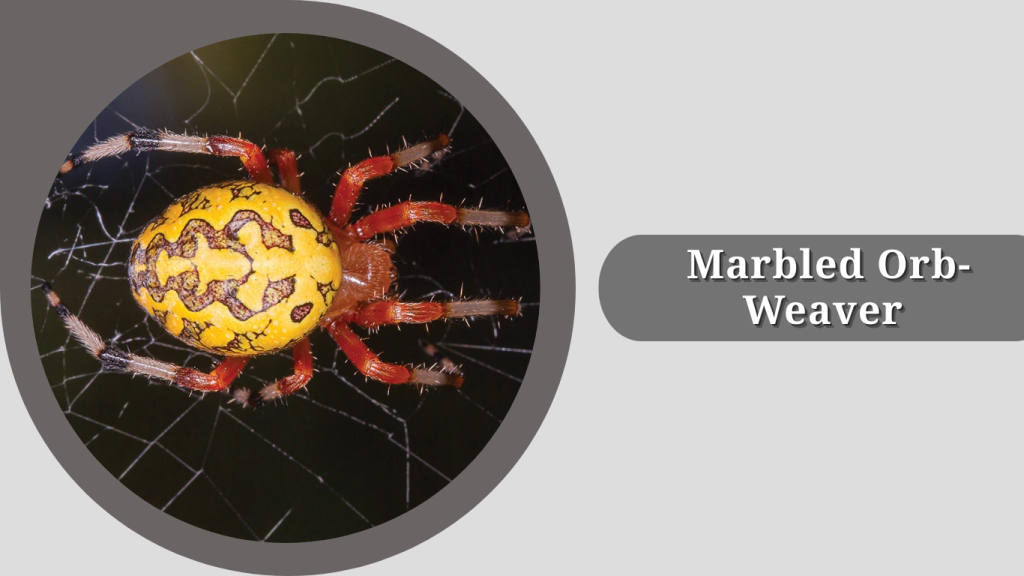
The Marbled Orb-Weaver is one of the most visually striking spiders in North America. Its orange and black coloration, often accented with white or yellow, has led to frequent descriptions such as an orange spider with black and white legs or an orange yellow and black spider.
Identification
- Large, rounded abdomen, bright orange with black marbling
- Legs often banded in black, orange, and white
- Females can reach 14–18 mm; males are smaller
- Dense hairs cover the body, enhancing its vivid look
- Distinct orb-weaver body shape with long, delicate legs
Habitat
Common in wooded areas, gardens, and meadows across North America. It builds large orb webs in shrubs and tall grasses, making it a well-known orange and black spider in the garden.
Behaviors
Constructs large circular webs to trap flying insects. Nocturnal, retreating during the day and emerging at dusk to sit at the web’s center. Despite its fearsome look, it is harmless to humans.
Lifecycle & Lifespan
Adults are most visible in late summer and fall. They live for one year, with females laying egg sacs in autumn. Spiderlings hatch the following spring.
Diet
Feeds mainly on flying insects like moths, beetles, and flies that become ensnared in its web.
7. Cross Orb-Weaver (Araneus diadematus) – Orange Morph
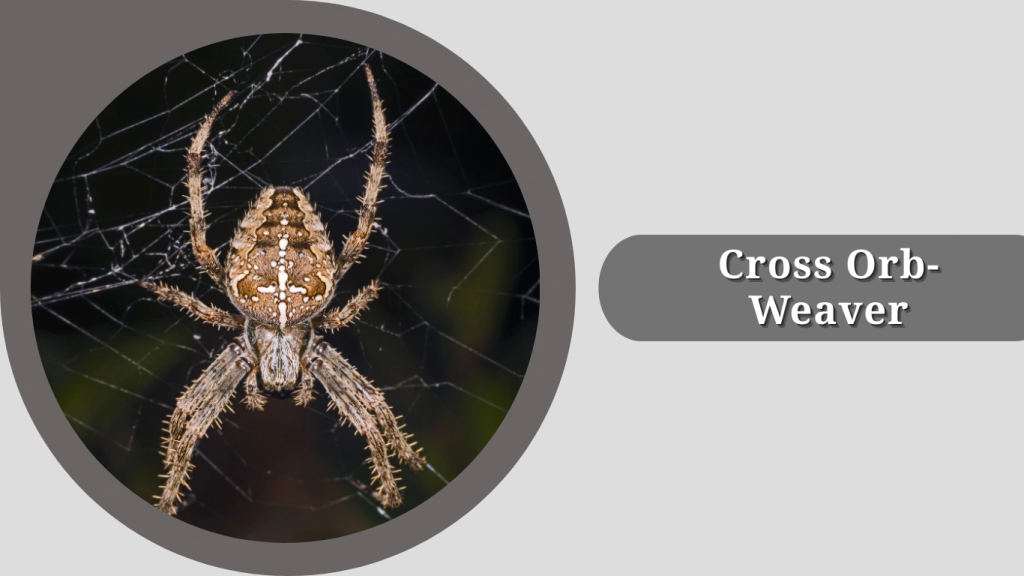
The Cross Orb-Weaver, also known as the European Garden Spider, has multiple color variations, including orange and black forms. These variations often match the description of an orange and black striped spider or orange and black spider in Colorado.
Identification
- Abdomen ranges from orange to reddish with black cross-like markings
- Legs often display alternating black and orange striping
- Medium to large orb-weaver: 6–20 mm body length
- Females are significantly larger than males
- Distinct cross pattern on abdomen, though less visible in darker morphs
Habitat
Common in gardens, fields, and wooded areas across Europe and North America. Frequently spotted on porches, fences, and bushes, making it one of the most recognized orange and black striped spiders in gardens.
Behaviors
Spins large orb webs to trap insects. Typically sits at the web’s center with legs outstretched, waiting for vibrations from prey. Non-aggressive and avoids human contact.
Lifecycle & Lifespan
Adults are most visible in late summer through fall. They live for about one year, with females producing egg sacs before dying in winter.
Diet
Feeds on flies, mosquitoes, grasshoppers, and other insects caught in its web.
8. Banded Garden Spider (Argiope trifasciata)

The Banded Garden Spider is a striking orb-weaver often recognized as an orange and black striped spider or a spider with orange and black striped legs. Its bold markings and large webs make it a common sight in open fields and gardens.
Identification
- Long legs with orange, black, and white banding
- Elongated abdomen with orange, yellow, black, and silver stripes
- Females reach up to 25 mm; males are much smaller
- Distinctive zig-zag (stabilimentum) often woven into the web
- Slender, elongated body shape
Habitat
Widespread across North America, commonly found in meadows, grasslands, and gardens. Its large webs are often stretched between tall plants, making it one of the most noticed black and orange garden spiders.
Behaviors
An orb-weaver that waits at the center of its web for prey. It immobilizes insects with silk before feeding. Though large and intimidating, it is harmless to humans.
Lifecycle & Lifespan
Adults appear in late summer and autumn. Females deposit egg sacs in protected areas before dying with the onset of winter. Spiderlings hatch in spring.
Diet
Feeds on grasshoppers, bees, moths, and other flying insects caught in its web.
9. Yellow Garden Spider (Argiope aurantia) – Orange-Leg Morph
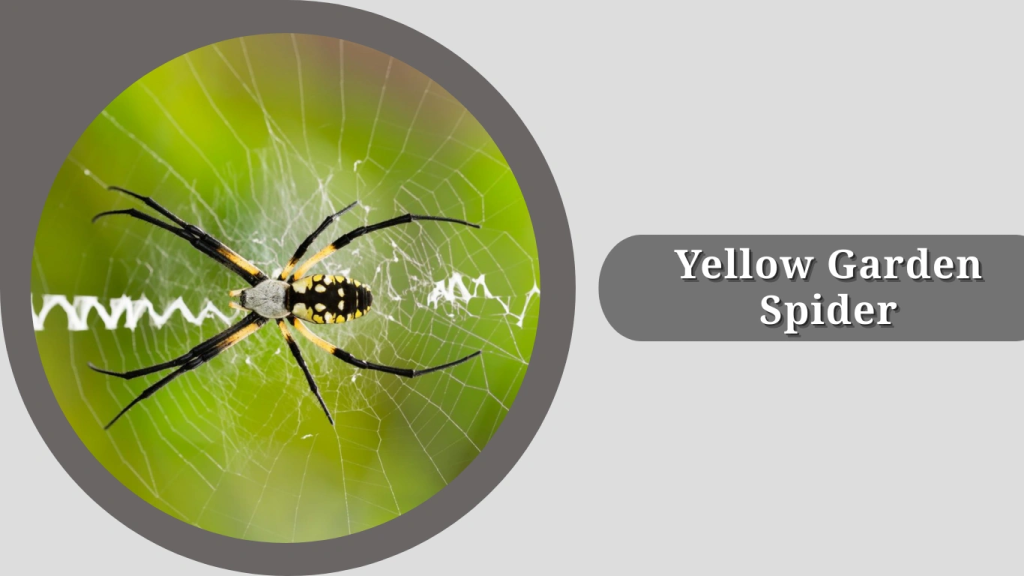
The Yellow Garden Spider is one of the most recognizable orb-weavers in North America. While typically yellow and black, many individuals display orange or reddish legs, leading to descriptions such as a yellow and black spider with orange legs or a yellow, orange, and black spider.
Identification
- Large, bright yellow abdomen with bold black markings
- Legs often striped black with orange or reddish joints
- Females up to 28 mm; males much smaller at 5–9 mm
- Produces a vertical stabilimentum in the web
- Broad, oval abdomen with dense hairs
Habitat
Common across the United States and Canada. Builds large webs in gardens, fields, and along forest edges, making it one of the most frequently seen orange and black spiders in gardens.
Behaviors
Constructs enormous orb webs to catch prey. Typically rests at the web’s center, head down. Though intimidating, it is non-aggressive and retreats when disturbed.
Lifecycle & Lifespan
One-year lifespan. Females produce several egg sacs in autumn, which hatch in spring. Adults are most visible in late summer.
Diet
Feeds on large flying insects such as grasshoppers, bees, wasps, and butterflies.
10. Spiny Orb-Weaver (Gasteracantha cancriformis) – Orange Morph
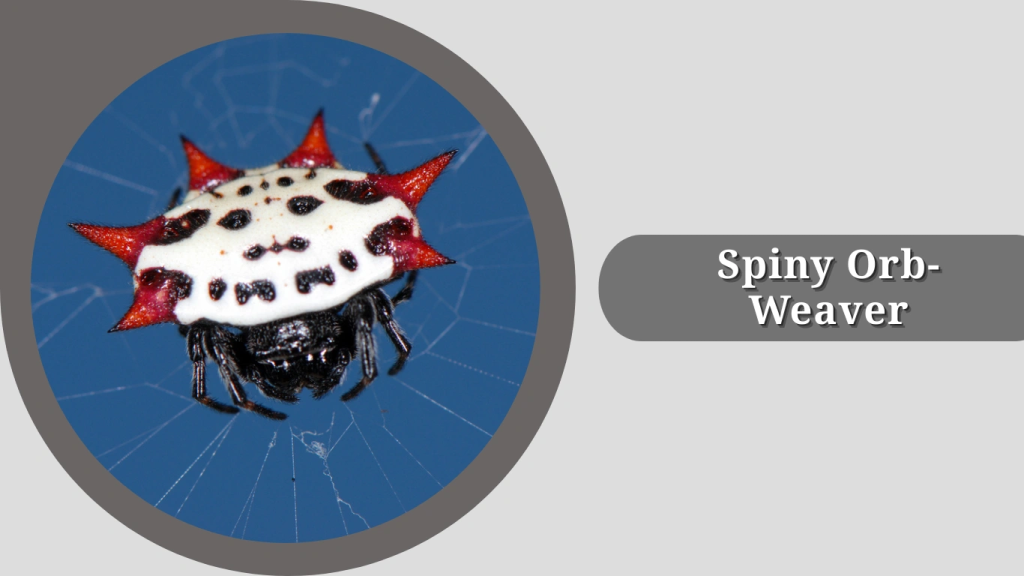
The Spiny Orb-Weaver is a small but distinctive spider often spotted in gardens. With its brightly colored shell, it is frequently mistaken for an orange and black spotted spider or even described as an orange black and white spider depending on the morph.
Identification
- Flattened, crab-like body with six sharp spines
- Abdomen bright orange or red with black spots
- Some morphs show orange mixed with white or yellow patterns
- Small size: 5–9 mm across
- Wide, flat body compared to other orb-weavers
Habitat
Found across the southern United States, the Caribbean, Central and South America. Prefers gardens, shrubs, and forests where it spins small orb webs. Often seen in Florida and the Gulf Coast states.
Behaviors
Spins circular webs between shrubs and trees. Despite its intimidating appearance, it is harmless and often called a “jewel” of the garden.
Lifecycle & Lifespan
Lives about one year. Females lay egg sacs attached to leaves or twigs in autumn. Spiderlings hatch in spring and disperse.
Diet
Feeds on flies, beetles, and mosquitoes trapped in its web.
11. Trapdoor Spider (Cyclocosmia truncata)

The Trapdoor Spider is a unique burrowing arachnid that can appear as a large orange and black spider in certain regions, particularly in the southern United States. Its armored abdomen and hidden lifestyle make it both fascinating and elusive.
Identification
- Stout body with dark brown to black carapace
- Abdomen may show orange or reddish hues in some morphs
- Strong legs adapted for digging
- Size ranges from 15–25 mm
- Distinct flat, disk-like abdomen used as a “trapdoor plug”
Habitat
Native to the southeastern U.S., especially in Georgia, Florida, and Texas. Builds burrows in sandy or clay soil, sealing the entrance with a camouflaged silk-lined “trapdoor.”
Behaviors
Ambush predator: waits behind its trapdoor until prey passes by, then lunges out. Rarely seen above ground, making sightings of a black and orange spider in Florida or Texas sometimes linked to this species.
Lifecycle & Lifespan
Lives several years underground. Females can survive 10–15 years, while males live only a few years after maturity.
Diet
Feeds on ground-dwelling insects, beetles, and small arthropods caught near its burrow entrance.
12. Wolf Spider (Hogna carolinensis) – Orange-Leg Variation
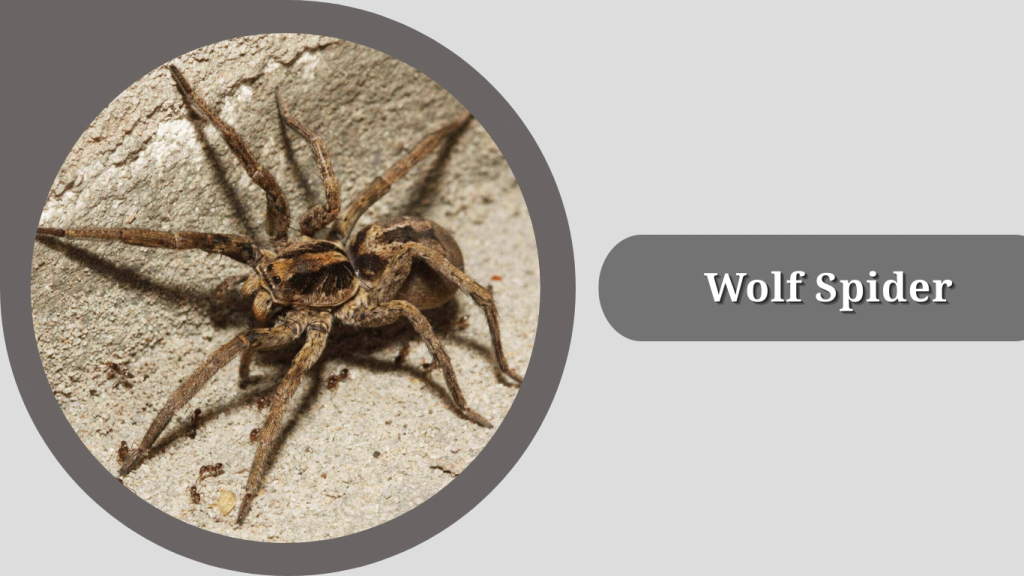
The Wolf Spider is one of the largest and most robust spiders in North America. Some variations display reddish or orange-banded legs, leading to descriptions such as a black and orange wolf spider or a large spider with orange and black legs.
Identification
- Stout, hairy body typically gray to dark brown with orange or reddish tinges
- Long, powerful legs sometimes marked with orange bands
- Females reach 25–35 mm; males are smaller
- Large eyes arranged in three rows, with two prominent forward-facing ones
- Agile build adapted for running and hunting
Habitat
Common throughout North America, found in grasslands, forests, deserts, and suburban yards. Often seen wandering at night with reflective eyeshine.
Behaviors
Active ground hunters that do not use webs for capturing prey. Known for carrying egg sacs attached to their spinnerets, and later carrying spiderlings on the female’s back.
Lifecycle & Lifespan
Lifespan ranges from 1–3 years. Females protect their egg sacs and young, a rare behavior among spiders.
Diet
Feeds on crickets, beetles, grasshoppers, and other ground insects. Larger individuals may capture small reptiles or amphibians.
13. Red-Backed Jumping Spider (Phidippus johnsoni)

The Red-Backed Jumping Spider is one of the most easily recognized jumping spiders in western North America. Its vivid orange-red abdomen contrasted against a black body often makes people call it a black and orange spider in California or a black spider with an orange body.
Identification
- Shiny black cephalothorax and legs
- Abdomen bright orange to red, sometimes with a central black mark
- Medium size: 7–15 mm
- Dense, velvety hairs give a fuzzy appearance
- Males usually darker; females show brighter red-orange coloring
Habitat
Found across western North America, especially in California, Arizona, and surrounding states. Common in deserts, woodlands, and near homes, often spotted as a black and orange spider in Arizona.
Behaviors
Active daytime hunter. Uses silk draglines as safety lines when leaping. Defensively rears up if threatened but generally avoids confrontation.
Lifecycle & Lifespan
Lives about one year. Females produce several egg sacs in sheltered areas, guarding them until hatching.
Diet
Feeds on flies, ants, moths, and other small insects. Occasionally preys on other spiders.
14. Spotted Orb-Weaver (Neoscona crucifera) – Orange Morph
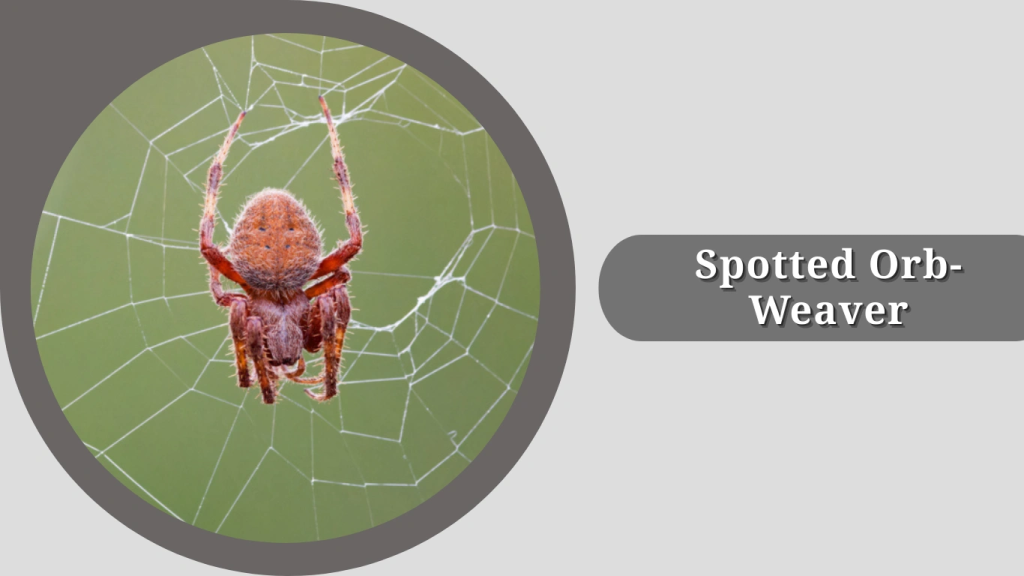
The Spotted Orb-Weaver is a widespread North American species with many color variations. In its orange morph, it is often mistaken for an orange and black legged spider or even a brown spider with orange and black striped legs.
Identification
- Abdomen rounded, orange to reddish with black spots
- Legs banded in black and orange, sometimes with yellow or brown shades
- Medium size: females 9–19 mm, males smaller
- Covered in dense short hairs, giving a velvety look
- Typical orb-weaver shape with long spindly legs
Habitat
Found across the United States and Canada in gardens, woodlands, and grasslands. Frequently spins large webs near lights at night, which draw in flying insects.
Behaviors
An orb-weaving spider that builds large circular webs. Usually nocturnal, hiding during the day and waiting in its web after dusk. Harmless to humans despite its intimidating look.
Lifecycle & Lifespan
Lives for about one year. Females lay egg sacs in autumn, which overwinter before spiderlings emerge in spring.
Diet
Feeds on moths, beetles, mosquitoes, and other flying insects trapped in its web.
15. Mexican Red-Knee Tarantula (Brachypelma smithi)
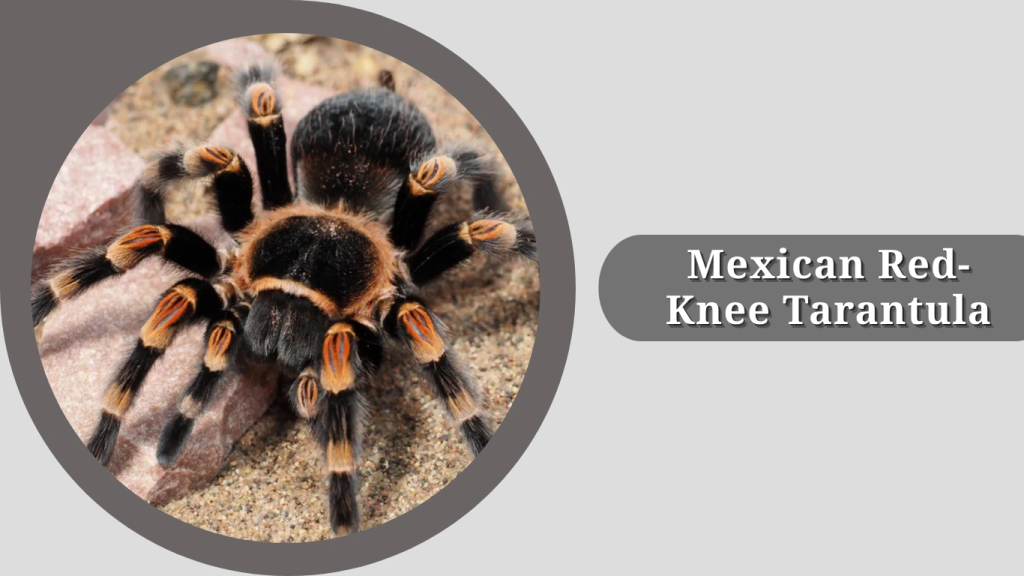
The Mexican Red-Knee Tarantula is one of the most iconic tarantulas in the world. Its bold coloring makes it fit many descriptions such as a black and orange tarantula, a spider with orange and black legs, or even a large black and orange spider.
Identification
- Striking black body with bright orange or red patches on the leg joints
- Large and robust, reaching up to 15–17 cm leg span
- Dense hairs covering body and legs
- Females more heavily built and longer-lived than males
- Known for its calm temperament compared to other tarantulas
Habitat
Native to the Pacific coast of Mexico, particularly in scrublands and deserts. Burrows into the ground or shelters under rocks and logs.
Behaviors
Mostly nocturnal and terrestrial. Known for its defensive behavior of kicking urticating hairs when threatened. Despite its size, it is generally docile and often kept as a pet.
Lifecycle & Lifespan
Females may live up to 20–25 years, while males typically live only 5–7 years. Egg sacs contain 200–400 spiderlings.
Diet
Feeds on crickets, roaches, grasshoppers, and other insects. Larger individuals may consume small lizards or mice.