Tarantulas are among the most feared spiders, largely due to their large size, hairy appearance, and dramatic reputation in movies. A common question many people ask is whether tarantulas are poisonous to humans or pets. The truth is more nuanced: tarantulas are not poisonous but venomous. Their venom is designed to subdue prey such as insects and small animals. For humans, however, the effects are usually mild and far less dangerous than people imagine.
Understanding Tarantula Toxicity
Poisonous vs. Venomous
One of the biggest misconceptions is the use of the word “poisonous.” A poisonous animal causes harm when touched or eaten, while a venomous animal injects toxins through a bite or sting. Tarantulas fall into the venomous category. Their venom helps immobilize prey, but for humans, it is generally not medically significant.
How Tarantula Venom Works
Tarantula venom contains proteins and enzymes that break down tissue and immobilize insects. Different species vary in potency, but the venom is not designed to kill large animals or humans. Most bites feel similar to a bee sting, causing redness, swelling, or mild pain.
Are Tarantulas Dangerous to Humans?

Bite Symptoms
For most people, a tarantula bite results in localized pain, itching, or swelling. Severe allergic reactions are rare, but they can occur in sensitive individuals. Unlike highly venomous spiders such as black widows or brown recluses, tarantulas pose little risk to human life.
Are They Poisonous to Touch?
Touching a tarantula will not poison you. However, many tarantula species possess urticating hairs—tiny barbed bristles that can cause skin irritation or eye inflammation when flicked as a defense mechanism. These hairs can feel itchy or cause rashes but are not poisonous.
Comparing Risks
A tarantula bite is far less dangerous than a wasp sting. While unpleasant, the venom does not cause long-term harm in healthy adults.
Are All Tarantulas Poisonous?

All tarantulas have venom, but potency varies widely. Some species have stronger effects on humans, while others are considered very mild. Importantly, no tarantula species is deadly to humans. Even the largest species, like the Goliath Birdeater, relies on size and intimidation rather than potent venom.
Venom Potency Spectrum
- Mild Venom Species: Chilean Rose Hair, Mexican Red Knee, Curly Hair.
- Moderate Venom Species: Cobalt Blue, Orange Baboon, Gooty Sapphire.
- Large Species with Intimidation Factor: Goliath Birdeater, Brazilian Black.
While some species may cause stronger pain, none are classified as dangerously venomous to humans.
Regional and Species-Specific Tarantulas
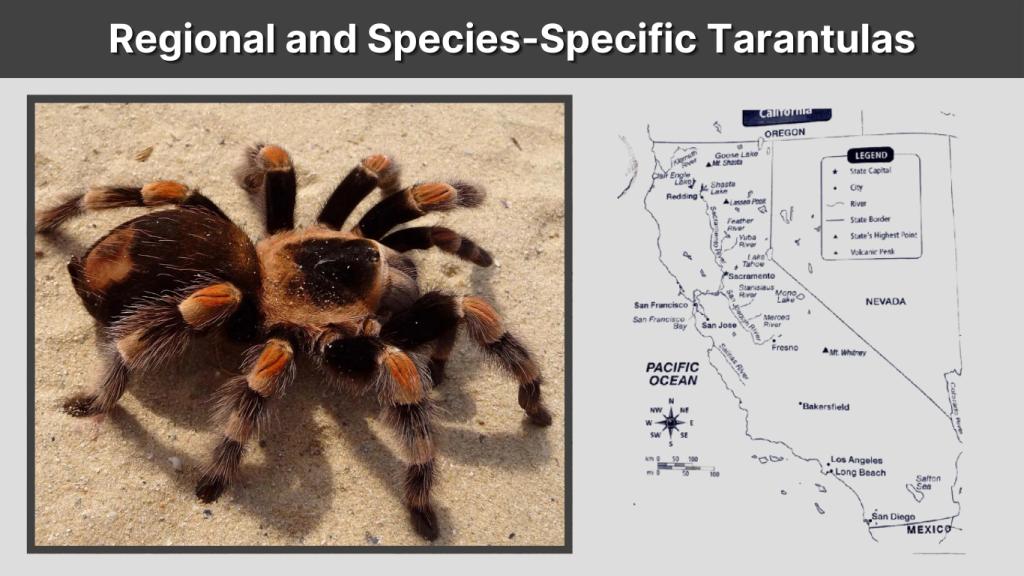
Across the world, tarantula species vary, and so do the myths around them. Here are some common ones people ask about:
Texas, Oklahoma, and Missouri Tarantulas
The Texas Brown Tarantula and similar species found in Oklahoma or Missouri are harmless to humans. Their bites are mild, and they often rely on defensive postures rather than aggression.
Arizona and Desert Tarantulas
Desert Blonde and Arizona tarantulas are common in the American Southwest. They are not considered dangerous and rarely bite unless provoked.
California and Colorado Tarantulas
These tarantulas are more often seen during mating season when males wander in search of females. Their venom is weak and poses no serious risk.
Brazilian and Mexican Species
The Brazilian Jewel Tarantula is stunning in appearance but not medically significant in terms of venom. Similarly, Mexican Red Knee and Mexican Fireleg are popular in the pet trade due to their docile temperaments and relatively mild venom.
Exotic Species
- Cobalt Blue Tarantula: Known for defensive behavior; bite can be painful but not deadly.
- Gooty Sapphire Tarantula: Striking blue coloration, stronger venom than beginner species, but still not life-threatening.
- Goliath Birdeater: Largest tarantula in the world, intimidating size but venom is weaker than many smaller spiders.
Pet Tarantulas and Safety

Pet tarantulas are often misunderstood. Species like the Chilean Rose Hair or Curly Hair Tarantula are commonly kept as beginner pets because of their calm behavior and weak venom. Handling should still be done cautiously, not because of lethal venom, but to avoid stress or bites.
Baby and Exotic Pets
Baby tarantulas, known as spiderlings, also have venom. However, due to their small size, the effects are almost negligible on humans. Owners should still avoid unnecessary handling to protect both the spider and themselves.
Risks for Humans
The biggest risk with pet tarantulas is irritation from urticating hairs, especially if they come into contact with the eyes. Bites are rare when spiders are left undisturbed.
Effects on Other Animals
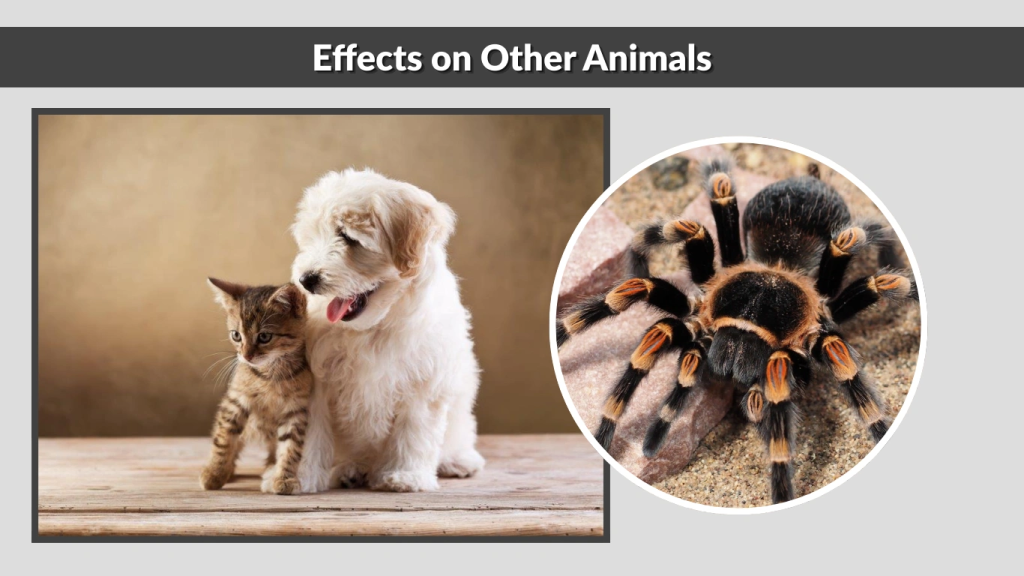
While tarantulas are safe for humans, their venom can have a stronger effect on smaller animals.
- Dogs and Cats: A bite may cause swelling, drooling, or lethargy, but fatalities are extremely rare. Veterinary care is recommended if pets are bitten.
- Edibility: Some cultures consume tarantulas roasted or fried. The venom breaks down with heat, making them safe to eat when prepared properly.
Tarantula Hawk Wasp and Confusion

One of the most confusing topics is the difference between tarantula spiders and tarantula hawk wasps. Despite the name, tarantula hawks are not spiders at all but large parasitic wasps.
- Sting Impact: The sting of a tarantula hawk is considered one of the most painful in the insect world. While not lethal to humans, the intense burning pain can last several minutes.
- Effect on Dogs: Dogs that encounter tarantula hawks may experience swelling or pain, but fatalities are rare.
- Purpose of Sting: The wasp uses its venom to paralyze tarantulas, laying eggs inside the still-living spider for the larvae to feed on.
It is important to note that tarantula hawks are venomous, not poisonous, and their toxicity is far stronger than that of tarantulas themselves.
Myths vs. Facts About Tarantulas
Tarantulas have been surrounded by myths for centuries. Hollywood often portrays them as deadly predators, but the truth is far less dramatic.
- Myth: Tarantulas are deadly to humans.
Fact: No tarantula species is lethal to humans. Their venom is mild compared to truly dangerous spiders. - Myth: Tarantulas are poisonous to touch.
Fact: You cannot be poisoned by touching one. The only risk is from urticating hairs or a defensive bite. - Myth: All tarantulas are aggressive.
Fact: Many species are docile and avoid confrontation. Aggressiveness varies depending on the tarantula. - Myth: Tarantulas hunt humans.
Fact: Tarantulas prey on insects, frogs, lizards, and sometimes small birds. Humans are far too large to be considered food.
By understanding the facts, people can see tarantulas as fascinating creatures rather than dangerous monsters.
Safety Tips Around Tarantulas
Although tarantulas are generally harmless, it’s wise to take basic precautions if you live in tarantula-prone areas or own one as a pet.
Handling Precautions
- Avoid handling tarantulas unless necessary.
- Wash hands after any contact to prevent irritation from hairs.
- Keep pet tarantulas in secure enclosures to prevent escape.
What to Do If Bitten
- Clean the bite area with soap and water.
- Apply a cold compress to reduce swelling.
- Take over-the-counter pain relievers if discomfort persists.
- Seek medical help if severe allergic reactions occur (difficulty breathing, dizziness, or widespread swelling).
Preventing Hair Irritation
- Avoid rubbing eyes after handling tarantulas.
- Wear gloves if moving enclosures or cleaning habitats.
- If hairs contact the eyes, flush immediately with clean water and seek medical care if irritation continues.
FAQs
Are tarantulas poisonous to humans?
No, tarantulas are not poisonous. They are venomous, but their venom is generally harmless to humans and causes only mild irritation, similar to a bee sting.
Are all tarantulas venomous or only some species?
All tarantulas have venom, but the strength varies by species. None are deadly to humans, though some may cause more painful bites than others.
Can tarantula bites kill pets like dogs or cats?
Tarantula bites may cause swelling, drooling, or mild illness in pets, but deaths are extremely rare. Veterinary care is recommended if your pet is bitten.
Which tarantula species have the most potent venom?
Species such as the Cobalt Blue, Orange Baboon, and Gooty Sapphire are considered to have stronger venom, but even these are not fatal to humans.
Are pet tarantulas safe to handle?
Yes, many species like the Chilean Rose Hair and Mexican Red Knee are docile. However, bites and irritation from hairs can still occur, so handling should be cautious and minimal.