
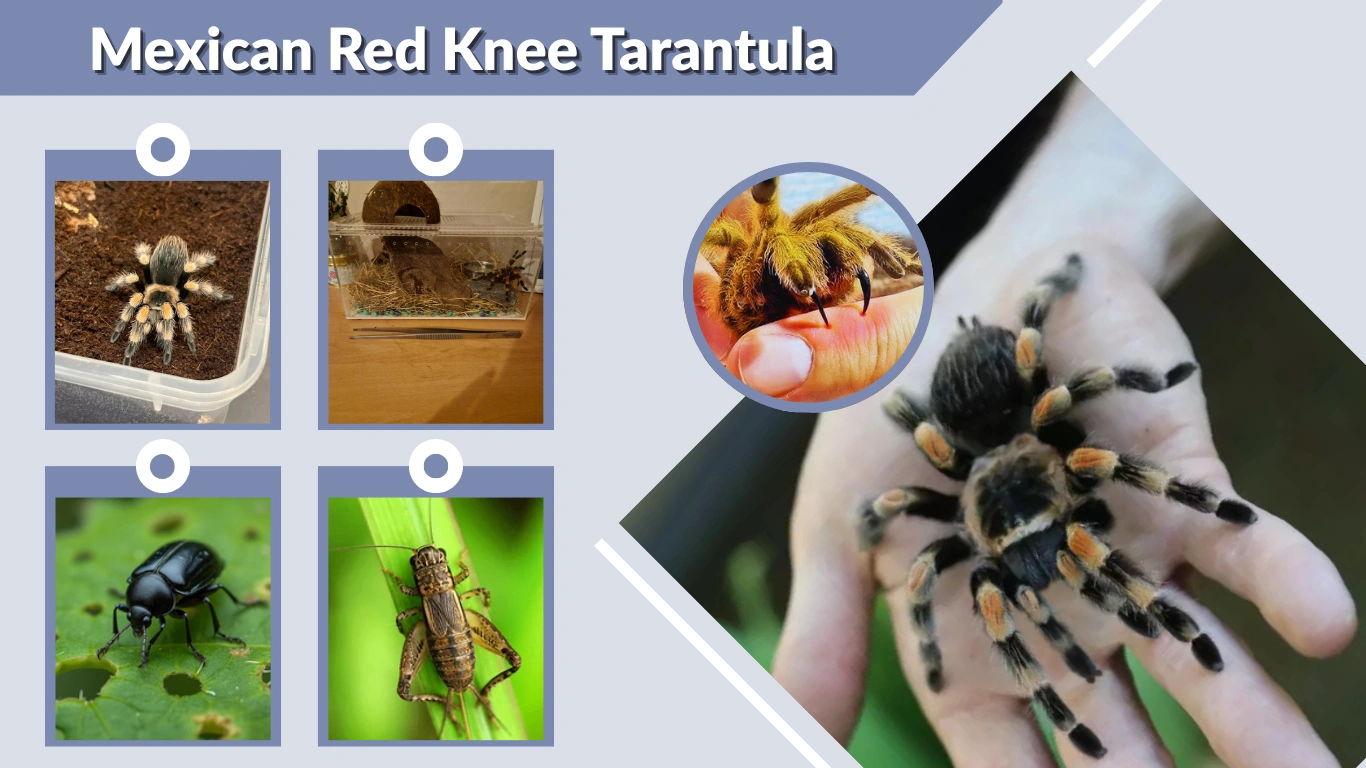
The Mexican Red Knee Tarantula (Brachypelma hamorii) is one of the most recognizable and beginner-friendly tarantulas in the world. Known for its striking orange-red knee joints contrasted with a dark body, it has become a staple in the exotic pet trade. Calm, hardy, and long-lived, the species is often recommended as a first tarantula for new keepers. In this article, we’ll explore its care, size, lifespan, cost, and what makes it such a popular pet.
Buying & Availability
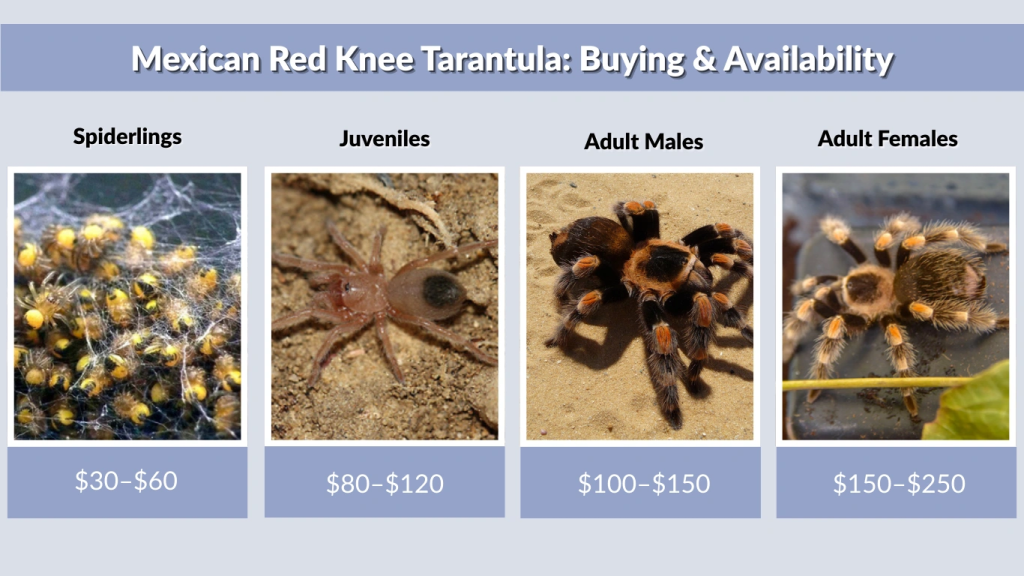
The Mexican Red Knee Tarantula is widely available due to captive breeding programs that protect wild populations. In the past, overcollection threatened the species, but today many breeders provide healthy, captive-bred spiderlings and adults.
Where to Buy
- Online Exotic Pet Shops: Many reputable breeders offer slings, juveniles, and adults shipped securely.
- Local Exotic Pet Stores: Common in reptile and arachnid specialty shops.
- Reptile & Arachnid Expos: Good source for captive-bred specimens.
Price Range
The cost depends heavily on age and sex:
- Spiderlings (slings): $30–$60
- Juveniles: $80–$120
- Adult Males: $100–$150
- Adult Females: $150–$250 (females cost more due to longer lifespans)
Location also affects pricing, with UK and US markets often listing higher prices for larger specimens.
Care & Enclosure Setup
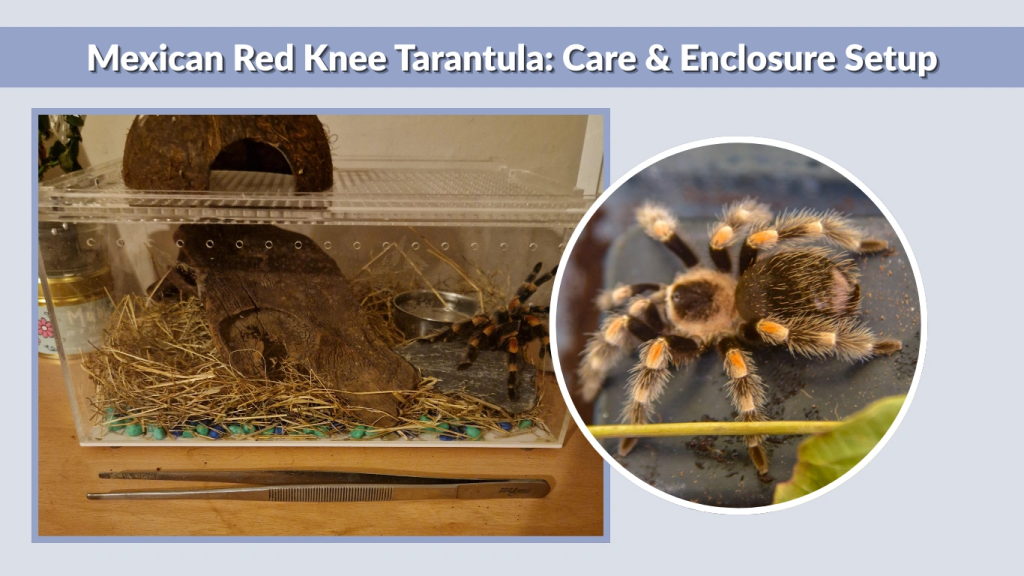
One reason the Mexican Red Knee is popular among beginners is its simple husbandry requirements. It adapts well to captive environments if its needs are met.
Tank Size
- Juveniles: A small plastic terrarium or critter keeper.
- Adults: A 5–10 gallon glass or acrylic tank (12x12x12 inches minimum).
The enclosure should provide floor space rather than height since they are terrestrial.
Substrate & Enclosure Design
- Substrate: Coconut fiber, peat moss, or a soil mix, 3–5 inches deep, for digging and burrowing.
- Hides: Cork bark, half logs, or artificial caves for shelter.
- Water Dish: A shallow dish with fresh water at all times.
Humidity & Temperature
- Humidity: 60–70%, maintained by light misting once or twice weekly.
- Temperature: 72–80°F (22–27°C), which is standard room temperature.
- Heating: Additional heating is usually unnecessary unless the room drops below 70°F.
Webbing & Burrows
Unlike arboreal species, they do not build large webs but may create silk layers in their hides. They also dig shallow burrows, so a deep substrate is recommended.
Size, Growth & Lifespan

The Mexican Red Knee is a medium-to-large tarantula, but not as massive as giants like the Goliath Birdeater.
Size
- Leg Span: 5–6 inches (12–15 cm) on average.
- Body Length: 4–5 cm, with females being bulkier than males.
Growth Rate
They are slow growers, taking several years to reach maturity. This slower growth contributes to their long lifespan but requires patience from owners raising spiderlings.
Lifespan
- Females: 20–25 years in captivity with proper care.
- Males: 5–10 years, often dying soon after reaching maturity.
This dramatic difference in lifespan is why females are more valuable in the pet trade.
Cost & Pricing
Pricing varies depending on factors such as age, sex, and breeder reputation.
- Spiderlings: The cheapest option, costing around $30–$60.
- Juveniles: Mid-range, priced between $80–$120.
- Adult Females: The most expensive due to their 20+ year lifespan, ranging from $150–$250.
- Adult Males: Shorter lifespan makes them less expensive, $100–$150.
Other costs include enclosure setup ($50–$100), substrate, food, and ongoing maintenance. Overall, the species is affordable compared to rarer tarantulas.
Male vs. Female Differences
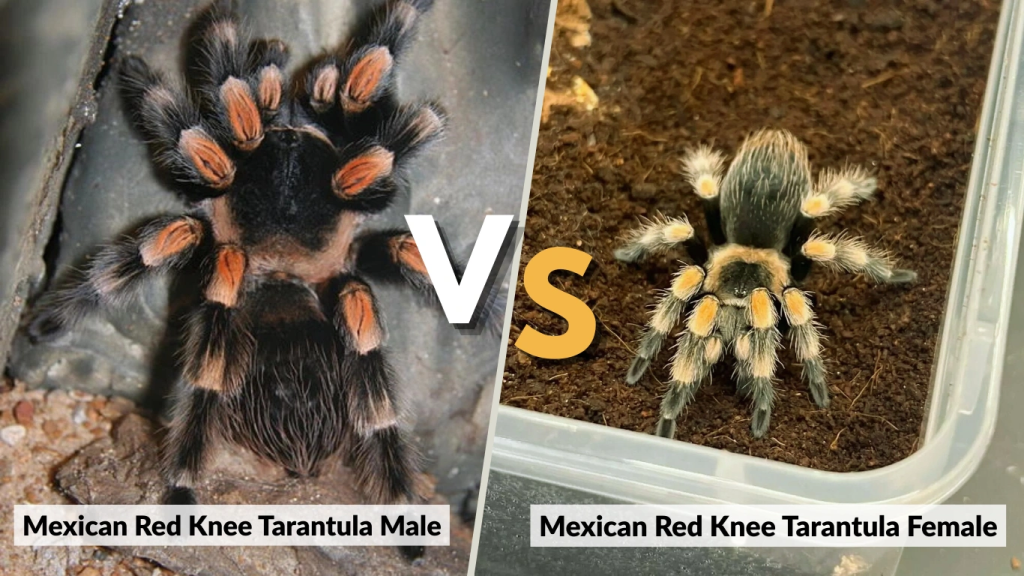
Appearance
- Females: Larger, stockier, and more robust. Their bodies appear rounder.
- Males: Slimmer, leggier, with longer pedipalps and tibial hooks in maturity.
Lifespan
- Females live up to 25 years, while males rarely exceed 10 years.
Temperament
Both sexes are generally docile, but females tend to be calmer and less prone to wandering. Males, especially after maturity, are more active as they search for mates.
How to Sex Them
- Molted Skins: Examining the exuviae (shed exoskeleton) is the most reliable way. Females show spermathecae (reproductive structures) inside the molt.
- Physical Traits: Mature males have hooks and larger pedipalps, but this is less reliable in juveniles.
Behavior & Temperament

The Mexican Red Knee Tarantula is best known for its calm and tolerant nature. This is one of the main reasons it’s recommended for beginners.
- Docile: They rarely show aggression unless provoked.
- Handling: While many owners report being able to handle them, experts advise limiting handling to reduce stress and avoid accidents. Even docile tarantulas may flick hairs or bite if startled.
- Beginner-Friendly: Their hardy nature, forgiving care requirements, and slow movements make them ideal for first-time tarantula keepers.
Are They Aggressive or Dangerous?
Mexican Red Knees are not aggressive by nature. They are more likely to retreat or flick urticating hairs from their abdomen than bite. Their defensive behaviors are mild compared to more nervous species like the Cobalt Blue or Orange Baboon Tarantula.
Venom, Bite & Safety

Are They Poisonous or Venomous?
Like all tarantulas, Mexican Red Knees are venomous but not poisonous. Their venom is designed to subdue insects, not humans.
Effects of a Bite
- Pain and swelling similar to a bee sting.
- Local redness or itching.
- Rare allergic reactions in sensitive individuals.
- Much less dangerous than spiders like the black widow.
Other Defenses
The more common issue is urticating hairs, which they kick into the air when threatened. These tiny barbed hairs can cause skin irritation and, if they get into the eyes, more serious discomfort.
Bottom line: They are not dangerous to humans and are among the safest tarantulas to keep.
Diet & Feeding
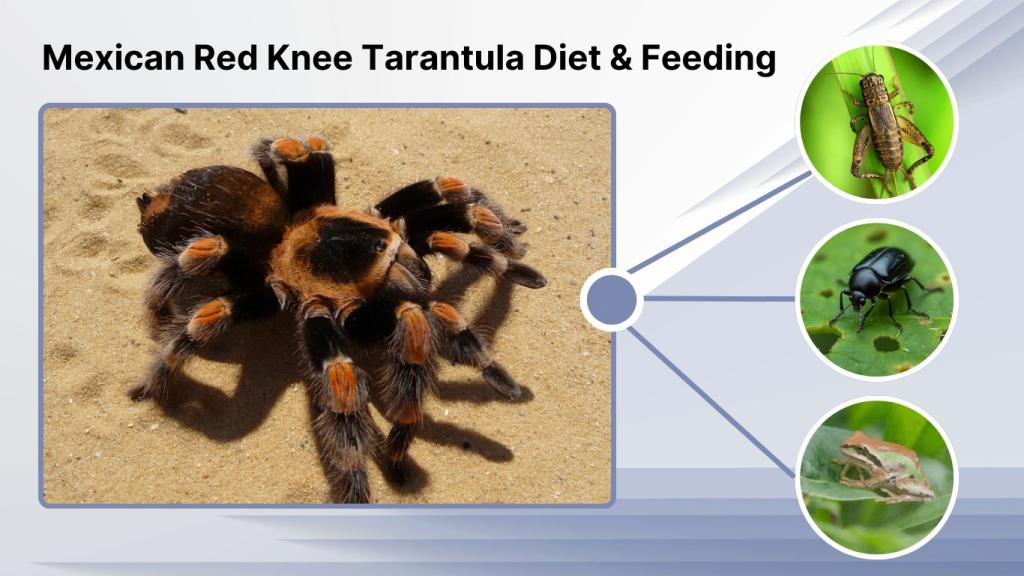
In the wild, Mexican Red Knee Tarantulas are opportunistic hunters, preying on small invertebrates and occasional vertebrates.
In the Wild
- Crickets, beetles, grasshoppers.
- Small lizards or frogs when available.
In Captivity
- Staple Diet: Crickets, mealworms, roaches.
- Occasional Treats: Superworms, locusts.
- Not Recommended: Feeding mice or large vertebrates is unnecessary and can cause stress or health issues.
Feeding Frequency
- Slings: Every 3–4 days.
- Juveniles: Once or twice a week.
- Adults: Once every 7–10 days.
Tarantulas can fast for weeks without harm, especially before molting. Overfeeding is a common mistake among new keepers.
Molting & Growth Cycle
Molting is an essential part of a tarantula’s life cycle, allowing it to grow.
Molting Frequency
- Spiderlings: Molt every few weeks.
- Juveniles: Every few months.
- Adults: Once a year or less.
Signs of Pre-Molt
- Refusal to eat.
- Dull or darkened coloration.
- Lethargy and sealing off their hide.
Post-Molt Care
After molting, the tarantula’s exoskeleton and fangs are soft. Do not feed them for about a week until they harden. Providing high humidity during molting helps reduce complications.
Natural Habitat & Range
The Mexican Red Knee is native to Pacific coastal regions of Mexico, particularly semi-desert scrublands and dry forests.
- Climate: Warm and relatively dry, with seasonal rains.
- Habitat: They live in burrows or natural crevices, using silk to reinforce entrances.
- Range: Found across parts of western Mexico, though populations have declined due to overcollection in the past.
Today, conservation efforts and international trade regulations (CITES) protect the species, making captive-bred individuals the standard in the pet trade.
Conclusion
The Mexican Red Knee Tarantula remains one of the most popular and beginner-friendly tarantulas in the world. Its striking appearance, calm temperament, and long lifespan make it a favorite among arachnid enthusiasts. With simple care requirements, hardy nature, and a forgiving disposition, it serves as the perfect introduction to tarantula keeping. While they do possess venom and urticating hairs, their threat to humans is minimal, and with proper care, they can live for decades in captivity.
FAQs
How long do Mexican Red Knee Tarantulas live?
Females can live up to 20–25 years, while males typically live 5–10 years. This makes females much more desirable to long-term keepers.
How big does a Mexican Red Knee Tarantula get?
Adults reach a 5–6 inch leg span, with females appearing bulkier and stockier than males.
Are Mexican Red Knee Tarantulas good for beginners?
Yes. They are calm, hardy, and easy to care for, making them one of the best species for beginner tarantula keepers.
Do Mexican Red Knee Tarantulas bite humans?
Bites are rare and usually occur only if the spider feels threatened. Venom is mild and not dangerous, but irritation from urticating hairs is more common.
How much does a Mexican Red Knee Tarantula cost?
Spiderlings cost $30–$60, juveniles $80–$120, and adult females $150–$250, depending on the breeder and market.