

Omothymus spiders are a fascinating group of arboreal tarantulas native to Southeast Asia. Known for their striking size, vivid colors, and reclusive behavior, they are a popular subject among arachnid enthusiasts and exotic pet keepers. With species such as Omothymus violaceopes and Omothymus schioedtei, they showcase incredible diversity in size and appearance. This article explores their physical traits, female differences, major species, venom, and overall importance in the exotic hobbyist community.
Overview of Omothymus Spiders
The genus Omothymus belongs to the family Theraphosidae, which includes tarantulas. Found mainly in Malaysia, Singapore, Indonesia, and nearby regions, these spiders thrive in dense rainforests where humidity levels remain consistently high. Historically, some species were grouped under the genus Lampropelma, leading to confusion in taxonomy. For example, Lampropelma violaceopes was later reclassified as Omothymus violaceopes, reflecting changes in scientific understanding.
Enthusiasts often admire Omothymus spiders for their striking arboreal adaptations. Unlike terrestrial tarantulas, they construct silken retreats in trees and elevated vegetation, making them excellent climbers and fast-moving predators.
Physical Characteristics

Omothymus spiders are recognized for their large size and impressive leg span. Adult specimens often reach a diagonal leg span (DLS) of 7–9 inches (18–23 cm), while exceptionally large females can exceed 10 inches. Their bodies are typically elongated, with robust legs adapted for climbing and securing themselves on vertical surfaces.
Coloration varies depending on the species. For example, Omothymus violaceopes (the Singapore Blue) is famed for its shimmering metallic blue legs and vibrant body. Omothymus schioedtei displays more earthy tones, often brown or olive with subtle iridescence. Younger spiders usually exhibit duller coloration, which intensifies as they mature.
When compared to humans, their leg span is often as wide as an adult’s outstretched hand, making them among the more visually striking tarantulas in the hobby.
Female Omothymus Spiders

Female Omothymus spiders are larger and bulkier than males. While males tend to be slender with longer legs, females have broader abdomens and thicker overall builds. This size difference plays a crucial role in reproduction, as females can produce and guard large egg sacs containing hundreds of spiderlings.
In terms of measurements, females of Omothymus violaceopes often range between 8–10 inches in leg span, while Omothymus schioedtei females can reach similar sizes. Their lifespan is also longer compared to males, with females often living 12–15 years in captivity, while males rarely survive beyond 3–4 years post-maturity.
Female Omothymus spiders are generally more reclusive, spending significant time hidden in their retreats. However, when disturbed, they can display defensive behavior, including rapid retreat or adopting a threat posture.
Popular Species of Omothymus

Omothymus violaceopes (Singapore Blue)
Perhaps the most famous member of the genus, Omothymus violaceopes is highly sought after in the exotic pet trade. Its iridescent blue coloration makes it one of the most visually stunning tarantulas in existence. This species requires tall enclosures with vertical climbing space, as it naturally resides in tree cavities and dense vegetation.
Adult females can grow up to 9–10 inches in leg span, making them formidable in both size and beauty. Despite their appeal, they are fast, defensive, and not suitable for beginners.
Omothymus schioedtei (Malaysian Earth Tiger)
This species is known for its earthy brown to olive coloration with subtle golden reflections. O. schioedtei is particularly admired for its size, with females reaching up to 10 inches. Males, however, remain more slender and shorter-lived.
In terms of temperament, they are defensive and reclusive, often spending much of their time in silken retreats. Their venom is considered medically significant, though not lethal, causing localized pain and discomfort. Hobbyists value this species for its rarity and impressive presence.
Omothymus sp. “Valhalla” and Langkawi
Recently described and locality-based species such as Omothymus sp. “Valhalla” and Omothymus sp. Langkawi add to the genus’s intrigue. Although less well-documented, they share arboreal habits and notable size. Hobbyists often distinguish them by subtle coloration differences and their geographic origins.
Omothymus hatihati
Another notable species, Omothymus hatihati, is appreciated among tarantula keepers for its appearance and active behavior. While not as vividly colored as violaceopes, it demonstrates the genus’s adaptability and diversity across Southeast Asia.
Behavior and Ecology
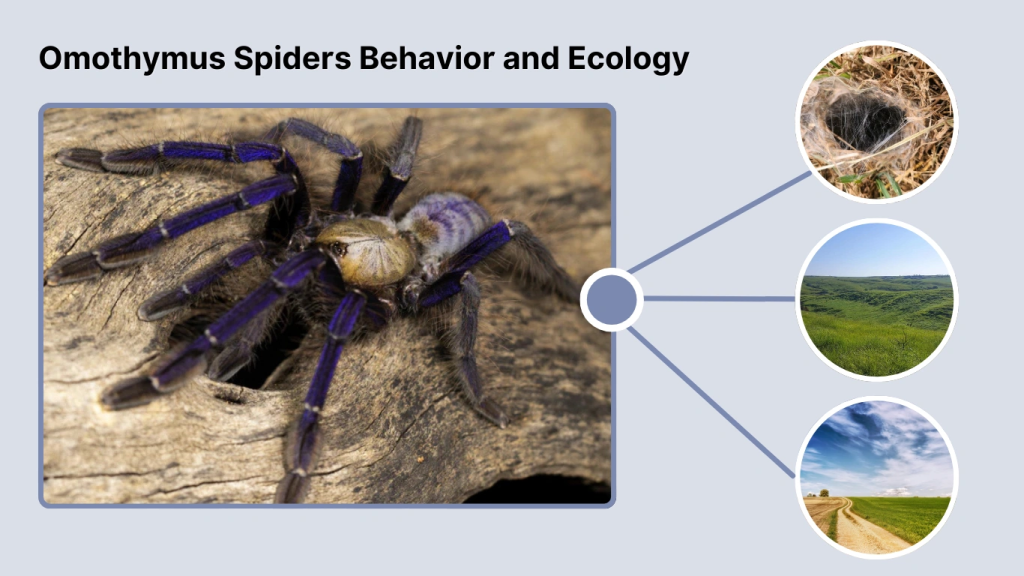
In the wild, Omothymus spiders are primarily nocturnal hunters. They rely on speed, agility, and powerful fangs to subdue prey ranging from insects to small vertebrates. Their arboreal lifestyle means they rarely come into contact with humans in natural settings, except when their habitats are disturbed.
These spiders are known for being defensive. When threatened, they may rear up, exposing their fangs, and strike if provoked. Due to their speed and climbing ability, they can quickly retreat into foliage or crevices.
Ecologically, they play a vital role in controlling insect populations, helping maintain balance in their rainforest environments.
Venom and Bite Concerns
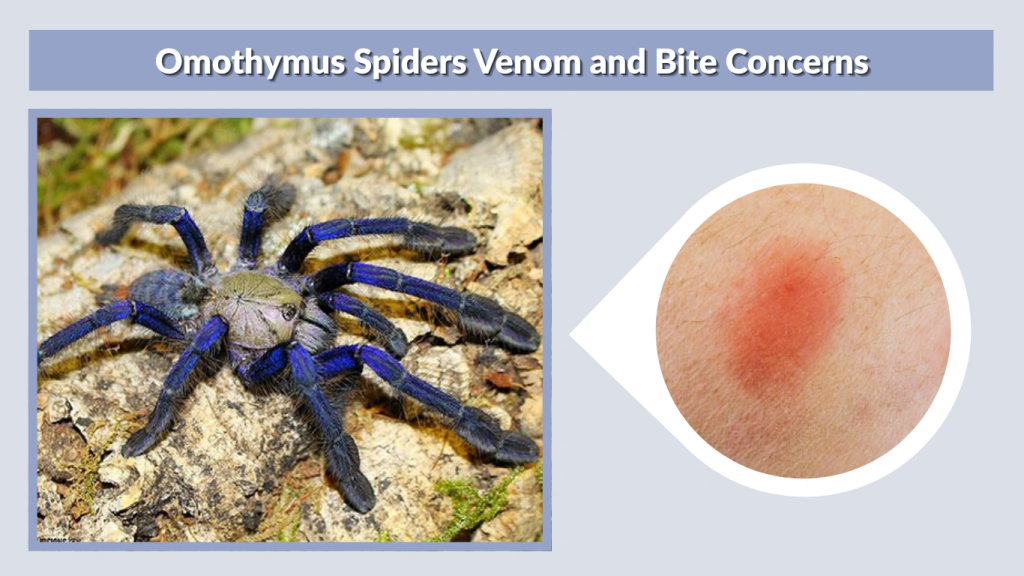
One of the most common questions about Omothymus spiders is whether they are dangerous. Like most tarantulas, they are venomous, but their venom is not considered lethal to humans. A bite from an Omothymus can cause significant localized pain, redness, and swelling, sometimes lasting several hours or even days. In rare cases, secondary symptoms such as nausea, dizziness, or muscle cramps may occur.
While their venom is more potent than many New World tarantulas, it is not comparable to medically significant spiders like the Sydney funnel-web. Most keepers report that the real risk lies in their defensive nature and speed, which can make handling stressful and increase the chances of accidental bites.
Size Comparisons

Omothymus spiders are among the largest arboreal tarantulas, and their leg span is frequently compared to human hands for scale. A mature female can easily cover the palm and fingers of an adult, making them appear even larger than their actual measurements.
- Average Size: 7–9 inches (18–23 cm)
- Largest Females: 10+ inches (25 cm)
- Males: 6–7 inches (15–18 cm), typically slimmer
When compared to the Goliath birdeater (Theraphosa blondi), Omothymus spiders are less bulky but nearly rival them in leg span. While the Goliath is heavier and more massive, Omothymus spiders are elegant giants, built for speed and climbing rather than sheer weight.
Hobby and Captive Care

Omothymus spiders have grown increasingly popular in the exotic pet trade, particularly species such as O. violaceopes and O. schioedtei. Their striking appearance and size make them desirable, but they are best suited for experienced keepers due to their defensive temperaments.
Housing Requirements
- Tall enclosures with vertical climbing space
- Plenty of anchor points for webbing
- High humidity levels (70–80%)
- Temperatures between 24–28°C (75–82°F)
Diet
They thrive on a diet of crickets, roaches, and other feeder insects. Larger adults can occasionally take small vertebrates, though insects are typically sufficient.
Mating in Captivity
Breeding Omothymus species can be challenging. Males often risk predation during introductions, and females may be aggressive toward them. However, successful pairings can produce egg sacs containing hundreds of spiderlings, contributing to the availability of captive-bred specimens.
Scientific and Local Mentions
Reports of wild Omothymus sightings are often shared in arachnid communities. A notable phrase, “a female Omothymus spider spotted in Malaysia,” highlights their distribution in dense tropical forests. Local names such as araña Omothymus or araña Omothymus hembra tamaño show their recognition in Spanish-speaking countries among hobbyists.
Taxonomically, these spiders have seen reclassification, with Lampropelma violaceopes now officially recognized as Omothymus violaceopes. This shift underscores the evolving understanding of Southeast Asian tarantulas. New species like Omothymus sp. “Valhalla” and Omothymus sp. Langkawi continue to emerge, sparking interest in ongoing research and discovery.
Conclusion
Omothymus spiders are some of the most remarkable arboreal tarantulas in the world. With their immense size, striking colors, and fascinating behavior, they attract both admiration and caution. While not ideal for novice keepers due to their speed and defensive nature, they remain a cornerstone of advanced tarantula collections. Beyond the hobby, these spiders play an important role in rainforest ecosystems, balancing insect populations and showcasing the biodiversity of Southeast Asia.
FAQs
What is the average size of an Omothymus spider?
Omothymus spiders typically range between 7–9 inches in leg span, with females being significantly larger than males. Some species, like Omothymus violaceopes and Omothymus schioedtei, can reach over 10 inches, making them some of the largest arboreal tarantulas in existence. Their size often rivals that of an adult’s outstretched hand.
Are Omothymus spiders dangerous to humans?
While their venom can cause painful bites, Omothymus spiders are not considered lethal to humans. Most effects include localized pain, swelling, and redness. Some cases may involve headaches or nausea, but these symptoms subside within days. They are defensive, fast-moving spiders, so bites are more likely from handling attempts rather than natural encounters.
How do female Omothymus spiders differ from males?
Females are larger, bulkier, and longer-lived than males. They often exceed 9–10 inches in leg span and can live up to 15 years in captivity. Males are slimmer, faster to mature, and rarely survive beyond 3–4 years post-adulthood. Female spiders are also central to reproduction, producing egg sacs containing hundreds of spiderlings.
Can Omothymus spiders be kept as pets?
Yes, but they are best suited for experienced tarantula keepers. They require tall enclosures with climbing space, stable humidity, and warm temperatures. Their defensive temperament and speed make them difficult to handle, so they are appreciated more for display and observation rather than interaction. Captive-bred specimens are available from specialized breeders.
How do Omothymus spiders compare to the Goliath birdeater?
The Goliath birdeater (Theraphosa blondi) is bulkier and heavier, often considered the largest tarantula by mass. However, Omothymus spiders rival them in leg span, sometimes reaching similar widths. While the Goliath dominates in weight, Omothymus spiders are elegant climbers, emphasizing speed and arboreal adaptations over sheer size.