
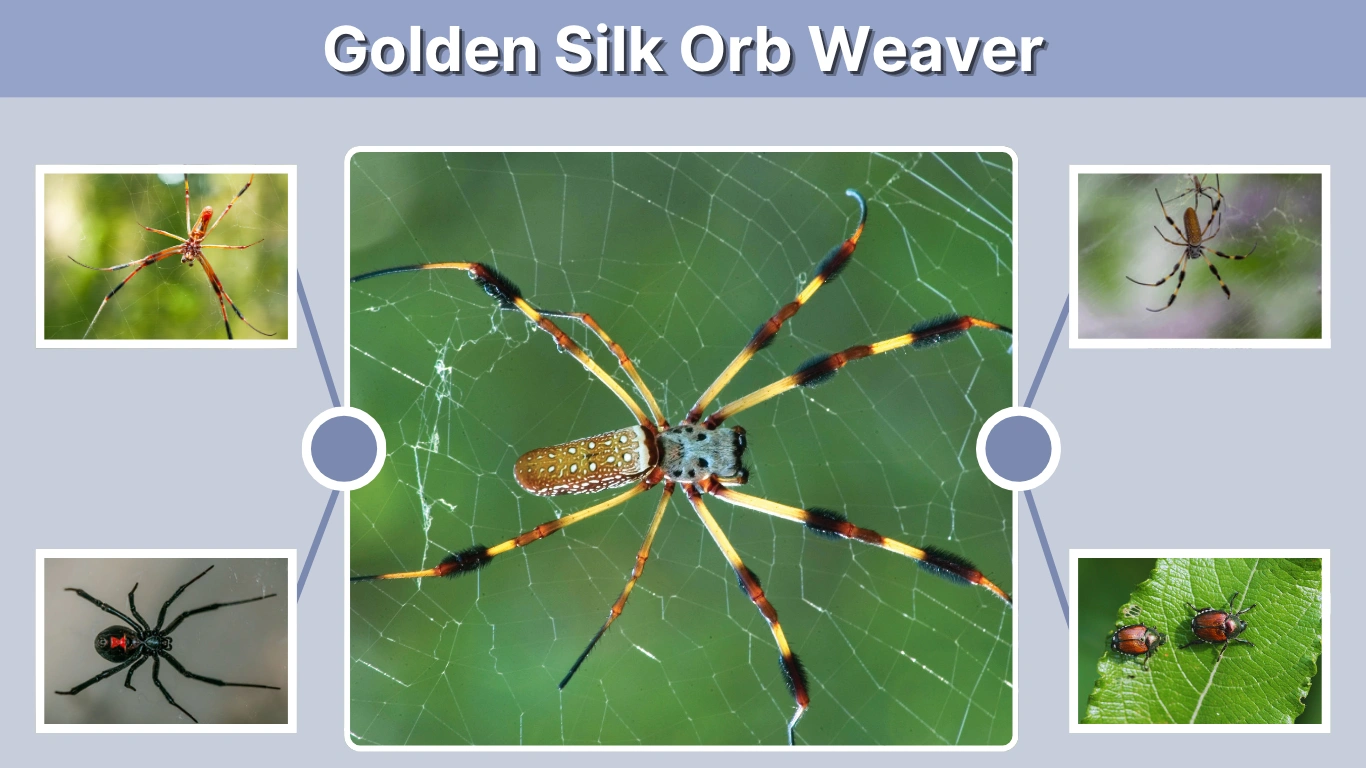
The golden silk orb weaver (genus Trichonephila), sometimes called the banana spider, is one of the most fascinating arachnids in the world. Known for its shimmering golden web and impressive body length, it easily stands out in the spider kingdom. While it is not the largest spider overall, its size, particularly the females, makes it one of the most eye-catching web builders. Comparing its dimensions with other well-known spiders helps us understand its significance in nature and how it measures up against other species.
Size Characteristics of Golden Silk Orb Weaver

Golden silk orb weavers show extreme sexual dimorphism—meaning males and females differ dramatically in size.
- Female size: Females are the giants of the species. Their body length ranges from 30 to 50 millimeters (3–5 cm), and with legs included, their span can reach up to 12 centimeters. This makes them among the largest orb-weaving spiders in existence.
- Male size: In contrast, males are tiny, usually 5–6 millimeters long. They are so small that they can often live unnoticed in the female’s web.
- Growth stages: As they molt, females gradually gain size, and their final molts lead to their impressive full-grown form. Males remain small, focusing more on reproduction than physical dominance.
This dramatic size gap contributes to their unique appearance and influences their behavior.
Golden Silk Orb Weaver vs Other Common Spiders
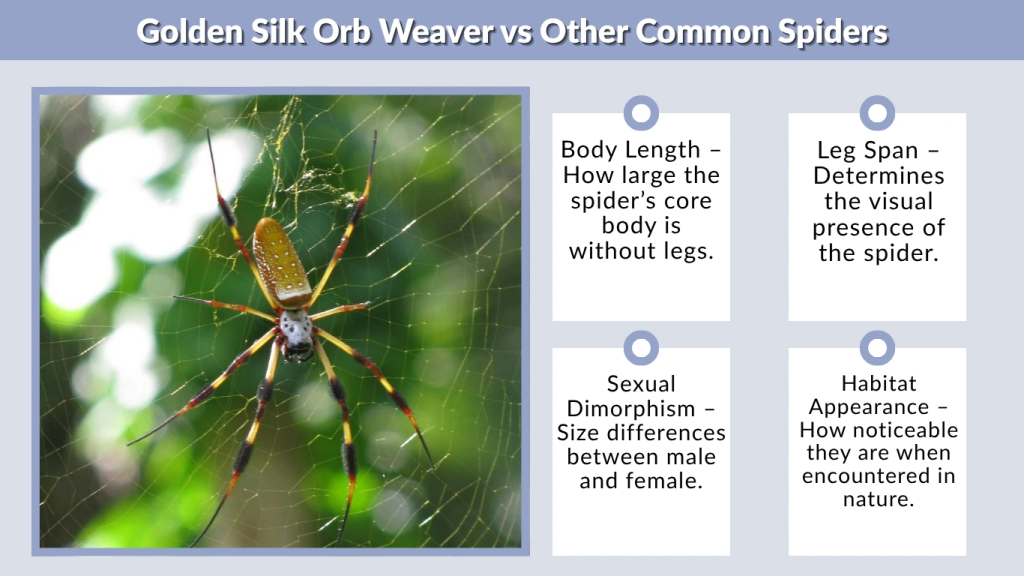
To truly appreciate their dimensions, it’s helpful to compare golden silk orb weavers with other spider species. Factors like body length, leg span, and web size all reveal interesting contrasts.
Key Size Comparison Factors
- Body Length – How large the spider’s core body is without legs.
- Leg Span – Determines the visual presence of the spider.
- Sexual Dimorphism – Size differences between male and female.
- Habitat Appearance – How noticeable they are when encountered in nature.
Spider Size Comparison Table

| Spider Species | Average Female Size (Body Length) | Leg Span Range | Male Size Comparison | Notable Features |
| Golden Silk Orb Weaver | 30–50 mm (females) | Up to 12 cm | Much smaller (5–6 mm) | Golden silk, massive webs |
| Black Widow | 8–13 mm | ~3–4 cm | Slightly smaller | Venomous bite, glossy black body |
| Garden Orb Weaver | 10–20 mm | 3–7 cm | Smaller | Common in gardens, classic orb web |
| Huntsman Spider | 15–30 mm | Up to 15 cm | Similar size ratio | Very large leg span, flat body |
| Goliath Birdeater (Tarantula) | 90–120 mm | Up to 30 cm | Slightly smaller | Heaviest spider, hairy appearance |
| Wolf Spider | 10–35 mm | 3–8 cm | Smaller | Ground hunters, fast movers |
Why Golden Silk Orb Weaver Appears Larger in Nature
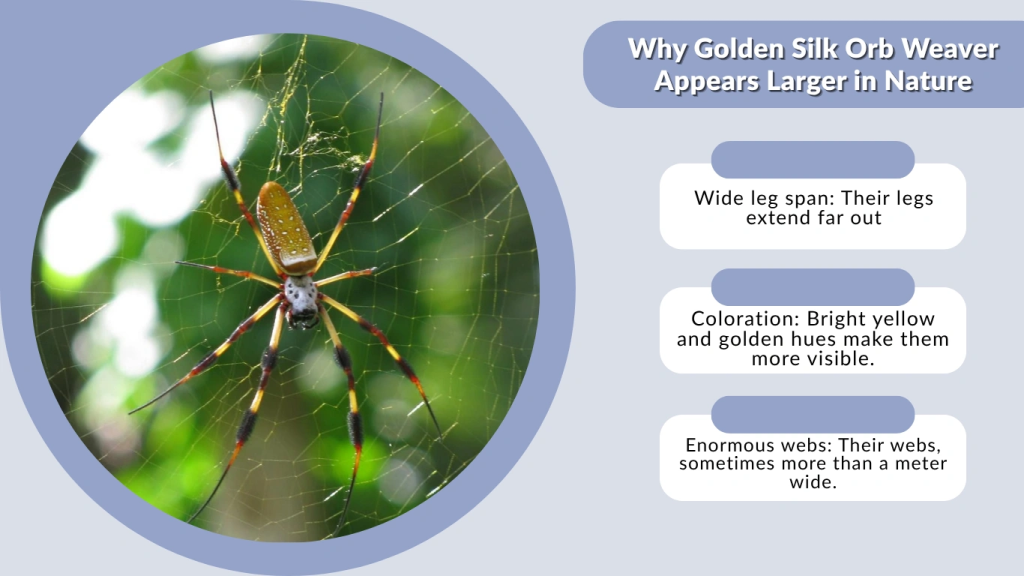
Although it is not as large as tarantulas or huntsman spiders, the golden silk orb weaver often appears much larger than it really is. This perception comes from several factors:
- Wide leg span: Their legs extend far out, creating an illusion of massive size.
- Coloration: Bright yellow and golden hues make them more visible.
- Enormous webs: Their webs, sometimes more than a meter wide, catch attention and exaggerate their presence.
These visual factors make the golden silk orb weaver one of the most striking spiders people encounter outdoors.
Importance of Size in Behavior and Survival
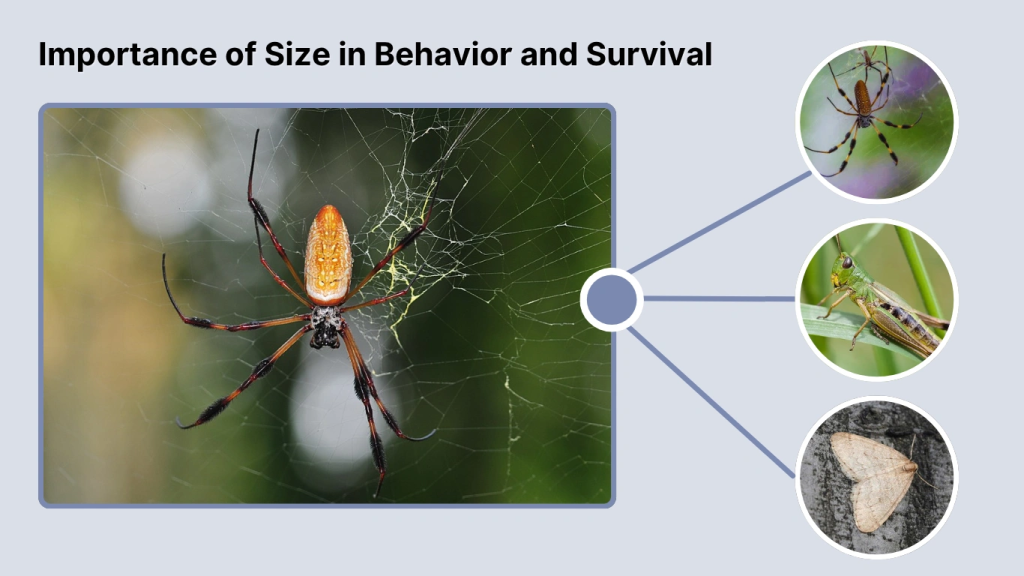
The size of the golden silk orb weaver influences nearly every aspect of its life. Larger females can build massive webs, sometimes exceeding one meter in diameter, which allows them to trap bigger prey such as grasshoppers, moths, and even small birds in rare cases. Their body size also gives them an advantage in terms of strength and endurance, allowing them to repair webs quickly and hold their position against wind or minor disturbances.
On the other hand, their bright size and color also make them more visible to predators like birds. To balance this risk, golden silk orb weavers rely on their golden silk as camouflage, blending with sunlight and dried foliage. Males, being tiny, avoid predation risks by staying discreetly hidden within the female’s web until mating opportunities arise.
Golden Silk Orb Weaver vs Giant Spiders

Although golden silk orb weavers are large among orb-weavers, they do not compete with the world’s absolute largest spiders. For example, the goliath birdeater tarantula is significantly heavier and bulkier, with a leg span up to 30 centimeters. Similarly, the huntsman spider often surprises people with its incredible reach, sometimes stretching longer than a human hand.
What makes the golden silk orb weaver unique is not its record-breaking size but the combination of moderate size and stunning silk webs. Unlike tarantulas that rely on ambush hunting or huntsman spiders that chase prey, orb weavers use their extraordinary web-building skills to maximize efficiency. Their webs are functional works of art, made possible by their size and silk strength.
Human Encounters and Perception of Size
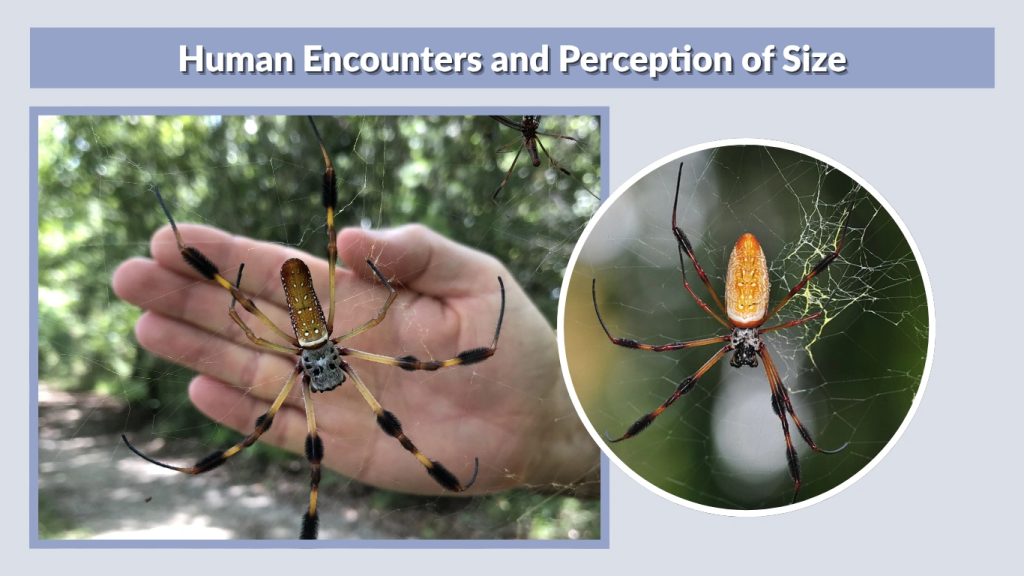
People often perceive golden silk orb weavers as more intimidating than they actually are. Their large webs are often built in gardens, near walking trails, or between trees where humans pass. Standing face-to-face with a spider that spans several inches across its legs can be alarming, especially under direct sunlight when the silk glitters.
Despite this, golden silk orb weavers are not dangerous to humans. Their venom is mild and rarely causes more than slight irritation. Their imposing size serves more as a defense mechanism than a real threat.
Conclusion
The golden silk orb weaver holds a unique position in the spider kingdom. While not the largest spider overall, its body length of up to 50 mm and leg span of 12 cm make it one of the largest orb-weaving spiders. Compared to black widows, garden orb weavers, and wolf spiders, it is dramatically larger. However, when placed beside huntsman spiders and tarantulas, it seems more moderate in scale.
What sets it apart is not just size but the combination of appearance, golden silk, and web-building mastery. These traits make it unforgettable to anyone who encounters one, whether in the wild or near home.
FAQs
How big can a golden silk orb weaver get?
Golden silk orb weaver females can grow up to 50 mm in body length with leg spans reaching about 12 cm. Males remain much smaller, usually only 5–6 mm. This dramatic size difference makes females appear massive in their webs, while males go almost unnoticed.
Are golden silk orb weavers bigger than black widows?
Yes, golden silk orb weavers are significantly larger. While a black widow female typically measures 8–13 mm in body length, golden silk orb weaver females can reach 30–50 mm. Their long legs and large webs further enhance their intimidating presence compared to the smaller, more secretive widow spider.
Which spider is bigger, huntsman or golden silk orb weaver?
The huntsman spider is generally larger in terms of leg span, stretching up to 15 cm, while the golden silk orb weaver reaches about 12 cm. However, the orb weaver’s thicker body and dazzling golden web often make it appear just as imposing in natural settings.
Is the golden silk orb weaver larger than tarantulas?
No, tarantulas such as the goliath birdeater far outsize golden silk orb weavers. A goliath birdeater can have a body length of over 90 mm and a leg span up to 30 cm. Still, golden silk orb weavers remain iconic because of their golden webs and striking presence among orb-weaving species.
Why are male golden silk orb weavers so small?
Males are tiny compared to females due to sexual dimorphism, a survival strategy in many spider species. Their small size helps them avoid being attacked by females and allows them to stay hidden within the web until mating. This adaptation ensures that reproduction happens without unnecessary risk.