
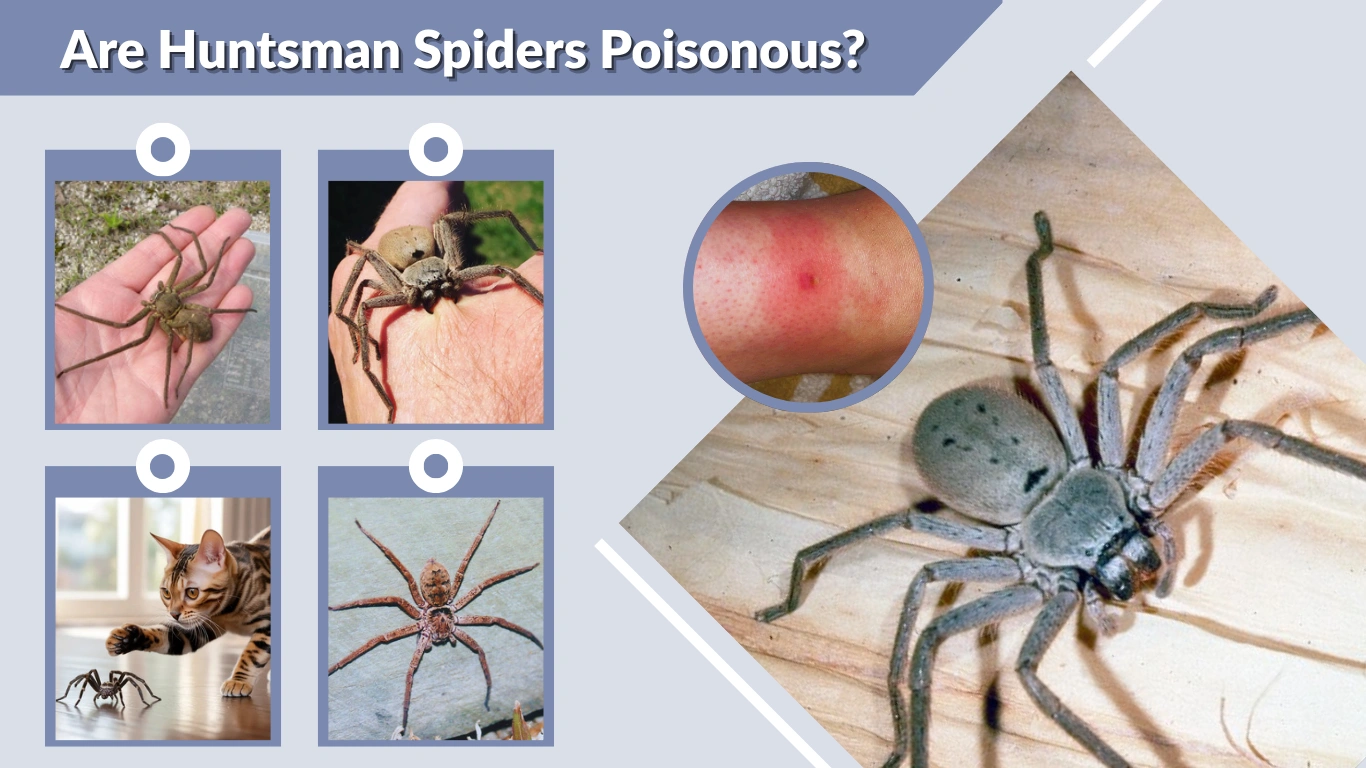
Huntsman spiders are some of the most recognizable arachnids, known for their large size, fast movements, and tendency to appear unexpectedly in homes. Their intimidating appearance often sparks fear and leads many to wonder if they are dangerous or poisonous. While huntsman spiders are indeed venomous, their venom is considered harmless to humans and pets. This article explores their biology, bite effects, and safety across different regions and species.
Understanding Huntsman Spiders

Physical Characteristics
Huntsman spiders belong to the family Sparassidae and are renowned for their enormous leg span, which can reach up to 12 inches in some species. Their bodies are generally flattened, allowing them to squeeze into tight spaces like behind bark or under rocks. They are typically brown, gray, or greenish, sometimes with banded legs. Although their size can be alarming, their appearance is more menacing than their actual threat.
Distribution and Habitat
These spiders are widely distributed, thriving in warm and tropical climates. They are commonly found in Australia, Asia, Africa, and parts of the Americas, with species also introduced in regions like Florida. Huntsman spiders prefer natural habitats such as forests and woodlands but are also well known for entering homes in search of food or shelter. Their adaptability has made them familiar yet misunderstood creatures worldwide.
Are Huntsman Spiders Poisonous to Humans?

Venom vs Poison Clarification
One of the biggest misconceptions is confusing venomous with poisonous. Poisonous refers to something harmful when ingested or touched, while venomous describes creatures that deliver toxins via a bite or sting. Huntsman spiders are venomous, not poisonous. Their venom is used to subdue prey like insects and small invertebrates but is not considered medically significant to humans.
Effects of a Bite
Huntsman spider bites are rare because they are generally non-aggressive and avoid human interaction. When bites do occur, symptoms are typically mild, including localized pain, swelling, redness, and itching. Some people compare the sensation to a bee sting. Severe reactions are extremely uncommon, and there are no verified cases of huntsman venom causing death in humans.
Special Cases – Babies and Sensitive People
While bites are not medically dangerous, infants, toddlers, or individuals with compromised immune systems may experience heightened reactions. In such cases, medical attention should be sought if swelling or allergic symptoms escalate. However, even among vulnerable groups, huntsman bites are far less concerning compared to bites from truly dangerous spiders like the Sydney funnel-web or black widow.
Huntsman Spiders and Pets

Are Huntsman Spiders Poisonous to Cats?
Cats often display natural curiosity and may chase, paw at, or even eat huntsman spiders. While a bite might cause local irritation or mild discomfort, huntsman venom is not toxic to cats. Symptoms are usually minor, such as drooling, pawing at the mouth, or temporary lethargy. Veterinary care is only required if unusual or prolonged symptoms appear.
Are Huntsman Spiders Poisonous to Dogs?
Dogs, like cats, may encounter huntsman spiders while exploring indoors or outdoors. A bite may result in localized swelling or mild pain, but it is not life-threatening. Dogs that consume huntsman spiders rarely suffer serious side effects, although mild gastrointestinal upset can occur. Pet owners should observe their animals after interactions but need not panic, as the risks are minimal.
Regional and Species Variations

Australian Huntsman Spiders
Australia is home to numerous huntsman species, and they are perhaps the most iconic of the group. Their enormous size often shocks homeowners, but despite their appearance, they are considered harmless. Australians generally tolerate them indoors since huntsman spiders are excellent at controlling cockroaches and other pests.
Florida Huntsman Spiders
In Florida, an introduced species known as the brown huntsman (Heteropoda venatoria) has established itself. It shares the same general traits: large size, nocturnal habits, and low risk to humans. While startling when spotted, these spiders do not pose a significant danger and are more of a household nuisance than a medical concern.
Giant and Golden Huntsman
The giant huntsman (Heteropoda maxima) of Laos holds the record for the world’s largest leg span. Despite its intimidating size, it is not harmful to humans. Similarly, the golden huntsman, recognized for its yellow or golden hues, shares the same low-risk venom profile. Both species highlight the variety within the huntsman family but reinforce the overall harmlessness of the group.
Other Regional Types of Huntsman Spiders

Brown Huntsman
The brown huntsman, often found in both Asia and the Americas, is one of the most widespread species. Its coloration allows it to blend easily into bark or soil, making it less noticeable until it enters human dwellings. Like other huntsman spiders, its venom is mild, and bites result only in short-lived irritation.
Green Huntsman
The green huntsman (Micrommata virescens) is a striking spider found in parts of Europe. Its vivid green color sets it apart from its relatives. Despite its unusual appearance, it is not medically dangerous. Its venom is only potent enough to immobilize insects, not humans.
Japanese Huntsman
The Japanese huntsman spider, also known as the “oka-huntsman,” is commonly encountered in Japan. While its large size often alarms residents, it plays an important role in pest control. Its bite, while potentially painful, does not carry serious health risks.
Victorian Huntsman
In Victoria, Australia, huntsman spiders are particularly common in suburban areas. These spiders are generally tolerated by locals as natural pest controllers. Encounters may be frequent, but their harmless reputation has made them more of a household guest than a threat.
Are All Huntsman Spiders Poisonous?
All huntsman spiders possess venom, which technically makes them venomous. However, their venom is specifically adapted for subduing insect prey rather than harming larger animals. Unlike medically significant spiders such as the funnel-web or recluse, huntsman venom lacks the potency to cause severe human injury. The misconception of danger largely arises from their intimidating size rather than their biology.
How Dangerous Are Huntsman Spiders Really?

Their Behavior
Huntsman spiders are non-aggressive by nature. When confronted, their first instinct is to escape rather than fight. They move rapidly across walls or floors, which can frighten observers, but this speed is a defensive trait. They rarely attempt to bite unless they are directly provoked or trapped.
When They Bite
Documented huntsman bites are infrequent and typically occur when the spider is accidentally cornered, handled, or pressed against the skin. Even then, their bites are considered minor compared to stings from bees or wasps. Immediate care, such as cleaning the wound and applying an ice pack, is usually sufficient. Severe allergic reactions are extremely rare.
Key Takeaways
- Huntsman spiders are venomous, not poisonous, and their venom is mild.
- Bites cause only minor symptoms like redness, swelling, and pain.
- They pose no serious risk to humans, cats, or dogs.
- Regional variations (Australian, Florida, giant, golden, green, etc.) do not change their harmless nature.
- Huntsman spiders are beneficial predators that help control insect populations.
- Their frightening appearance often overshadows the fact that they are harmless allies in ecosystems and even in households.
FAQs
Are huntsman spiders poisonous to humans?
Huntsman spiders are venomous but not dangerous to humans. Their venom is mild and designed to subdue insects, not harm people. A bite may cause temporary pain, redness, or swelling, but it is rarely more serious than a bee sting. No fatal cases have ever been recorded.
Can a huntsman spider kill a cat or dog?
No, huntsman spiders cannot kill cats or dogs. While curious pets may be bitten during play, the effects are typically mild. Symptoms such as swelling or slight irritation may appear but are short-lived. Veterinary care is only necessary if pets show unusual or prolonged symptoms after contact.
Are Australian huntsman spiders more dangerous than others?
Despite their size and frequency in homes, Australian huntsman spiders are not more dangerous than other species. In fact, Australians often tolerate them indoors because they help reduce pests like cockroaches. Their venom is no more harmful than that of huntsman species found elsewhere in the world.
How painful is a huntsman spider bite?
The pain of a huntsman bite is often compared to that of a bee sting. Victims usually experience localized discomfort, swelling, and mild redness that subsides within hours to days. Severe reactions are rare and mostly linked to individual allergic sensitivities rather than the venom itself.
Should I remove huntsman spiders from my home?
Removing huntsman spiders is not strictly necessary, as they are harmless and provide natural pest control. Many people choose to gently relocate them outdoors using a jar and paper. If their presence is unsettling, removal is a humane option, but extermination is not recommended or necessary.