
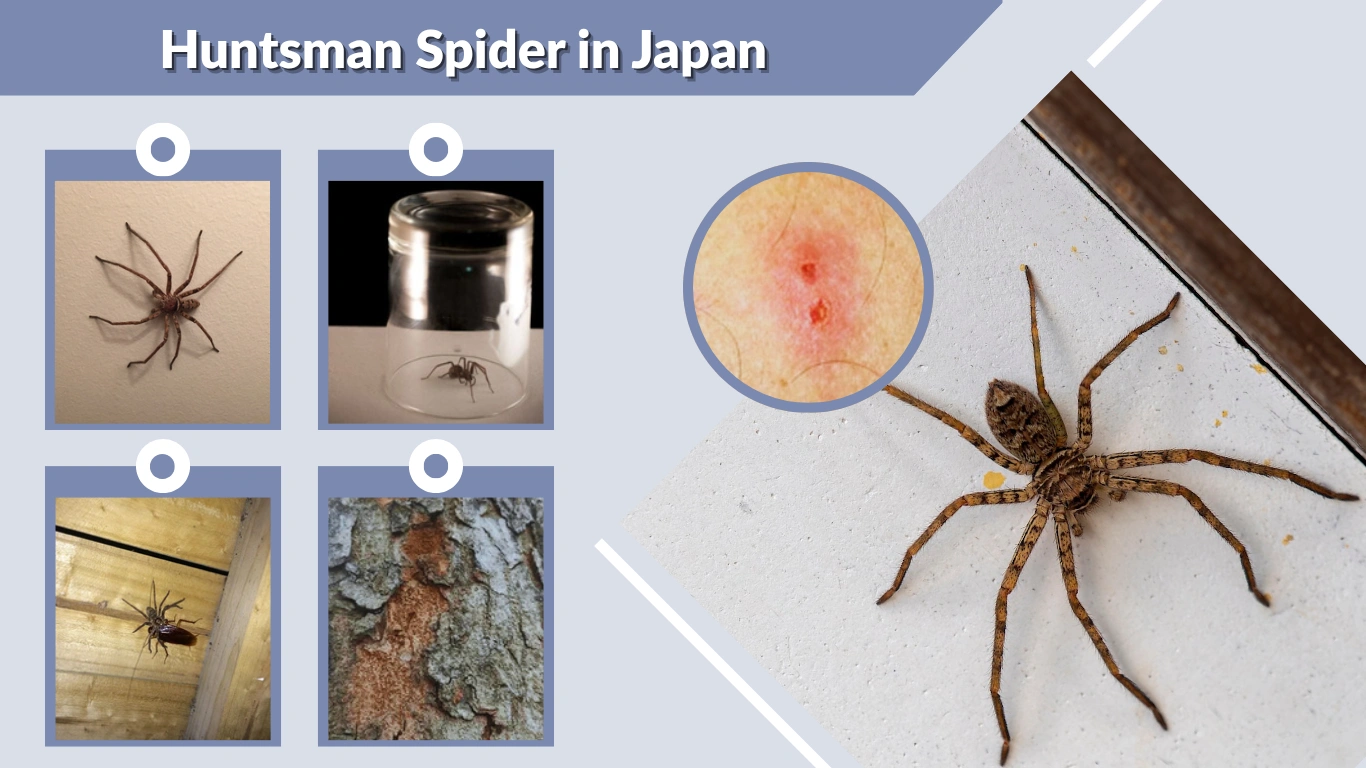
The huntsman spider in Japan is one of the most remarkable arachnids living alongside people across the country. Known for its wide legs, fast movement, and surprising size, it is often misunderstood. Despite its intimidating look, this spider is harmless and even helpful — many Japanese households quietly tolerate it because it keeps cockroaches, moths, and mosquitoes under control. In Japan’s warm, humid climate, the huntsman spider thrives both indoors and outdoors, becoming a familiar yet fascinating part of everyday life.
Is the Huntsman Spider Native to Japan?
Yes — Japan is home to several native and well-established huntsman spider species. The most common is Heteropoda venatoria, sometimes called the “house huntsman” or “banana spider.” It originated in tropical regions of Asia but has been living in Japan for centuries, especially in the southern islands. Other related species, such as Heteropoda minax, also inhabit the country’s forests and rural areas.
Because of Japan’s geography, ranging from subtropical Okinawa to the snowy north of Hokkaido, huntsman populations are concentrated in the warmer regions. In particular, Kyushu, Shikoku, and Okinawa have abundant numbers, while sightings in northern Japan are rare due to the colder climate.
Physical Appearance and Identification

Huntsman spiders are instantly recognizable once you know what to look for. Their long, flattened bodies and sideways-moving legs set them apart from most other spiders found in Japan.
Main identification traits include:
- Body size: Roughly 1 inch in body length, but their legs can stretch 4–5 inches across.
- Coloration: Typically light brown or gray, blending easily with wooden walls or tatami mats.
- Body shape: Flat, wide bodies allow them to squeeze behind furniture and wall cracks.
- Leg orientation: Long, crab-like legs extending sideways for agile, fast movement.
- Eyes: Eight eyes arranged in two neat rows across the front of the head.
Their size often leads to confusion with larger tropical species known as “giant huntsman spiders,” but most Japanese huntsman spiders are moderate in size compared to those found in Southeast Asia.
Common Huntsman Spider Species in Japan

Japan hosts a few species within the huntsman family, each suited to its environment:
- Heteropoda venatoria (House Huntsman Spider): The most common type, frequently seen inside homes and buildings.
- Heteropoda minax: Prefers outdoor habitats such as forest edges and under tree bark.
- Giant Huntsman Spider (rare reports): Occasionally spotted in southern Japan, but most “giant” sightings are exaggerations of large H. venatoria individuals.
All species share similar habits — they are nocturnal hunters, incredibly fast, and non-aggressive toward humans.
Size and Growth of the Japanese Huntsman Spider
The huntsman spider’s large appearance is one reason it captures so much attention in Japan. Adults can reach a leg span of up to 13 centimeters (about 5 inches), while their slender bodies measure around 2.5 centimeters. Females are bulkier than males and often remain near hiding places, while males are more active hunters.
Young huntsman spiders are smaller but grow quickly through a series of molts. During each molt, they shed their old exoskeleton, emerging larger and stronger. Within about a year, a juvenile can reach full adult size, ready to hunt insects independently. Because of Japan’s long summer season, their growth cycle progresses rapidly, allowing multiple generations to appear in warmer regions.
Habitat and Distribution Across Japan

The huntsman spider is distributed throughout most of Japan but is most abundant in southern and central regions. Its preferred habitats vary widely:
- Southern Japan (Okinawa, Kyushu): Thrives in tropical and subtropical climates with high humidity.
- Central Japan (Tokyo, Osaka, Nagoya): Common indoors during summer, often hiding behind wall clocks or sliding doors.
- Northern Japan (Hokkaido): Rarely seen due to cold winters, surviving only in heated indoor spaces.
They are remarkably adaptable, living both in urban areas and forests. Inside homes, they hide in corners, behind shelves, or within gaps between furniture. Outdoors, they rest under rocks, bark, or garden sheds, emerging at night to feed.
Behavior and Lifestyle

Huntsman spiders are nocturnal hunters that rely on speed and vision instead of webs. They chase and ambush prey such as cockroaches, beetles, and mosquitoes, making them natural pest controllers. Their quick, crab-like movements can seem alarming, but they are not aggressive. When threatened, they prefer to flee rather than bite.
In Japan, people often view them as beneficial companions rather than pests. Many households let them stay quietly in corners, believing they bring good fortune by keeping the home insect-free. Their calm temperament, combined with their pest-reducing habits, makes them surprisingly welcome guests in many traditional Japanese homes.
Cultural Perception of Huntsman Spiders in Japan
In Japanese folklore and daily culture, the huntsman spider occupies an interesting place. While their sudden appearance can cause alarm, many people associate them with good luck and clean living environments. Seeing one indoors, especially during summer, is sometimes taken as a sign that the house is free from harmful pests.
In rural communities, farmers appreciate these spiders because they help reduce crop-damaging insects. The huntsman’s presence in rice-growing regions and gardens reflects Japan’s traditional balance between humans and nature — where even large spiders are respected for their usefulness.
Are Huntsman Spiders Dangerous in Japan?

Despite their size and speed, huntsman spiders are not dangerous to humans. They are timid creatures that prefer escaping over confrontation. Bites are extremely rare and typically happen only when a spider is accidentally trapped or handled roughly. Even then, the bite causes mild irritation or swelling, similar to a mosquito bite.
Japanese residents often share their homes with these spiders without issue. In fact, many recognize their value — a single huntsman can eliminate several cockroaches or moths each night, reducing the need for pesticides.
What to Do If You Find a Huntsman Spider Indoors

Encounters with huntsman spiders are common in Japanese homes, especially during summer. Here’s how to handle the situation safely and humanely:
- Stay calm: Their size can be startling, but they’re harmless and non-aggressive.
- Use a container: Trap the spider gently under a clear cup or box.
- Slide paper underneath: This allows you to move it safely without harm.
- Release outdoors: Let it go near shrubs or gardens where it can continue hunting.
- Keep windows screened: This prevents re-entry while allowing air circulation.
These simple steps help maintain harmony between people and nature — a value deeply respected in Japanese culture.
Role in Japan’s Ecosystem
Huntsman spiders play a crucial ecological role across Japan. They control insect populations, particularly in humid regions where mosquitoes and cockroaches thrive. In rural areas, they help protect crops from small insect pests, while in cities, they act as natural pest controllers within homes and buildings.
Their hunting behavior keeps the balance between insect populations, supporting Japan’s biodiversity. Even in densely populated cities like Tokyo or Osaka, huntsman spiders quietly contribute to a cleaner, healthier environment.
Seasonal Activity and Behavior Changes

The huntsman spider’s activity changes with the seasons. They are most active from May through September, coinciding with Japan’s warm, humid months. During this time, insects multiply, giving the spiders plenty to eat.
In cooler months — from late autumn to early spring — they become less active and often seek shelter indoors. Some enter a semi-dormant state, hiding behind furniture or in storage areas until temperatures rise again. In southern Japan, where winters are mild, huntsman spiders can remain active almost year-round.
Huntsman Spider Myths and Internet Fame in Japan
Like many large spiders, the huntsman has become an internet sensation in Japan. Photos of huntsman spiders clinging to walls or ceilings sometimes go viral on Japanese social media, often with exaggerated captions claiming they are “giant spiders invading homes.”
In reality, these are common Heteropoda venatoria individuals — big but not monstrous. The combination of bright indoor lighting and camera angles makes them appear much larger. Despite the myths, the huntsman spider’s fame has helped raise awareness of Japan’s rich native biodiversity.
Difference Between Huntsman and Other Common Japanese Spiders
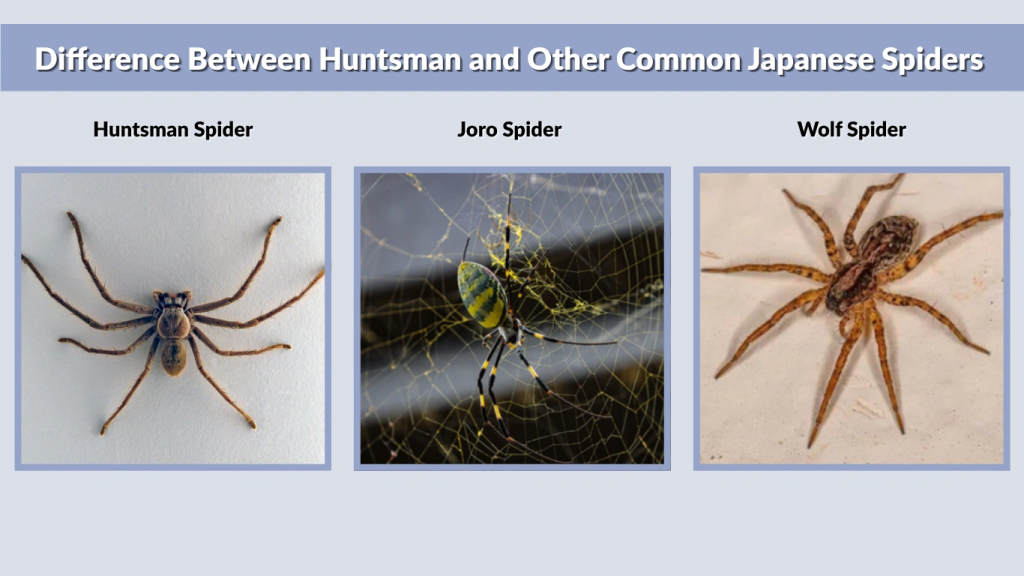
Several large spiders live in Japan, and they are often mistaken for one another. Below is a quick comparison:
| Trait | Huntsman Spider | Joro Spider (Trichonephila clavata) | Wolf Spider |
| Movement | Sideways, fast, crab-like | Stationary, web-dwelling | Ground-running |
| Body Shape | Flat and wide | Round abdomen, long legs | Stout, hairy body |
| Habitat | Indoors/outdoors | Gardens, trees | Ground, under leaves |
| Webs | None (hunts prey) | Spins large orb webs | Does not spin webs |
| Temperament | Shy, avoids people | Passive | Defensive when provoked |
This table helps residents identify huntsman spiders correctly and understand their harmless nature compared to other species.
Reproduction and Life Cycle
Female huntsman spiders in Japan lay eggs inside silk sacs, which they guard diligently. Each sac contains 150–200 eggs, and the spiderlings hatch after several weeks. The young disperse soon after hatching, beginning their independent lives as hunters.
Unlike many spiders, huntsman mothers sometimes stay near their young for protection, showing a level of care unusual among arachnids. Most live for about two years, with females typically outliving males. The life cycle peaks during summer when conditions are ideal for mating and hunting.
Climate Influence on Huntsman Populations
Japan’s climate directly influences the range and activity of huntsman spiders. They thrive in humid and subtropical areas, such as Okinawa, Kyushu, and southern Honshu. Coastal humidity and summer warmth create ideal conditions for breeding and hunting.
In recent years, mild winters caused by climate change have allowed these spiders to expand slightly northward. While they remain rare in Hokkaido, occasional reports show that huntsman spiders are adapting to new environments as Japan’s climate gradually warms.
FAQs
Are huntsman spiders native to Japan?
Yes. The most common species, Heteropoda venatoria, has long been established in Japan, particularly in southern regions. It is considered both native and beneficial.
How big do huntsman spiders get in Japan?
Adult huntsman spiders can reach a leg span of 12–13 centimeters. Though large, their flat bodies make them appear even wider when they move.
Are huntsman spiders common in Tokyo?
They are occasionally seen indoors during summer in Tokyo and other central areas, especially in older wooden houses. They’re more common in southern Japan.
Are huntsman spiders dangerous?
No. They are harmless and rarely bite. Their venom is too weak to harm humans and they usually flee from people rather than attack.
Why do Japanese people tolerate huntsman spiders?
Many Japanese households consider them helpful because they eat pests like cockroaches and mosquitoes. Their presence is seen as a natural, eco-friendly form of pest control.