
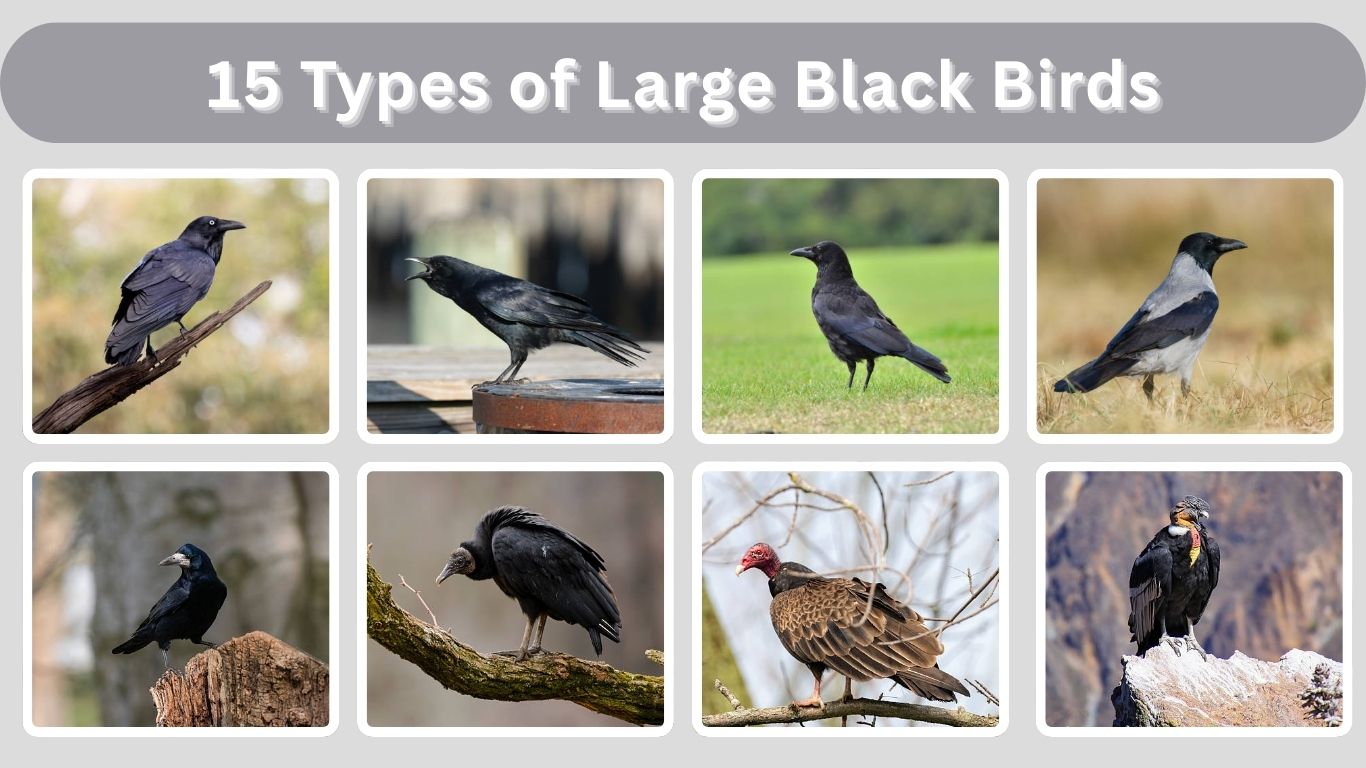
Large black birds have long captured human attention with their powerful presence, intelligence, and dramatic silhouettes. From highly intelligent crows and ravens to massive soaring condors, vultures, and eagles, these birds dominate skies, forests, wetlands, and open landscapes around the world. Many are skilled hunters or scavengers, playing vital roles in maintaining ecological balance. Their dark plumage, impressive wingspans, and adaptable behavior make them some of the most fascinating and easily recognizable birds in nature.
1. Common Raven
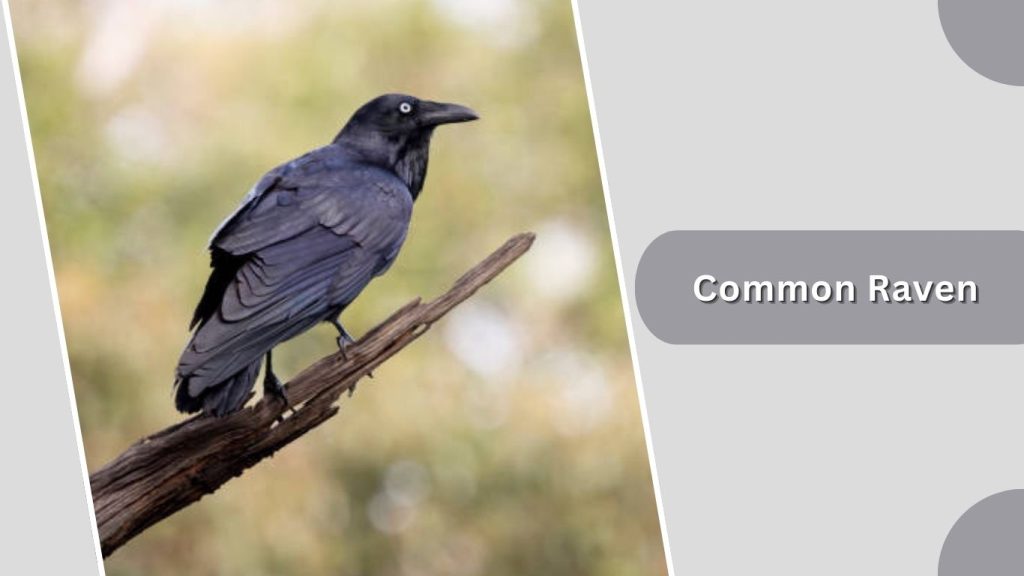
The Common Raven (Corvus corax) is one of the largest and most intelligent black birds in the world. Found across the Northern Hemisphere, it is known for its powerful flight, deep croaking calls, and remarkable problem-solving abilities. Ravens have played important roles in mythology and folklore and are often associated with mystery and wisdom. Despite their intimidating appearance, they are highly adaptable and thrive in both wild and human-dominated environments.
Identification
- Large, all-black body with glossy feathers
- Thick, heavy bill slightly curved at the tip
- Wedge-shaped tail visible in flight
- Shaggy throat feathers, especially noticeable when calling
Size
The Common Raven measures about 54–67 cm (21–26 inches) in length and has an impressive wingspan of 115–150 cm (45–59 inches), making it one of the largest perching birds in the world.
Habitat
This species occupies a wide range of habitats including mountains, forests, tundra, deserts, coastal cliffs, and open countryside. It is also increasingly common near towns and roadsides, especially where food is available.
Diet
The Common Raven is an omnivorous scavenger. Its diet includes carrion, small animals, insects, grains, fruits, and human food scraps. It is also known to cache food for later use, demonstrating advanced memory and planning skills.
2. American Crow
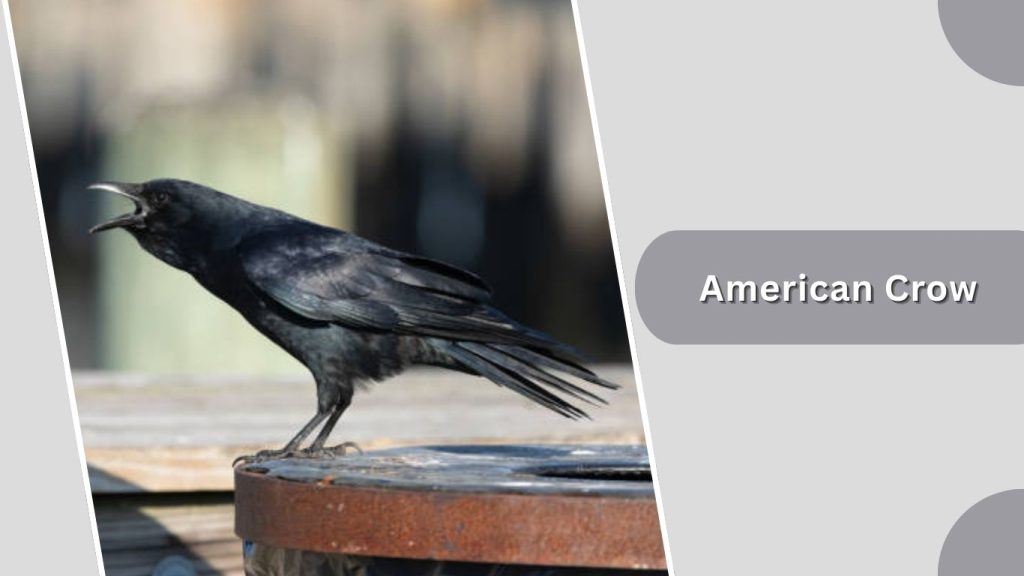
The American Crow (Corvus brachyrhynchos) is a large, intelligent black bird commonly seen across North America. Highly social and adaptable, it thrives in cities, farmlands, forests, and open countryside. Known for its loud “caw” calls and strong family bonds, this crow often works cooperatively when feeding or defending territory.
Identification
- Large black body with a straight, stout bill
- Glossy black feathers with a slight purple sheen
- Fan-shaped tail in flight
- Loud, harsh “caw-caw” calls
Size
The American Crow measures about 40–50 cm (16–20 inches) in length with a wingspan of 85–100 cm (33–39 inches).
Habitat
This species is found in woodlands, agricultural fields, grasslands, urban areas, and suburbs, showing exceptional adaptability to human environments.
Diet
American Crows are omnivorous, feeding on insects, small animals, eggs, fruits, grains, carrion, and human food waste. They are also known for storing food and using tools in some situations.
3. Carrion Crow
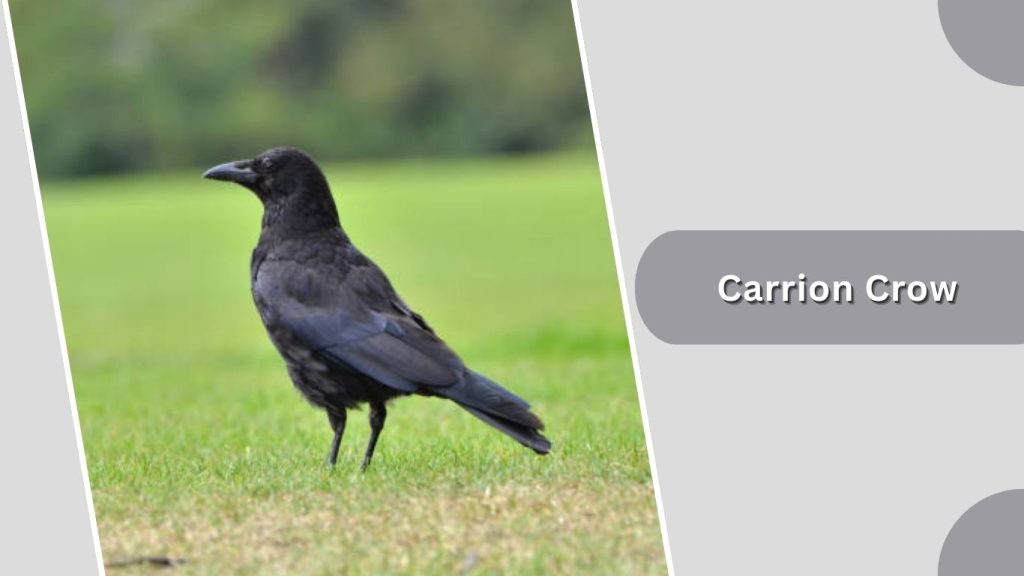
The Carrion Crow (Corvus corone) is a large black crow native to Europe and parts of Asia. Often confused with other crow species, it is recognized for its entirely black plumage and intelligent, cautious behavior. It is a confident bird that frequently exploits new food sources.
Identification
- Entirely black plumage from head to tail
- Strong black bill and sturdy legs
- Broad wings with rounded tips
- Deep, harsh croaking call
Size
The Carrion Crow measures approximately 45–47 cm (18–18.5 inches) in length and has a wingspan of 93–104 cm (37–41 inches).
Habitat
This crow inhabits farmland, open woodland, coastal areas, parks, and towns. It avoids dense forests and prefers open or semi-open landscapes.
Diet
The Carrion Crow feeds on carrion, insects, small mammals, eggs, seeds, fruits, and food scraps, making it a highly opportunistic and resilient species.
4. Hooded Crow
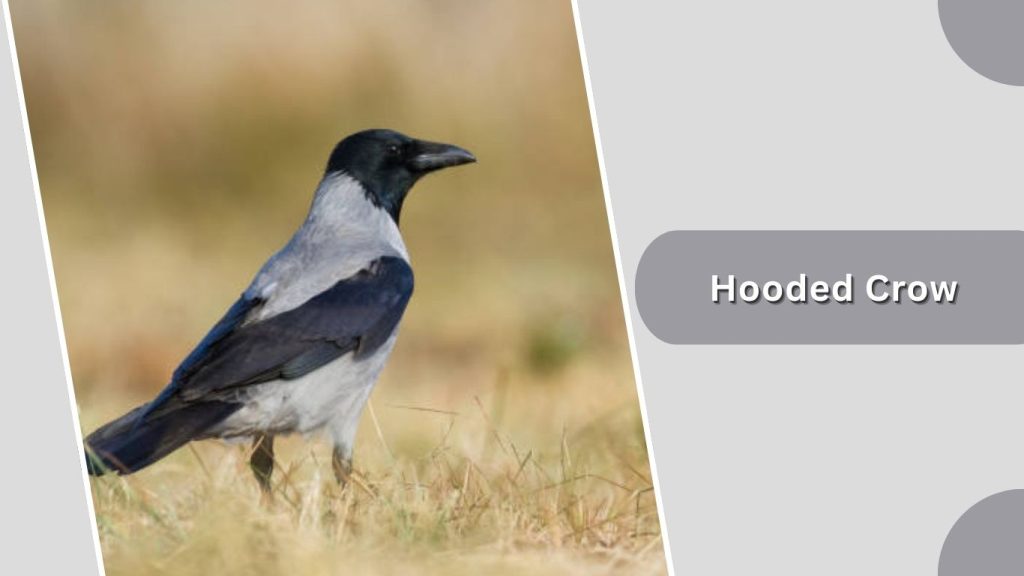
The Hooded Crow (Corvus cornix) is a striking large black bird known for its two-toned appearance and sharp intelligence. Often called the “hoodie,” this crow stands out from other crows due to its contrasting gray and black plumage. It is highly adaptable and thrives in a wide range of environments, from remote coastal regions to busy cities. Like other members of the crow family, it is curious, cautious, and capable of complex problem-solving.
Identification
- Black head, throat, wings, and tail
- Pale gray body and chest creating a hooded look
- Strong black bill and legs
- Broad wings and confident, steady flight
Size
The Hooded Crow measures about 48–52 cm (19–20.5 inches) in length and has a wingspan of 95–105 cm (37–41 inches). Its size and build are similar to the Carrion Crow, making it one of the larger crow species.
Habitat
This species occupies coastal areas, farmland, open countryside, forests, mountains, and urban environments. It is especially common in northern and eastern Europe, parts of the Middle East, and northern Asia. Hooded Crows are highly tolerant of cold climates and human activity.
Diet
The Hooded Crow is an omnivorous generalist. It feeds on insects, small mammals, eggs, carrion, grains, fruits, shellfish, and human food waste. Its intelligence allows it to exploit new food sources quickly, including cracking shells or dropping food from heights to break it open.
5. Rook
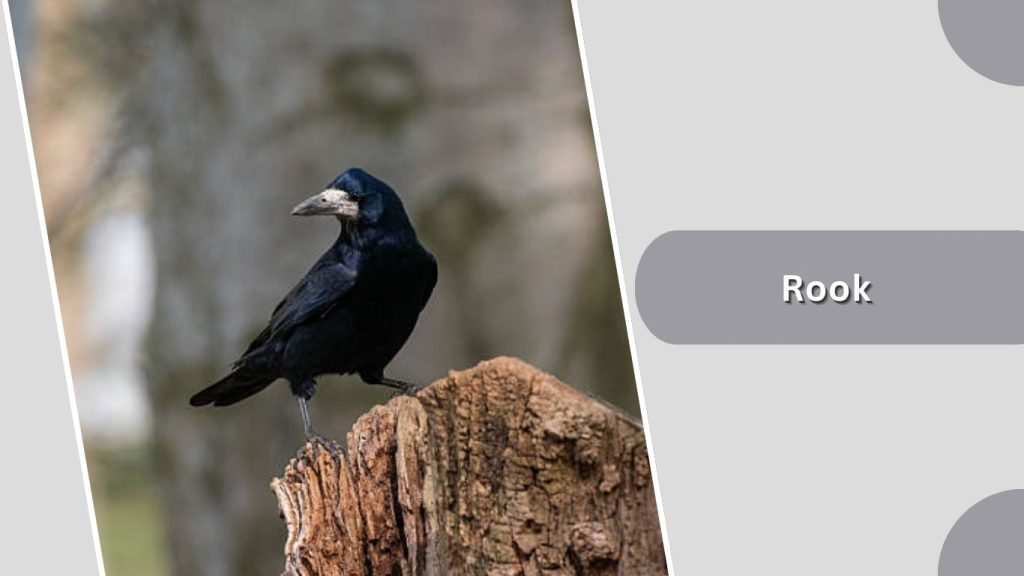
The Rook (Corvus frugilegus) is a large black bird closely related to crows and ravens, but it has several unique features that make it easy to identify. Known for its communal nesting behavior, the rook is a highly social species often seen in noisy groups called rookeries. Though sometimes viewed as a farmland pest, it plays an important role in controlling insects and cleaning up waste.
Identification
- Entirely black plumage with a glossy purple-blue sheen
- Distinct bare, pale-gray skin around the base of the bill (adults)
- Long, pointed bill and slightly peaked head
- Often seen in large flocks, especially outside breeding season
Size
The Rook measures approximately 44–46 cm (17–18 inches) in length and has a wingspan of 81–99 cm (32–39 inches). It is slightly smaller and slimmer than a Common Raven but comparable to large crows.
Habitat
Rooks are commonly found in farmland, open countryside, grasslands, woodland edges, and towns. They prefer open areas with scattered trees for nesting and often return to the same nesting sites year after year.
Diet
The diet of the Rook consists mainly of insects, earthworms, larvae, grains, seeds, fruits, and carrion. It frequently forages on the ground, probing soil with its long bill. While it can damage crops at times, it also benefits agriculture by consuming large numbers of harmful insects.
6. Black Vulture
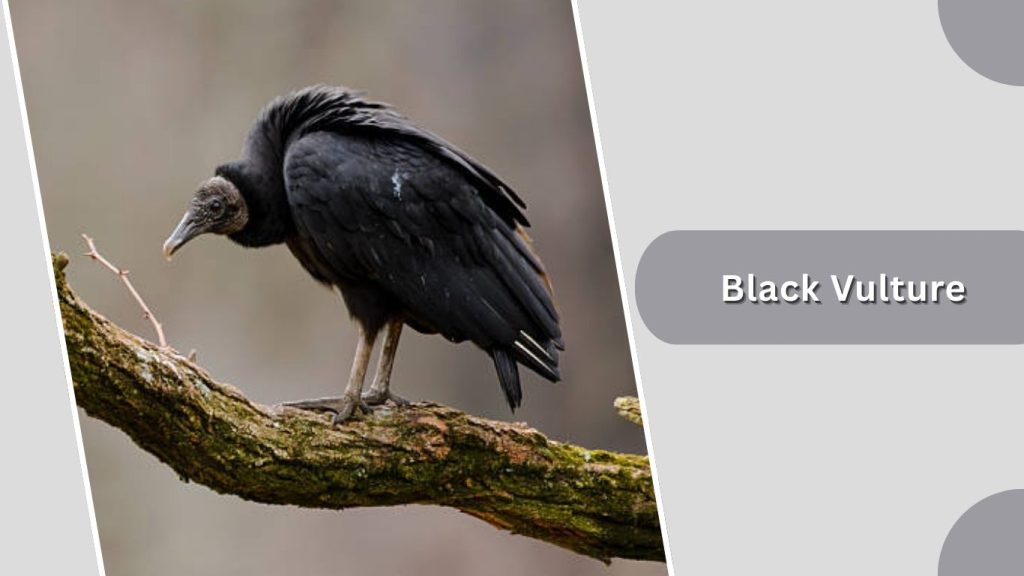
The Black Vulture (Coragyps atratus) is a large black scavenging bird commonly found in the Americas. It is known for its soaring flight, social behavior, and strong reliance on carrion for survival. Unlike many birds of prey, Black Vultures often feed and roost in groups, relying on cooperation and keen observation to locate food. Though sometimes misunderstood, they play a vital role in ecosystems by cleaning up dead animals and reducing the spread of disease.
Identification
- Large black body with broad wings
- Short, hooked bill adapted for tearing flesh
- Bare, wrinkled blackish-gray head
- White patches visible near the wingtips during flight
Size
The Black Vulture measures about 56–66 cm (22–26 inches) in length and has a wingspan of 132–150 cm (52–59 inches). Its broad wings and short tail give it a compact, powerful appearance in the air.
Habitat
This species inhabits open areas, forests, wetlands, farmlands, coastal regions, and urban zones. It is especially common near roads, landfills, and slaughterhouses where food is readily available. Black Vultures have expanded their range northward in recent decades.
Diet
Black Vultures feed almost entirely on carrion, including dead mammals, birds, and fish. They also scavenge human waste and are known to follow other vultures to food sources, relying more on sight than smell to locate carcasses.
7. Turkey Vulture
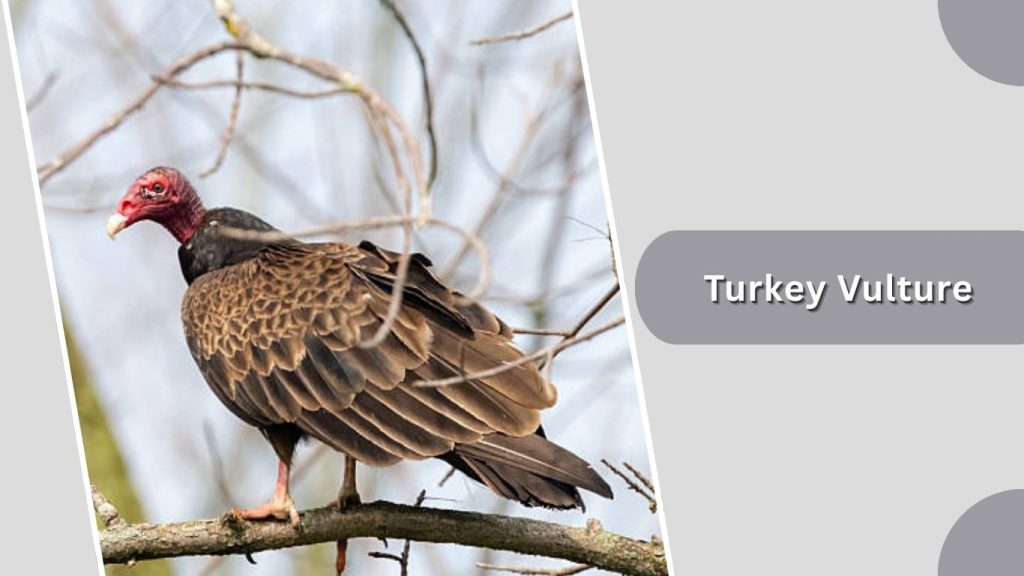
The Turkey Vulture (Cathartes aura) is one of the most widespread and recognizable large black birds in the Western Hemisphere. Famous for its effortless soaring flight and keen sense of smell, it can detect dead animals from great distances. Despite its somewhat eerie appearance, the Turkey Vulture is harmless and essential for maintaining environmental health.
Identification
- Large dark body with long, broad wings
- Small head with bare red skin (adults)
- Two-toned wings with dark front edges and lighter trailing edges
- Long tail and distinctive V-shaped glide in flight
Size
The Turkey Vulture measures approximately 64–81 cm (25–32 inches) in length and boasts an impressive wingspan of 160–183 cm (63–72 inches), making it larger than the Black Vulture.
Habitat
This species is found in a wide range of habitats including grasslands, deserts, forests, mountains, wetlands, and suburban areas. It avoids dense urban centers but is common in open landscapes where soaring is easy.
Diet
Turkey Vultures are specialized scavengers, feeding almost exclusively on carrion. Unlike Black Vultures, they have an exceptional sense of smell that allows them to locate hidden carcasses. By rapidly consuming dead animals, they help prevent the spread of disease and recycle nutrients back into the ecosystem.
8. Andean Condor
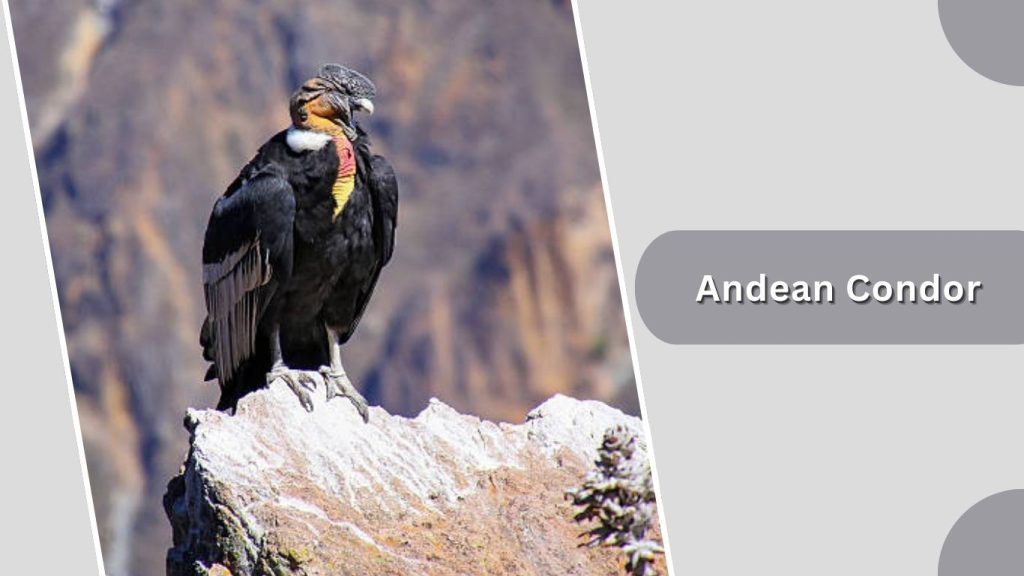
The Andean Condor (Vultur gryphus) is one of the largest flying birds in the world and the biggest black bird in South America. Revered in Andean cultures as a symbol of power and freedom, this majestic scavenger is known for its enormous wingspan and effortless soaring over mountain landscapes. Despite its massive size, it relies almost entirely on air currents to stay aloft.
Identification
- Very large black body with broad wings
- White wing patches and a distinctive white neck ruff
- Bare head with reddish skin; males have a prominent comb
- Short, powerful hooked bill
Size
The Andean Condor measures about 100–130 cm (39–51 inches) in length and has a massive wingspan of 270–320 cm (8.9–10.5 feet), making it one of the widest-winged birds on Earth.
Habitat
This species inhabits high mountains, cliffs, open grasslands, and coastal regions of the Andes. It prefers rugged terrain where strong updrafts help it soar with minimal effort.
Diet
The Andean Condor is a scavenger, feeding mainly on large carcasses such as deer, livestock, and marine animals. Its role in consuming dead animals is crucial for preventing disease spread in its ecosystem.
9. Common Grackle
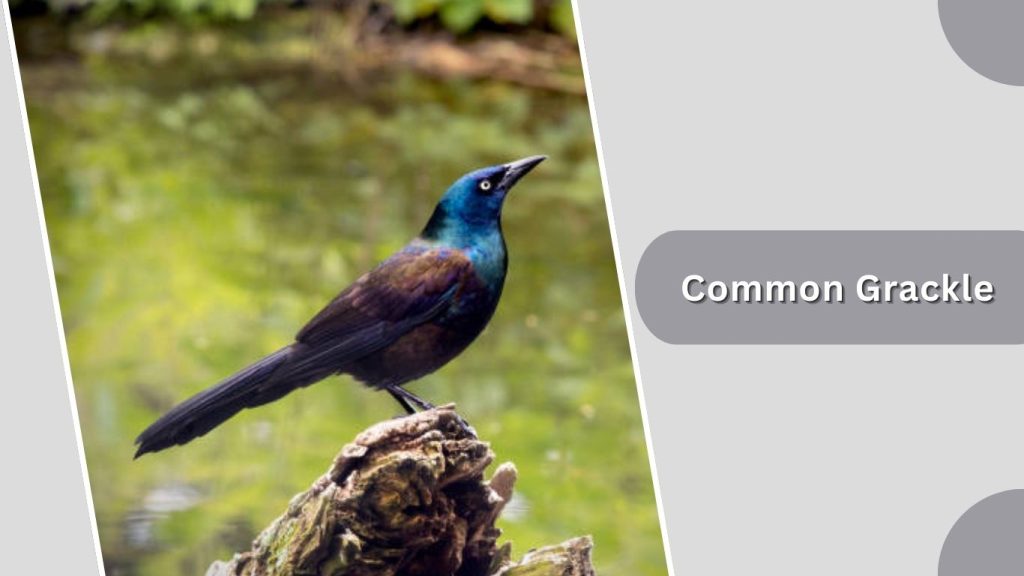
The Common Grackle (Quiscalus quiscula) is a large, glossy black bird often seen in noisy flocks across North America. Known for its striking iridescent plumage and piercing yellow eyes, it is highly adaptable and thrives in both rural and urban environments. Though sometimes considered a nuisance, it is an intelligent and resourceful species.
Identification
- Medium-to-large black body with iridescent blue or purple sheen
- Long tail often held in a keel shape during flight
- Bright yellow eyes
- Strong, pointed bill
Size
The Common Grackle measures approximately 28–34 cm (11–13 inches) in length with a wingspan of 36–46 cm (14–18 inches), making it large compared to many songbirds.
Habitat
This species occupies open woodlands, wetlands, agricultural areas, city parks, and suburban neighborhoods. It often nests in colonies and gathers in large roosts outside the breeding season.
Diet
Common Grackles are omnivorous, feeding on insects, grains, seeds, small fish, frogs, eggs, and food scraps. Their flexible diet and bold behavior help them succeed in diverse environments.
10. Great Cormorant
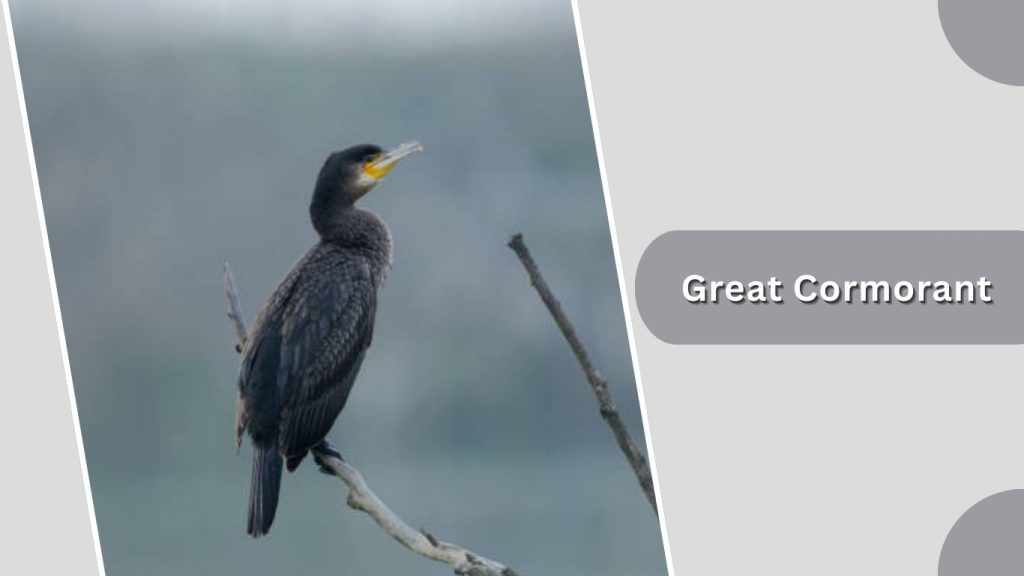
The Great Cormorant (Phalacrocorax carbo) is a large, powerful black waterbird widely distributed across Europe, Asia, Africa, Australia, and parts of North America. Known for its excellent diving ability, this bird is often seen perched with wings spread wide, drying its feathers after fishing. Its commanding presence and efficient hunting skills make it one of the most recognizable large black birds near water.
Identification
- Large black body with a long neck
- Strong, hooked bill ideal for catching fish
- Yellowish skin patch at the base of the bill
- Long tail and heavy, angular silhouette
Size
The Great Cormorant measures about 70–102 cm (28–40 inches) in length and has a wingspan of 121–160 cm (48–63 inches), making it one of the largest cormorant species.
Habitat
This species inhabits coastlines, lakes, rivers, estuaries, and reservoirs. It nests on cliffs, islands, trees, or man-made structures, often forming large colonies near productive fishing waters.
Diet
Great Cormorants feed almost exclusively on fish, which they catch by diving underwater and pursuing prey with strong kicks of their webbed feet. They may also eat eels and crustaceans when available.
11. Anhinga
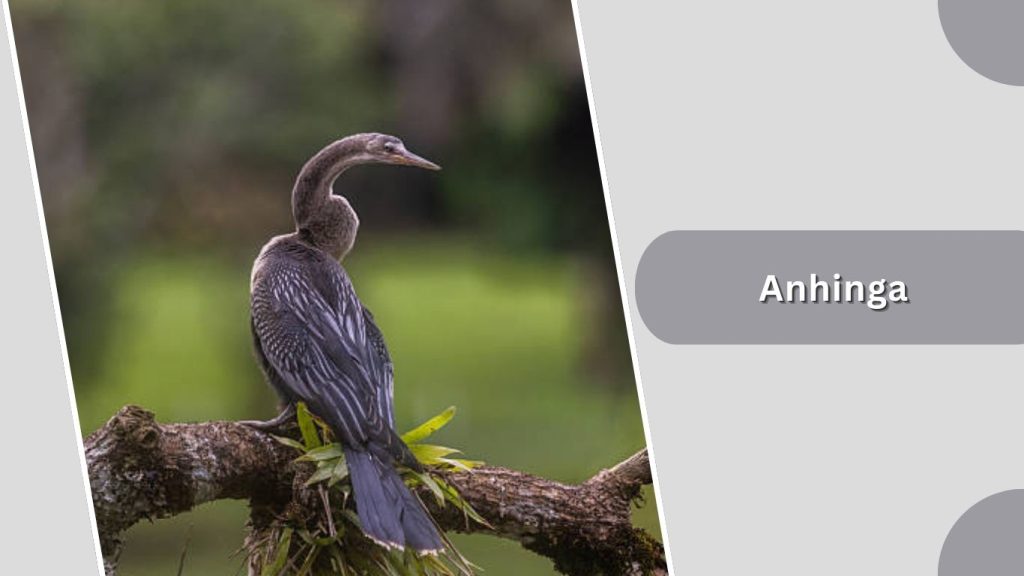
The Anhinga (Anhinga anhinga), often called the “snakebird,” is a large black waterbird famous for its long, slender neck and stealthy swimming style. When swimming, only its head and neck may be visible above water, giving it a snake-like appearance. Though similar to cormorants, the Anhinga has distinct behaviors and feather structure.
Identification
- Long neck and pointed, dagger-like bill
- Dark body with silvery streaks on wings
- Male is darker with glossy black plumage
- Female has a paler head and neck
Size
The Anhinga measures approximately 85–95 cm (33–37 inches) in length and has a wingspan of 114–122 cm (45–48 inches), making it slightly slimmer but comparable in size to large cormorants.
Habitat
This species is found in freshwater swamps, marshes, slow-moving rivers, lakes, and wetlands, mainly in the southeastern United States, Central America, and South America.
Diet
Anhingas feed primarily on fish, which they spear with their sharp bills. They also eat amphibians and aquatic insects. Like cormorants, they often perch with wings spread to dry after swimming.
12. Black Swan
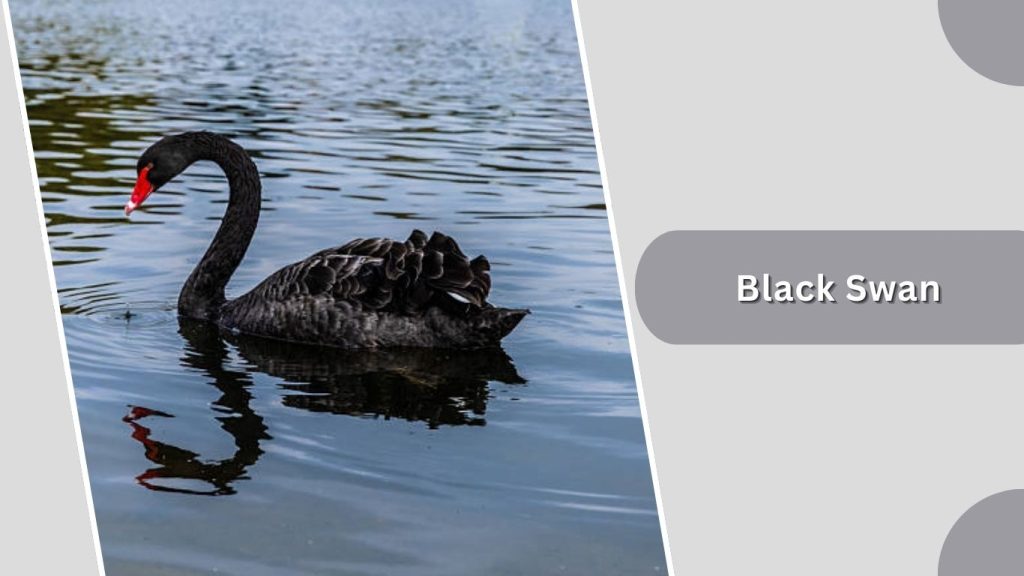
The Black Swan (Cygnus atratus) is a large, elegant black waterbird native to Australia and one of the most striking swan species in the world. Unlike most swans, which are white, this species is almost entirely black, with bright red bills that make it easy to recognize. It is a powerful flier and often travels long distances in flocks.
Identification
- Very large body with black plumage
- Long, curved neck held in an S-shape
- Bright red bill with a pale tip
- White flight feathers visible during flight
Size
The Black Swan measures about 110–140 cm (43–55 inches) in length and has a wingspan of 160–200 cm (63–79 inches), making it one of the largest black birds in the world.
Habitat
This species inhabits lakes, rivers, wetlands, estuaries, and coastal lagoons. It prefers shallow waters with abundant aquatic vegetation and is often seen in large flocks.
Diet
Black Swans feed mainly on aquatic plants and algae, which they reach by dipping their long necks underwater. They may also graze on grasses along shorelines.
13. Black Stork
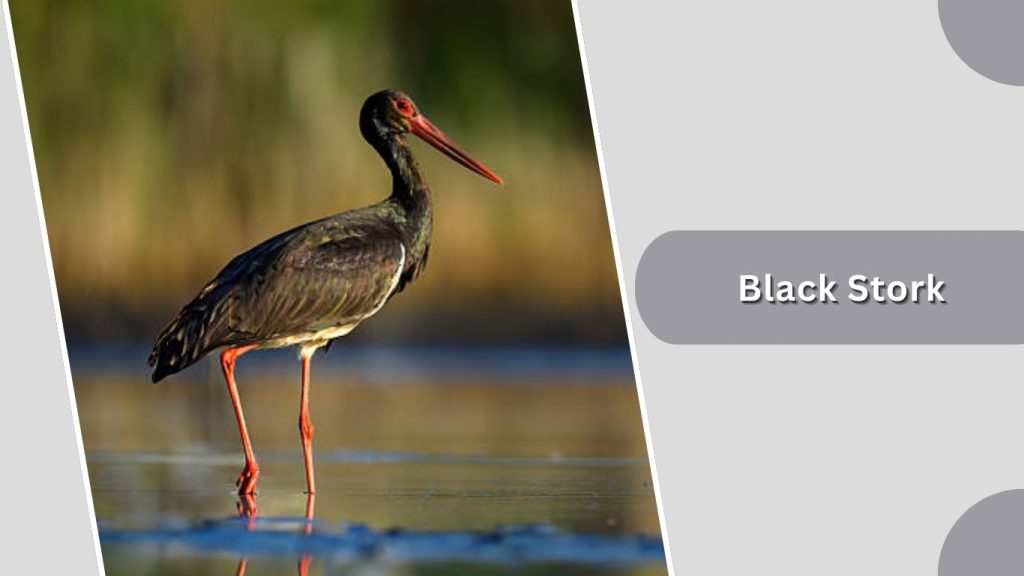
The Black Stork (Ciconia nigra) is a large, shy black bird that contrasts sharply with the more familiar White Stork. Known for its secretive nature, it avoids human settlements and prefers remote habitats. Its glossy dark plumage and graceful flight make it one of the most impressive large birds in its range.
Identification
- Large body with glossy black upperparts
- White belly and underwings
- Long red bill and red legs
- Long neck and broad wings
Size
The Black Stork measures approximately 95–100 cm (37–39 inches) in length and has a wingspan of 145–155 cm (57–61 inches).
Habitat
This species inhabits dense forests near rivers, wetlands, and marshes across Europe and Asia. It nests in tall trees or on cliffs, far from human disturbance.
Diet
The Black Stork feeds on fish, amphibians, insects, and small reptiles, which it catches by wading slowly through shallow water.
14. Black Kite
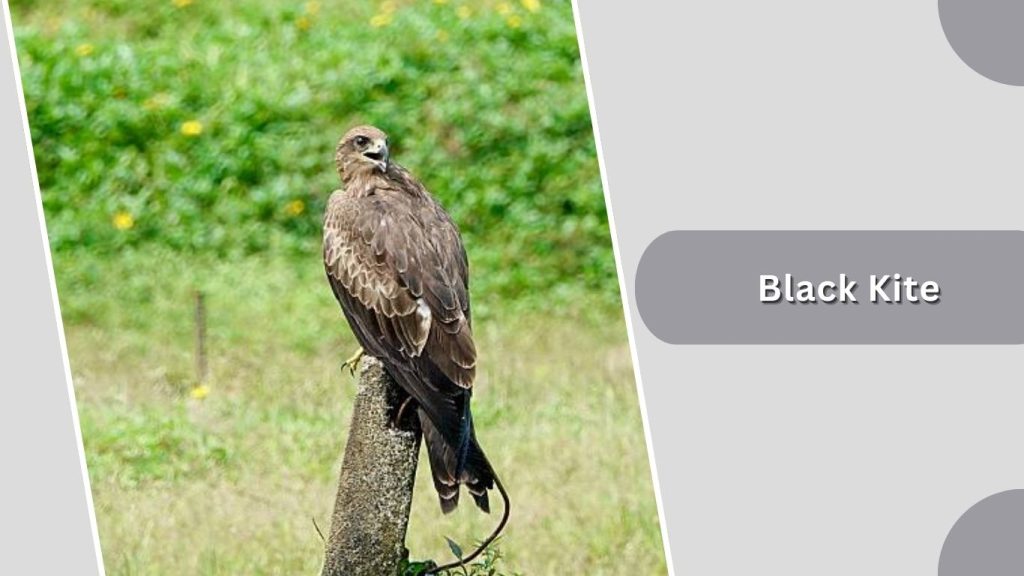
The Black Kite (Milvus migrans) is a large, graceful black bird of prey widely distributed across Europe, Asia, Africa, and Australia. Known for its effortless soaring and forked tail, it is one of the most adaptable raptors in the world. Black Kites are often seen circling high in the sky or scavenging near human settlements.
Identification
- Medium-to-large dark brown to black body
- Long wings with fingered tips
- Distinctly forked tail
- Pale head and lighter underparts in good light
Size
The Black Kite measures about 47–60 cm (18.5–24 inches) in length and has a wingspan of 135–155 cm (53–61 inches).
Habitat
This species occupies open countryside, wetlands, grasslands, coastal areas, and urban regions. It is highly tolerant of human presence and often nests near towns and villages.
Diet
Black Kites are opportunistic feeders, consuming carrion, small mammals, birds, fish, insects, and human food waste. Their scavenging habits help keep environments clean.
15. Black Eagle
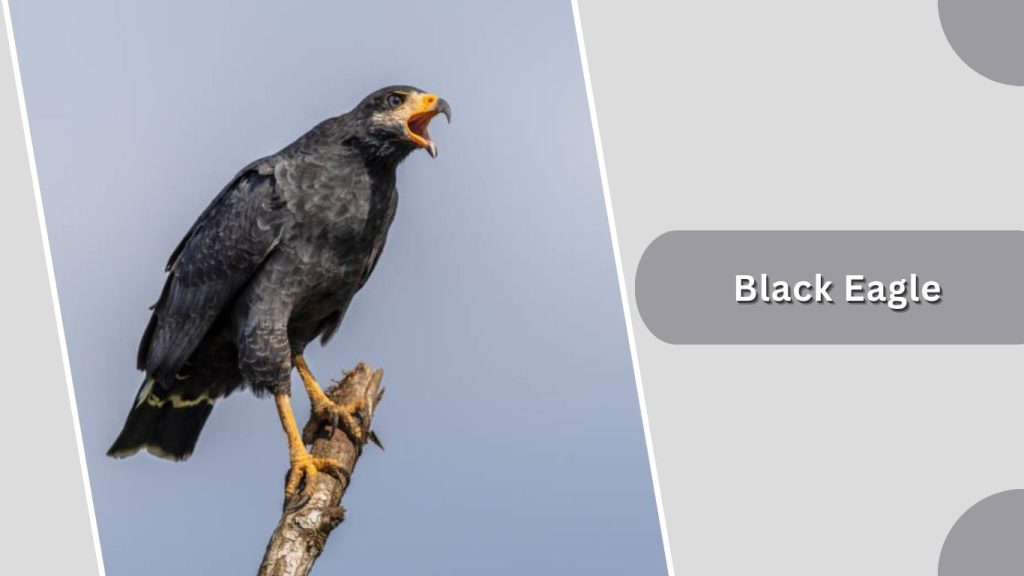
The Black Eagle (Ictinaetus malaiensis) is a large, powerful raptor found in South and Southeast Asia. It is famous for its slow, graceful flight over forest canopies as it searches for prey. With its long wings and dark plumage, it is one of the most impressive black birds of prey.
Identification
- Large, dark blackish-brown body
- Long wings with broad, fingered tips
- Yellow cere and feet
- Slender head with a hooked bill
Size
The Black Eagle measures approximately 69–81 cm (27–32 inches) in length and has a wingspan of 148–182 cm (58–72 inches).
Habitat
This species inhabits forested hills, mountainous regions, and dense tropical forests. It prefers undisturbed areas where it can soar above tree canopies.
Diet
The Black Eagle feeds mainly on small mammals, birds, eggs, and reptiles, often plucking prey directly from nests or forest canopies with remarkable precision.