
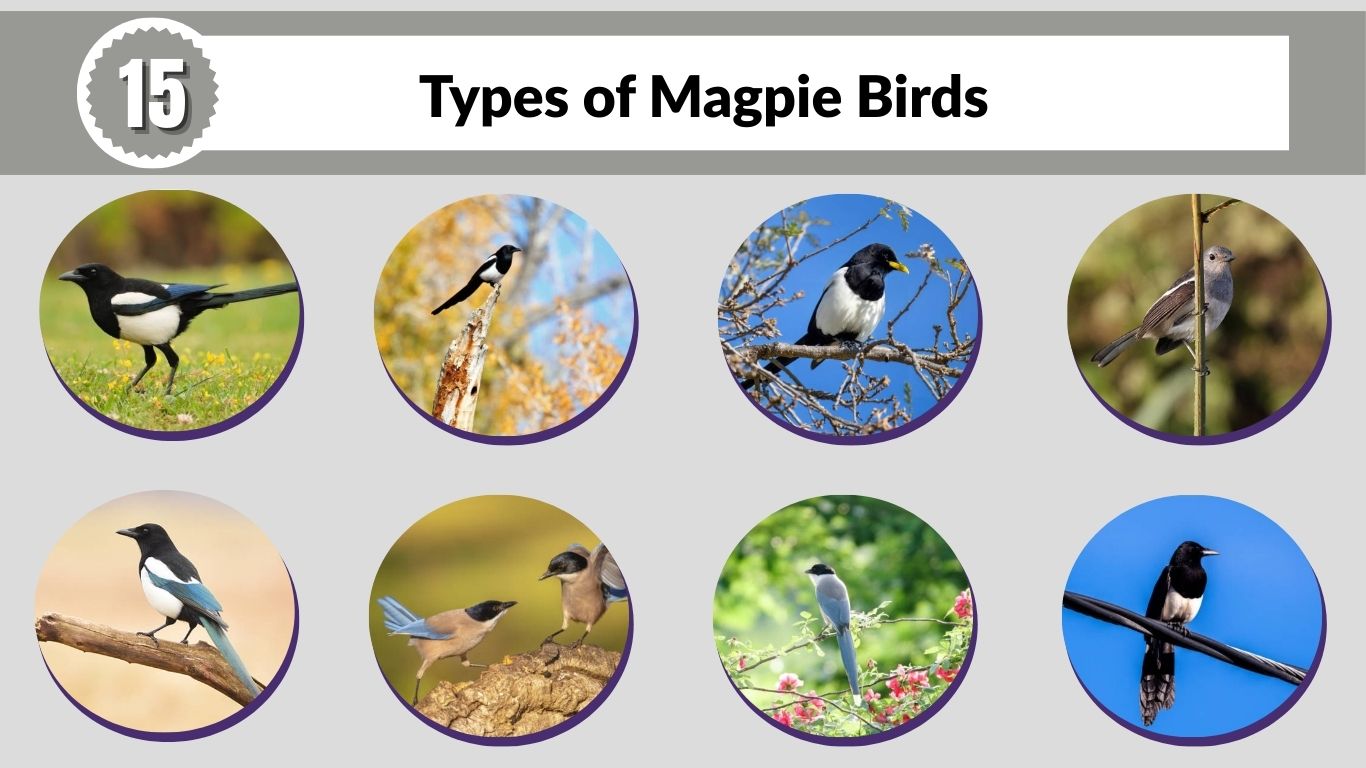
Magpies are intelligent, striking birds known for their bold colors, long tails, and complex social behavior. Found across Europe, Asia, Australia, and parts of Africa, magpies belong mainly to the corvid family, which also includes crows and jays. Some species display classic black-and-white plumage, while others shine in vivid blues, greens, and reds. In this guide, you’ll explore 15 different types of magpie birds, each with unique features, habitats, and behaviors.
1. Eurasian Magpie (Pica pica)
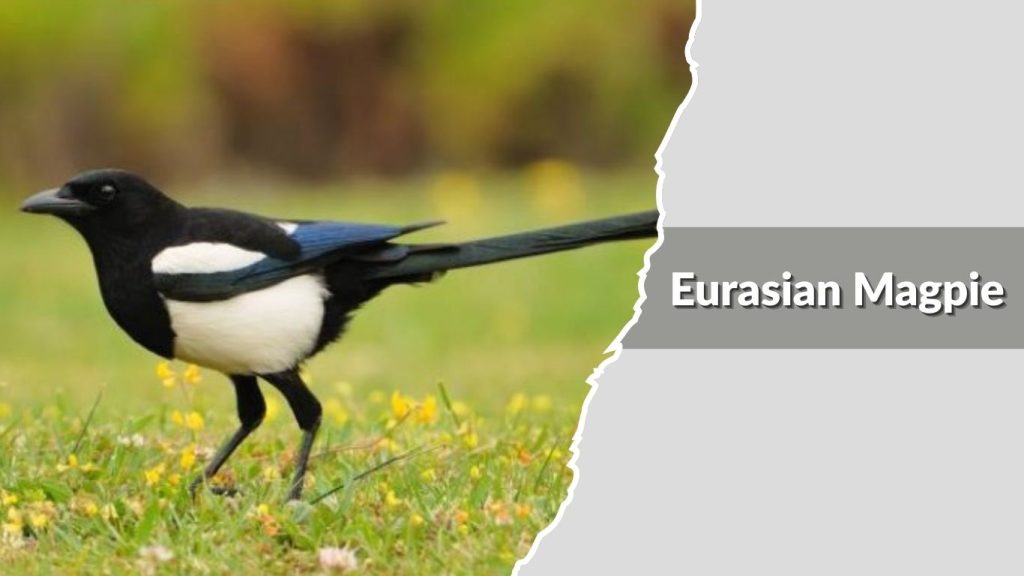
The Eurasian Magpie is one of the most widespread and easily recognized magpie species in the world. Known for its striking black-and-white plumage and long iridescent tail, this intelligent bird is commonly found across Europe, Asia, and parts of North Africa. It adapts well to forests, farmlands, and even urban environments.
Identification
- Glossy black head, chest, and back
- Bright white belly and shoulder patches
- Long, wedge-shaped tail with green-purple iridescence
- Strong black beak and legs
- Medium-sized body, about 44–46 cm long
Habitat
Eurasian Magpies live in a wide range of habitats, including open woodlands, agricultural fields, gardens, parks, and village outskirts. They prefer areas with scattered trees and open ground, which allow them to forage easily while having nearby nesting sites.
Diet
They are omnivorous and highly opportunistic feeders. Their diet includes insects, worms, small mammals, eggs, seeds, grains, fruits, and human food scraps. This flexible feeding behavior is a major reason for their success in both rural and urban landscapes.
Behavior
Eurasian Magpies are extremely intelligent and curious birds. They are known for complex social behavior, loud chattering calls, and strong territorial instincts. Pairs often stay together year-round and actively defend their nesting areas from intruders.
2. Black-billed Magpie (Pica hudsonia)
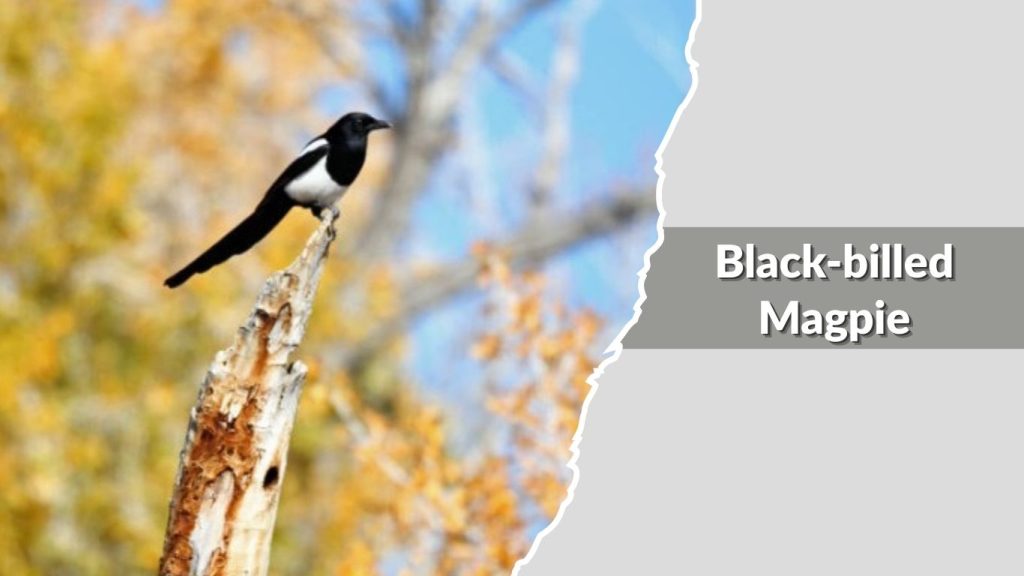
The Black-billed Magpie is a bold, long-tailed corvid native to western North America. It closely resembles the Eurasian Magpie but is distinguished by its jet-black bill and slightly different vocalizations. This species is highly adaptable and often lives close to farms, grasslands, and small towns.
Identification
- Black head, chest, back, and bill
- White belly and broad white wing patches
- Very long tail with greenish-blue iridescence
- Strong legs adapted for walking and hopping
- Body length around 45–60 cm including tail
Habitat
Black-billed Magpies are commonly found in open country with scattered trees, such as grasslands, river valleys, farmland, and suburban edges. They avoid dense forests and prefer landscapes that provide both open foraging areas and tall nesting sites.
Diet
They are omnivores that eat insects, carrion, small rodents, eggs, seeds, grains, fruits, and food scraps. Their scavenging habits help them survive harsh winters and changing environmental conditions.
Behavior
This species is social, intelligent, and often seen in pairs or small groups. They are known for loud, harsh calls, complex communication, and strong territorial defense during the breeding season.
3. Yellow-billed Magpie (Pica nuttalli)
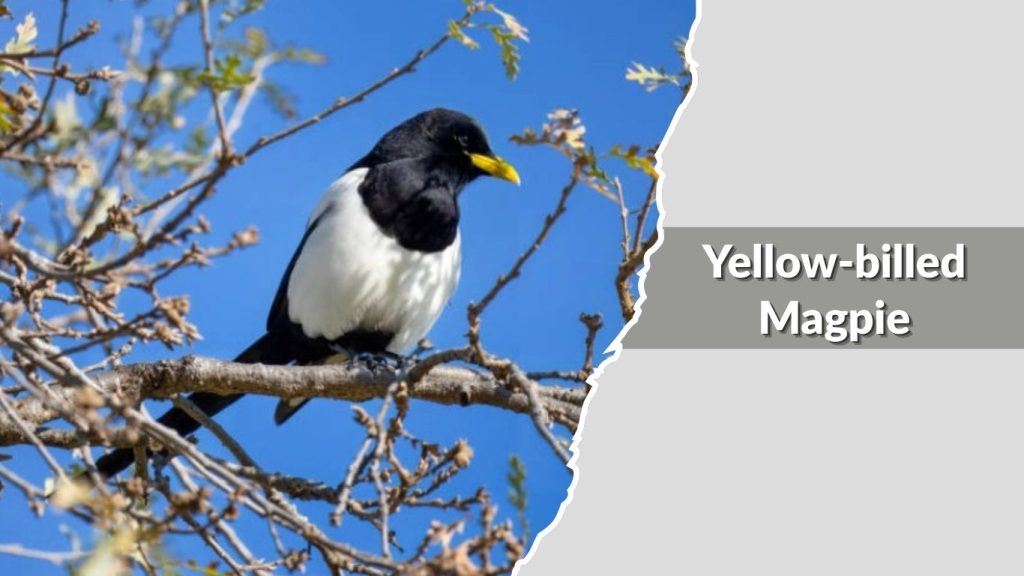
The Yellow-billed Magpie is a rare magpie species found only in California. It looks similar to the Black-billed Magpie but has a distinctive pale yellow bill and eye skin. Because of its limited range, it is considered a species of special conservation concern.
Identification
- Pale yellow bill and bare yellow skin around the eyes
- Black head, neck, and chest with white belly
- Long, glossy tail with bluish-green shine
- Broad white shoulder patches
- Slightly smaller than the Black-billed Magpie
Habitat
Yellow-billed Magpies mainly inhabit oak woodlands, valleys, orchards, and farmlands in central California. They depend heavily on oak trees for nesting and nearby open areas for feeding.
Diet
Their diet includes insects, acorns, seeds, fruits, small animals, eggs, and carrion. Acorns are especially important during certain seasons and help sustain local populations.
Behavior
They are social birds, often forming loose colonies. Yellow-billed Magpies are intelligent, vocal, and known for cooperative behaviors, including group mobbing of predators.
4. Oriental Magpie (Pica serica)
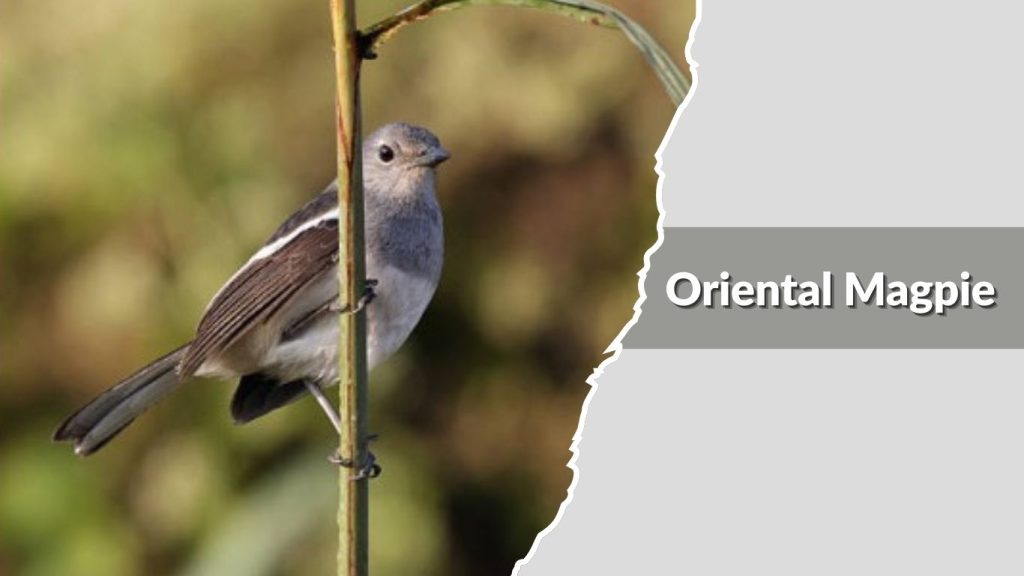
The Oriental Magpie is a beautiful black-and-white magpie species native to East Asia, especially China, Korea, and parts of eastern Russia. It is culturally significant in several Asian countries and is often associated with good fortune and happiness.
Identification
- Glossy black head, throat, and back
- Bright white belly and shoulder patches
- Long tail with green and purple iridescence
- Strong black bill and legs
- Medium-sized body similar to Eurasian Magpie
Habitat
Oriental Magpies live in open woodlands, riverbanks, farmlands, gardens, and city parks. They are highly adaptable and often nest near human settlements.
Diet
They feed on insects, larvae, grains, fruits, small reptiles, eggs, and food scraps. Seasonal foods change their diet, making them very flexible feeders.
Behavior
Oriental Magpies are social, vocal, and intelligent birds. They form long-term pairs and aggressively defend nesting territories. Their calls are loud and varied, used for communication within groups.
5. Azure Magpie (Cyanopica cyanus)
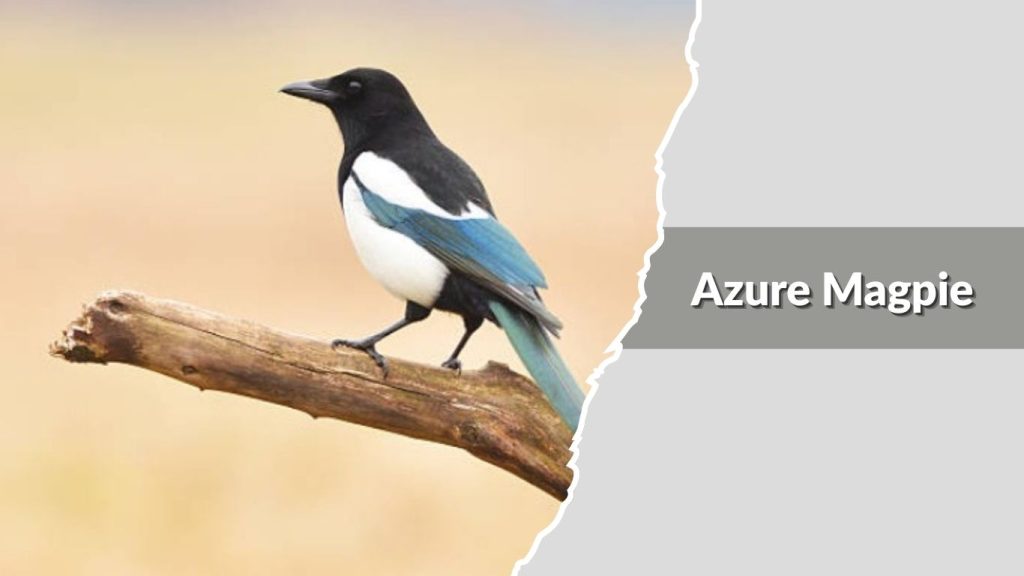
The Azure Magpie is a slender, long-tailed magpie species famous for its soft blue coloring and graceful appearance. It is found mainly in East Asia, with a separate population in parts of Europe.
Identification
- Pale bluish-gray body with deep blue wings and tail
- Black cap and facial mask
- White throat and belly
- Very long, narrow tail
- Smaller and more delicate than black-and-white magpies
Habitat
Azure Magpies prefer mixed forests, forest edges, orchards, and river valleys. They often live in loose colonies, especially outside the breeding season.
Diet
Their diet includes insects, berries, seeds, fruits, nuts, and small invertebrates. They play an important role in seed dispersal in forest ecosystems.
Behavior
Azure Magpies are highly social and often seen in noisy flocks. They are agile flyers, curious by nature, and use a wide range of calls to communicate within the group.
6. Iberian Magpie (Cyanopica cooki)
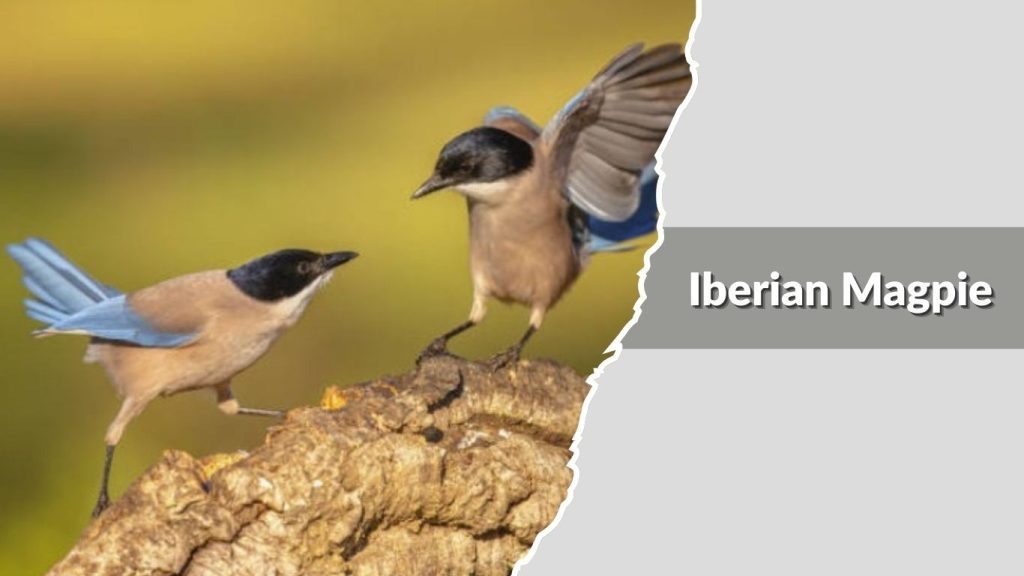
The Iberian Magpie is a striking blue-and-black magpie found mainly in Spain and Portugal. Once considered the same species as the Azure Magpie, it is now recognized as a separate species due to genetic differences and geographic isolation.
Identification
- Soft blue wings and long blue tail
- Black cap, face, and upper chest
- Pale gray body with white throat
- Slender build with very long tail
- Smaller than Eurasian Magpie
Habitat
Iberian Magpies inhabit open woodlands, cork oak forests, pine forests, orchards, and farmland edges. They are especially common in Mediterranean landscapes.
Diet
They eat insects, seeds, fruits, berries, acorns, and small invertebrates. Their diet changes seasonally, with more animal prey taken during breeding months.
Behavior
This species is very social and often lives in active groups. Iberian Magpies are vocal, alert, and known for cooperative behaviors such as group foraging and mobbing predators.
7. Korean Magpie (Pica serica)
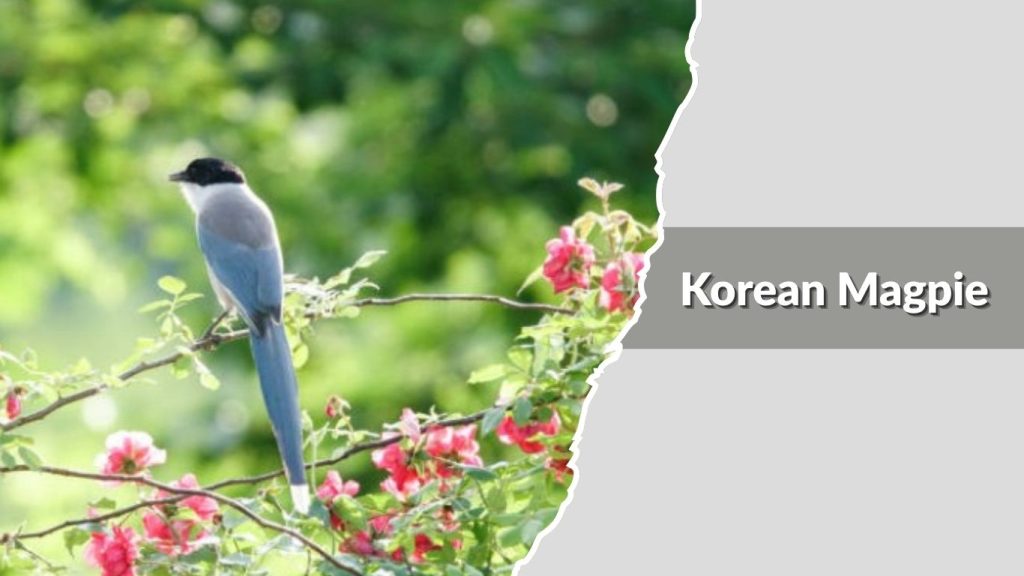
The Korean Magpie is best known as the national bird of South Korea. It closely resembles the Oriental Magpie and is famous in Korean folklore for symbolizing good luck and joy.
Identification
- Glossy black head and upperparts
- Clean white underparts and shoulders
- Long iridescent tail feathers
- Strong black beak and legs
- Medium-sized corvid
Habitat
Korean Magpies are found in open forests, farmlands, riversides, and urban areas. They often build nests in tall trees near human settlements.
Diet
They are omnivores, feeding on insects, grains, fruits, small animals, eggs, and scraps. Their flexible diet allows them to thrive in many environments.
Behavior
They are intelligent, territorial birds with loud, varied calls. Pairs are usually monogamous and defend their nesting areas aggressively during the breeding season.
8. Asir Magpie (Pica asirensis)
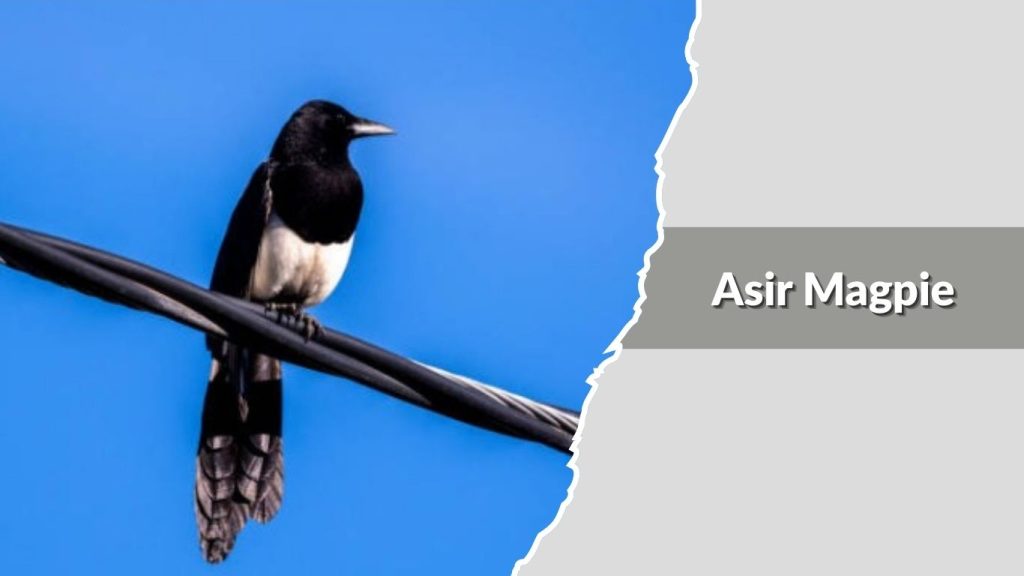
The Asir Magpie is a rare and localized magpie species found only in the Asir Mountains of southwestern Saudi Arabia. It is one of the least known magpies in the world and is considered endangered due to its very limited range and habitat loss.
Identification
- Glossy black head, chest, and back
- Bright white belly and wing patches
- Long black tail with greenish sheen
- Thick black bill and strong legs
- Slightly smaller than Eurasian Magpie
Habitat
Asir Magpies live in highland juniper woodlands and mountainous forest edges. They depend on mature trees for nesting and nearby open ground for feeding.
Diet
Their diet consists of insects, small reptiles, seeds, fruits, and human food waste. Because of their restricted habitat, they rely heavily on local seasonal food sources.
Behavior
They are intelligent but shy birds, usually seen in pairs or small family groups. Asir Magpies are territorial and vocal, using harsh calls to warn intruders.
9. Red-billed Blue Magpie (Urocissa erythroryncha)
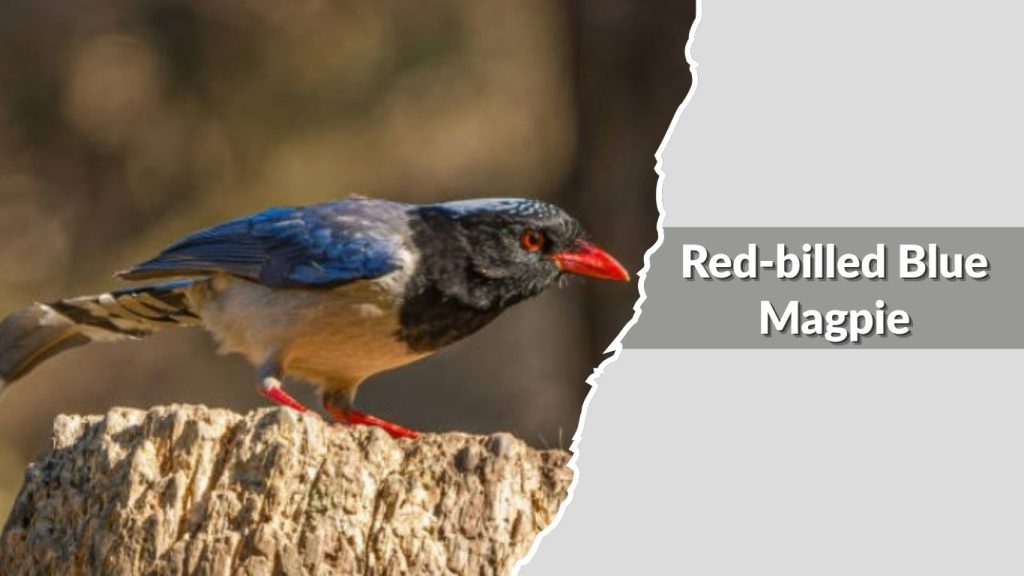
The Red-billed Blue Magpie is one of the most colorful magpie species, easily recognized by its bright red bill and vivid blue tail. It is native to the Himalayan region and parts of Southeast Asia.
Identification
- Bright red bill, legs, and eye ring
- Blue wings and very long blue tail
- Black head and upper chest
- White wing patches and underparts
- Large, graceful body shape
Habitat
This species inhabits forest edges, subtropical forests, mountain slopes, and wooded valleys. It prefers areas with dense trees mixed with open spaces.
Diet
They feed on insects, fruits, seeds, berries, small animals, eggs, and carrion. Their mixed diet supports their active and social lifestyle.
Behavior
Red-billed Blue Magpies are social and often move in noisy groups. They are agile, alert birds known for acrobatic movements and loud, musical calls.
10. Yellow-billed Blue Magpie (Urocissa flavirostris)
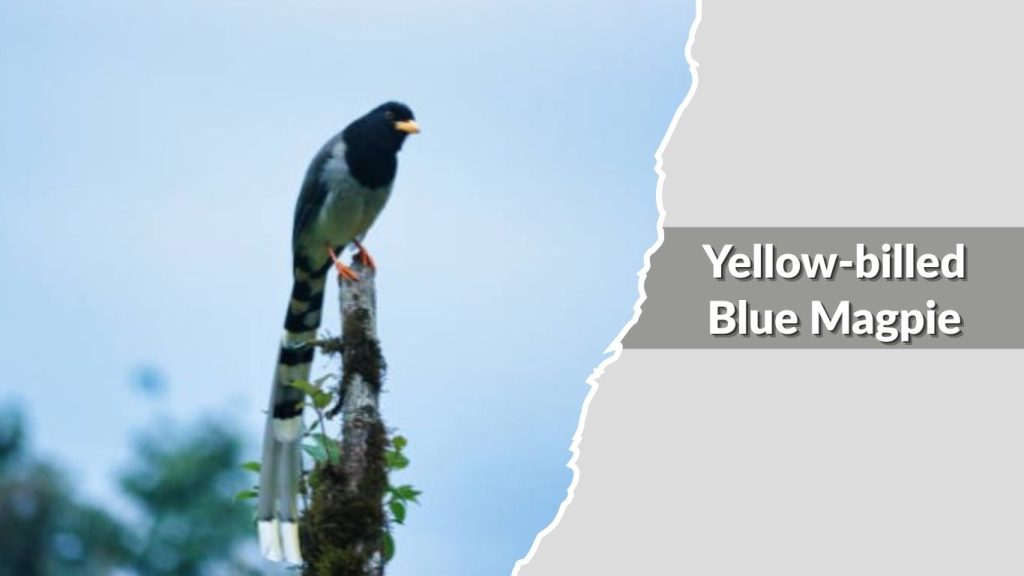
The Yellow-billed Blue Magpie is a striking mountain magpie found mainly in the Himalayan regions of India, Nepal, and Bhutan. It is closely related to the Red-billed Blue Magpie but is distinguished by its bright yellow bill and facial skin.
Identification
- Bright yellow bill and eye ring
- Deep blue wings and very long blue tail
- Black head, neck, and upper chest
- White underparts and wing markings
- Large, slender corvid body
Habitat
This species prefers montane forests, wooded valleys, and forest edges at higher elevations. It is often seen moving through tree canopies in small, active groups.
Diet
Its diet includes insects, fruits, seeds, berries, small reptiles, eggs, and food scraps. Seasonal fruiting trees are especially important food sources.
Behavior
Yellow-billed Blue Magpies are noisy, social birds that travel in groups. They are intelligent and curious, often calling loudly while foraging and moving through forests.
11. Sri Lanka Blue Magpie (Urocissa ornata)
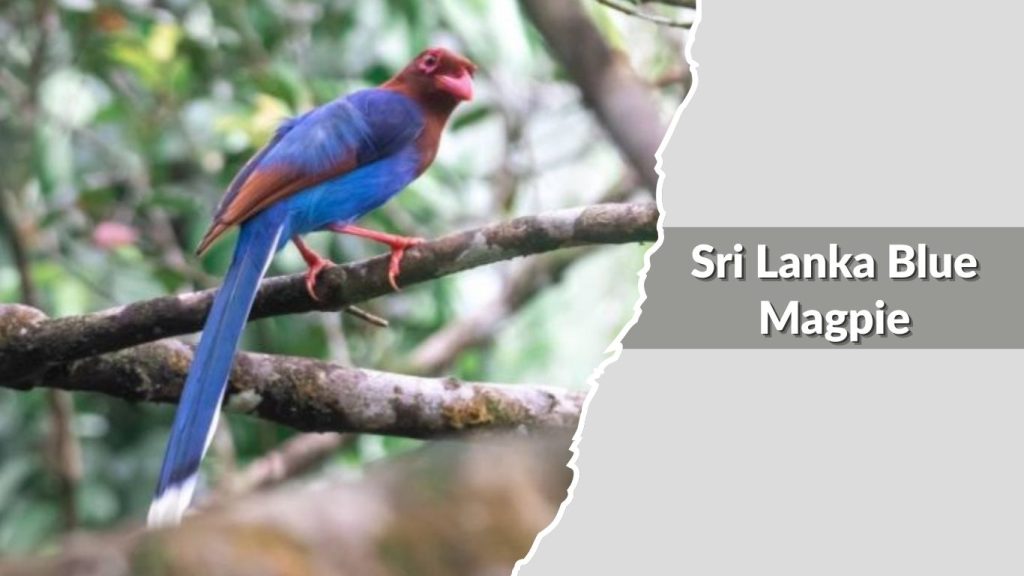
The Sri Lanka Blue Magpie is a beautifully colored and endemic bird found only in the rainforests of Sri Lanka. It is one of the country’s most iconic forest birds and is considered vulnerable due to habitat loss.
Identification
- Bright blue wings and long blue tail
- Deep chestnut head and upper body
- Red bill, legs, and eye ring
- White-tipped tail and wing markings
- Medium to large-sized magpie
Habitat
Sri Lanka Blue Magpies inhabit lowland and montane rainforests, especially dense evergreen forests. They are rarely found far from thick tree cover.
Diet
They feed on insects, frogs, lizards, fruits, seeds, and occasionally eggs. Their diet reflects their strong dependence on healthy forest ecosystems.
Behavior
They are active, vocal birds often seen in pairs or small flocks. Sri Lanka Blue Magpies are agile climbers and are known for their loud, ringing calls within forest canopies.
12. Taiwan Blue Magpie (Urocissa caerulea)
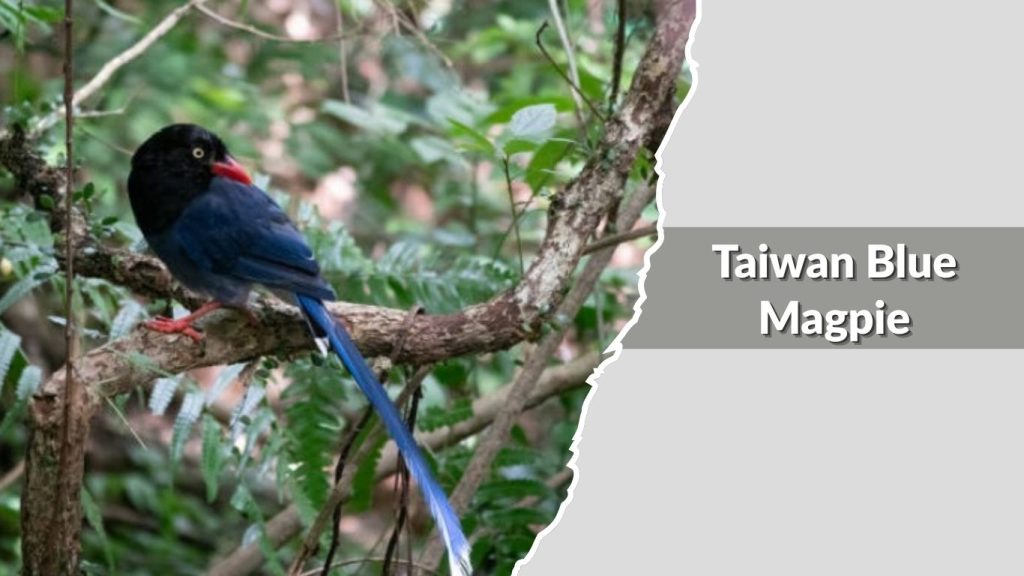
The Taiwan Blue Magpie is a large, strikingly colorful bird found only in Taiwan. With its vivid blue body, red bill, and extremely long tail, it is often called the “long-tailed mountain lady” and is one of Taiwan’s most recognizable native birds.
Identification
- Bright red bill, legs, and eye ring
- Deep blue body, wings, and very long tail
- Black head and upper chest
- White markings on wings and tail tips
- Large, elegant corvid shape
Habitat
This species inhabits broadleaf forests, foothills, and mountainous regions. It is commonly seen in forest edges and wooded areas near human settlements.
Diet
Taiwan Blue Magpies eat insects, fruits, seeds, small animals, and carrion. They are also known to steal food from campsites and picnic areas.
Behavior
They are highly social and often travel in family groups. Taiwan Blue Magpies are bold, intelligent, and famous for cooperative mobbing of predators.
13. Magpie-lark (Grallina cyanoleuca)
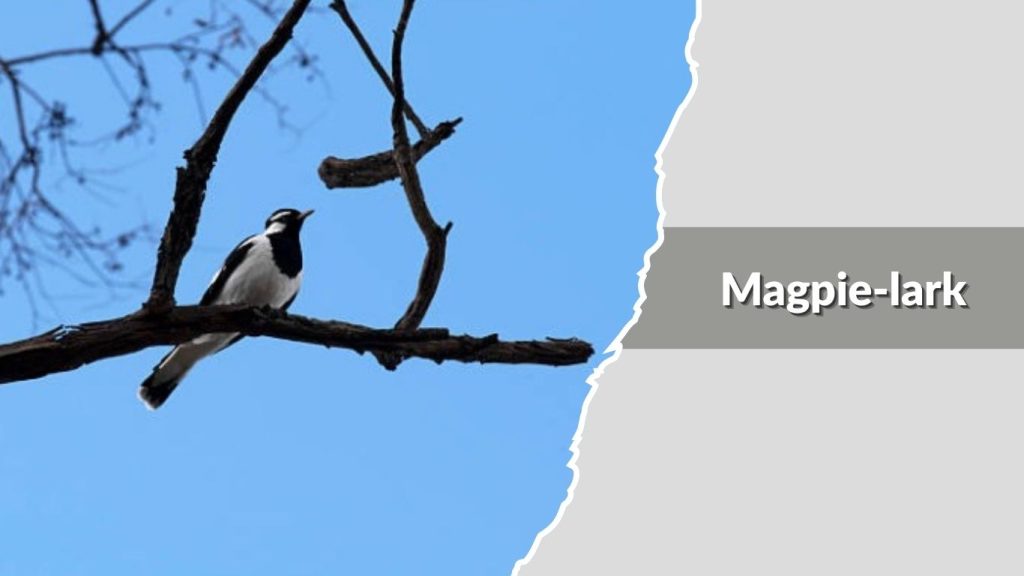
The Magpie-lark is a black-and-white bird native to Australia and New Guinea. Although not a true magpie, it is commonly called one due to its similar coloration and upright stance.
Identification
- Black-and-white plumage with bold contrast
- White face with black mask pattern
- Medium-length tail, not extremely long
- Slender bill compared to true magpies
- Strong legs adapted for ground foraging
Habitat
Magpie-larks are found near rivers, wetlands, open woodlands, farmlands, and urban parks. They are often seen walking on the ground searching for food.
Diet
They feed mainly on insects, larvae, worms, and other small invertebrates picked from soil and shallow water.
Behavior
Magpie-larks are territorial and often seen in pairs. They are known for their loud “pee-wee” calls and for building distinctive mud nests on tree branches and buildings.
14. Hooded Magpie
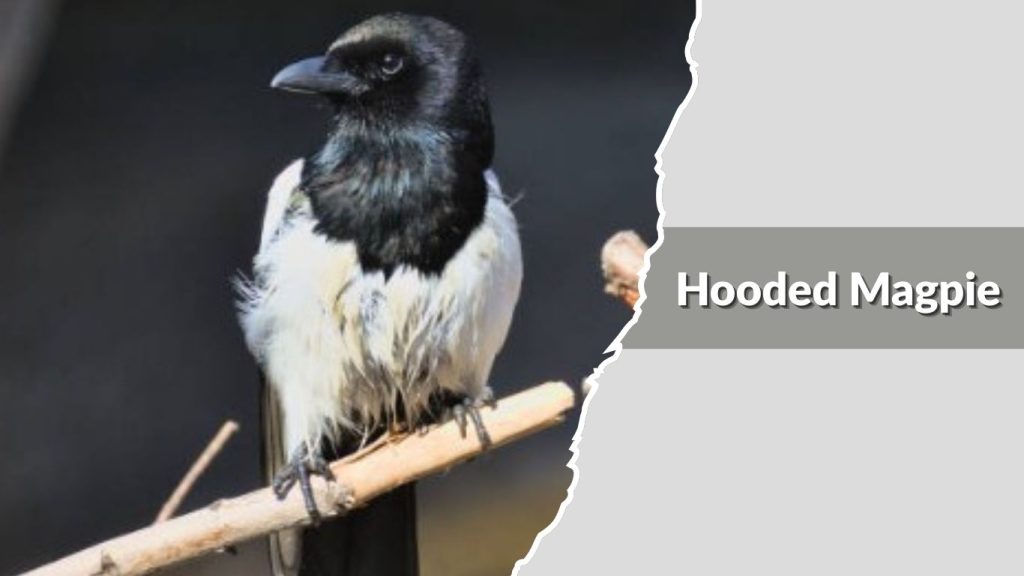
The Hooded Magpie is a regional form of the Australian Magpie group, found mainly in northern Australia. It is known for its contrasting hooded appearance and strong, flute-like calls that carry over long distances.
Identification
- Black hooded head with white nape
- Strong, straight pale bill
- Black-and-white body with broad shoulders
- Long, rounded tail
- Robust, ground-walking build
Habitat
Hooded Magpies live in open woodlands, grasslands, farmland, and suburban parks. They prefer open ground for feeding with nearby trees for nesting and roosting.
Diet
They feed mostly on insects, larvae, worms, and small vertebrates. They also eat seeds and scraps when available, especially in human-modified areas.
Behavior
Hooded Magpies are territorial and usually seen in pairs or family groups. They are famous for complex, musical songs and can become defensive around nests during breeding season.
15. Australian Magpie
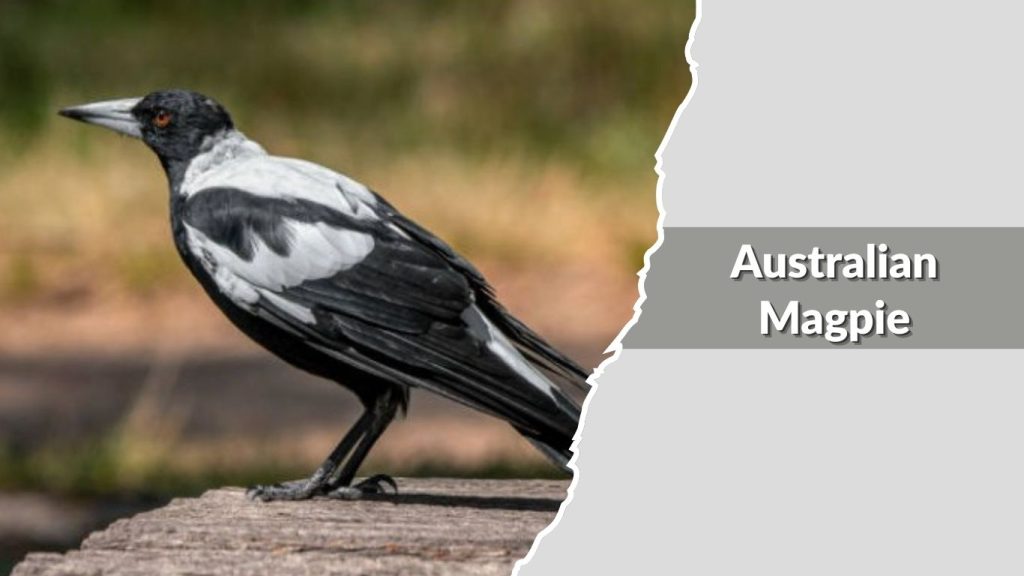
The Australian Magpie is one of the most well-known birds of Australia, admired for its intelligence and rich, flute-like singing. Despite its name, it is not a true magpie but is closely related to butcherbirds.
Identification
- Bold black-and-white plumage
- White nape and shoulder patches (varies by region)
- Strong pale hooked bill
- Long legs adapted for walking
- Medium to large, sturdy body
Habitat
Australian Magpies occupy grasslands, open forests, farmlands, sports fields, and suburban areas. They are especially common in open spaces with short grass.
Diet
They mainly eat insects, grubs, worms, and small animals, along with seeds and human food scraps. Most feeding is done on the ground.
Behavior
Australian Magpies are highly intelligent, social birds with complex vocal abilities. They form long-term territories and are well known for defensive swooping behavior during nesting season.