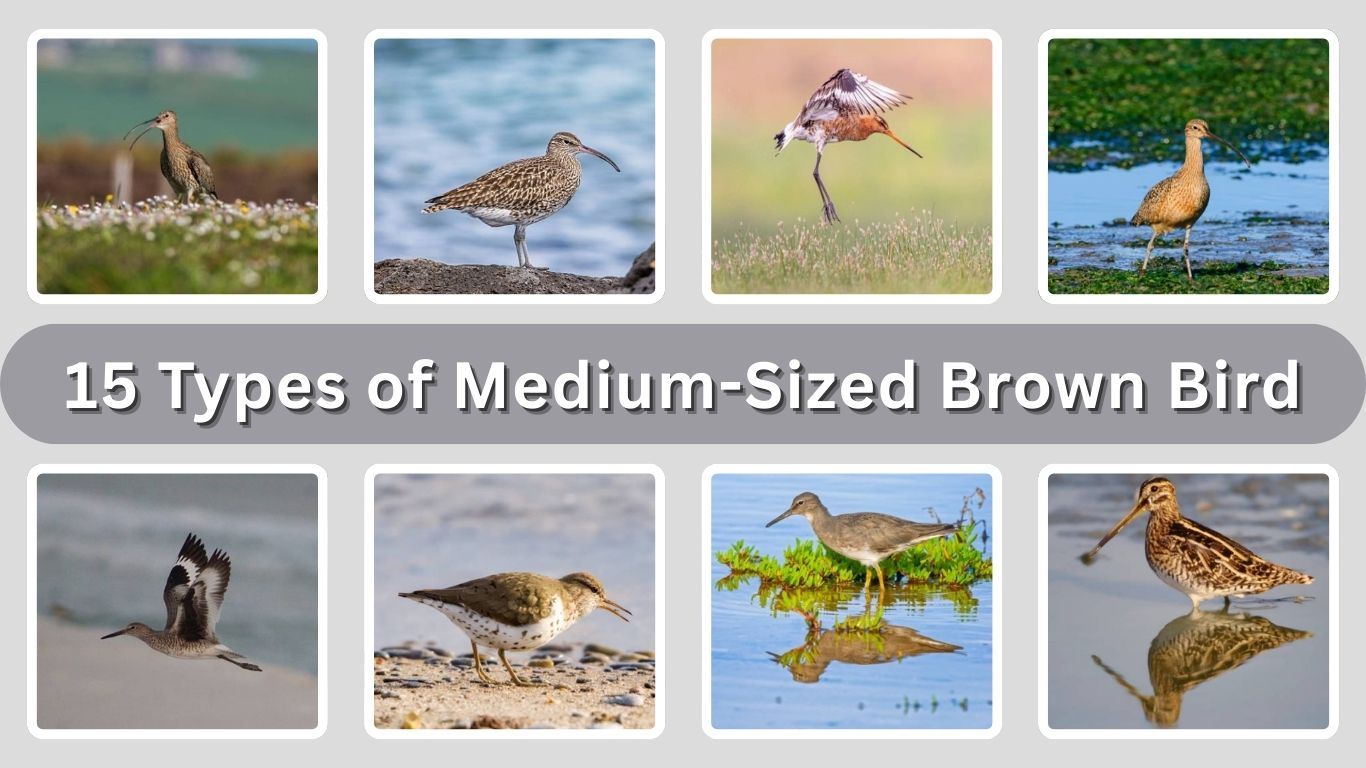
Medium-sized brown birds with long beaks are most often seen in wetlands, shorelines, and open grasslands, where their shape and coloring provide perfect camouflage. Their long, slender bills are specially adapted for probing mud, sand, and shallow water in search of hidden food. From curlews and godwits to ibises and snipes, these birds are graceful walkers and strong fliers. They play an important ecological role by controlling insect and invertebrate populations and connecting distant ecosystems through long seasonal migrations.
1. Curlew (Numenius species)

Curlews are medium-sized to large brown shorebirds best known for their very long, downward-curved beaks. They are elegant wading birds often seen walking slowly across mudflats, wetlands, and open coastal areas while probing the ground for food. Their soft brown coloring provides excellent camouflage in marshy and sandy environments.
Identification
- Medium-sized brown bird with extremely long, curved bill
- Long legs adapted for wading
- Mottled brown and buff plumage for camouflage
- Slender body with long wings
- Females usually have longer bills than males
Habitat & Distribution
Curlews are found across many parts of the world, including North America, Europe, Asia, and Australia. They inhabit coastal mudflats, estuaries, marshes, grasslands, and open wetlands. Many species migrate long distances between breeding and wintering grounds.
Diet & Feeding Habits
Curlews mainly feed on worms, crabs, insects, and small shellfish. Their long, curved beaks allow them to probe deep into soft mud and sand to reach hidden prey. In inland habitats, they also eat beetles, grasshoppers, and other invertebrates.
Behavior & Nesting
Curlews are usually seen walking slowly while feeding, often in small groups. During the breeding season, they nest on the ground in open grasslands or tundra. Nests are shallow scrapes lined with grass, and adults are very protective of their eggs and chicks.
2. Whimbrel (Numenius phaeopus)

The whimbrel is a medium-sized brown shorebird with a long, curved beak and bold head stripes. It is slightly smaller than most curlews but shares the same graceful shape and probing feeding style. Whimbrels are strong migrators and are often seen along coastlines during seasonal movements.
Identification
- Medium-sized brown shorebird with a long, curved bill
- Distinct dark and light stripes on the head
- Mottled brown back and wings
- Long legs and slender body
- Slightly smaller and shorter-billed than large curlews
Habitat & Distribution
Whimbrels are found on coastal mudflats, sandy shores, tidal wetlands, and sometimes inland marshes. They breed in northern tundra regions and migrate to coastal areas across North America, Europe, Africa, Asia, and South America.
Diet & Feeding Habits
They mainly eat crabs, marine worms, snails, and insects. Whimbrels use their curved bills to probe mud and sand or to pick prey from the surface. Inland, they may also feed on berries and small invertebrates.
Behavior & Nesting
Whimbrels are often seen in loose flocks, especially during migration. They nest on the ground in open tundra, making shallow depressions lined with vegetation. Both parents help protect the nest and care for the chicks.
3. Marbled Godwit (Limosa fedoa)
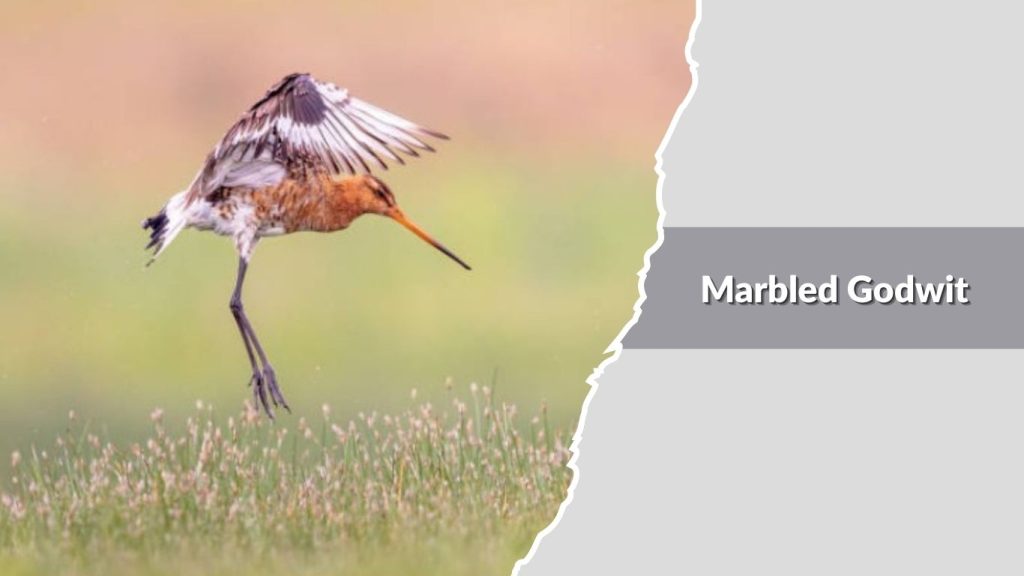
The marbled godwit is a tall, medium-to-large brown shorebird with a long, slightly upturned bill. It has a warm, cinnamon-brown appearance and long blue-gray legs, giving it a graceful look while wading through shallow water and mudflats.
Identification
- Medium-to-large brown shorebird with a very long bill
- Bill slightly curved upward, often pink at the base with a dark tip
- Warm brown, finely patterned body
- Long legs and long neck
- Large wings with bold dark and light pattern in flight
Habitat & Distribution
Marbled godwits are found in coastal estuaries, mudflats, and inland wetlands. They breed in northern prairies and grasslands of North America and migrate to coastal regions of the United States, Mexico, and Central America for winter.
Diet & Feeding Habits
They feed on worms, crustaceans, insects, and small mollusks. Using their long bills, marbled godwits probe deeply into mud and shallow water to locate prey hidden beneath the surface.
Behavior & Nesting
Marbled godwits often feed in small groups and are strong, direct fliers. They nest on the ground in open grasslands, laying eggs in shallow scrapes lined with grass. Adults are very alert and will loudly defend nesting areas.
4. Long-billed Curlew (Numenius americanus)
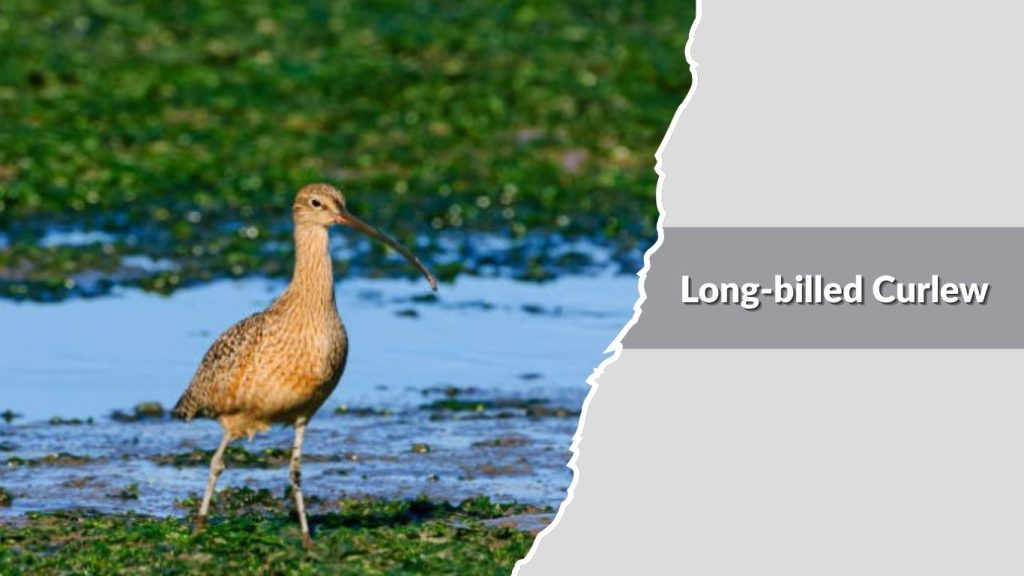
The long-billed curlew is the largest North American shorebird and one of the most striking brown birds with a long beak. Its extremely long, curved bill and tall body make it easy to recognize when walking through open grasslands or coastal flats.
Identification
- Very large brown shorebird with extremely long, downward-curved bill
- Long legs and long neck
- Cinnamon-buff underparts with darker streaking
- Long wings with warm brown pattern
- Females have noticeably longer bills than males
Habitat & Distribution
Long-billed curlews breed in open grasslands, prairies, and plains of western and central North America. Outside the breeding season, they move to coastal mudflats, estuaries, and agricultural fields along the Pacific and Gulf coasts.
Diet & Feeding Habits
They feed on crabs, worms, beetles, grasshoppers, and other invertebrates. Their long bill allows them to reach deep-buried prey. In grasslands, they also pick insects from the surface.
Behavior & Nesting
Long-billed curlews are usually seen in open areas, walking slowly and deliberately. They nest on the ground in short grass, creating shallow scrapes. Adults are very protective and use loud calls and distraction displays to defend nests.
5. Willet (Tringa semipalmata)
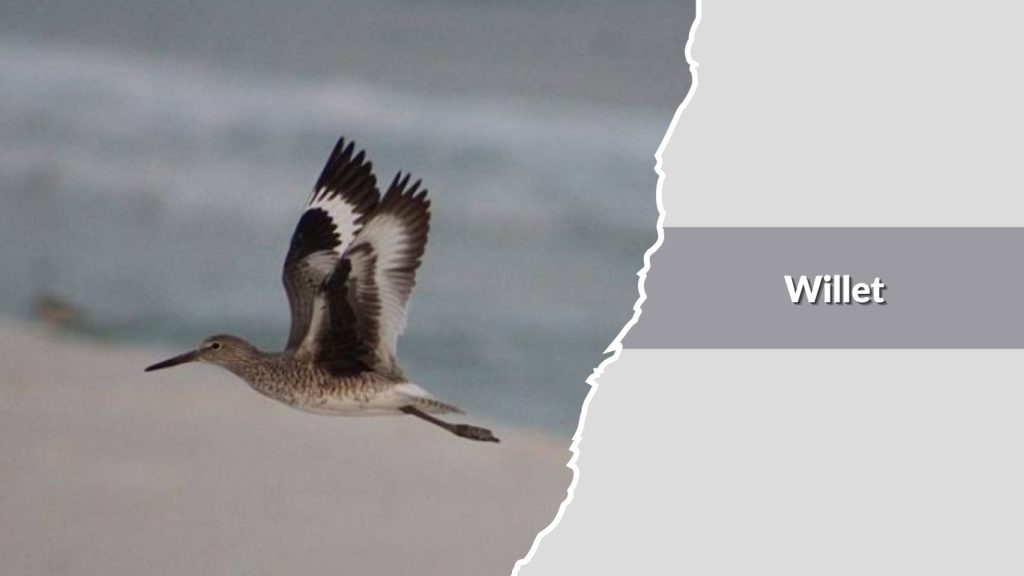
The willet is a sturdy, medium-sized brown shorebird with a long, straight bill. At rest it looks fairly plain, but in flight it shows bold black-and-white wing patterns. Willets are often heard before they are seen, thanks to their loud, piercing calls.
Identification
- Medium-sized brown shorebird with long, straight bill
- Gray-brown body with lighter underparts
- Long bluish-gray legs
- Bold black-and-white wing pattern visible in flight
- Thick, strong-looking body
Habitat & Distribution
Willets are found along coastlines, salt marshes, mudflats, and sandy beaches. They also breed in inland wetlands and grasslands of North America. In winter, they remain mostly along warm coastal regions.
Diet & Feeding Habits
They eat crabs, marine worms, insects, and small mollusks. Willets forage by probing wet sand and shallow water or picking prey from the surface.
Behavior & Nesting
Willets are alert and noisy birds. They nest on the ground in marshes or grasslands, building shallow scrapes hidden by vegetation. Adults aggressively defend their nests, often calling loudly and diving at intruders.
6. Spotted Sandpiper (Actitis macularius)
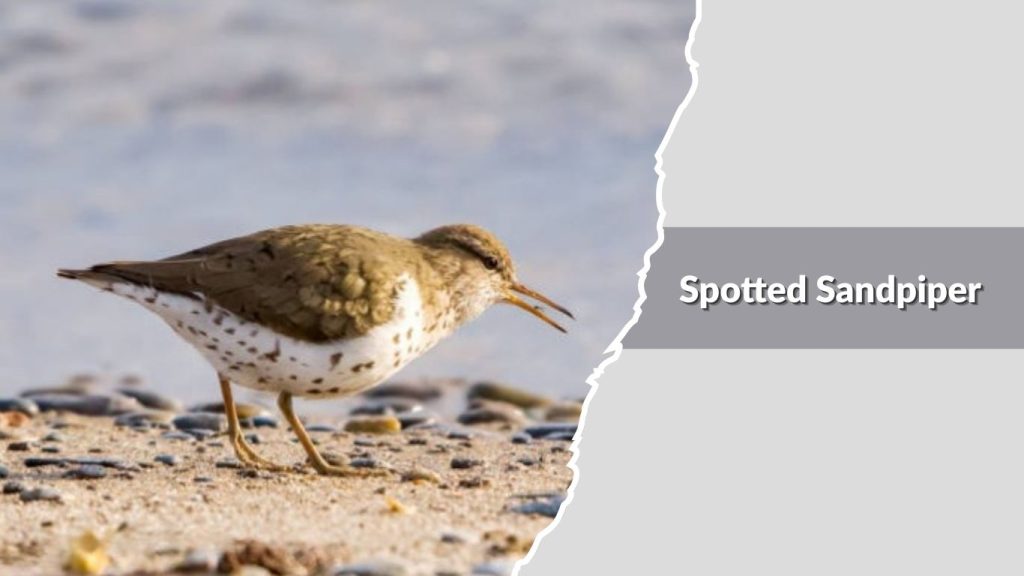
The spotted sandpiper is a small-to-medium brown shorebird with a slim body and a long, straight beak. It is best known for its constant tail-bobbing motion and quick, darting movements along shorelines.
Identification
- Small to medium-sized brown shorebird with a straight, medium-long bill
- Brown upperparts with white underparts
- Breeding adults show dark spots on the chest
- Short legs and rounded wings
- Constant tail-bobbing behavior
Habitat & Distribution
Spotted sandpipers are widespread across North America. They live along rivers, lakes, streams, ponds, and coastal shorelines. During winter, they migrate to southern North America, Central America, and South America.
Diet & Feeding Habits
They feed on insects, small crustaceans, worms, and snails. Spotted sandpipers forage along water edges, picking prey from the ground or shallow water.
Behavior & Nesting
Spotted sandpipers are often seen alone, running quickly along shorelines. They nest on the ground near water, hidden among vegetation. Interestingly, females may mate with several males, and males take on most of the nesting duties.
7. Solitary Sandpiper (Tringa solitaria)

The solitary sandpiper is a medium-sized brown shorebird known for its preference for quiet freshwater habitats. Unlike many shorebirds, it is often seen alone rather than in flocks. Its long, straight bill and graceful movements give it an elegant appearance.
Identification
- Medium-sized brown shorebird with long, straight bill
- Dark brown upperparts with fine pale spots
- White eye ring and white underparts
- Long greenish legs
- Slim body and long wings
Habitat & Distribution
Solitary sandpipers are found around forest ponds, wetlands, marshes, and slow-moving streams. They breed in northern forests and migrate through much of North America to wintering areas in Central and South America.
Diet & Feeding Habits
They eat insects, small crustaceans, worms, and aquatic invertebrates. Solitary sandpipers forage by walking slowly in shallow water and picking prey from the surface or mud.
Behavior & Nesting
These birds are shy and quick to fly when disturbed. Uniquely, they often nest in abandoned tree nests rather than on the ground. Adults are usually silent except during brief flight calls.
8. Common Snipe (Gallinago gallinago)
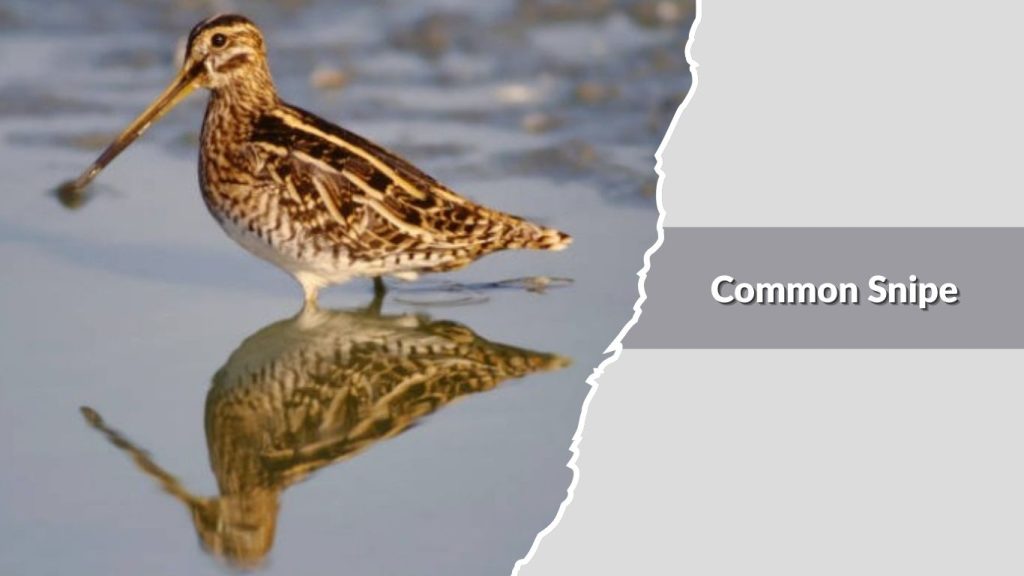
The common snipe is a medium-sized brown bird with a very long, straight beak and excellent camouflage. Its striped head and heavily patterned body allow it to blend perfectly into muddy wetlands. When flushed, it bursts into fast, zigzag flight.
Identification
- Medium-sized brown bird with very long, straight bill
- Strong light and dark stripes on the head
- Heavily mottled brown, buff, and black body
- Short legs and compact, rounded shape
- Length usually around 25–27 cm
Habitat & Distribution
Common snipes live in marshes, wet meadows, bogs, and muddy wetlands. They are widely distributed across Europe, Asia, and parts of North America, migrating seasonally between breeding and wintering areas.
Diet & Feeding Habits
They feed mainly on worms, insect larvae, small crustaceans, and snails. Using their long sensitive bills, snipes probe deep into soft mud to locate hidden prey.
Behavior & Nesting
Common snipes are secretive and usually stay hidden in dense wet vegetation. They nest on the ground in marshy areas, making shallow scrapes lined with grass. During courtship, males perform dramatic aerial displays that produce a distinctive “drumming” sound.
9. American Woodcock (Scolopax minor)
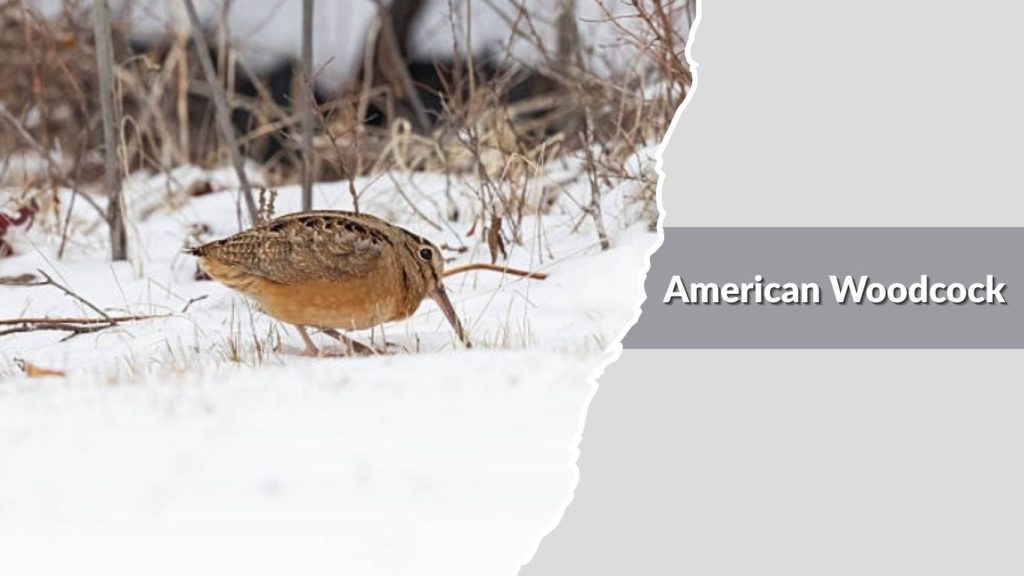
The American woodcock is a stocky, medium-sized brown bird with a very long, straight beak and large eyes set far back on its head. It is a woodland shorebird, often found in moist forests and thickets rather than open shores.
Identification
- Medium-sized, round-bodied brown bird
- Very long, straight bill
- Large dark eyes positioned high and far back on the head
- Heavily mottled brown and buff plumage
- Short legs and short tail
Habitat & Distribution
American woodcocks live in young forests, wet woodlands, shrubby fields, and moist thickets. They are found mainly in eastern North America, migrating south during winter.
Diet & Feeding Habits
They feed primarily on earthworms, along with insects and larvae. Their long bill allows them to probe soft soil and leaf litter. Woodcocks often feed at dusk or at night in moist ground.
Behavior & Nesting
American woodcocks are most famous for their courtship flights, where males spiral into the air and make twittering sounds. They nest on the ground in forest clearings, laying eggs in shallow leaf-lined scrapes.
10. Limpkin (Aramus guarauna)
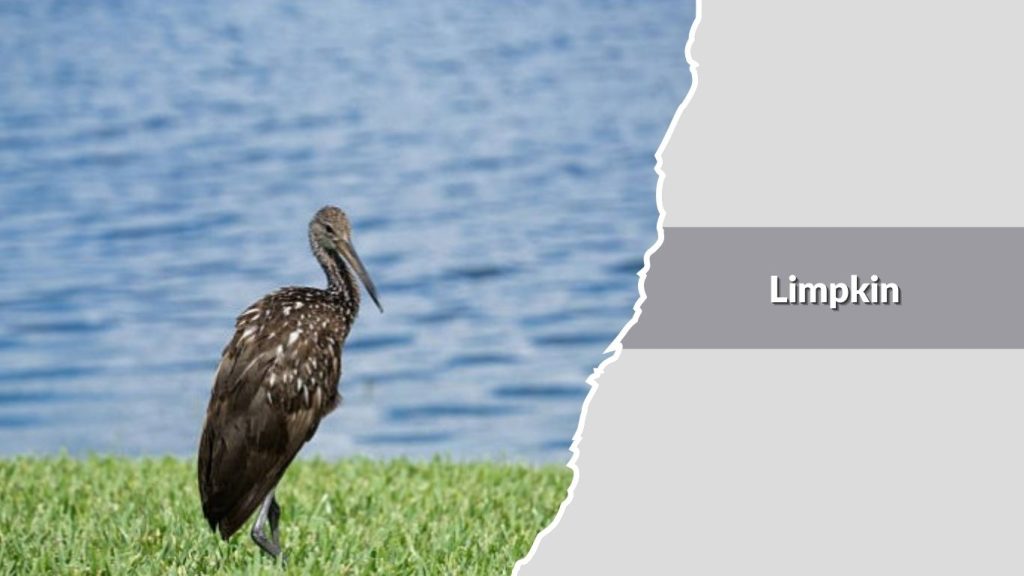
The limpkin is a medium-to-large brown wading bird with a long, slightly curved beak. It is best known for its loud, haunting calls and its strong association with wetlands where apple snails are found.
Identification
- Medium-to-large brown bird with long neck and legs
- Long, slightly curved yellowish bill
- Dark brown body with white streaks and spots
- Rounded wings and slow, deliberate flight
- Length usually around 64–73 cm
Habitat & Distribution
Limpkins inhabit freshwater marshes, swamps, lakes, and slow-moving rivers. They are found mainly in the southeastern United States, Central America, South America, and the Caribbean.
Diet & Feeding Habits
Their diet consists mostly of apple snails. They use their long bills to extract snails from shells, but they may also eat insects, frogs, and small aquatic animals.
Behavior & Nesting
Limpkins are often solitary and active at dawn and dusk. They nest in dense wetland vegetation or low trees near water. Their loud cries are often heard at night and can sound eerie to unfamiliar listeners.
11. Glossy Ibis (Plegadis falcinellus)
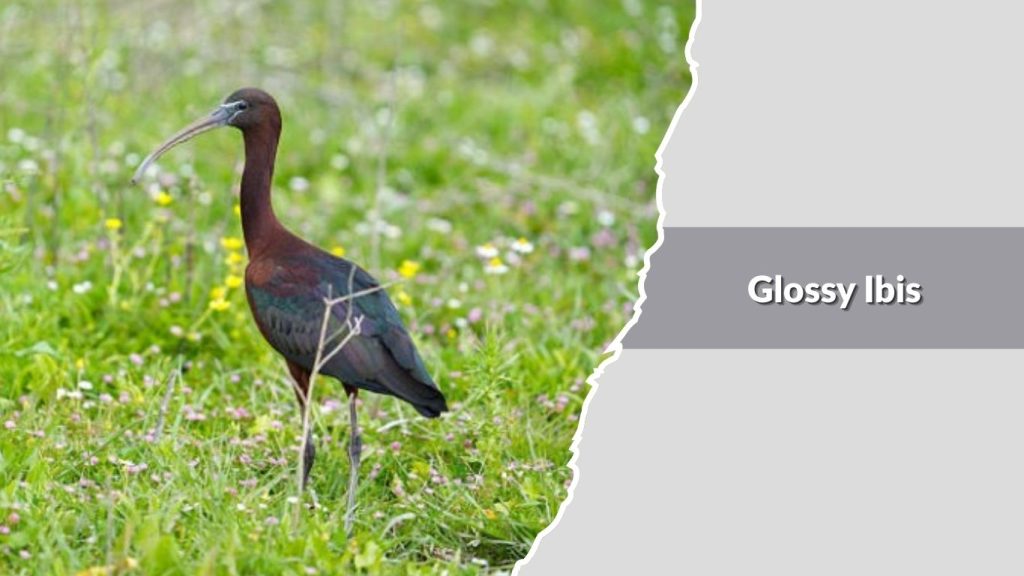
The glossy ibis is a medium-sized brown wading bird with a long, down-curved beak. Although it shows iridescent colors in sunlight, it often appears dark brown from a distance. It is graceful in flight and commonly seen feeding in shallow wetlands.
Identification
- Medium-sized dark brown bird with long, curved bill
- Slender neck and long legs
- Subtle green and purple sheen on feathers
- Long, decurved beak ideal for probing mud
- Length usually around 55–65 cm
Habitat & Distribution
Glossy ibises inhabit marshes, swamps, flooded fields, lagoons, and coastal wetlands. They are found on every continent except Antarctica, with populations in North America, Europe, Africa, Asia, and Australia.
Diet & Feeding Habits
They feed on insects, crustaceans, worms, frogs, and small fish. Glossy ibises slowly sweep their bills through shallow water and mud to locate prey by touch.
Behavior & Nesting
Glossy ibises are social birds and often feed and nest in colonies. They build platform nests of sticks and reeds in trees or dense marsh vegetation, usually close to water.
12. White-faced Ibis (Plegadis chihi)
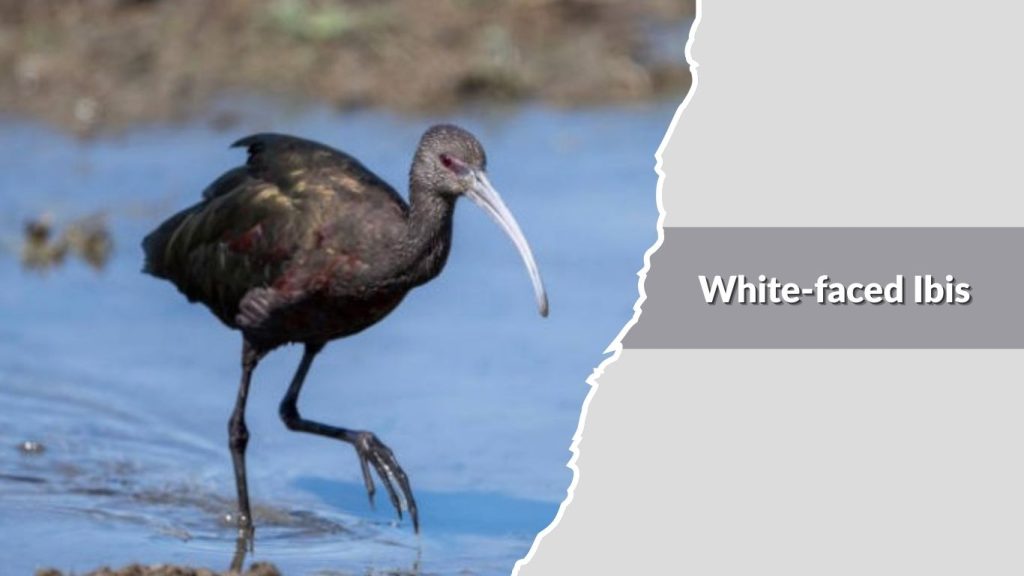
The white-faced ibis is a medium-sized brown wading bird with a long, curved beak and long legs. From a distance it often looks dark brown, but up close it shows glossy tones and a distinctive pale facial border during the breeding season.
Identification
- Medium-sized dark brown bird with long, down-curved bill
- Slender neck and long legs
- Reddish-brown to bronze body with subtle green sheen
- Breeding adults show a white border around the face
- Length usually around 55–65 cm
Habitat & Distribution
White-faced ibises are found in freshwater marshes, flooded fields, wet meadows, and shallow lakes. They are mainly distributed across western and central North America, as well as parts of Central and South America.
Diet & Feeding Habits
They feed on insects, worms, snails, crustaceans, and small fish. White-faced ibises probe soft mud and shallow water with their curved bills to detect prey by touch.
Behavior & Nesting
These birds are social and often feed in flocks. They nest in colonies, building platform nests of reeds and sticks in dense wetland vegetation. Adults are attentive parents and strongly defend nesting areas.
13. Eurasian Curlew (Numenius arquata)
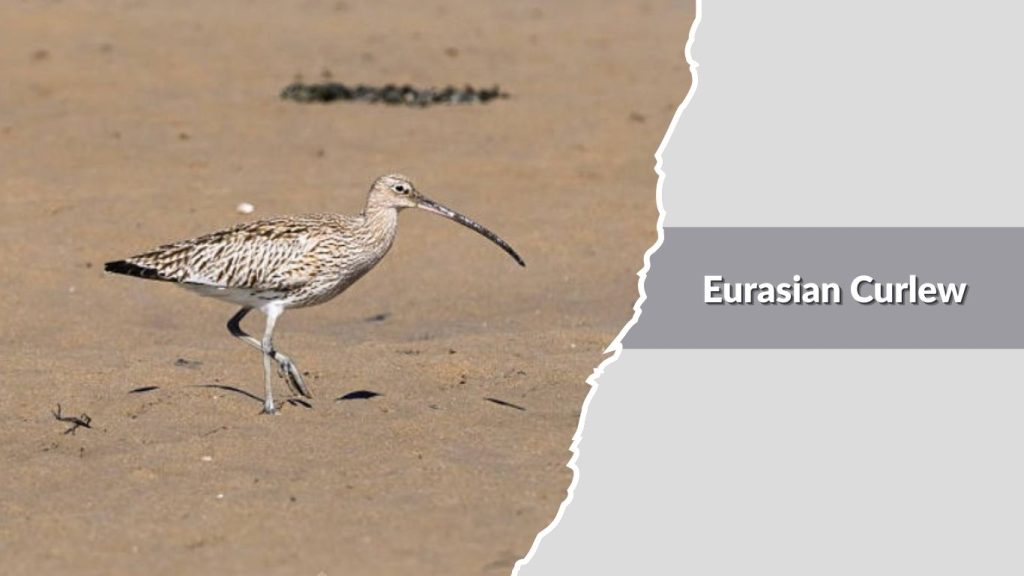
The Eurasian curlew is a large, medium-to-large brown shorebird with a very long, down-curved beak. It is the largest wader in Europe and is well known for its haunting, ringing calls over coastal flats and open moorlands.
Identification
- Large brown shorebird with extremely long, curved bill
- Long legs and long neck
- Heavily streaked brown body
- Long wings with pale underwings in flight
- Females have longer bills than males
Habitat & Distribution
Eurasian curlews inhabit coastal mudflats, estuaries, marshes, moorlands, and open grasslands. They breed across northern Europe and Asia and migrate to coastal and temperate regions in winter.
Diet & Feeding Habits
They feed on worms, crabs, mollusks, and insects. Using their long bills, they probe deep into mud and sand to reach prey hidden beneath the surface.
Behavior & Nesting
Eurasian curlews are often seen in loose flocks outside breeding season. They nest on the ground in open landscapes, laying eggs in shallow scrapes lined with grass. Adults are very vocal and protective near nests.
14. Bar-tailed Godwit (Limosa lapponica)
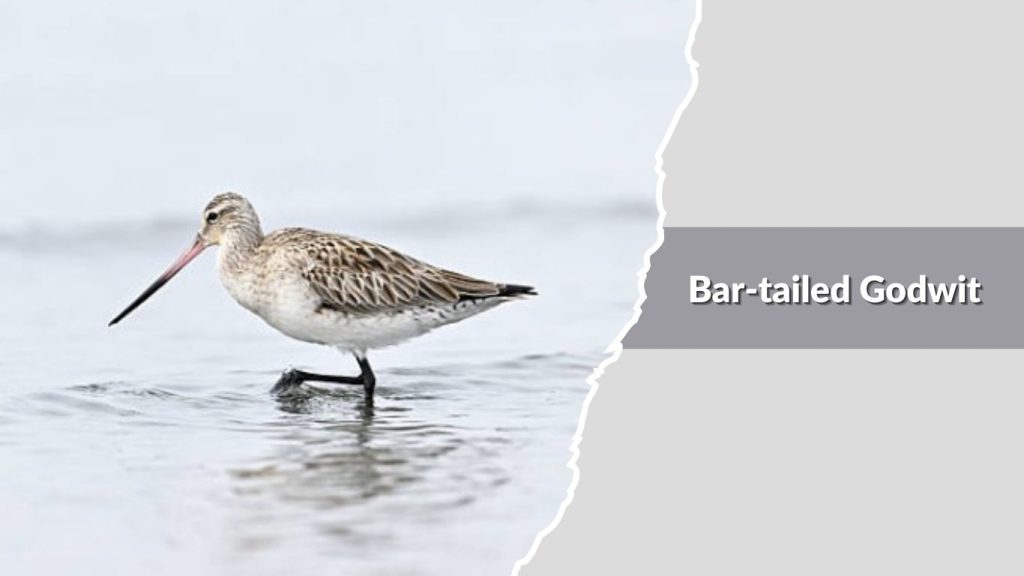
The bar-tailed godwit is a medium-to-large brown shorebird with a very long, slightly upturned beak. It is famous for its extreme long-distance migrations and its warm brown plumage, which blends perfectly with coastal mudflats and sandy shores.
Identification
- Medium-to-large brown shorebird with very long bill
- Bill slightly upturned, pinkish at the base with dark tip
- Mottled brown body with barred tail
- Long wings and long bluish-gray legs
- Slim, elegant shape in flight
Habitat & Distribution
Bar-tailed godwits are found along coastal mudflats, estuaries, beaches, and tidal wetlands. They breed in Arctic tundra across northern Europe and Asia and migrate to coastal regions of Africa, Asia, Australia, and parts of North America.
Diet & Feeding Habits
They feed on marine worms, crustaceans, insects, and small mollusks. Using their long sensitive bills, they probe deeply into wet sand and mud to locate prey hidden below the surface.
Behavior & Nesting
Bar-tailed godwits often gather in flocks, especially outside the breeding season. They nest on open tundra, laying eggs in shallow ground scrapes lined with grass. These birds are powerful fliers, capable of nonstop flights lasting several days.
15. Black-tailed Godwit (Limosa limosa)
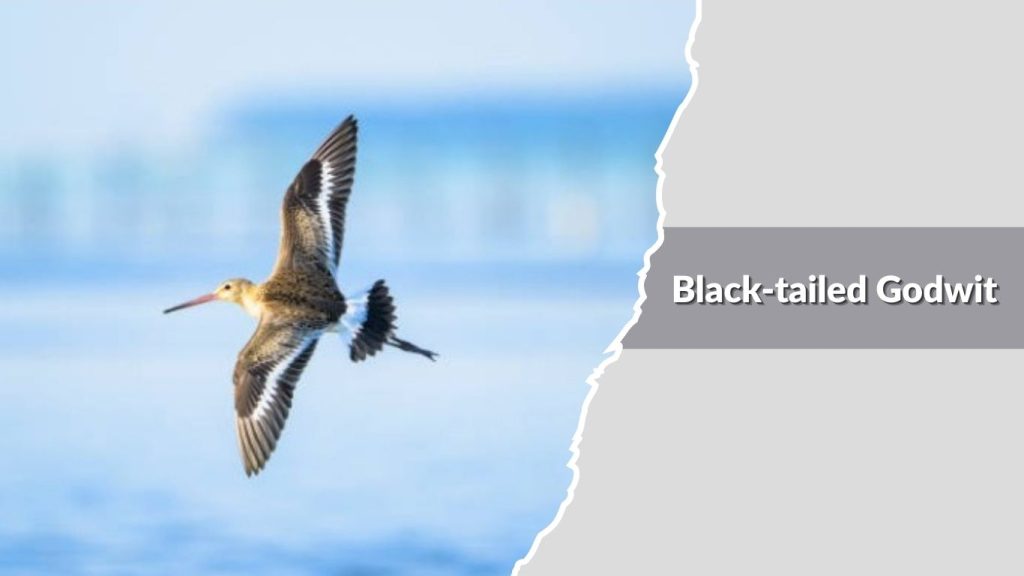
The black-tailed godwit is a tall, medium-sized brown shorebird with a long, straight to slightly upturned beak. It is known for its elegant shape, long legs, and bold black-and-white wing patterns in flight.
Identification
- Medium-sized brown shorebird with very long bill
- Long dark legs and long neck
- Warm brown body with darker streaking
- Black tail with white base, visible in flight
- Broad wings with bold pattern
Habitat & Distribution
Black-tailed godwits live in wetlands, flooded meadows, marshes, and shallow lakes. They breed across Europe and parts of Asia and migrate to Africa, southern Europe, and southern Asia during winter.
Diet & Feeding Habits
They feed on insects, worms, crustaceans, and aquatic invertebrates. Black-tailed godwits probe mud and shallow water with their long bills, sometimes also picking prey from the surface.
Behavior & Nesting
Black-tailed godwits are social birds, often seen in flocks. They nest on the ground in wet grasslands, building shallow scrapes lined with vegetation. Adults are vocal and defensive near their nesting sites.
FAQs
What makes a bird “medium-sized” with a long beak?
Medium-sized birds usually measure between 25 and 65 cm in length. When they also have long beaks, it often means they are adapted for probing mud, sand, or shallow water. This body type is common in shorebirds and wading birds that feed on hidden prey.
Why do brown birds often have long beaks?
Brown coloring provides camouflage in wetlands, mudflats, and grasslands. Long beaks allow these birds to reach worms, crustaceans, and insects buried deep in soil or sand. Together, these traits help them survive while feeding in open environments.
Where are medium-sized brown birds with long beaks usually found?
They are most often found near water, such as marshes, swamps, mudflats, beaches, lakeshores, and flooded fields. Some species also live in open grasslands or moist forests, especially during breeding seasons.
Are these birds migratory?
Many medium-sized brown birds with long beaks are strong migrators. They often breed in northern regions and travel thousands of kilometers to warmer coastal or wetland areas in winter, sometimes crossing oceans and continents.
What do these birds mostly eat?
Their diet mainly consists of worms, insects, crabs, snails, and other small aquatic animals. Some species also eat plant matter and berries, but most rely heavily on probing with their long beaks to find hidden prey.